
In the Footsteps of the Vikings: A Guide to Enemies and Explorable Territories
Greetings, esteemed readers! The main points of the gameplay and explanations about the game have already been detailed in the four previous posts of this blog. It's time to publish the final post in the series about Northgard.
In previous posts about the campaign walkthrough, we have partially discussed individual "esteemed" opponents as well as the areas we had to explore and conquer. In this post, I will try to consolidate the information about them for greater convenience, and also supplement it with what has not been mentioned before to avoid difficulties during gameplay and allow a quicker immersion into the Viking world.
First, let's talk about the opponents we've encountered repeatedly in the campaign and in solo skirmishes.
First, some explanations to the following material about the opponents:
Indicator
Conditional notation
Attack Strength

Resistance

Life Force

Opponent
Description
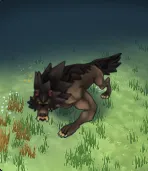
Wolf
Probably the most common type of opponent, especially among beasts. You can find them in every second area we will be conquering. They compensate for their not very high strength with their numbers, as they do not appear alone, usually in groups of 2-3 individuals, and in wolf dens, there are usually twice as many.
10
3
50
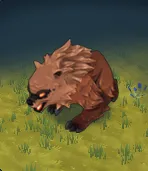
Brown Bear
Bears are much rarer encounters. They are solitary creatures and most commonly found in forests, though there are exceptions. It is not unusual to find 2 individuals in the area, while 3 is already a rarity. However, these opponents are quite dangerous, and not every warrior will be able to defeat a bear alone.
10
13
80
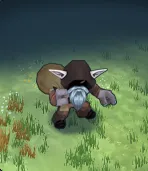
Kobold
Kobolds are peaceful creatures and will not attack us first, making trade with them profitable. However, sometimes they inhabit the territories we are interested in, making conflict unavoidable. Although their numbers in one area can be large (more than 5), they are rather weak opponents.
8
5
38
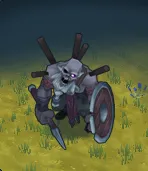
Draugr
Draugrs, or risen dead, are not peaceful at all. It is impossible to negotiate with them - you can only get rid of them. They appear in large numbers almost in every region. Like wolves, the area can contain 2-3 representatives, while areas with draugr graves might have up to twice as many.
10
5
63
(31)*
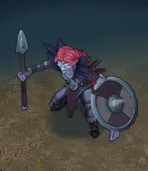
Valkyrie
Local valkyries are far from those celebrated in songs, and they can only 'escort' a warrior to Valhalla by killing him. They have become this way due to the influence of Helheim and are quite dangerous opponents who are not so easy to deal with, especially alone. Compounding the difficulty is the fact that the area they occupy is typically protected by two, or even three, of them.
20
8
88
(44)*
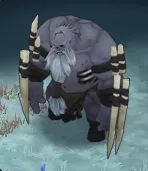
Jotun-Draugr
Unlike originally peaceful jotuns, jotun-draugrs are primarily risen dead and are only found in chapter 10 of the campaign. They are the strongest opponents among the undead.
20
18
50
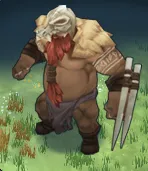
Jotun
Jotuns are peaceful giants who never attack first. If you engage in food trade with them, they can become loyal allies. The only exception is chapter 8, where jotuns from the opposing camp, which we haven’t supported, will periodically attack us. In their camp, they usually reside in groups of three.
20
18
100
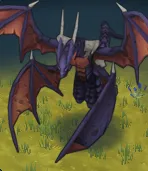
Wyvern
Wyverns are considered among the most terrible creatures that inhabit the lands of Northgard. However, they are a rather rare opponent, and we will only encounter them in chapter 8. Besides a very large reserve of life force, their attack strength is also quite significant, so you can only deal with them if you have a good-sized company, consisting not only of axe throwers but also shield bearers. There are two varieties of wyverns that can be encountered: azure and crimson. If their life forces are equal, the latter has significantly stronger attacking abilities.
40
52
20
34
250
Eldur
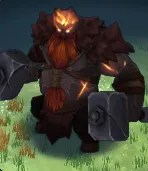
Eldurs, also known as the sons of Muspel, or fire giants, are only encountered when playing through chapter 11 of the campaign. They are similar in characteristics to jotuns, but unlike them, their lifespan noticeably decreases when leaving the area with the Muspel gates.
20
18
100

Hrimgrind
This is a huge underground serpent whose favorite delicacy is frost-covered ore. Its body is covered with a powerful, almost invulnerable armor covered in frost. It has numerous attacks that are related to cold or ice, and it is not surprising that the weather in the region where Hrimgrind has settled becomes much harsher. To defeat it, you can only do so with the Serpent Slayer - a sword specially forged from unique material. This opponent is exclusively encountered when completing the campaign in chapter 9.
40
25
500
Mercenary
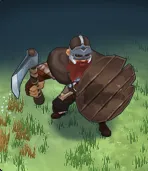
A fighter for hire that you can recruit for enough gold. He is not the strongest warrior, however, with recruited companions he may pose some issues when launching unexpected raids on coastal territories.
10
4
50
Hagen
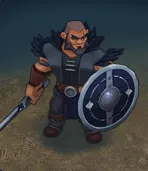
A cruel and fierce leader of the Raven Clan, who attacked and killed the last king, father of Riga. The plot of the game in campaign mode begins precisely with Hagen's attack. However, he is not particularly brave and will only attack when he has enough henchmen behind him.
22 + 4
9
70
Hvedrung
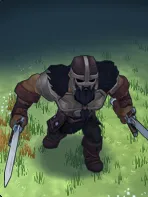
A mysterious and treacherous leader of the Boar Clan, around whom the plot of the campaign initially revolves. Not much is known about him, but he is obsessed with the idea of hastening Ragnarok, and if it were not for our intervention, he would have surely achieved his goal. His actions were prophesied in runes, and if there is a second part of the game, we will definitely hear about him again. For now, he is the last opponent to be defeated in the campaign.
30
15
75
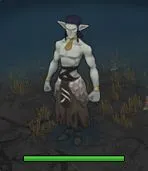
Dark Alf
A new character from the neutral race of dark elves. Nevertheless, they are quite treacherous and aggressive. They may periodically raid territories neighboring their habitat. To ensure safety, it is necessary to maintain good relations with them through trade (stone and iron) or destroy their camp.
16
6
63

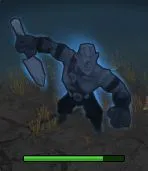
Stone Golem
A magical creature that appears after a volcanic eruption. In the first 4 months following its appearance, it is a melted stone with a slight magical infusion. After the allotted time has passed, it transforms into a formidable opponent that is not easy to defeat.
12
12
100
Phantom Warrior
Once, in life, this was a Viking, but he was not spared by life and died in a shipwreck. With the arrival of Ragnarok, he rose from the dead and sows fear among the peaceful inhabitants unfortunate enough to cross his path.
5
15
50
In parentheses with an asterisk ()* is indicated the life level for the same categories of opponents found in chapter 10 of the campaign, thawed after Fimbulwinter. Their life forces are half of those of their regular counterparts.
Having reviewed the main and secondary enemies that we can encounter during the campaign as well as in solo gameplay, it’s time to move on to a comprehensive and detailed description of all possible territories that will present themselves in the game.
Area
Description
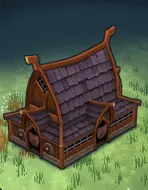
Town Hall
The very name of this area indicates what makes it remarkable. It is always a starting location, and we begin the process of exploring new lands from the town hall, and losing it means we suffer defeat. A distinctive feature of this area is the ability to build 5 buildings, which is not possible in any other area.
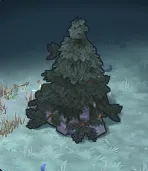
Forest
An area rich in forest provides a bonus by increasing the productivity of the wood harvested here by 10%. It is advisable to build a lumberjack's hut specifically in this territory. The number of buildings that can generally be built in this area is usually three.
Lake
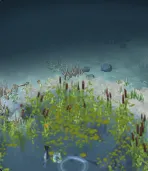
An area with a lake allows for the construction of a fisherman’s hut to fish here. In any other area, a fisherman’s hut cannot be built. The number of buildings that can be erected in this area is 2-3. 2 is typical for cases when the lake is completely situated in one area, while 3 is when it is located at the boundaries of several areas, though often a fisherman’s hut can only be erected in one area - where fish can be found.
Deer
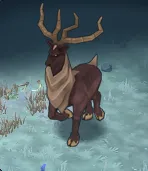
An area with a habitat for deer provides a wonderful opportunity to erect a hunter’s watchtower and increase food supplies by hunting for meat. The number of buildings that can potentially be built in this area is usually three.
Fertile Land
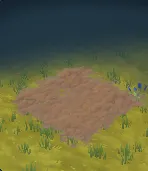
In such an area, the most necessary thing for extracting profit is the organization of agriculture through sowing fields. The number of buildings that can generally be constructed here is usually three. In this area, as well as in other food-rich areas (lake, deer), it is beneficial to build a warehouse to increase productivity.
Stone
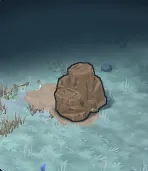
Quarries with stone deposits will be very useful for upgrading existing buildings and constructing some new ones, for example, a sage’s workshop. The number of buildings that can generally be built in this area is usually three. This is also a great spot for building a stone quarry.
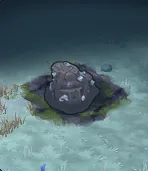
Iron Mine
Similarly to the previous point, this area is rich in iron deposits. Iron is also used for upgrades but for the tools of our peaceful inhabitants as well as the weapons of our warriors. The number of buildings that can usually be built in this area is also three. This area also requires a stone quarry.
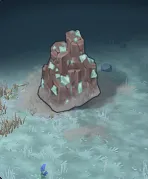
Frosty Ore Deposit
An area with an extremely rare metal, whose deposits are found only in very harsh conditions. From frosty ore, powerful weapons can be forged, specifically the Serpent Slayer sword. A stone quarry is necessary for extraction. This area is only found in chapter 9 of the campaign.
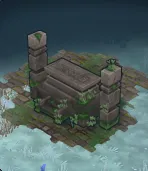
Ruins
In this territory, you can scamper riches. After colonizing it, you must send a scout who, after exploration, will replenish our treasury with gold as well as acquire legends. The number of buildings that can generally be built in this area is usually three.
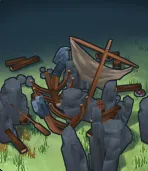
Shipwreck
This area is located only in the coastal zone. After colonizing it, a scout should also be sent to explore the wreckage to bring us gold and wood. The number of buildings that can normally be constructed in this area is usually three.
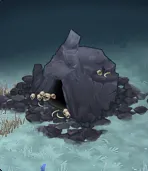
Wolf Den
As the name suggests, this territory is a source of wolf appearances. To get rid of them, it is not enough just to kill them all, as their number is usually twice that compared to territories where they simply appear. It is necessary to colonize this area, then the problem will be resolved. By the way, colonizing this area also grants additional glory - 30 units, as well as an increase in stone reserves by 5 units. The number of buildings that can generally be erected in this area is usually three.
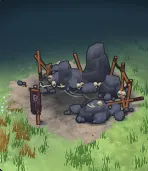
Draugr Graves
This area has a graveyard from which new draugrs will appear with enviable regularity, with their number in this territory also being up to 2 times higher than in other territories. In addition to exterminating them, to solve the problem of new undead, colonization of the area is required. After colonization, besides the additional glory of 50 units, we will receive 5 units of iron. The number of buildings that can generally be constructed in this area is usually three.
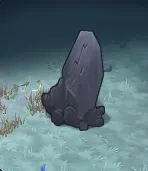
Runestone
After colonizing this area, the villagers sent to the runestone become sages and start yielding legends for us. The number of buildings that can usually be built in this area is three. The runestone allows only one sage to extract legends.
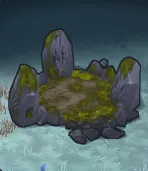
Stone Circle
An area with a stone circle is a naturally occurring source from which legends can be collected without additional buildings. Naturally, the area must first be colonized, otherwise, sages will refuse to go there. The number of buildings that can be generally constructed in this area is usually three. The stone circle accommodates two sages simultaneously.
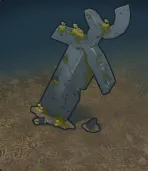
Ancient Shrine of the Gods
Such territories are quite rare, particularly in chapter 8 of the campaign. Thanks to this territory, we can peacefully resolve the conflict between jotuns. Sages sent to this relic will produce 100% more legends. The number of buildings that can generally be built in this area is usually three. This shrine accommodates the maximum possible number of sages simultaneously – three.
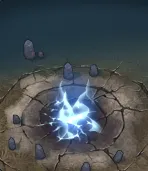
Thor's Wrath
This territory is an ancient place of power. Colonization of this territory increases the attack power of fighters of all kinds by 5%. The number of buildings that can generally be built in this area is usually three. Furthermore, when colonizing this territory, an additional bonus is the acquisition of 50 units of glory.
Plain
A plain is the most ordinary territory, containing no particular features. Colonization of this territory gives us no bonuses. Even the number of buildings that can be constructed here does not exceed the standard number.
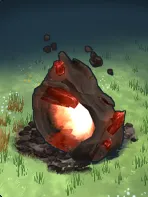
Gates of Muspel
This territory occurs only in chapter 11 of the campaign. The territory with these gates connects Northgard with the realm of fire – Muspelheim. As long as the gates remain unsealed (it is enough to destroy all the eldurs in the area for this), new fire giants will emerge with every sound of Gjallarhorn. Depending on the location of the gates in such an area, 2-3 buildings can be erected.
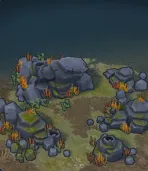
Geyser
Such areas are not very common. Due to the presence of a geyser, it serves as a natural source of warmth, reducing wood consumption in winter by 10% when under our control. Furthermore, if the area is colonized, our population will also be happy – the happiness level increases by 1 unit. The number of buildings that can be built in this area is three.

Swamp
A swampy area does not give us any advantages at all, and actually limits our possibilities. Due to the marshy soil, the number of buildings that could be constructed here is reduced. The maximum possible construction is only two buildings.
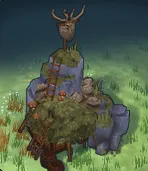
Kobold Camp
This area is the habitat of kobolds and does not contain any resources beneficial to us, unless they have captured adjacent areas with valuable deposits. In areas reclaimed from kobolds, only two buildings can be built.
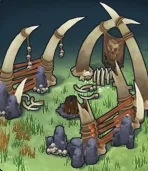
Jotun Camp
This area is the habitat of jotuns; it also contains no useful resources for us. The only bonus we can obtain from clearing and colonizing this territory is an additional glory of 150 units. If long-term use of jotuns is planned, it is more sensible to engage in food trade with them. In areas reclaimed from jotuns, three buildings can be constructed.
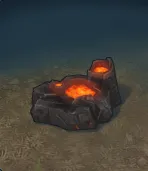
Magma Flow
This area occurs only in solo play. The magma is similar in purpose to frost ore from the campaign and is intended for creating powerful weapons. In this area, a forge is built where three parts of Odin's sword are forged. In areas with magma, three buildings can be constructed.
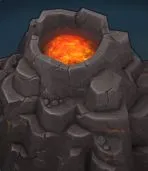
Volcano
An area with a volcano is located in the center of the map when choosing the Ragnarok mode. The distinctive feature of this area is that it cannot be colonized. Since it is an active volcano, eruptions occur periodically. The fiery stones that may land on your territories will serve as an excellent source of stone, which miners will help you obtain. However, be quick; if such a "gift stone" is left unutilized, be prepared for the consequences – the appearance of quite strong opponents, namely stone golems.

Dark Alf Camp
This is the habitat of dark alfs. It does not possess useful resources unless some beneficial deposits might be present. In territories reclaimed from dark alfs, only two buildings can be constructed.
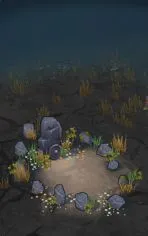
Ancient Cemetery
The site of ancient burials where seidr – ancient witchcraft was practiced. Sending sages to study these burials can provide spectral warriors to assist you. However, keep in mind that peaceful inhabitants will not approve of such support – while such a warrior is on your lands, you will have to accept a decrease in happiness level by 10 units. In this territory, the construction of three buildings is possible.