
A detailed review of the game specifically for Gamer.ru
In its infancy, the gaming industry was a mischievous and wicked child. Almost like the Dark Lord. You sit down to play Panzer General, and the strategy laughs right in your face, mocking you and asking: "So, are you ready to break through the French defenses or have you come again to sit for two hours in front of the monitor and then shamefully surrender?" The game challenged us, took no mercy, and never forgave mistakes. You could get stuck in the middle of a campaign due to poor choices made in the early missions. You had to start all over again. All of us (I want to believe) were raised on those projects. Each has a thousand stories of how he tried to defeat the game and how it stubbornly resisted.
Times have softened the temper, and now it's extremely difficult to find something similar. But just a few days ago, a game came out that throws down the gauntlet. It immediately puts in their place those who think they are hotshots in Call of Duty or Battlefield. Meet, (pronounced with a grim, gruff voice) ArmA2 - a game for real men. Snot-nosed schoolboys have no place here!
I wanted to write a review for those who have been into such games for many years, but it turned out that they are a minority; everyone I asked just shrugs and expresses outrage. So I’ll have to start with a brief introduction.
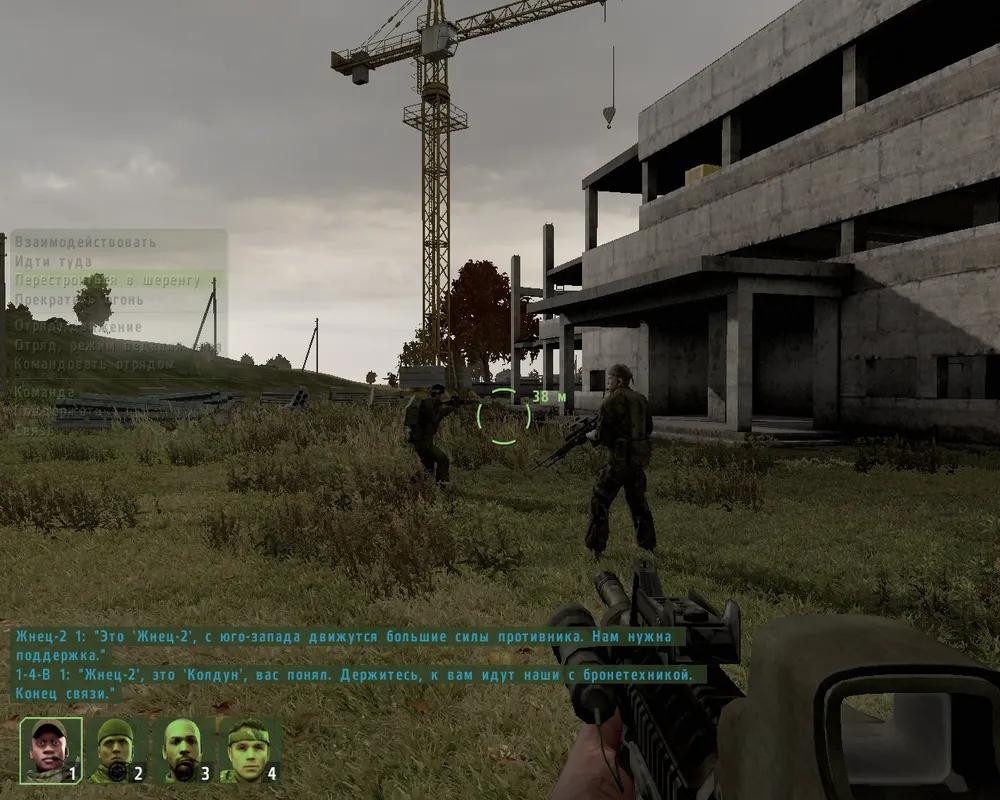
The graphics are nice and look somewhat photorealistic, but on low and mid-tier PCs, its full potential is hard to see.
What kind of beast is this?
ArmA2 belongs to a rare genre of war simulators, which includes Operation Flashpoint and Armed Assault by the same developers. These are first-person shooters that don’t really differ much visually from Call of Duty 4: Modern Warfare or S.T.A.L.K.E.R.: Shadow of Chernobyl.
But to compare ArmA2 with, say, Medal of Honor is simply madness. These are completely different games that only resemble each other externally. To illustrate: there’s “IL-2”, which requires you to consider a hundred thousand parameters, and there's Battlestation: Pacific, where nothing is taken into account but it’s all dynamic and fun – though both projects are about airplanes. Racing games have a similar gradation. In Need for Speed, we perform juicy tricks, darting through street traffic and admiring beautiful cars (and girls), while in [Colin McRae Rally](Colin McRae Rally), we participate in real tough competitions, where even a mistake and a sharp turn can lead to losing and falling behind.
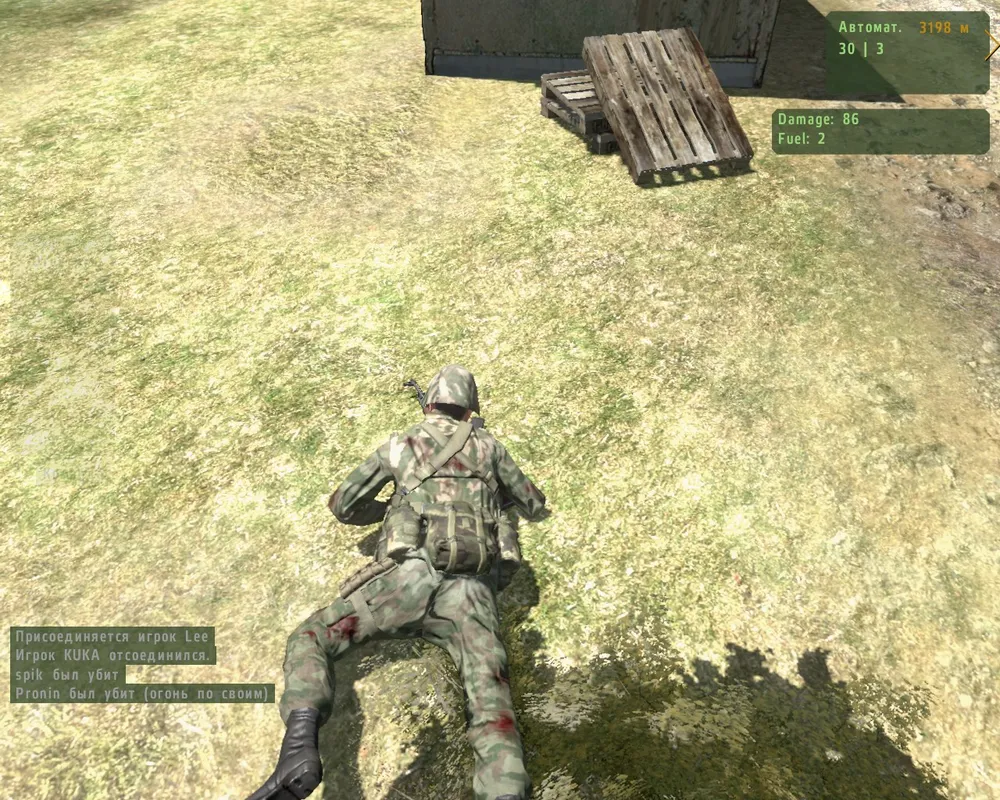
There is a third-person mode. Shooting this way is not very convenient, but you get to see how we look
So it is with ArmA2. It only resembles the fun and dynamic shooters where we kill enemies by the hundreds. You run out into the middle of the street and start taking down Nazis one by one, managing to throw a grenade, stab two or three that break through under heavy fire, and still have time for tea. This isn’t bad – on the contrary, it’s very fun. ArmA2 allows you to have a different experience.
In war
If you have never dealt with war simulators before, ArmA2 is unlikely to stun you and make you fall in love with it right away. It’s too unfamiliar. Imagine that you are given the task to get to a factory on the outskirts of a city. There are four people in your group, you are in enemy territory, but the fighting seems to have quieted, and you can move more or less safely. You run, touching no one, trying to understand from the map where the hell you’ve ended up (on medium and high difficulty, you have to determine your location “by instruments”); suddenly you hear the sound of machine-gun fire – your hero is dead. You have to start all over again. You move forward again, this time through courtyards, but again someone is shooting somewhere, you don’t catch what's happening, and you end up lying there all shot up. And start all over again.
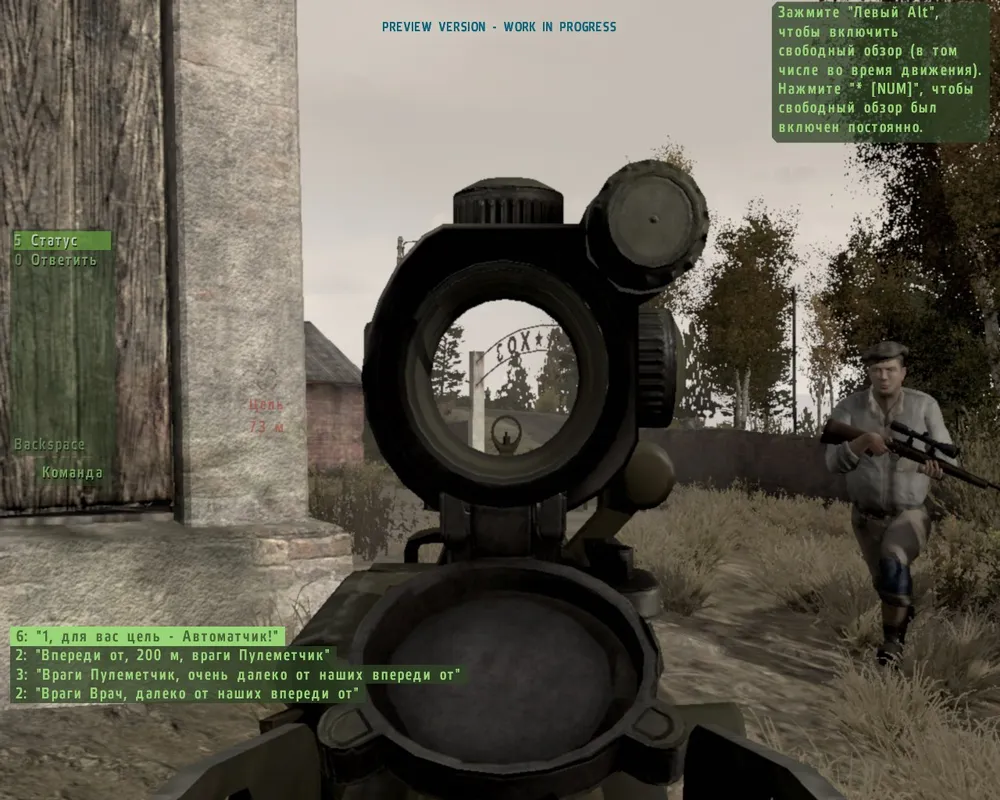
Hide, hide, and hide again – otherwise, you won’t survive here.
To die, it’s enough to catch two or three bullets. If they hit your legs, you might still live, but you can barely walk. A hit in the hand isn’t too scary either (though shooting becomes very difficult), if you just scrape it – you can still fight, but a hit in the stomach, chest, or head is a certain death.
But the realism here is not only limited to health and lifespan. It’s throughout. The territories are vast and not scaled down, working with the map is as it is in real battle – no “minimaps” or markers indicating where people are; fighters run at the same speed as real soldiers. They get tired, so after a long run, you won’t be able to shoot accurately (this is not done arcade-style, as in Call of Duty 4: Modern Warfare). Moreover, it’s actually very hard to be accurate. The flight of a bullet is influenced by a huge amount of factors: wind speed, distance to target, weapon wear, character fatigue, health, and there’s just a nightmare of bullet spread (read: realistic).
Note: in no other game of any genre is there such detailed calculation of bullet flight. Even in very harsh and realistic strategies like “World War II”, most parameters are dropped, because hundreds and thousands of soldiers shoot at once (the processor would explode). So Arma2 is the most realistic in this aspect. It will help you understand how the weapons we constantly see in games and movies actually work.
Enemies are local geniuses. They can shoot by sound, pinpoint your movement by shadow, and simply fire at where you just were. If you move and the enemy is looking your way – expect leaden company; they are already coming your way. This doesn’t mean that the enemies are artificially made too clever to make us sweat. No, they simply behave logically. If you knew that somewhere nearby, American paratroopers wanted to kill you, you wouldn’t just ignore any rustle, and if you saw a brave marine running through the forest, you’d want to take him down by any means.
These are the rules of the game. Everything should be as it is in real war. No heroic charges at five enemies, reckless runs across the street, or risky dashes under machine gun fire. Just one stray bullet is enough to start the mission over. Caution, cold calculation, and thoughtful, measured actions are essential here. It’s not boring, dreary, or monotonous – you are always focused, tense, and a little scared. Because even the banal sound of jet engines makes the character dive to the ground, and the player’s heart starts to race. Just don’t let them notice, just don’t let them notice...
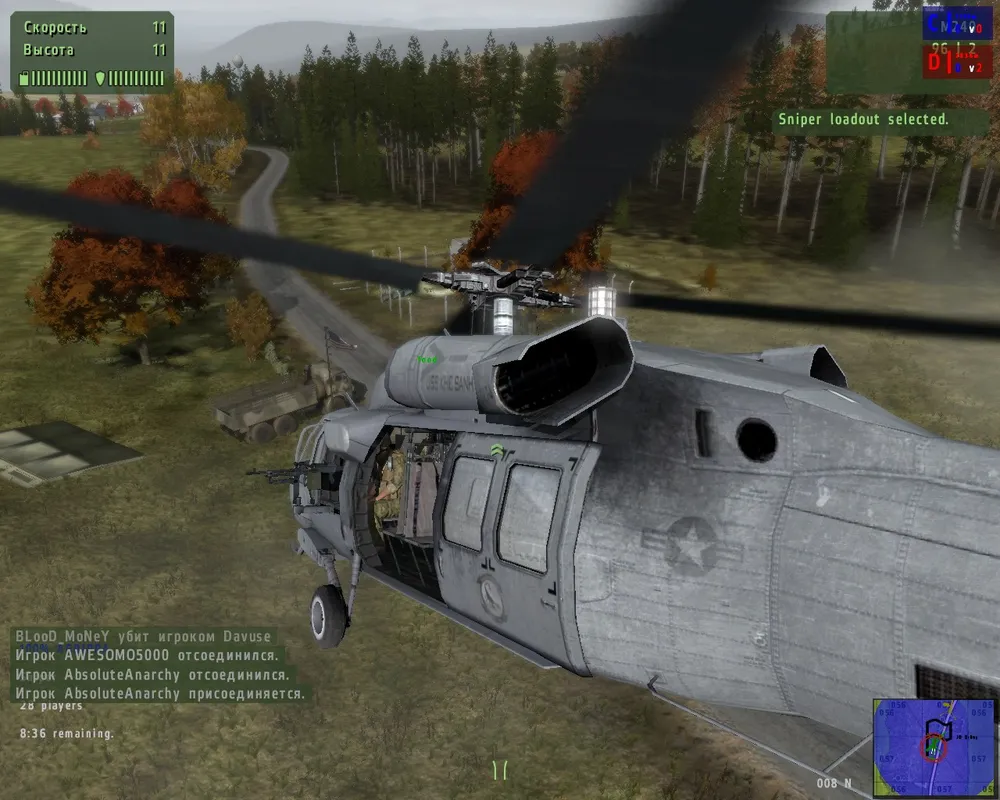
Controlling vehicles is very difficult; it's best to use a joystick for this
They will save the world again!
I hope those who have never played war simulators now have a rough idea of what this genre is? Then let's continue. The ArmA2 campaign starts with unrest in a certain Chernarus, and America realizes that there is a sharp shortage of democracy in those places. Just a few hours later, we find ourselves on an aircraft carrier waiting for our first sortie into the troubled region, where we will sow people’s power everywhere, killing a few locals and actively exterminating enemies.
There won’t be any chaos ..., I mean, Mother Russia won’t allow us to help Chernarus. Soon, she sends her troops into the brotherly republic and... What happens next, I won’t spoil. I don’t want to reveal the plot. It’s important to note that you can’t play as the Russians in the campaign; you can only command the U.S. Army.
And immediately, cries were heard online that ArmA2 should be banned in Russia because what kind of thing is this – killing your own countrymen. And really, how can you play as those American bastards? However, such statements are so tiresome that it’s simply ridiculous. I hope it’s unnecessary to explain why this position is absurd. Or am I mistaken?
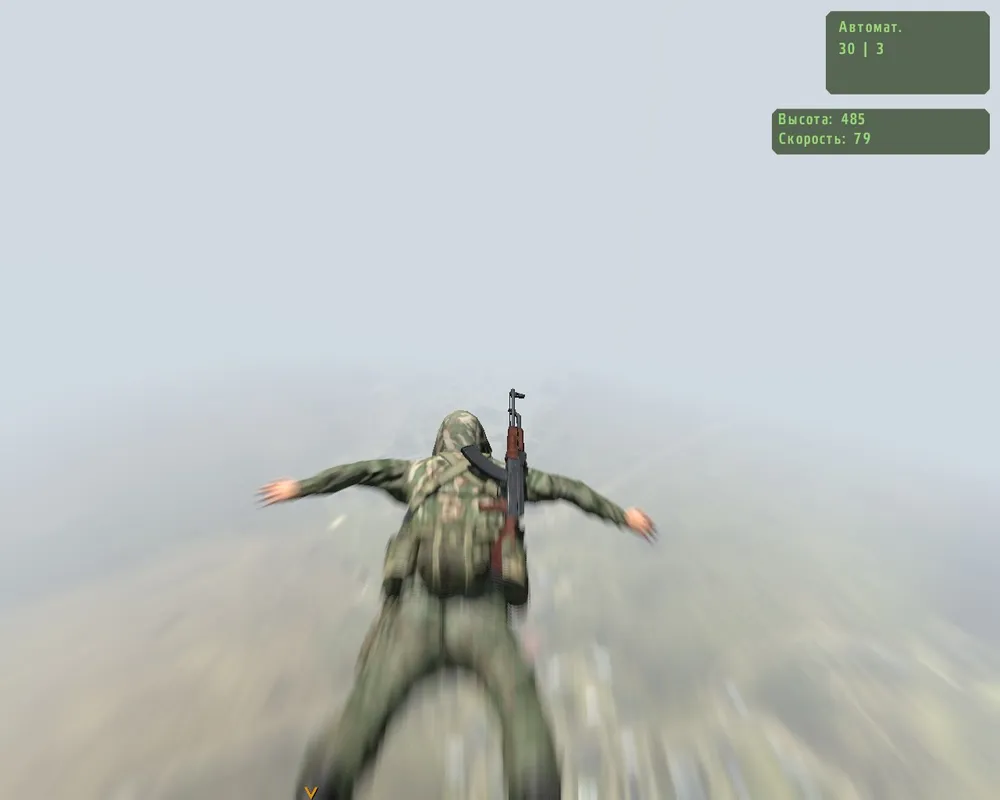
Entertainment not for the faint-hearted – a jump from 10,000 meters
Into the depths of the country
Chernarus allowed developers to realize several types of missions. Since the events take place in a relatively developed post-Soviet country, battles in industrial cities are included, where we have to run between high-rise buildings, climb tall factory pipes, and from there use binoculars to look for the enemy and determine our location on the map. Fighting in industrial areas is interesting because it’s hard to know where the enemy is (since you can’t see a thing, and it’s impossible to say what enemy is behind that corner) and it’s easy to pave your way through the most “closed” spots. For example, one can move in narrow passages between warehouses, crawl under pipes, and so on.
But since Chernarus is supposedly a rural place – and ideally bears with balalaikas should be running around here, not terrorist rebels – there are also many villages and forests. Here, the developers implemented a second type of missions that take place in completely open spaces. You drop in a kilometer away from the point, then run for a long time, looking around, crawling through bushes, and then clearing a village. Gradually, you methodically drive out the enemies, hiding as you go. You have to act very carefully, but experience a lot of firefights and various tactical decisions.
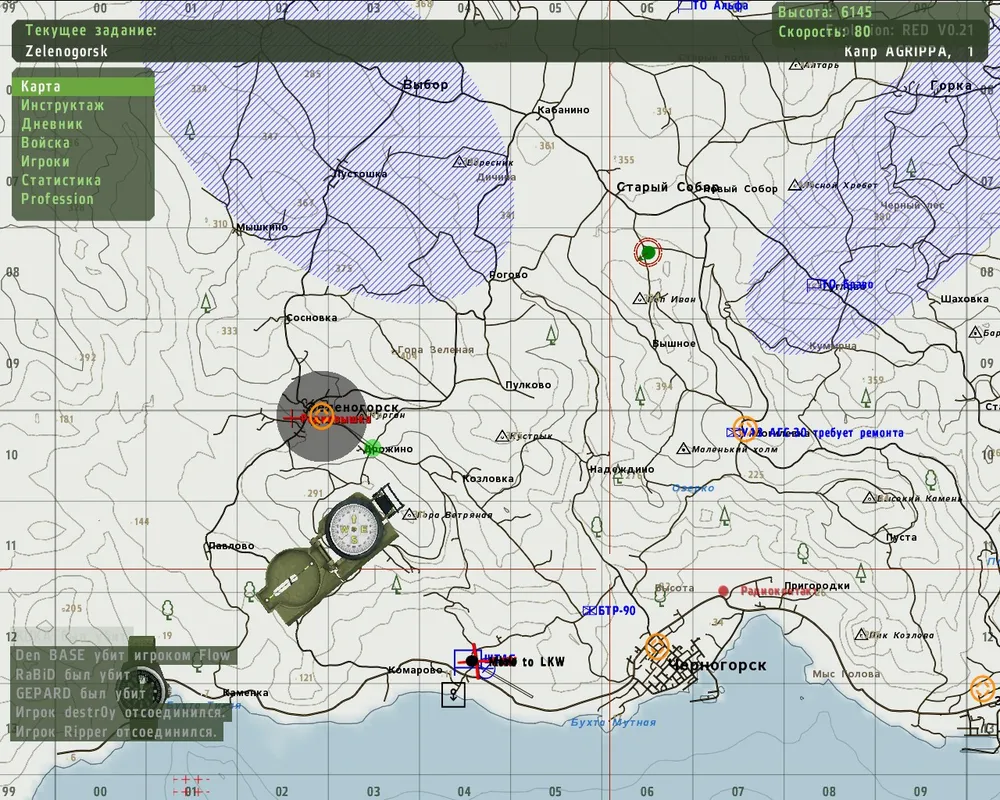
And this is just part of the entire map...
And perhaps one of the main advantages and distinctions of ArmA2 is that before us is a vast seamless world where players face no boundaries. No artificial limits or walls that you can’t go past. Hence, there’s tactical depth. In many shooters, there’s a corridor and two or three branches off it. In ArmA2, there are no alternative paths, as the main road is also absent. Very often in games, you start to think “game-ly,” like this path will lead you somewhere and that one won’t, so we’ll go this way because it’s definitely free. And if there's a blockage somewhere, it’s done just to stop you from proceeding. Here, that’s not the case; you can go wherever you please. It’s unlikely the developers themselves realize the exact number of schemes they have provided for users.
As for the bugs - there are thousands of them. The latest patch fixed only part of them; however, ArmA2 is playable, though ten more patches wouldn’t hurt...
Shoulder to shoulder
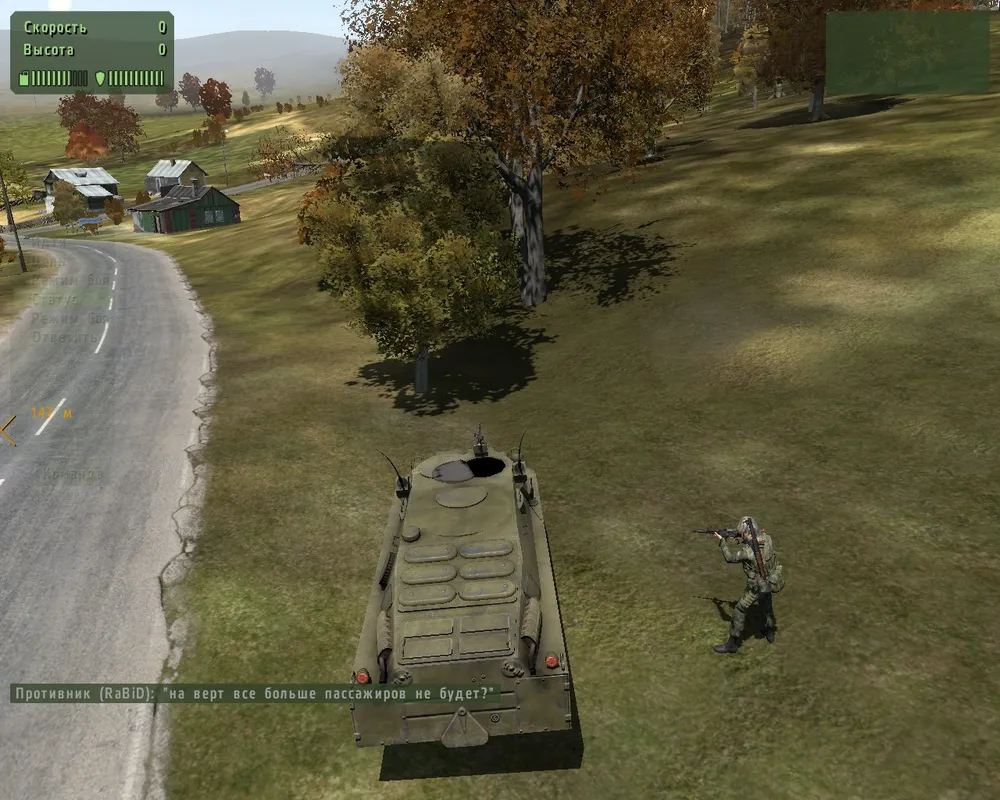
Using a BTR to cover my comrade from a sniper. I’m moving slowly forward, he’s running behind me. Then he’ll hide in the forest and watch for the enemy.
However, you cannot fully appreciate ArmA2’s capabilities in single-player mode. The project only unveils itself in online battles.
The simplest starting point – cooperative gameplay. No other shooter places such emphasis on team interaction. Everyone must act as carefully as possible, voice communication is strictly mandatory, and actions are fully coordinated. For example, a sniper says he’s climbing onto the roof. He clarifies if everyone understood, waits for the others to take positions, and can assist him if needed. And generally, going through the campaign with friends is just much more fun. You run from the drop-off point (10-15 minutes) and chat. An indescribable atmosphere, reminiscent of films where fellow soldier comrades share news over the radio, joking with each other. And when you find yourself on the ground in the city, it’s not uncommon to hear a shout like: “Quiet, down, I heard something!” And for a minute, the channel seems to die.
But cooperation also cannot completely exhaust ArmA2’s potential. Thus, to enjoy the game fully, you must engage in battles of 20 versus 20 or more. The map for such fights is several kilometers long. For example, it takes 15-30 minutes to drive from the base to the combat area.
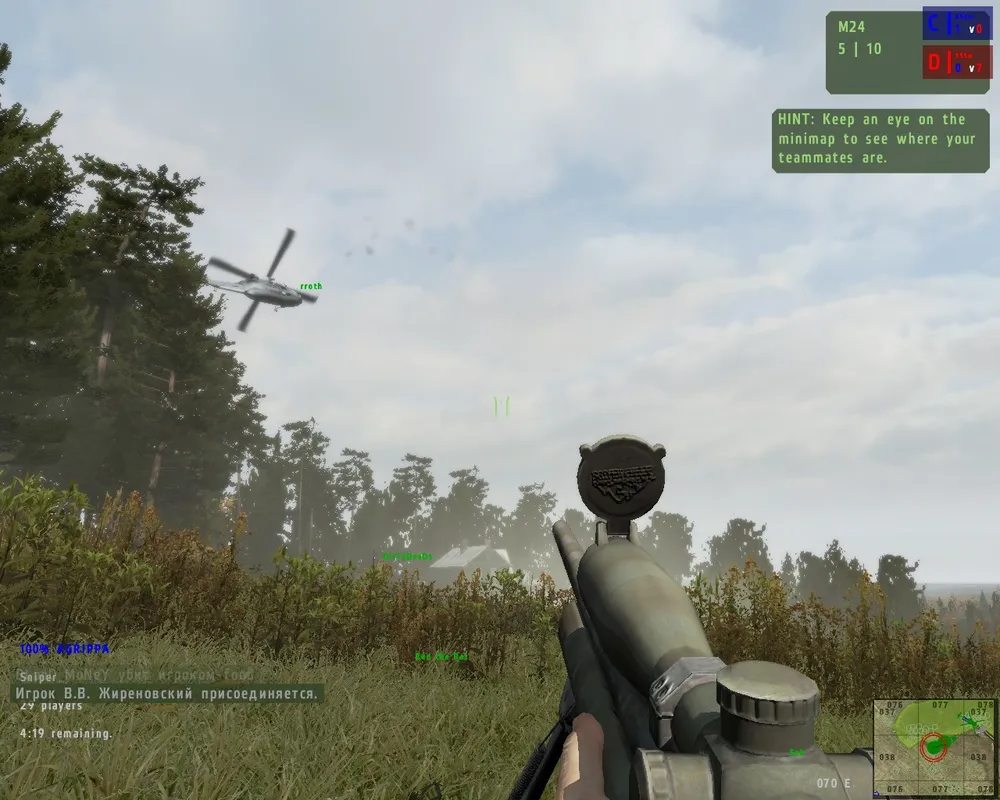
A helicopter dropped us off near the enemy positions and flew back to base for another group of soldiers.
In the end, the teams come up with many interesting solutions. For example, one player hops into a helicopter, loads soldiers into it, and flies with them to a clearing in the woods. There, the troops switch to another helicopter, which takes them straight into the heart of the battle. Transporting your friends is also enjoyable. You’re doing important work; without you, the team would likely lose.
Controlling vehicles here is very interesting. They are modeled highly realistically and are much more complex than in BF. Airplanes, tanks, armored vehicles, jeeps, bombers, motorcycles, plus various anti-aircraft and artillery guns – everything is there.
You can speak endlessly about multiplayer. Just imagine, incredible freedom, vast territories, absolutely any strategies and possibilities. No one forbids you from being dropped near the enemy base, crawling through the grass to the road used by all vehicles, setting two or three charges, and waiting for tanks. You lie there for 10 minutes, 20, then an enemy appears, you press the button – boom, and the opposing team is left without heavy support.
You can sneak deep into the woods, find a hill, take a sniper rifle and take out enemies across a small street. In the grass, you won’t be seen; frequently, even your snipers get shot by mistake, since it’s terribly hard to tell friend from foe (unless you have set up a more forgiving mode with names above heads). Thus, it often takes air support to take out such sneaky heroes. One of the enemies communicates your approximate coordinates via chat or voice, and twenty seconds later, a bomber reduces everything in the marked square to ashes. So, you’ll need to change positions after every shot, hide, and wait. All of these struggles are worth it if you kill even two or three enemies. Getting to the battlefield is quite challenging, so one accurate shot can eliminate an enemy for several minutes. Imagine the moral effect of knowing that a sniper is operating somewhere nearby. The cost of death is high, so everyone naturally fears and behaves overly cautiously.
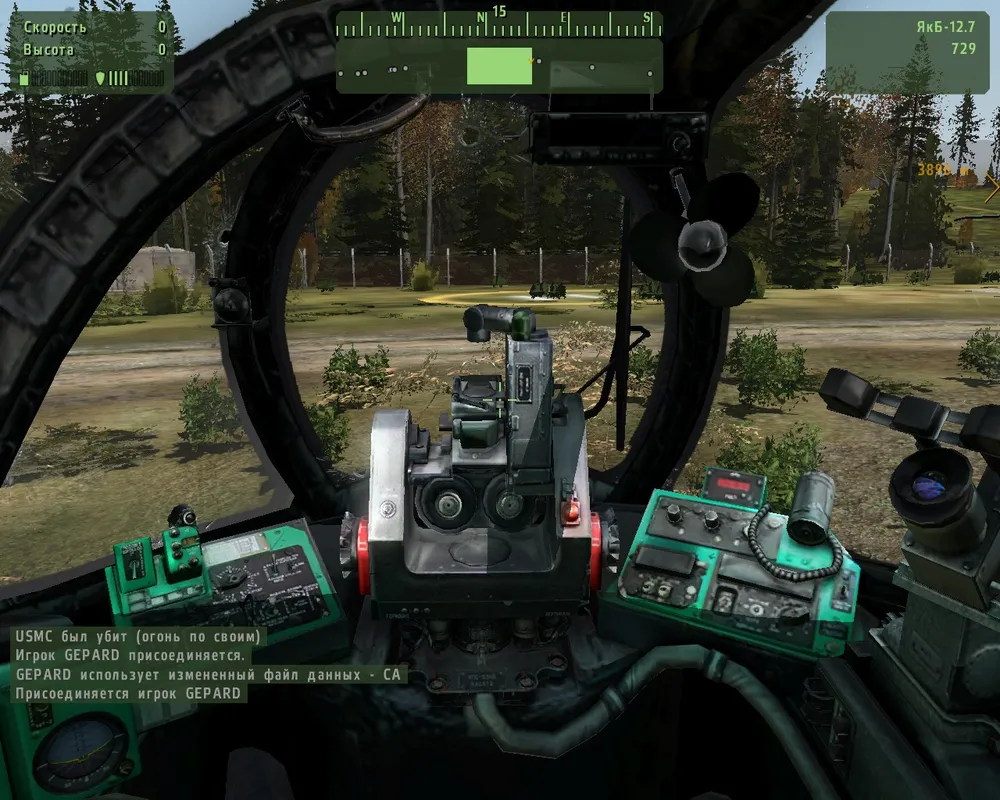
In online battles, restrictions on using vehicles are often implemented. To sit in a helicopter, for example, you must kill 10 enemies and capture two control points.
Or here’s a story from recent times. It happened just today. There’s a battle for control points; we need to force the enemy out of their positions and protect our own. I chose a sniper, donned a camouflage suit, picked up a specialized rifle (which is also covered in grass), and decided to somehow contribute to the assault on sector Delta. There the enemy was very tightly entrenched, and it was challenging to push him out. I had to crawl on my belly for twenty-five minutes only to finally approach the enemy. Then, I took another fifteen minutes to find a good position, and only after that did I finally begin the fight. Unimaginable sensations: lying behind a tree, waiting for the enemy to appear. You can’t see a damn thing; the greenery obstructs your aim. You have to search for gaps between the blades of grass to glimpse the enemy. Sometimes you can’t take it anymore, you kneel to get a clear shot – so, with the change in body position, the scope starts to tremble, plus you might be spotted, and down you go on your belly again and wait. In half an hour – fifteen corpses, two of which are enemy snipers who couldn’t handle it and, after my shot, jumped up trying to figure out where the fire was coming from. I’ve played many other shooters, but I’ve never fought like this before. The enemy can’t even guess where the shots are fired from. A position among the trees, a terrible thought that there’s a sniper hiding behind each tree. Panic, nobody wants to respawn in this sector anymore, and ultimately we managed to take Delta.
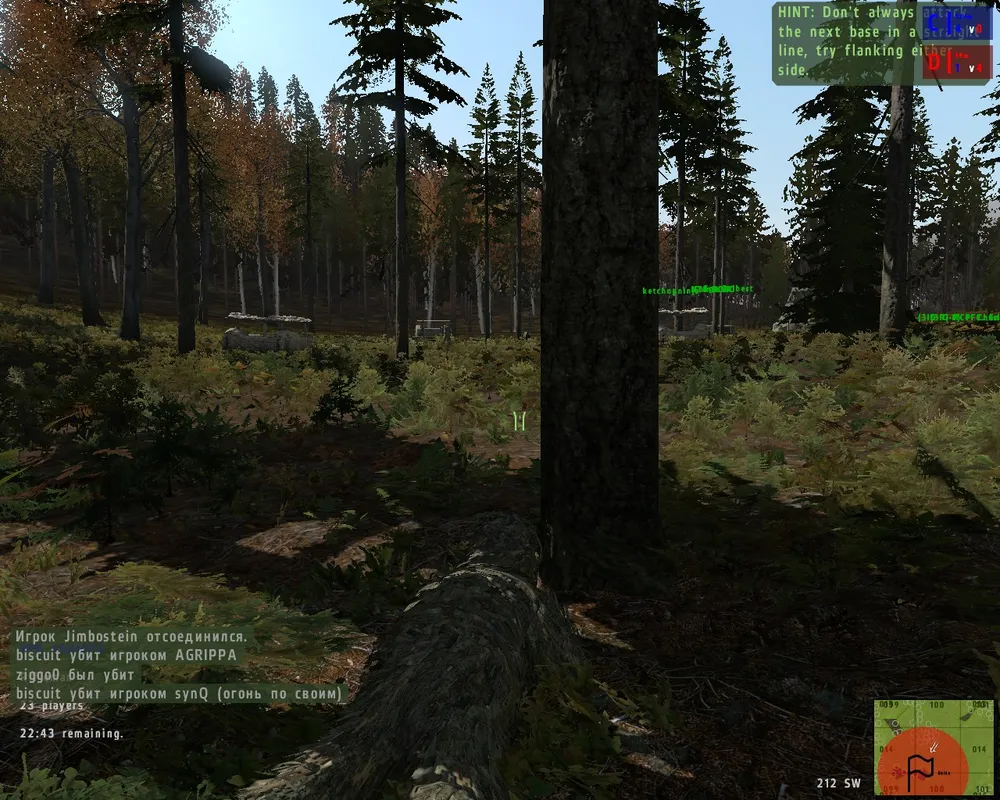
Well hidden
And there are a million such stories to tell. Each of you will have plenty, just give it a try. And if you are already playing, share your impressions, tell what happened in your battle. I read the forums about the game, where those who fight online gather - it’s pure pleasure. Maybe we’ll create a cozy spot here? (If needed, we can create a separate thread)