
Let's summarize the results
The development of Majesty 2 is gradually coming to an end, and now is the time to figure out what the project is all about. Your humble servant has been a guest at Ino-Co several times, played through the campaign and online mode, and has had many discussions with the developers. So this is not just a rehash of information from the internet, but an analysis of what I have seen, heard, and felt.
As soon as you press the "New Game" button in the main menu, nostalgia begins to distract from the action on screen. The map is reminiscent of the original, with a dozen different nearly unrelated missions, and once again a advisor appears to tell us what we need to do here or there; in the game itself, we are greeted by painfully familiar guilds, the castle, and the humble homes of the peasants.
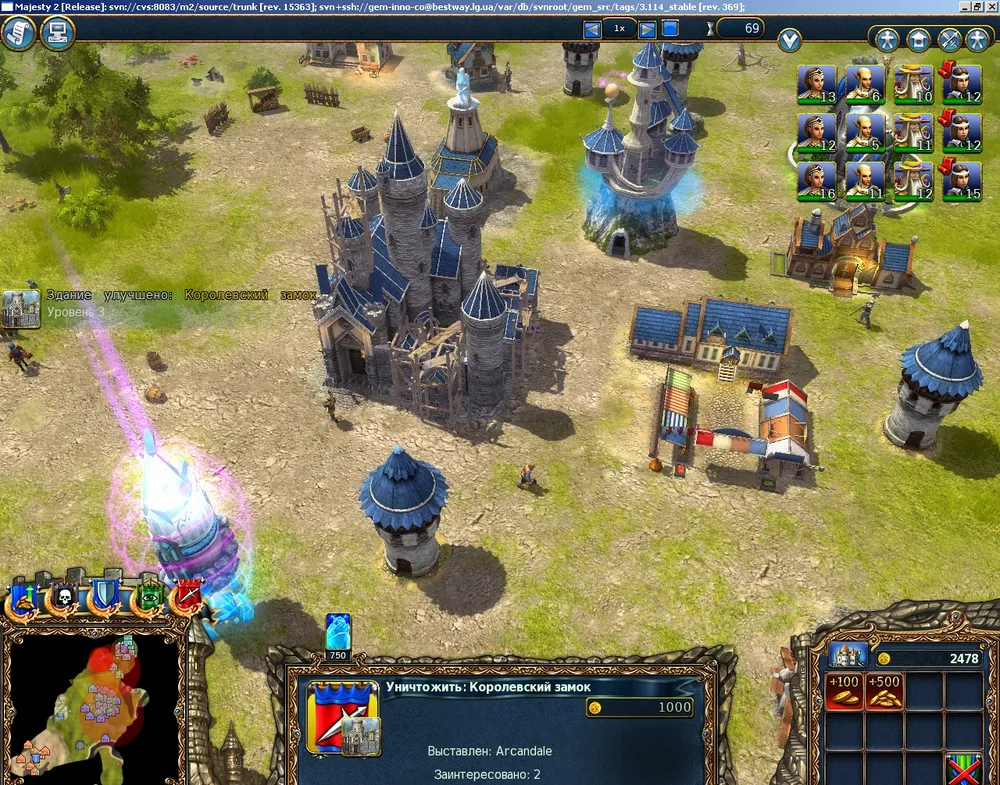
If you take a break from building, remove your hands from the keyboard, and simply observe the life of the city, you will recall the feelings that arose while playing the first Majesty. Here’s a tax collector going from house to house, peasants trudging towards a statue being built, a ranger chasing wolves, and wolves chasing him. The world still seems to have no need for us, living its own life, and even new cottage houses are appearing...
Every visit to Ino-Co began with twenty-minute reminiscences. I see a small dragon attacking a watchtower and start telling the developers about how I once struggled to complete a mission with a huge dragon, and they slyly smile and show me that very same mission, only now in Majesty 2.
What you certainly shouldn’t fear is the loss of the series' spirit. The creators of the new game understand perfectly what we want to see and are doing everything possible to please us. I especially liked how they repainted the dresses of the sisters of the Crypt, as many on the forums complained that such an outfit would be unacceptable for the first part.
And brother, the power is in the places
However, Ino-Co does not intend to make a remake of the first part; after all, we do have a new game with a hundred features and many interesting missions. Developers have long said that no matter how much they love the original project, it had flaws that need to be fixed, not copied.
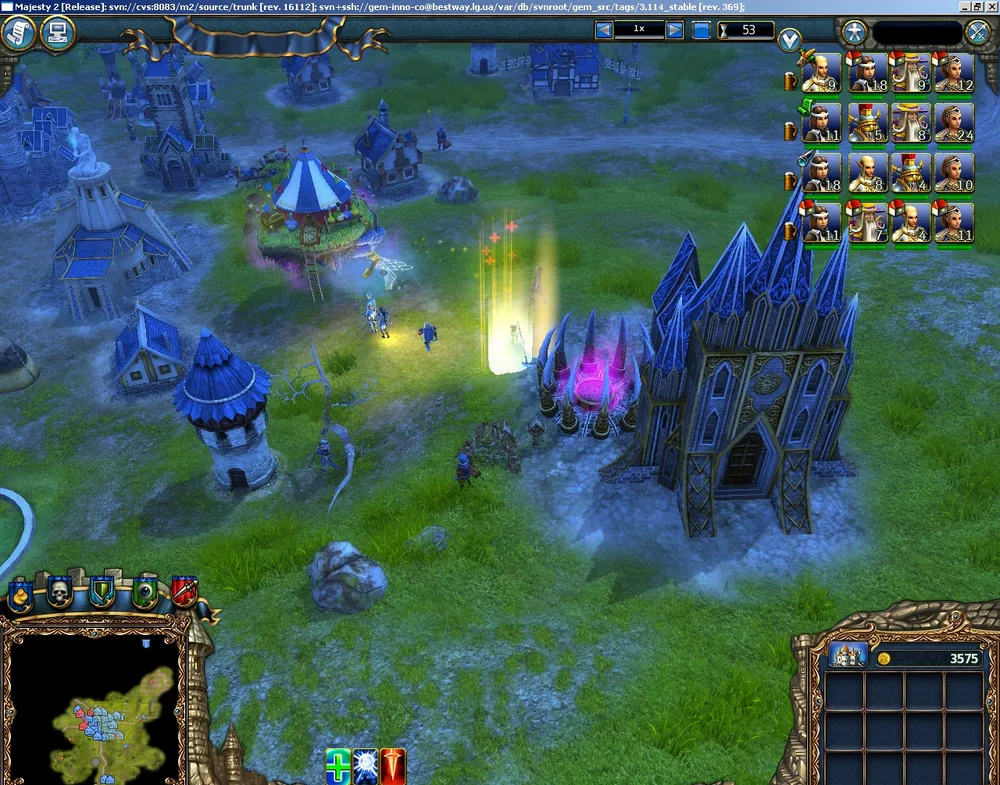
One major difference is the introduction of "power locations" (the name is still a working title and may change). Previously, we couldn't build both temples of the warring gods at once, so we had to choose between two types of followers. Either the sisters of the Crypt bring chaos and destruction, or the priestesses of Agrila sow goodness and eternity. But we could build these "super buildings" anywhere and anytime – as long as we had the money.
But everything has changed, and the gods have become much friendlier. Now we can build as many temples as we want and summon any heroes to serve us. However, I should note that construction only occurs at power locations, which are not that numerous and not always located right next to the castle. You will still have to fight for them.
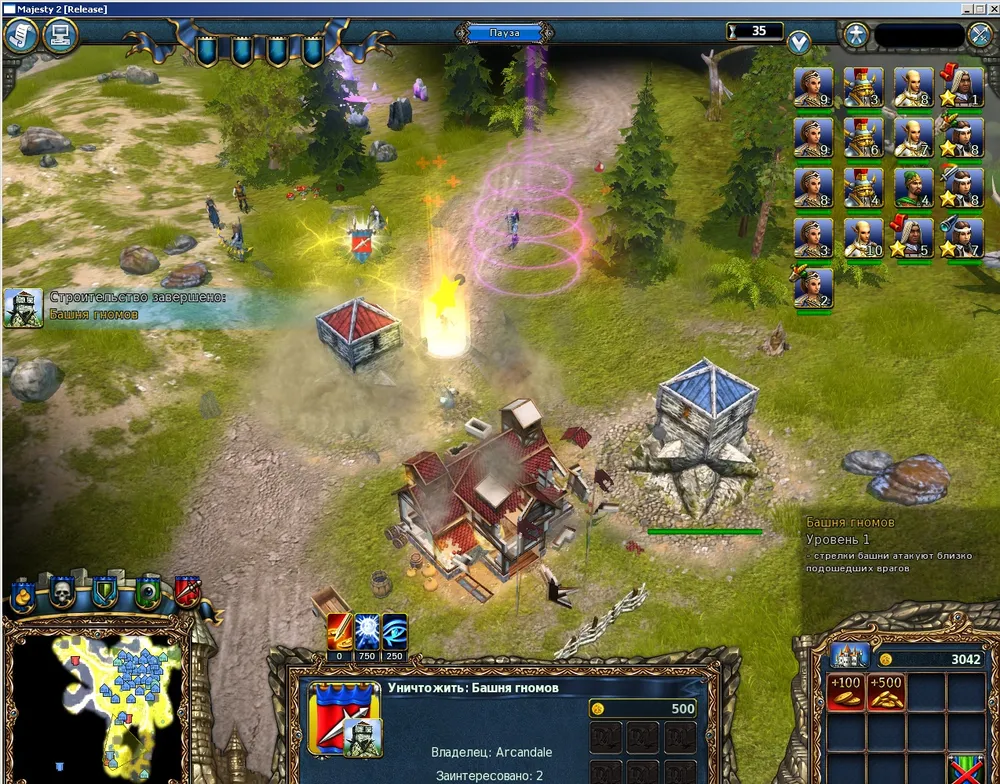
In the campaign, power locations are usually guarded by some strong monsters. For example, elemental giants capable of killing weak characters with a single blow. So one has to think – is it even worth going there, or should we just complete the mission without powerful heroes? Although, of course, in most cases, players will clear the point. After all, epic enemies here look like a juicy chunk of experience. Kill them, gain new levels, clap your hands, and raise a temple at the same time.
How the developers will further use power locations in the campaign, I do not know. I have only seen battles against monsters. However, I can tell you in more detail about the multiplayer mode, where temples allow a player to become significantly stronger. Even a single temple hero can almost wipe out an entire group of ordinary units. Therefore, we will strive to gain access to the power points as quickly as possible. But they are usually located in the center of the map, where battles can be ongoing. One player destroys surrounding monsters, starts construction, calls soldiers to guard the territory, and then an enemy comes along and begins to destroy everything and build structures themselves. And, let me remind you, control is indirect. This isn’t StarCraft, where such an operation is trivial. Heroes also need to be motivated, not just framed up and thrown into battle.
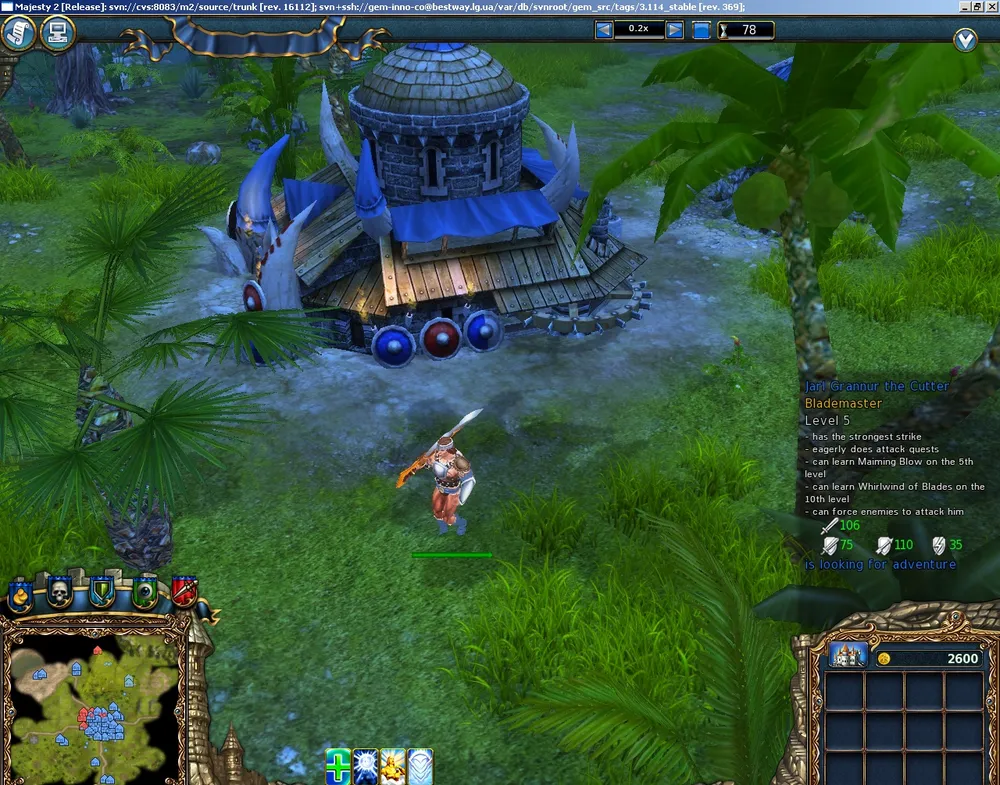
However, one of the maps that I happened to fight on turned out to be very unfortunate in terms of power point placement. One power location stood right by the castle, so neither I nor the project leader felt the need to rush for the two more in the center. So we each built a temple and went to war with each other. Meanwhile, the clusters of divine energy remained dusty somewhere close by.
If I am with a friend, and the dragon without a friend
However, capturing a power location is not the complete path to obtaining a temple hero. After constructing the building for prayers and pleas for grace, we have the ability to turn a regular character into an upgraded one. Thus, ordinary female followers, who can restore health decently well, can become either the sisters of the Crypt or the priestesses of Agrila. Alternatively, we can assign one to the dark goddess and the other to the light one. And even together, they will slay monsters, if we group them together.
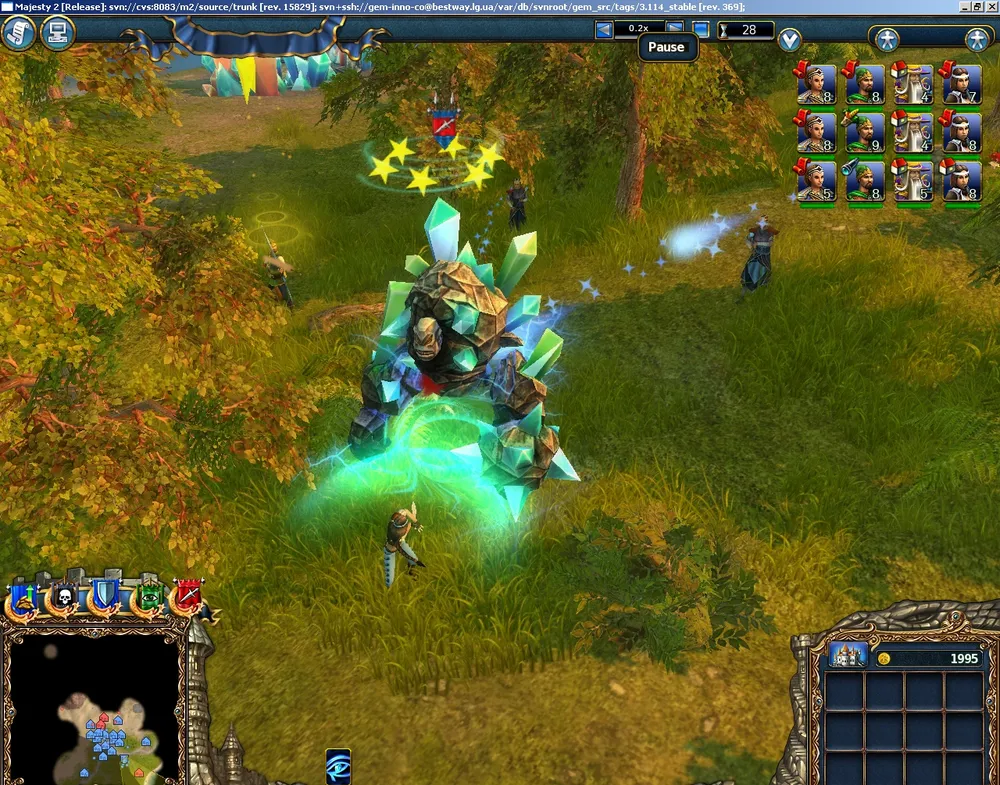
This is yet another innovation that many are talking about, and it has genuinely made the gameplay much more interesting. By themselves, heroes do whatever they want. They are completely free; some hunt, some wander through shops, and some just stroll around. However, once grouped together, they all share a single goal. The main thing is for the party leader to want to fulfill our royal will, and then all the others will agree.
Groups help clear levels faster and more effectively eliminate strong monsters. Inside the squad, all support each other and fear nothing. The effectiveness of battles increases many times over. But even effectiveness isn’t everything. Just watching the battle is already a pleasure. A thief stuns an ogre, a mage freezes him, a paladin draws attacks onto himself, and the archers unleash powerful shots. You watch and it seems like we are observing a party from an MMORPG.
In general, the connection between Majesty 2 and online role-playing games is very strong. Heroes successfully hunted, returned to the castle, and immediately went shopping. If there’s a new sword or armor in the blacksmith’s, the paladin will definitely stop by to stock up. Everyone goes to the market to replenish their health potions. In the alchemist’s shop, characters buy (if they aren’t greedy and their wallet isn’t empty) some enhancing stuff, and in the guilds, they learn skills. All of this looks really cool and realistic. Developers always speak of the characters as if they were their children. After all, they raised them, taught them to behave like that, but they still don’t fully know what the hero will do in a given situation.
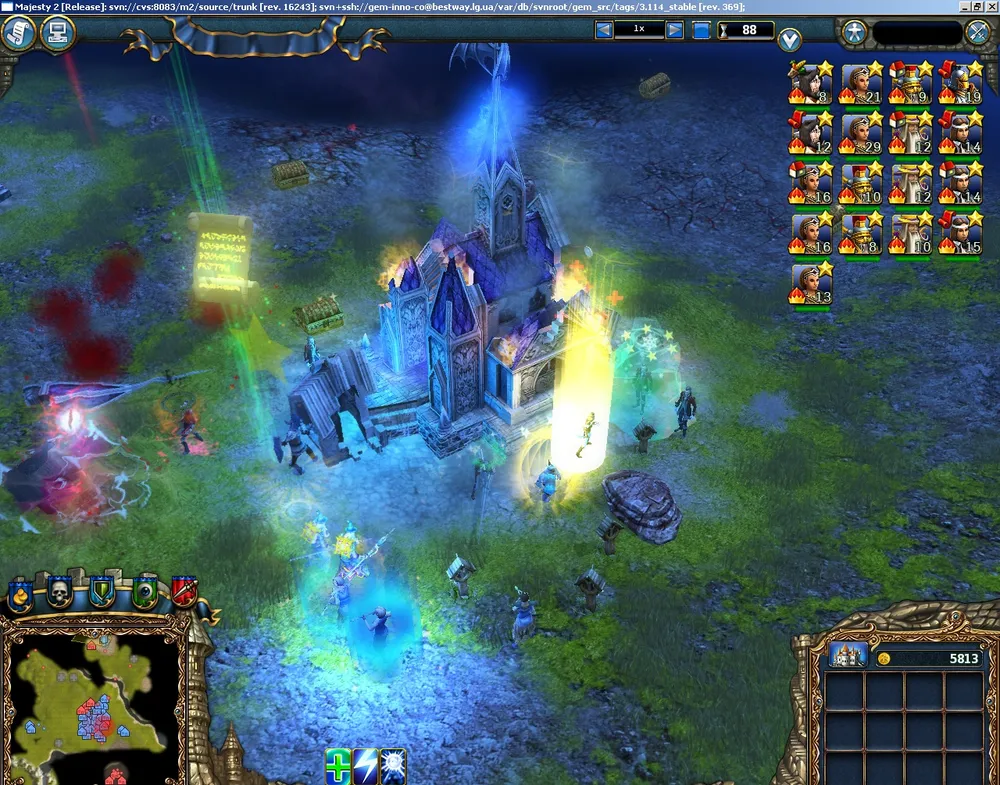
In multiplayer mode, character behavior will play a crucial role in building strategies. For example, the elven women are very resourceful and calculating. They engage in attack only with a huge stock of various potions, and they will retreat to the castle if they feel they may lose. Thus, a simple combination arises. First, we build them a guild, hire five or six charming archers, and send them hunting. While they gain experience, we improve the market, build an alchemist’s shop, and do everything so our heroines can stock up here fully and then attack the enemy. The opponent may just lack the strength to defeat such health-conscious fighters.
Or another tactic. If the opponent is preparing to attack and you can’t adequately prepare, then as quickly as possible you order paladins, improve the blacksmith, and wait for the soldiers to buy strong armor there. Paladins are ready to hold out until the end; they will never retreat or hide in the guild but will immediately attack the opponent and prevent him from reaching key structures – the market, trading post, or castle. And while our "tanks" absorb the damage, we will build towers that deal high damage. The attack falters; we can now counterattack.
And these are just the very initial, surface strategies. After the release, players will come up with many more interesting options. And skills from classic RTS won’t help here. You’ll have to learn to think anew.
Feel the power
Thus, to enhance interaction between the player and AI, the developers decided to add new flags. Previously, as you remember, there were only two. Attack and scout. However, after Majesty 2, I can no longer imagine how one could manage with just the old ones.
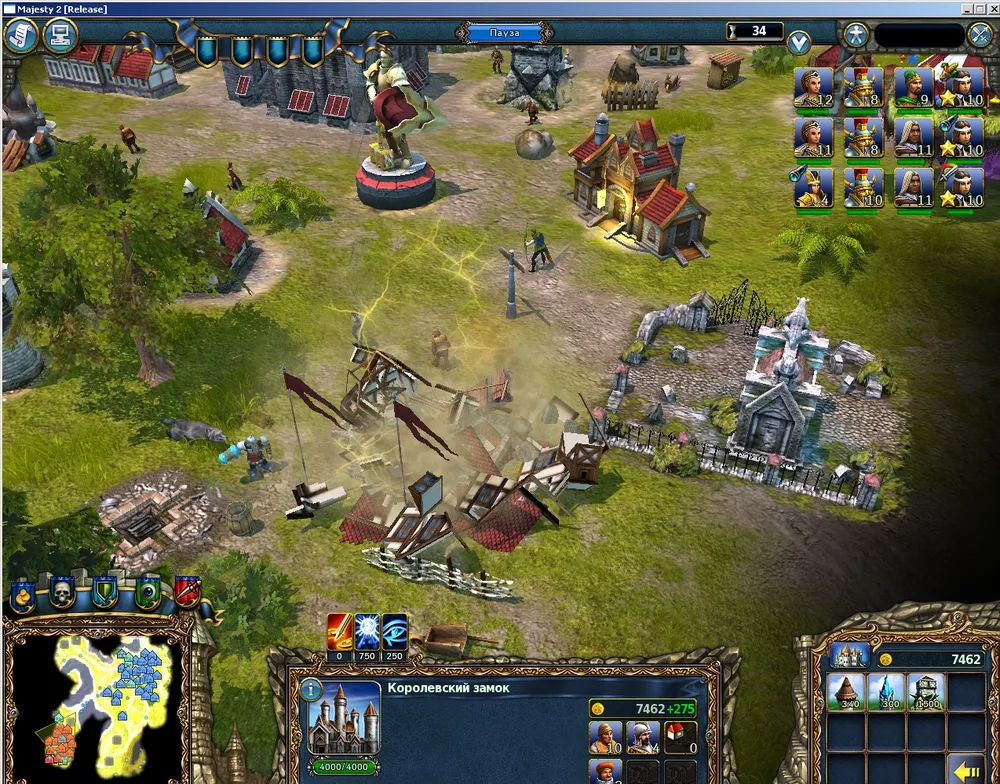
First of all, a defense flag appears, which allows you to protect the selected building from all enemies at once. This is much easier than ordering to attack each one. Remember when a horde of various monsters attacked you and you had to click on each one, promising a reward for every head? Now it takes much less time and you don’t have to waste ten minutes on unnecessary activities.
However, as useful as the defense flag is, it is equally dangerous. In multiplayer mode, all your flags are visible to the enemy. And if you, for example, decide to defend some building from NPCs and promised a high reward for it, the opponent can take advantage of this. He will attack from the other side of your base or build towers where your heroes aren’t. All your characters stand in one place waiting for the reward while the enemy burns, steals, and kills. You will have to remove the old flag, put up a new one, and wait for your subordinates to decide to save the homeland. After all, they might find it more interesting to go shopping.
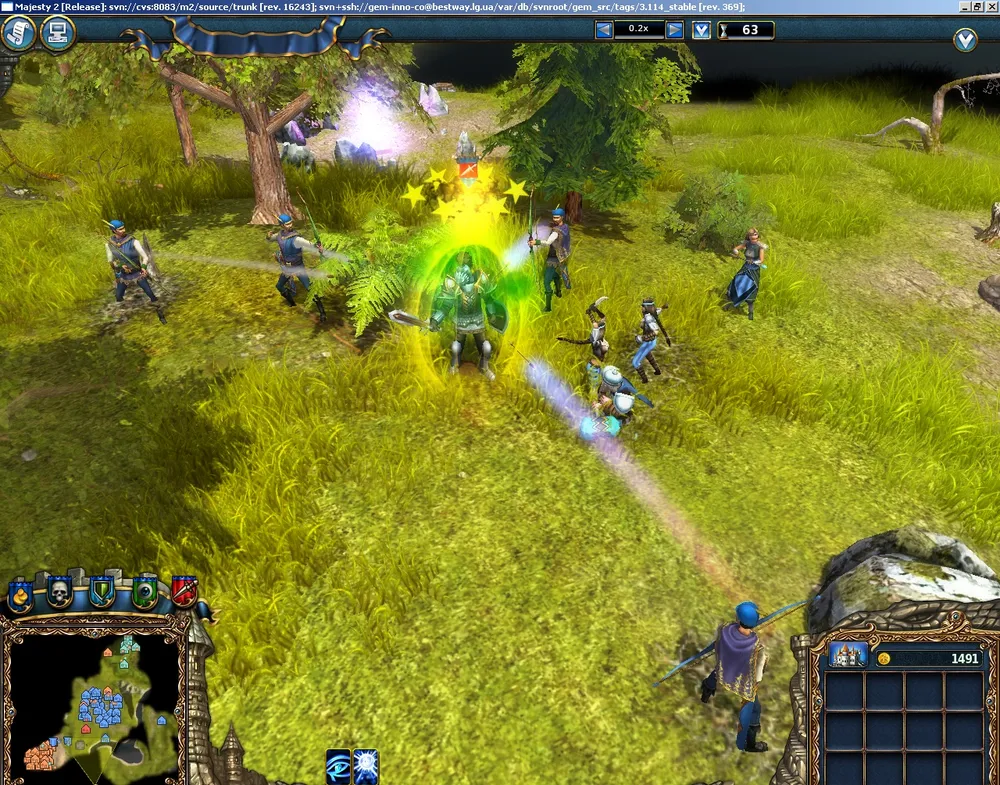
There’s also a fear flag now. It drives heroes away from a selected territory – a very handy thing. It helps you not to lose curious characters who are too interested in what a giant ogre feels like or if a dragon's breath is really fiery.
* * *
As you can see, the gameplay differs somewhat, but overall – the spirit has been conveyed excellently. In fact, I like the new game a bit more. Ino-Co truly manages to create a fantastic and fitting continuation of the series. And let us hope that bugs won’t sneak into the multiplayer mode, and the developers will manage to polish the balance. Then, in addition to a wonderful campaign, we’ll be able to battle in one of the most unusual multiplayer experiences in recent years.