
Preview of "Mass Effect 3" from ign.com + Q&A [translation]

Preview of "Mass Effect 3", along with Q&A
Colin Moriarty, 03.01.2012.
It’s no secret that I love and appreciate the "Mass Effect" series. I’m well acquainted with the first two games (your humble servant personally wrote extensive guides for both for IGN) and "Mass Effect 3" is at the top of my list of most anticipated games for 2012. I wanted to finally see the conclusion of Captain Shepard's monumental mission; now, holding "Mass Effect 3" in my hands, I feel that I am close to the resolution.
Cradling my "PlayStation 3" with "Mass Effect 3", I pondered what awaited me. Unlike most of those eagerly anticipating the release of the third installment of the "BioWare" space trilogy, I consciously underwent an information fast. Although it wasn't easy (after all, I am connected to gaming for work), I managed; recent trailers, gameplay impressions, and even the demo version passed me by. Naturally, I didn't know exactly where the third part begins and where the player goes from there.
However, I immediately faced a dilemma. Should I transfer my save from "Mass Effect 2" or start anew? I chose the latter. Considering the introduction of (what I think is totally unnecessary) online elements and the ability to choose a role-playing, combat, or narrative focus at the start, it's clear that "BioWare" and "EA" wanted to make "Mass Effect 3" accessible to as wide an audience as possible. I decided to pretend to be a newcomer, not a seasoned series veteran, and get the corresponding impressions. After all, the game will not only be purchased by those who fell in love with the series from its inception.
I was pleased that the game started on Earth. It’s strange that only now players were given a chance to step onto the surface of humanity's cradle. Seeing it with my own eyes (and not from orbit), you instantly understand the gravity of the situation. The horrific Reapers, once thought to be mere delusions of religious fanatics, turned out to be all too real. And, as every fifty thousand years, they intend to cleanse the Milky Way of all living things.
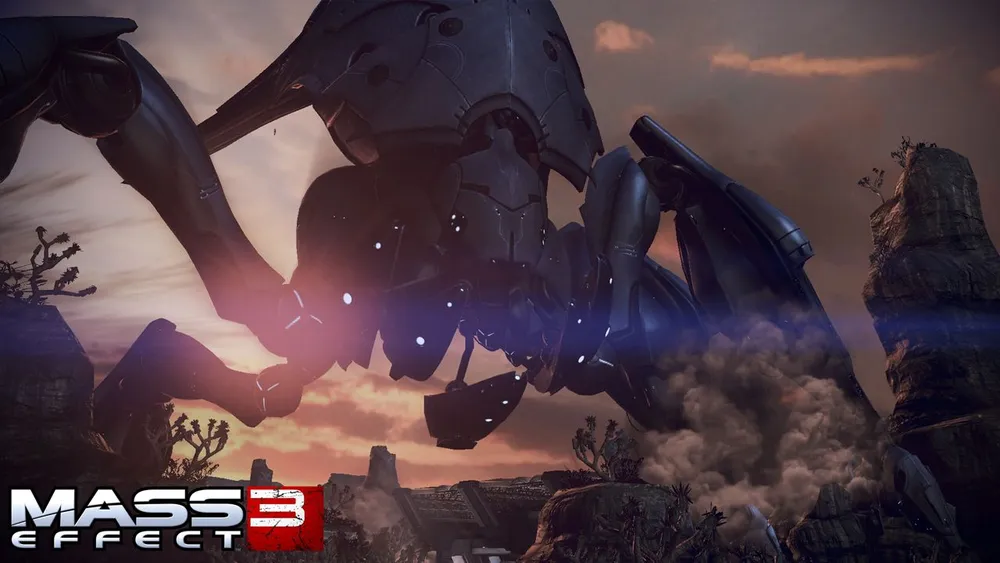
Earth stands no chance against the overwhelming firepower and scale of the Reaper invasion (they are similar in this to the Turians). Shepard barely escapes the death that has claimed millions; the grim scene of slaughter sets a deliberately dark tone for the game. The Reapers pose a threat to the existence of all life in known (and unknown) corners of the Galaxy. The fate of the entire Milky Way depends on your success or failure in restoring ancient Prothean technologies. Unlike previous installments, where, say, Salarians and Krogan had quite a bit of animosity toward each other due to long-standing conflicts, the player must now strive for peace in the Galaxy that’s necessary for the survival of all races and species.
The initial battle for Earth sets an unusual pace for the game. The player not only learns (or recalls) the combat system of "Mass Effect", but also encounters several small innovations. "Mass Effect 3" involves more dimensions than its predecessors. For instance, players will have to jump over chasms and even do some climbing while advancing forward while shooting enemies. Such elements won't disappear as the game progresses.
It's also worth noting that I was plagued by minor bugs from the very beginning of the game. The introductory video suffered from frame rate issues, and while this particular problem isn’t as noticeable in subsequent cutscenes, it seriously bothered me. Lip synchronization with speech is almost always terrible, characters sometimes freeze in place, and even disappear during dialogues.
Fortunately, these shortcomings do not significantly detract from the overall brilliance of the game. If the player can overcome the minor technical misunderstandings, they will simply drown in the deep and beautifully written narrative with interesting characters, both familiar and newcomers alike. After all, the early "Mass Effect" games also suffered from bugs—long loading times, texture problems—but it didn't prevent players from enjoying the story.
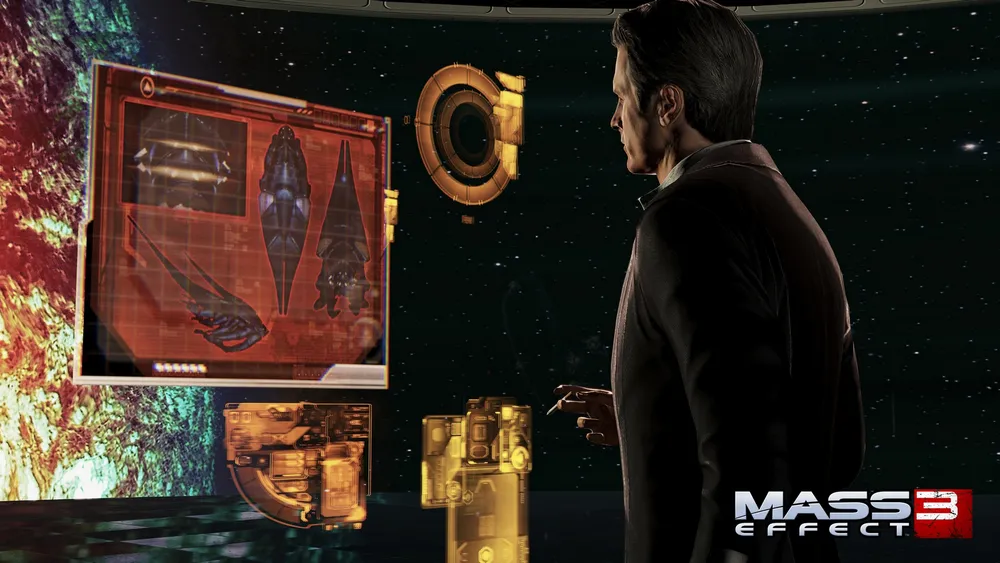
Speaking of the story: in the previous games in the series, I spent a ton of time reading through all the primary and secondary codex entries. I’ve already poured a couple of hours into this, and I’m still amazed at the level of detail in the backstory of "Mass Effect". It is astonishingly deep, and I assure you—no other series has a more engaging backstory.
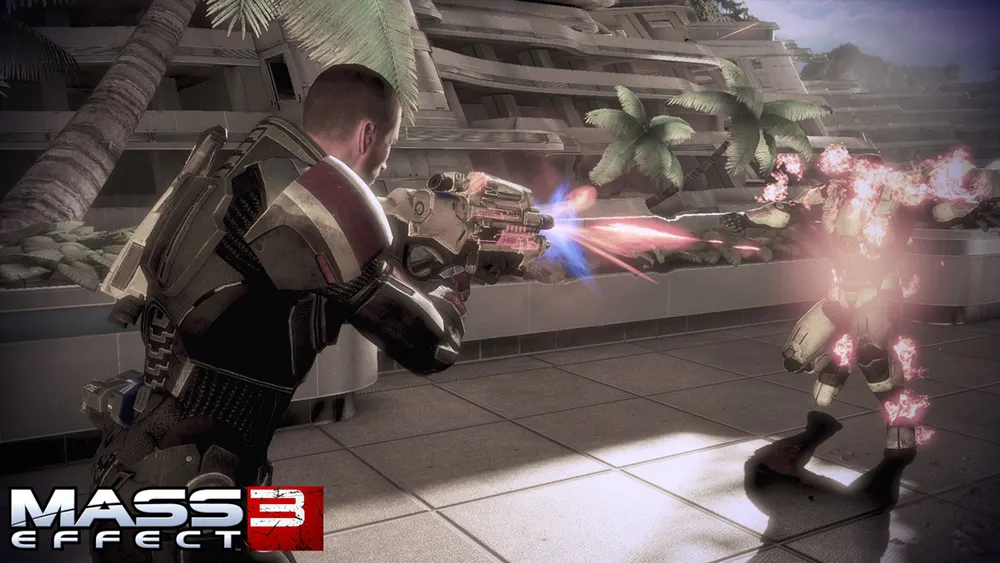
The battles in the game are well done and fast-paced; here "Mass Effect 3" doesn't differ much from previous games. I’m playing as a straightforward soldier; the interface for switching between weapons and skills hasn’t changed since "Mass Effect 2". Using cover can be tricky at times, especially if one of your companions is trying to sit next to you, but overall, it’s hard to complain about the combat system. I like it, and I think it surpasses most of its TPS counterparts. A significant achievement for a game where the story and role-playing take precedence over the immediate gameplay.
I was pleased with the new enemies right at the capture of Earth. It's not that players don’t come across familiar enemies at all, but in "Mass Effect 3" there’s a noticeable difference between old and new foes, which you will begin to grasp almost from the very start. After all, you never encountered the mysterious galaxy destroyers, the Reapers, and you have no idea what they are capable of.
As I explored new planets, locations, and ships, I noticed something that should shock fans of the series—the experience is awarded noticeably more frequently than in the second part. As a consequence, characters level up faster. Of course, if the player transfers a character from "Mass Effect 2", they will receive a significant boost in levels. If the level cap in the second part was set at thirty, it has been raised to sixty in the third. Additionally, while the player can change very little about the transferred character, they can choose a different class for them if they wish.

Skill points define the character's development path, and the player will have plenty of options for investing them. Most of these depend on inherent abilities of the character that come with the class. I always prefer to first boost those characteristics that directly increase combat power and health, but in "Mass Effect 3", where choices are made at every turn, the player gets to play around with the development not only of Shepard but also of all available companions.
I’ve spent about twelve hours in the game and am swamped with main and side quests. By the way, the approach to side activities in "Mass Effect 3" is more businesslike. If in "Mass Effect", the player landed on countless planets, and in "Mass Effect 2", scanned them for valuable ores and minerals, in the third installment they must develop and maintain precious combat resources while exploring the Galaxy for available planets and items.
I can say one thing for sure. I can’t wait to see more. More story, more consequences of my choices. Moreover, I still want to transfer my character from "Mass Effect 2" and see how the decisions made in the second part will resurface in the third. But for this review, I’ve decided to view the game from the perspective of a newcomer (albeit one burdened with considerable knowledge); so far, everything is simply amazing.
\a week later**
I’ve spent the last two days holed up in "Mass Effect 3", confidently pulled into the depths of its narrative. After spending the weekend socializing with living people and organizing my thoughts, I locked myself back in the apartment and sat down to play. And I was amazed. Only by an immense force of will was I able to tear myself away before the ending to preserve the sensations of a complete playthrough for the review, rather than spilling them here in the preview.
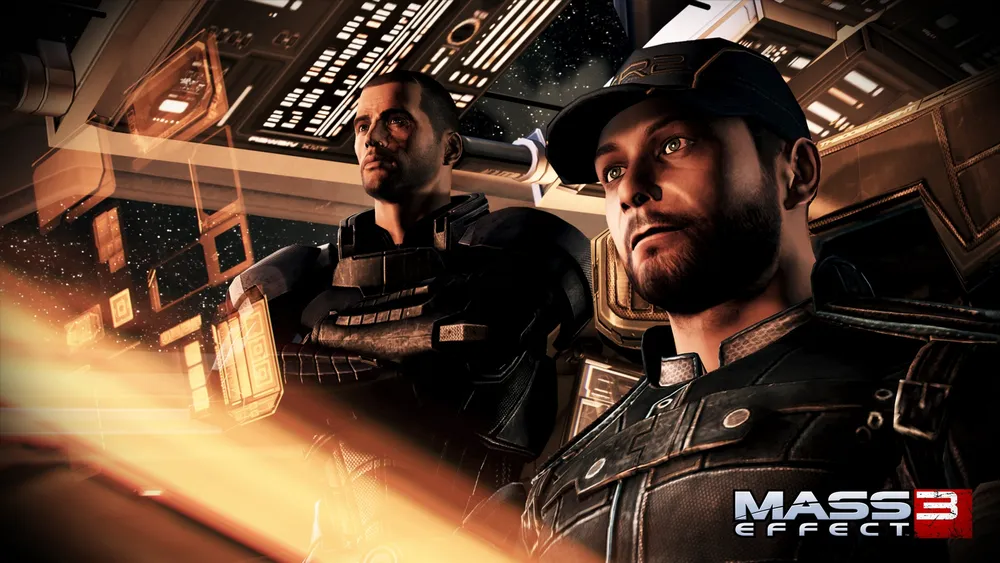
Many "Mass Effect" fans often inquire about the connection between the second and third parts. I wasn’t sure about the answer while playing through the first half of the game. "Mass Effect 2" is, in many ways, the essence of a computer game that deserves to be on the list of the best of the best. At the time, "Mass Effect 3" felt inferior to the second part since it had set the bar so high. Now I don’t think that anymore.
I noticed this only after fifteen or twenty hours, when it became apparent how elegantly all parts of "Mass Effect" are interwoven. I was constantly amazed at how everything comes together into a single whole, referencing not only the second part but also the first. Even though I’m playing with a “new” character, my extensive knowledge of the game world enabled me to appreciate all the major and minor callbacks to characters, events, and dialogues from previous games. How "BioWare" managed to accomplish this, I personally do not understand.
It was at this moment that I clearly realized that "Mass Effect 3" can only be fully appreciated by someone who has played through the entire series. This seems obvious, but in this case, it wouldn't hurt to reiterate it. If a player is vaguely familiar with the events of previous games, they will enjoy the third part, but won’t understand even a hundredth of the multitude of callbacks and nuances, particularly in the second half of the game. It doesn’t matter what platform you played on previously, as long as character choice isn’t of particular importance to you. What matters is that you were there, you saw those characters and these events.
Of course, transferring an individual version of Shepard will be a cornerstone for many veterans of the series. They should get the game on "Xbox 360" or PC, where a character can be fully imported. On "PlayStation 3", there’s, of course, the “interactive comic” where you can make key decisions from the first part, and transferring a character from the second game can be done without any complications. But, to be honest, it's worth playing through "Mass Effect" and "Mass Effect 2" before starting "Mass Effect 3" if you want to experience the full, hmm, effect.
I don’t know what else to write; the editorial team is energetically working on writing the review. "Mass Effect 3" has problems—rare hiccups with frame rates, texture loading, and other bugs—but nothing hinders it from ascending to the throne. This is the pinnacle of the greatest, most captivating, and brilliant series in the history of computer games. I can’t wait to announce its score next week. But, more importantly, I can’t wait to hear your feedback to see who manages to grasp the entirety of the trilogy.
Well, let’s move on to the questions:
Question: Can you tell us more about the reputation system? Is it made up of Hero and Renegade points?
Answer: We at IGN are all trying to understand how it works. Given that there are no guides and none are forthcoming, it’s not the most trivial task.
If you select Shepard on the squad screen, the reputation bar will be on the left, along with the Hero and Renegade bars. One might assume that they are the same thing—the reputation consists of Hero and Renegade points. In practice, though, it turns out that you can receive Hero or Renegade points PLUS reputation points. Or you can earn both separately. Their amounts may differ; you could get a lot of one and a pittance of the other.
This led us to conclude that reputation affects the Hero or Renegade levels, but it itself affects the character's recognition. In any case, high reputation affects dialogue options, as do the Hero/Renegade levels.
Question: Is the weapon system implemented like in the first part, where the player had dozens of, say, assault rifles to choose from, or like in the second, where each class had one or two types of weapons?
Answer: In "Mass Effect 3", there’s a decent system based on weapon types and upgrades. Various types of weapons can often be found on the battlefield (so search the locations thoroughly), but with the found or purchased upgrades, you can enhance them.
I believe you're most interested in the “dozens”, in your case, of assault rifles. I haven’t seen any dozens, but I currently have half a dozen and about the same number of upgrades available.
In other words, "Mass Effect 3" has reached a balance between too wide a variety and too small a selection. The upgrade system and switching between weapon types for different combat situations are quite engaging and interesting, particularly considering that you can work with your weapons right in the location if you find a weapons bench. Moreover, if the player finds new weapons, they can immediately equip them without waiting to return to the "Normandy".
Question: I’m interested in the weapon upgrade system. Do upgrades change the weapon's characteristics?
Answer: As I mentioned, in "Mass Effect 3", upgrades play quite a significant role. Depending on the installed modules, the weapon's characteristics can change quite a bit, and the upgrades can be removed and placed on another weapon of the same class.
For instance, if you upgraded a pistol with two modules that increased the bullet's penetration power and expanded the magazine, those modules can be removed on the "Normandy" or a weapons bench and placed on another pistol without any restrictions. However, the upgrades are strictly tied to weapon classes; therefore, you cannot put an upgrade for an assault rifle on a sniper rifle.
It’s also worth noting that on the "Normandy", you can permanently upgrade weapons for money. These upgrades increase the base characteristics and cannot be removed after purchase. In this case, the weapon's name will change, marking the purchase of the upgrade, and it will be impossible to revert it back to its original state.
Question: "BioWare" stated that the squad will have fewer characters, which will allow for more focus on their development. Has this development progressed?
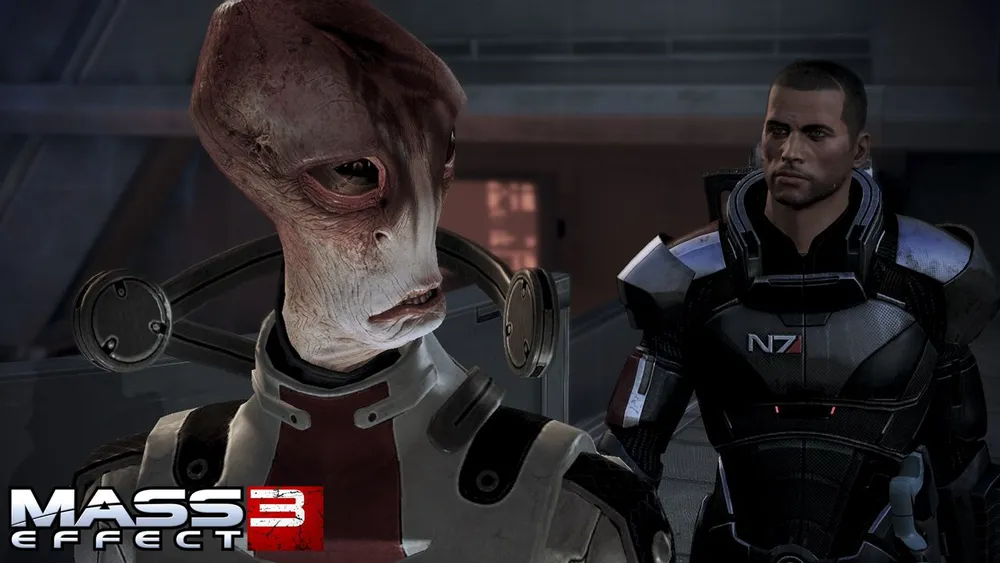
Answer: The narrative in the third part is presented somewhat differently. Since the events of the game take place during a severe crisis, characters are revealed in the context of a threat to the existence of all life in the Galaxy. "Mass Effect" has always emphasized story, but in the third part, the stories of both new and familiar characters feel different, especially because the decisions you make and your relationships with other characters can significantly impact the game.
But has this development progressed? Yes and no. I don’t want to spoil anything, but let’s just say that old characters will be revealed in new ways, while new ones will quickly show themselves, especially if you take the time to engage with them. Remember: wandering around the Citadel or the "Normandy" and talking to every passerby will immerse you the most in the narrative.
Question: I’d be very interested to know which characters are available for homosexual relationships.
Answer: I won’t go into details to avoid spoilers, but this is a fairly common question. In "Mass Effect 3", you can engage in homosexual relationships regardless of your character's gender. Of course, finding characters available for them is interesting in itself, so I won’t rob you of that pleasure.
Question: I’ve played the first two parts so many times that I can’t recall what decisions I made in which saves. When transferring, does the player get a list of important decisions made earlier?
Answer: Of course, the game will inform you of which important decisions you made. However, they are displayed not through images or scenes, but in a simple list indicating whom you saved, whom you slept with, and other details that resurface in the third part.
In other words, those who have a mountain of saves need not worry if they can’t remember where they made what decisions.
Question: I haven’t seen or read much, but I know the whole Universe is at odds with the Reapers. So I’d like to know how side quests are implemented. Are they focused on the threat from the Reapers or are they unrelated to the main story?
Answer: Yes, the events of the game unfold during a severe crisis. The Reapers have turned out not to be a fiction—they intend to destroy all living things in the Galaxy, just like every fifty thousand years.
One of the biggest shortcomings of "Mass Effect 3" is that side quests are weakly connected to the Reapers and more resemble "fetch quests". Some of them, like the N7 missions, are indeed connected to the main story, but most are so detached from it that they resemble farce.
In the first two parts, the side quests were miscalculated, but here they were completely missed the mark. Why is Shepard playing the role of a errand boy? If the Reapers win, it’s the end of everything, and the game would have been far more realistic and coherent if it focused on the Reapers instead.
I also found another downside in the side quests, such as their number on, say, the Citadel. In earlier games, you could obtain side quests by overhearing someone’s conversation, but in the third part, this has reached absurdity. Running through a new section of the Citadel, you get a side quest seemingly every minute due to overheard conversation you “overheard” completely accidentally, without even realizing it. The descriptions of the quests in the codex are rather unclear as well. Ultimately, it results in something crooked and inconvenient.
Another downside is the time limit. I failed several side quests by not completing them within the specified time, but at the same time, no one initially indicated the time constraints, nor even informed me of the existence of such a limit! Learn from my bitter experience and complete side quests as soon as you receive them; otherwise, you may irrevocably fail them.
Question: Do Hero and Renegade actions still exist in the game?
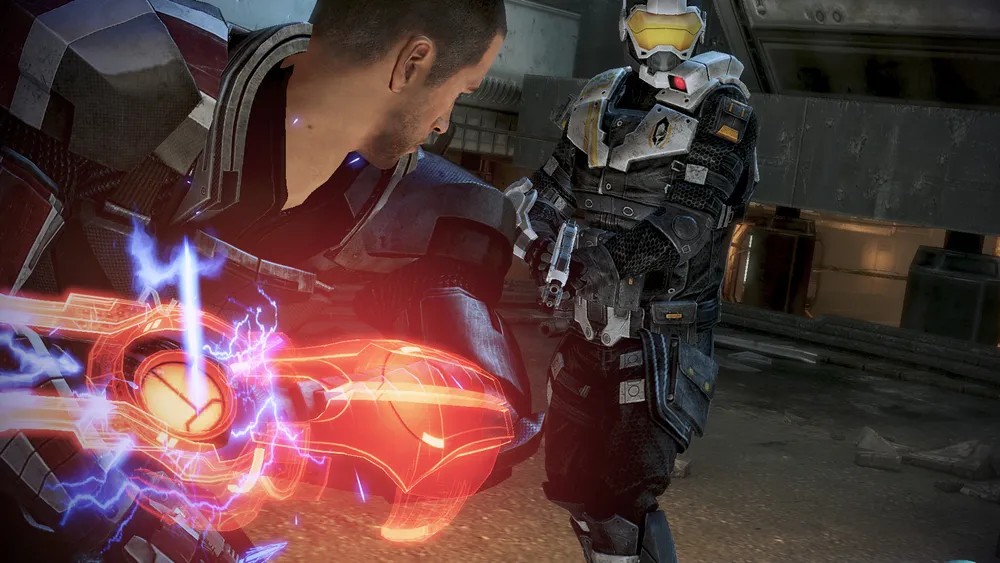
Answer: Yes. During some conversations, you can suddenly make decisions based on your character’s tendency toward “good” or “evil.” And, as in "Mass Effect 2", you need to decide quickly, so don’t count crows and be ready!
Question: You mentioned that in the initial cutscenes you had problems with frame rates. Could you elaborate a bit on the graphics overall and whether the synchronization of facial expressions and speech and frame rates improved later, or did you just get used to it?
Answer: The game overall, composed of sound, script, characters, and narrative, is magnificent. I hardly recall any game that could, like "Mass Effect", pull the player into an engaging world full of interesting characters and important decisions that tug at the soul’s delicate strings.
Coming down from the heavens to earth, however, one finds minor technical problems. The longer I played on the "PlayStation 3", the less I noticed them, and I think this is not because I got used to them. It seems they really went away. The reasoning behind it is, however, still unknown.
Question: How’s the "Normandy"? Can it still be upgraded?
Answer: The "Normandy" still belongs to Shepard, but now it cannot be upgraded like in "Mass Effect 2". In the previous game, upgrades were necessary to increase the ship's chances of surviving the Omega-4 mass relay transit. This situation has now changed.
Instead of ship upgrades, there are “combat resources.” You earn these throughout the game by making decisions, helping certain characters, and hindering others. They determine your readiness for the game’s finale and, indeed, the ending. “Combat resources” are not quite the same as ship upgrades, but they are the closest analogue in "Mass Effect 3".
Question: Could you elaborate on the economy and acquiring equipment and ship upgrades? I don’t quite understand how the concept of money fits into a dying Galaxy.
Answer: As I mentioned while answering the question about side quests, "Mass Effect 3" strangely emphasizes things that wouldn’t matter in the proposed situation. This is sad because the series has always prided itself on its relative realism, but in "Mass Effect 3", that sense of reality is lacking.
This applies to money as well. Everyone continues to chase after it. Some believe that the Reapers won’t destroy everyone; others don’t take their attack seriously until the last moment. In any case, in "Mass Effect 3", money plays an important role, so don’t expect a barter system or no need to buy anything. Although this, of course, would have added realism to the game.
Question: Some of the most significant scenes in the first two games were slow-paced and dialogue-driven. Take Mordin's personal mission in the second part, for example. I will never forget the discussion on the use of the genophage and his regrets. So, I’d like to ask: when the fate of the Galaxy is at stake, is there still room for such small personal scenes?
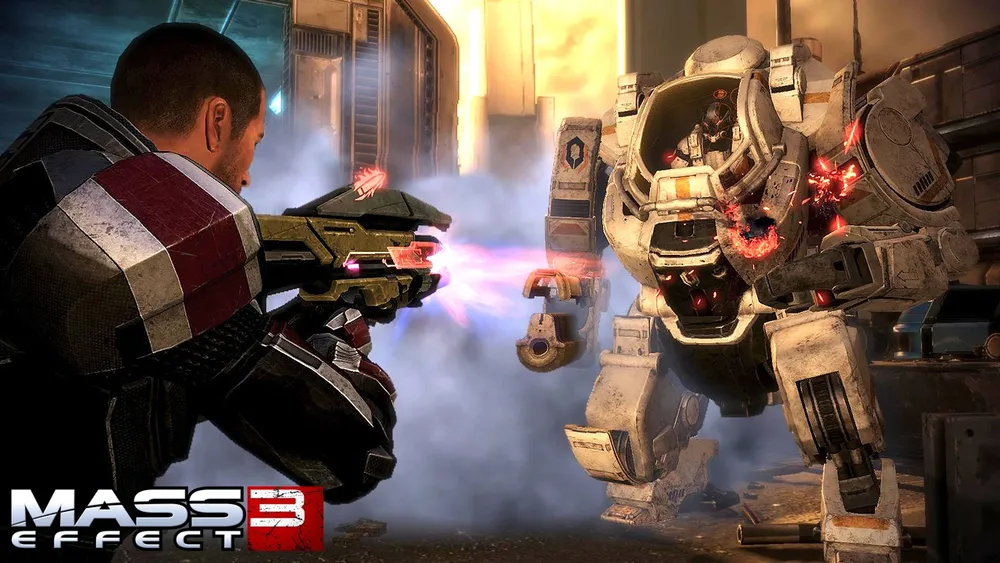
Answer: In "Mass Effect 3", the stories of the characters are revealed beautifully. At this stage, I’ve already seen some of the most touching scenes in the series and think there are still many to come. In the game’s world, everything is bad. Really bad. Thus, characters reveal themselves more easily and actively.
So don’t worry. In "Mass Effect 3", there are a plethora of small personal scenes. The dialogues are excellently written, relationships with characters feel realistic, and there are many moments that will stay with players for a long time.
*Question: Despite playing a