
The Second Chapter of the Ancient Scrolls
The entire Daggerfall is a monument to the unrestrained ambitions and fantasies of the developers of the late twentieth century—people for whom nothing was impossible. T. Khorev.
The Evil Villain, the Heroic Hero (Instead of a Preface).
This shouldn’t have happened, to be honest. We shouldn’t have been leisurely wandering the roads of Tamriel, whistling a merry tune, engaging in whatever the Daedra desired. We shouldn’t have been choosing from a dozen classes, no.
We were supposed to be a team of gladiators, traveling the cities of this world with one goal—to beat other gladiators to a pulp for the title of the best.
That’s how the developers at Bethesda Softworks, founded by Chris Weaver in 1986 and engaged in the release of various sports simulators, envisioned it.
As development progressed, the tournament system gradually faded into the background, giving way to quests, arenas expanded into cities, and these acquired caves beyond their walls. And soon, they shoved the team into a corner, making way for a single hero...
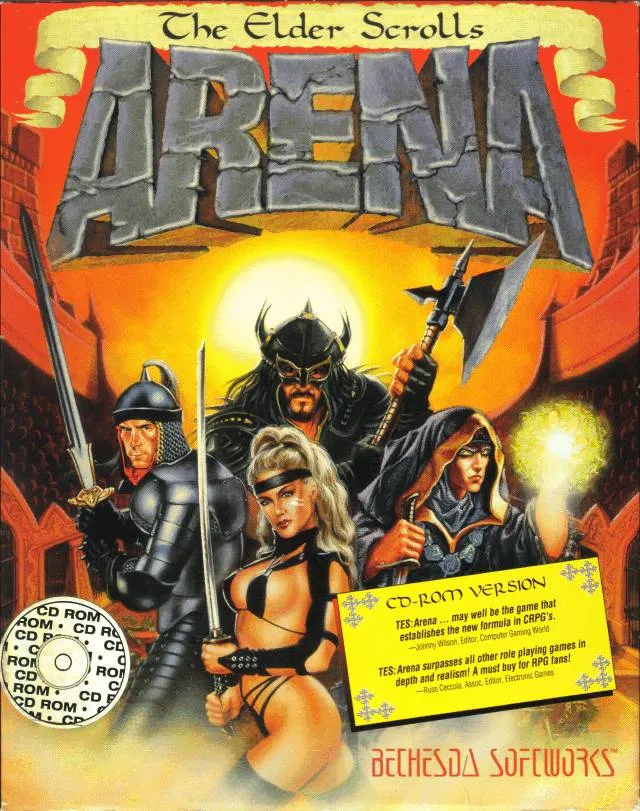
Cover of The Elder Scrolls: Arena
The plot didn’t shake the consciousness of role players then, nor does it now. The year 389 of the Third Era. The battle mage of His Imperial Majesty, Jagar Tharn, snatches the Balac-thurm, the Staff of Chaos, an artifact whose name alone makes it clear—it’s not for the lustful hands of apprentice mages. With it, he successfully locks his lord, Uriel VII Septim, in Oblivion, while applying illusion magic to take on his appearance and claim the throne. Unfortunately, the gift of leadership rarely accompanies sinister laughter, and so in ten years of his “reign,” he nearly destroys the Empire.
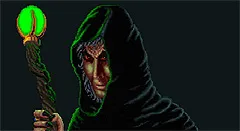
Jagar Tharn
"Tharn!.. I don’t trust this half-elf! He’s part dark elf, part high elf, and partly something only the gods know. He’s gathered all the worst traits of these races, I can assure you." He snorted. "Nobody really knows anything about him. He claims to have been born in southern Valenwood, and his mother was a wood elf. It seems he’s been everywhere..."
399 3E. In the dungeon of the Imperial City, an unknown prisoner is already listening to the words of the ghost Ria Silmaeyn—Jagar’s apprentice, killed by him due to the threat of exposing his treachery. It turns out that the Staff can indeed crush the mage, but knowing the danger, he shattered it into eight pieces and hid them in legendary (synonym for “very dangerous”) places of the Empire. “Your task is to gather the Staff, vanquish Tharn, and free the Emperor,” Silmaeyn advises the hero, opening the dungeon exit for him, “Just don’t get it mixed up.”
History shyly omits how much the hero resisted his liberation (“very legendary?” “very-very” “perhaps this door is too small to fit through”), but ultimately, it turned out as Ria wished (and the concept of the “unknown prisoner” became the series’ hallmark).
Chapter II.
Immediately after the release of Arena, work began on the second chapter—Daggerfall.
Initially, the game’s events were supposed to take place in Mournhold, a province of Morrowind, but then smoothly transitioned to the shores of the Iliac Bay on the other side of the continent.
The praise of “huge world,” “role system,” “well-crafted,” “depth” has not ceased for a long time. However, another song does not fade away… But let’s not fall behind our predecessors and join in.
Trailer of The Elder Scrolls: Chapter II - Daggerfall
On August 31, 1996, players saw a game of such scale for the first time (and, as many claim, the last). Classic numbers—15,000 cities and settlements, 750,000 interacting NPCs, an area the size of two Great Britains, Morrowind composed merely 0.1% of its predecessor, according to Todd Howard, executive producer of Oblivion and Fallout 3, who joined the company during the development of Arena. Many features introduced in the game still seem innovative even now—banks, the ability to buy a ship and real estate, a horse with a cart. Creating your own spells, magical items, and potions. The vast world required the introduction of a compass and a fast travel system, which returned to the series only a decade later. However, this system is quite different from Oblivion—there, the player lazily unfolds the map and scratches their neck in search of a neat marker with a green arrow. In Daggerfall, this trick won’t work—you will have to manually input the sought object into the search system. After all, in one kingdom alone, there are over a hundred such markers, and the green arrow might only appear in an exploratory frenzy...
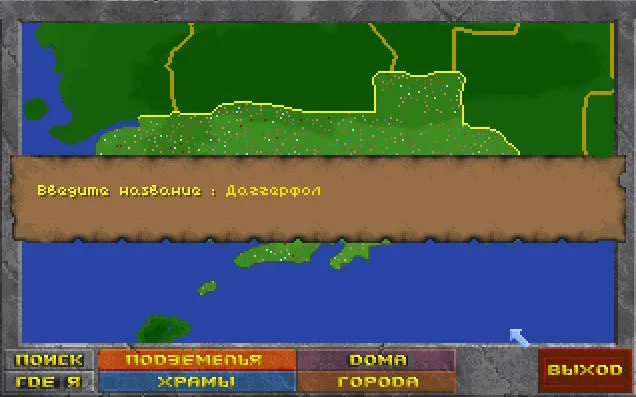
The object search system on the map will quickly teach you to capitalize correctly and input names correctly—one wrong letter and "object not found."

Cover of The Elder Scrolls II: Daggerfall.
But behind these numbers lies the main problem. “Testing such a game can never be finished—only interrupted.” Buggerfall—a nickname that has firmly attached itself to the game. Bugs, crashes, messing up the main quest was as easy as pie due to script errors. Bethesda released patch after patch until they gave up and settled on version 1.07.213.
Upside Down.
- Everything that is positioned backward is much easier to understand if you put it upside down as well, - explained Lord Vetinari.
Terry Pratchett, "Truth"
It was in the second part that the role system “backwards” was applied, one of the many features of the series. Usually, we act for experience by rifling through others' pockets and corpses, and upon leveling up, we allocate points to attributes and skills. Here we need to raise skills, gain levels, and distribute points to attributes—strength, agility… By the way, it is not necessary to level up weapon skills by shouting and swinging your sword (mace, halberd, bow, fireball) in self-generating dungeons where one can easily get lost—teachers are always at your service for a sum (gild members get a discount), ready to teach you anything and everything. However, they only teach you up to 50% of the skill; after that, your character will have to struggle on their own.
And these skills—there's one for every taste and color. That is, for every weapon, spell, and language. Don’t like hammers? Take a sword or a dagger—each has its respective skill. If you decided to take the path… no, not redemption, don’t be scared… of a monk, or just accidentally sold your favorite two-handed sword—swing your fists. Prefer not to knock out enemies with lightning, but stealthily approach with a surprise attack—your right. By the way, the possibility of a critical hit—yes-yes, another skill...
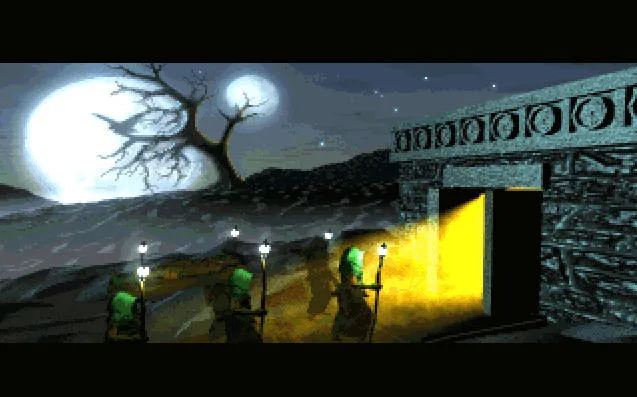
After the character's death, a sad cutscene plays where he is solemnly carried to the crypt.
You can’t just chatter with NPCs—there’s a set of linguistic skills that allows, with sufficient knowledge of the language, to make a speaking enemy leave you alone.
The character generation system, although it does not rely on the influence of constellations, is no less impressive than in later games. You may choose from nine races, including both elves and humans, as well as beastfolk. All of them have their own variations of additional skills and attributes. Then you'll have to choose a profession—or create one yourself, selecting primary and secondary skills along with additional capabilities (for example, the offered class “Knight” has immunity to paralysis, but cannot wear daedric armor). Choose from the list yourself—or answer a psychological test. There are pure variations on the theme of mage, warrior, and thief— and there are hybrids, such as the Nightblade—a thief-mage, or Spellsword—a mage-warrior.
Compass Rose.
Thus, we have obtained our character, fought through the thickets of the training dungeon, reached Daggerfall… And… What to do next? Soon we receive a letter from a spy of the Blades—and after that, we have a total of ninety days to mess up the main quest. If we do venture forth, receive instructions, then afterward we can do...
You know, we can do anything.
We can go north, or south. Or west, or east. There’s no linearity of the first part here—we can be good or evil, become a warrior, or dive into the political intrigues of kingdoms. Stuff the main quest into the far drawer. Take up quests—and nearly all NPCs are willing to provide them. Before us—a multitude of guilds. The classic guilds of mages and fighters. A cluster of knightly orders and temple cults. You can complete their tasks without even joining their main group.
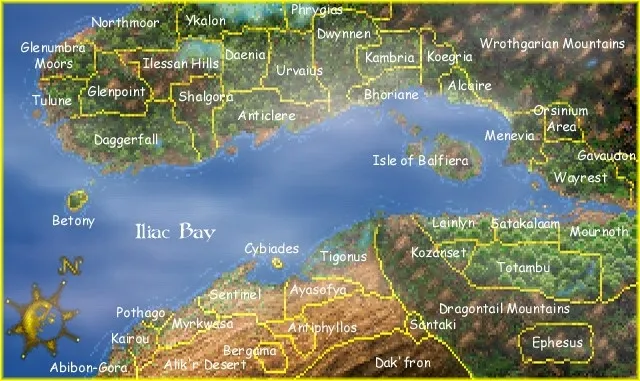
Game map of the Iliac Bay.
And there are the guilds of thieves and assassins—the Dark Brotherhood—but much less legitimate. They’re no longer willing to provide tasks to outsiders, and you won’t find a recruitment spot in the main square of the city. To join the first, you must commit several burglaries and pickpockets; for the latter, you need to kill a certain number of inhabitants within a day.
Additionally, there are covens of witches—you may not join, but well-paid tasks can be found among them.
A Lean in the Sack...
- E-eh... Havelock... - he began.
- Do you want to tell me something?
- It... got lost.
- Yes. But you’re looking for it. Wonderful. Have a good day.
Terry Pratchett, “Guards! Guards!”
The Elder Scrolls: Chapter II - Daggerfall, Intro
Tharn’s incompetent rule has not gone unnoticed by the Empire—riots frequently flare up everywhere, local rulers strive to snatch a piece of land and remember old grievances. The most impressive collision—the War of Betony, which erupted over the islet of the same name in the bay. Ancient enemies—High Rock and Hammerfell, more precisely, their largest kingdoms Daggerfall and Sentinel respectively—clashed. After the battle at Cryngaine Field, it seemed everything ended in victory for Daggerfall, albeit losing its king Lysandus.
Not quite.
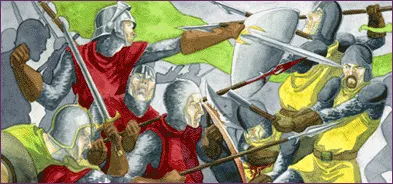
Art for The Elder Scrolls: Daggerfall.
Soon the ghost of Lysandus and his guard began appearing on the streets of the city, demanding one thing—retribution. To confirm the seriousness of their demands, any who had the misfortune to step out onto the street at night was swept into the phantom army.
The Emperor is troubled by these unrests—amid the war, a highly important letter was lost, sent to Queen Miniser of Daggerfall. No, no love stories, the letter was actually intended for the Emperor’s spy—The Blades—Lady Brizinne Magnessen, who was in service to the queen. She was to deduce the true recipient of the letter by its special seal.
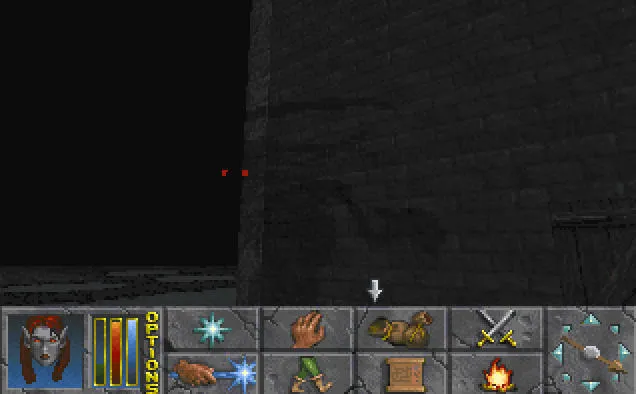
The hero miscalculated the time and went out for a stroll at night. The cry of "Retribution!" was not long in coming.
But there’s an issue—the queen has changed, and the letter fell into new hands, and her maid decides to resell the message to the orc king Gortworg, who, like any politician, collects gossip about his neighbors. He, misunderstanding the meaning of the letter just as the maid did, seeks advice from the necromancer king Mannimarco, the King of Worms.
And the secret details about the ancient artifact cease to be, how shall we say it, secret.
But all this the hero will have to discover a little later. For now, it’s the year 405 of the Third Era and he has two missions from Emperor Uriel VII—to uncover the reasons for Lysandus’s uprising from the dead and to find the missing letter—sailing to Daggerfall.
He does not know that a storm—both literally and figuratively—is already brewing ahead...
P.S.
Imagine a point A and a point B, separated by a wall between them. We need to get from one to the other, and there’s an obstacle. How will you get over the wall? Will you climb over it, gripping the ledges? Will you rope up or ladder it? Will you fly over, or perhaps jump? Will you dig under, go around, or will you simply walk through the gate?
In this case, A and B are the beginning and end of Daggerfall, and the wall is the game itself. And it’s up to you to decide how you will pass through it.
Sources Used: