
"I'm Getting into the Build." Overview of Ridge Racer Unbounded
While some developers go to great lengths to immerse players for hours on end, others cut features to minimize distractions for the casual player. It's strange to see how Bugbear, which has established itself on the former path with the Flatout series, suddenly releases a product that looks primitive even compared to NFS [Hot Pursuit](/games?search=Hot Pursuit). However, this was to be expected: Namco wouldn't allow its flagship racing series to turn into a battle of flying drivers. But surprisingly, RRU is as far from [Ridge Racer](/games?search=Ridge Racer) as it is from Flatout. Yes, it's still a racing arcade, but simplified doesn't mean it's easy.
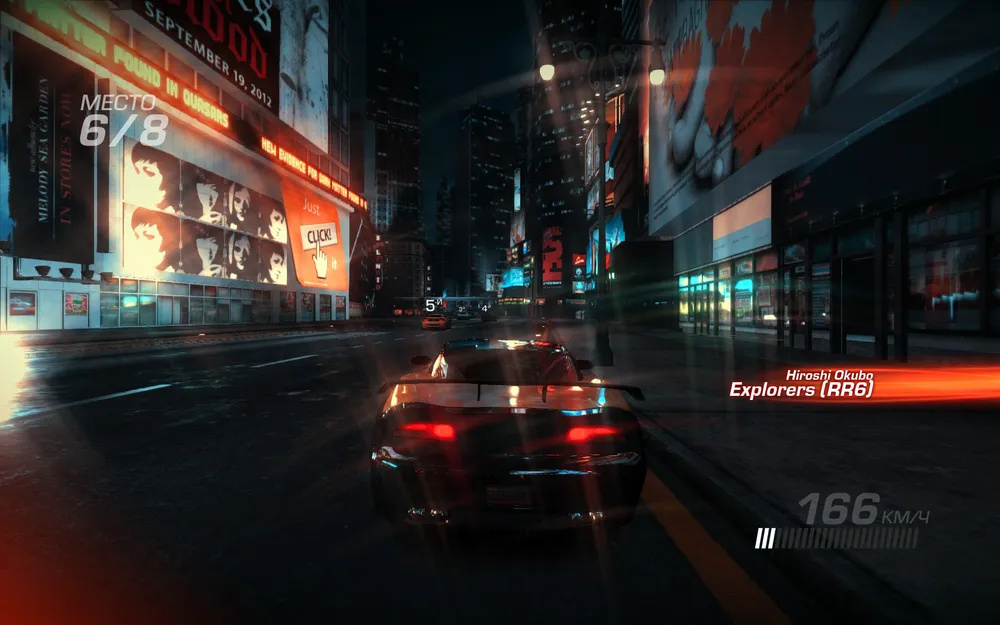
[Ridge Racer Unbounded](/games?search=Ridge Racer Unbounded) begins with a painful adjustment to the controls: during the first half hour of the game, I was simply learning to take turns. Even with experience from dozens of racing games, it's a tough task, as there's no tutorial, and without it, understanding RRU's physics is nearly impossible. Some Western reviewers even labeled the game excessively difficult because they couldn't figure it out! But the secret is simple: drift. Destructive drift. At first glance, the car's behavior resembles that of NFS HP or [Ridge Racer 7](/games?search=Ridge Racer 7), where you can't earn gold without adept sliding. However, while careful sliding without touching the track edges is important there, here the situation is the opposite: you must push off the walls. And the faster you go, the better. Drifting is handled by a separate button, so speed is not lost at all. And if there's a café on the corner of the street – well, you'll need to slide right through those stone curbs. It’s both faster and will yield far more precious nitro-boost points.
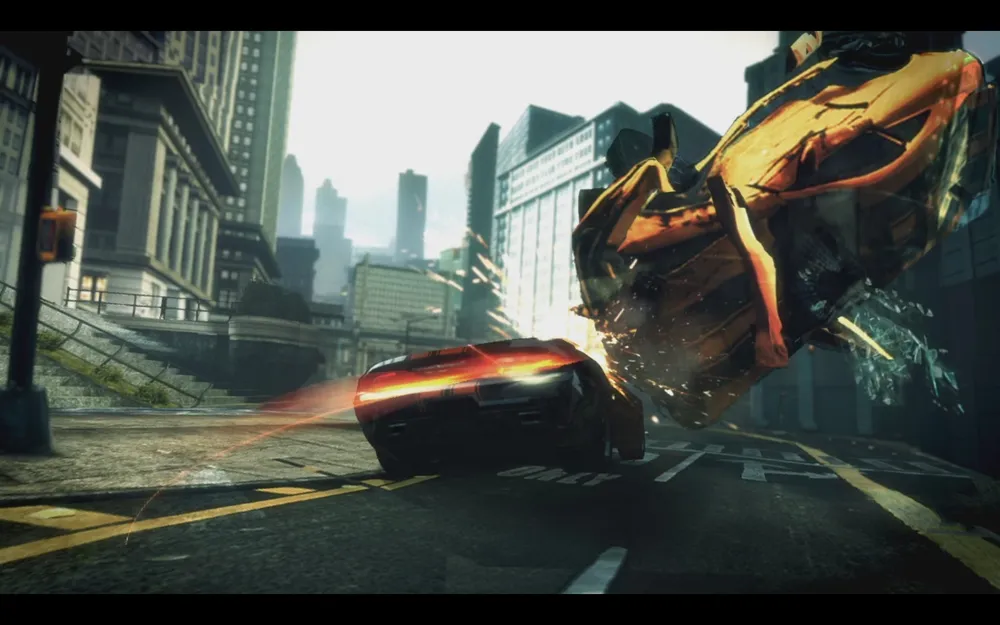
Nitro plays a special role in Unbounded: not every obstacle can be broken with a simple hit; for some, you need to be in an “accelerated” state. The speed itself doesn't matter: at 100 km/h with nitro, the car flies through a cinema as if it weren't there, but at 250 km/h without acceleration, it crashes into a pancake. The game helpfully hints in big letters which obstacles can be smashed, and... players accustomed to Split/Second will end up crashing, as starting nitro at the moment the hint appears results in the charge running out about five meters before the wall. And if you hit an opponent while nitro is activated, they are instantly destroyed and fly into the nearest ditch with a beautiful animation reminiscent of [Burnout Paradise](/games?search=Burnout Paradise), returning to the track in a second and a half, in the best traditions of the genre.
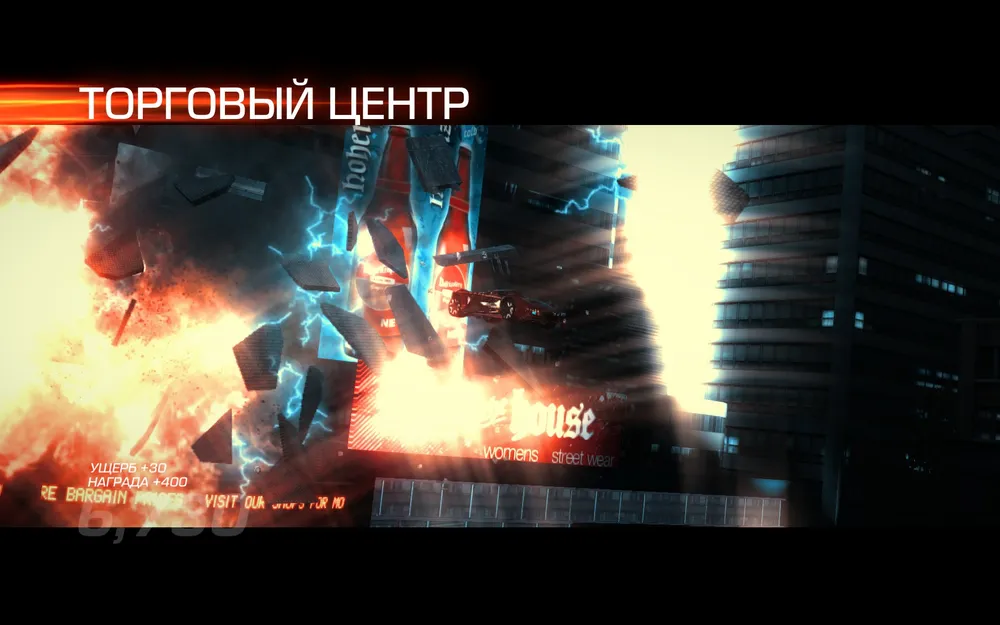
Once you master the controls, you can finally enjoy the gameplay. The races are dynamic, the opponents are strong, and the destruction is truly gratifying. It feels somewhat like NFS Underground, to which Bugbear added their signature dish: megatons of destructible objects, debris from which remains on the track until the end of the race. However, unlike Flatout, in RRU this debris is only needed to accumulate nitro points, and speed does not decrease when passing through buildings. If in the first Underground the tunnel with columns was a nightmare, here the route can be plotted right through those columns, with a vindictive smile on your face.
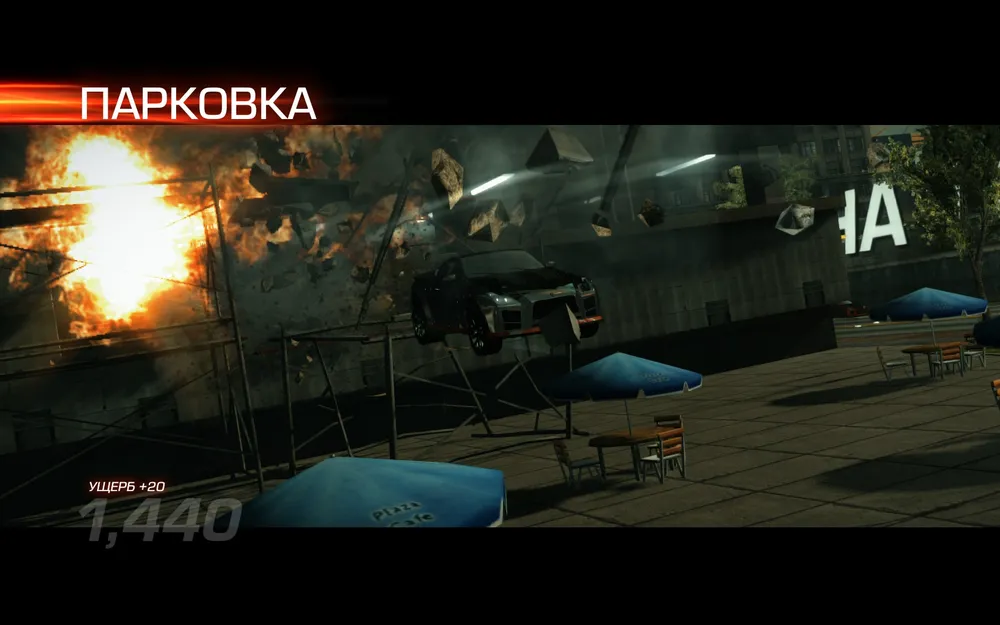
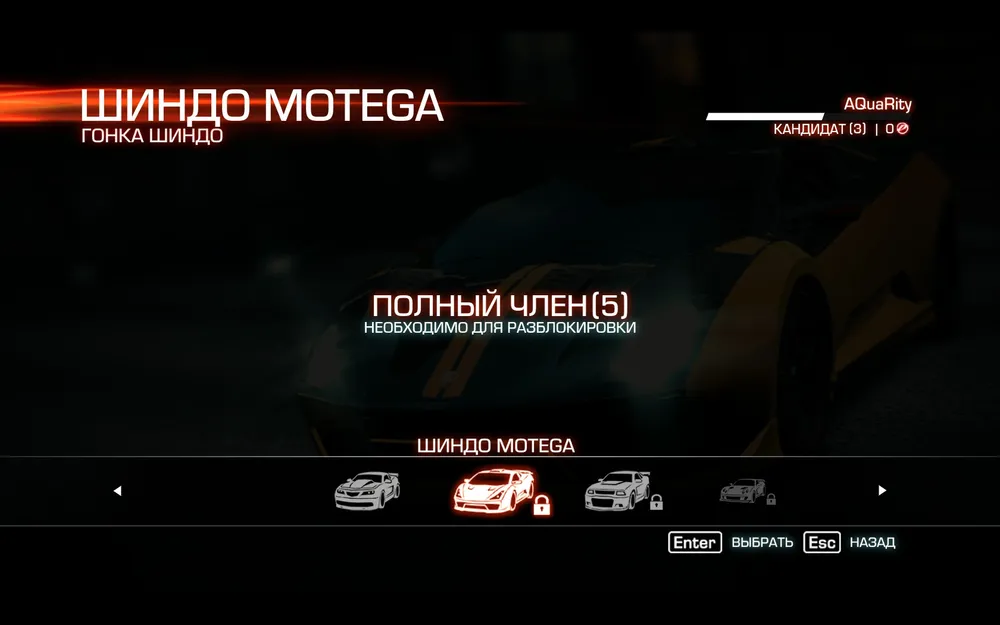
Competitions are divided into five types. Dominance races – circuit races where the goal is to reach the finish line first, allowing for the destruction of opponents and creating paths through buildings. The main source of prize points. Shindo Race – the same concept, but without destruction; nitro is only used for acceleration. Drift is familiar – slide and accumulate the necessary points. Time is limited, but successful sliding grants a couple of bonus seconds, allowing experienced players to drift indefinitely. Without enjoyment, however. Time Trials – race a stretch of track at speed, sometimes filled with stunt elements. The final type of competition – destruction – best showcases the scale of the developers' mockery of players.
The player's car is indestructible, nitro replenishes itself every five seconds, and the objective is to destroy a certain number of opponents who follow the same course as the player. Easy? Ha. The developers didn't complicate things by disabling scripted sequences during opponent destruction, during which control of the car is lost for two seconds. As a result, you see a group of cars, aim with nitro at the nearest one, and pray that the computer takes out a couple more during the scripted moments. And so on a dozen times over the course of the track. I don't know how anyone in their right mind could create such a scenario, but fortunately, there are comparatively few of these challenges in the career mode.
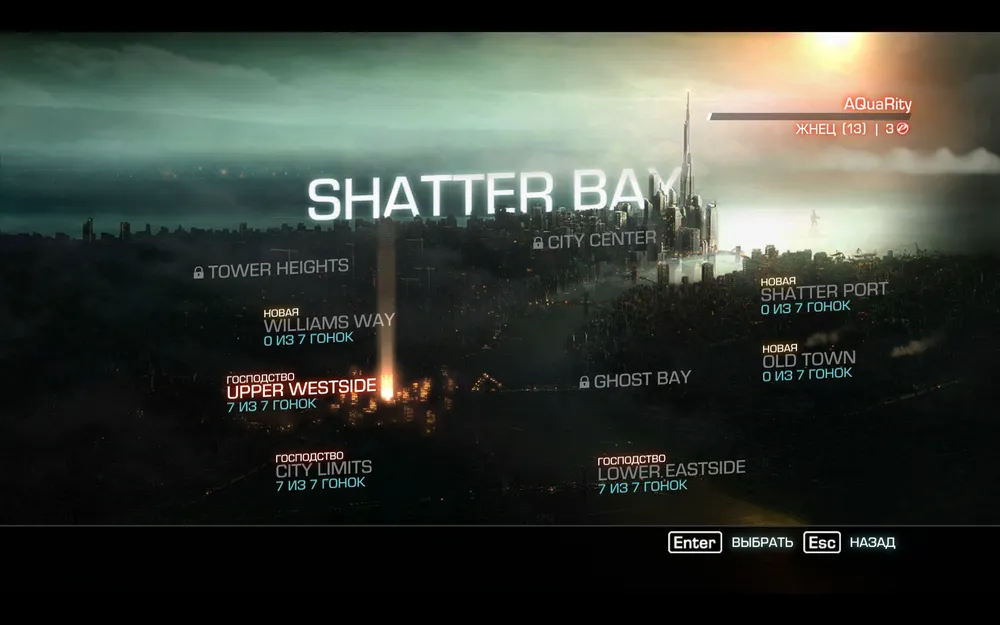
Career. In the scope of [Ridge Racer Unbounded](/games?search=Ridge Racer Unbounded), this means the following: seven districts, each requiring you to complete races and accumulate a certain number of points to unlock the next ones; the final race grants dominion over the district. Several districts are usually opened for selection, and you can complete them in any order. There’s no motivation for completion: there is no story, aside from the pompous opening and closing cinematics; the tracks are made of repeating segments, and players won't see any gameplay innovations after completing the first district. However, some might say the same was true for the first NFS Underground, and they’d be right. But that was nine years ago, and few gamers will stick it out to the end. At some point, players will face the requirement that to unlock the final district races, they must complete all previous ones with three stars, plus achieve full destruction in dominance races. For relaxation, the career demands too much, and for hardcore gameplay – it offers too little in return. And what about multiplayer?
Multiplayer is the saddest part. The menu features only two options: quick race on campaign tracks and quick race on user creations. In the first case, players are immediately thrown into a lobby where all participants silently await the race to start, with no option to change anything. In campaign mode, races involve 12 participants; in multiplayer, officially 8, but in reality, no more than 5 gather due to this idiotic system. All races are domination with destruction; no other options are provided. It's certainly engaging to play, but with such an attitude, there's no joy to be found. Competitions in user-created cities differ from the above in that there are far fewer track options, and they are way more primitive. But at least there's some choice! All that remains for the final verdict is to see the track editor in action, where all this is created.
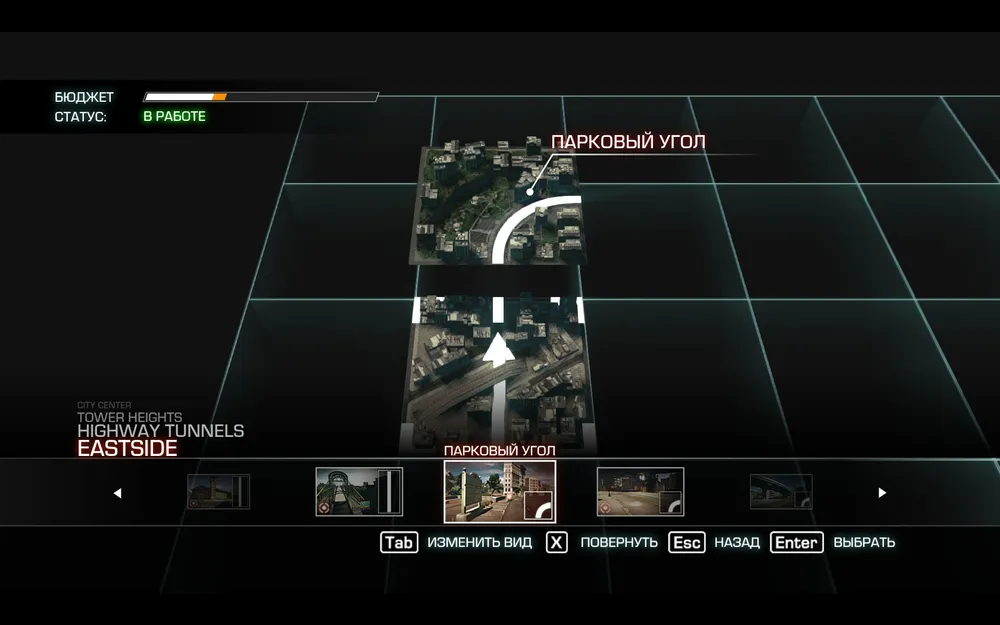
An 8 x 8 grid, where each cell can be populated with an element. There are about a hundred elements, each containing about 500 meters of track. After a brief study, it becomes clear that all the tracks in the game are created in this editor. Hence constant déjà vu, hence the tracks are templated, hence all districts look alike. Respect? Sorry, not in this game.
Not [Ridge Racer](/games?search=Ridge Racer), not Flatout, not Split/Second, and not even NFS [Hot Pursuit](/games?search=Hot Pursuit) – yet this game is completely devoid of individuality. You can find pleasure in [Ridge Racer Unbounded](/games?search=Ridge Racer Unbounded), but with such an attitude towards players, it is quite difficult. If the developers polish up the multiplayer, it would be worth $5 on a Steam sale; if not – well, NFS [Hot Pursuit](/games?search=Hot Pursuit) is still alive and well.