
Don't you think that NFS is not what it used to be? The answer is here! A unique review specially for Gamer.ru
I think you all have heard of the "curse" of **Need For Speed**. It's also called a "law of inevitability." It goes something like this: every even-numbered installment of the game is crap and rubbish. The first five entries are excluded from this rule. **High Stakes** brought in economics and upgrades for money, while the second installment is a classic—those who covet it will be met with silence. Anyway, the sixth entry—Hot Pursuit 2—was not loved. However, Underground was a revolution. The eighth installment, **Underground 2**, was boring, lengthy, silly, and monotonous. On the other hand, **Most Wanted** is still considered a gem. Nothing much was expected from even-numbered **Carbon**, and it didn't show much either. It seemed like the perfect candidate to be the victim of the curse. The gods of failure quenched their thirst—this new installment was supposed to be cool, interesting, and generally awesome... But something went wrong; it seems someone there was dancing the wrong dances, offering the wrong prayers—**Need For Speed: Pro Street**, although it brought a minor revolution to the series, inherited the curse—it was dull and uninteresting. A thousand and one identical tracks, a hundred thoughtless competitions… The new engine with beautiful cars and realistic physics couldn't pull the plot and meaning out of the deep pit of boredom. EA Black Box strained, took the old, weathered engine, patched it with shaders where necessary, and crafted another story about a racer who must overtake everyone… In short, they tried to replicate the success of Most Wanted with the original recipe...
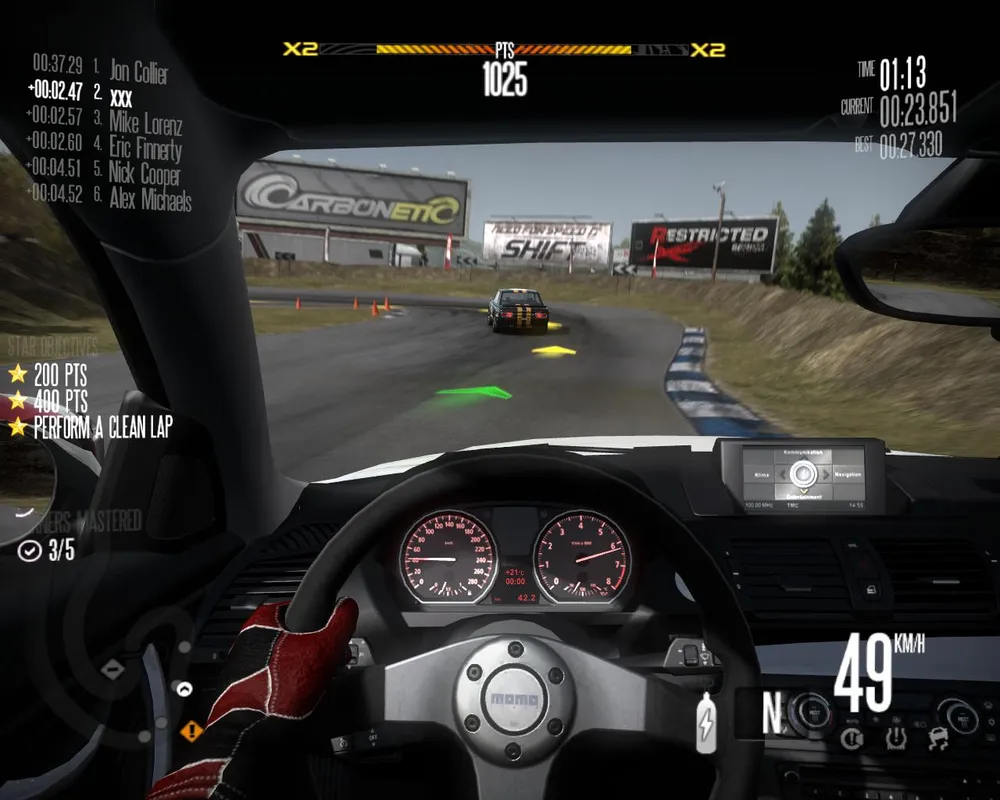
What came of it—you know. **Undercover** turned out decent, but more than mediocre. Another city, some races, some police—we've seen this already at least five times… In short, EA took their cow from Black Box and handed it over to Slightly Mad studio. The latter are known for their work on **GTR2** and **GT Legends** (even though it was co-authored, but what names!). These "Slightly Mad" folks took the excellent Pro Street engine and taught it serious tricks: how cars should drive correctly, how gearboxes shift, how tires grip the road, how suspension compresses and decompresses. The slight touch of realism from **Pro Street** was replaced with three layers of top-notch racing physics. And now, dear readers, the main thing is—Need For Speed is no longer the same! Isn't it? But we won't use such a general and flame-generating formulation—let's ask specific questions. Has the influence of pure-bred simulators benefited the typically arcade Need For Speed? Why is racing on a keyboard a godforsaken evil? How to drift in this game? Why do the rear wheels slide out so easily?
So, are these normal questions for a review? During these days, while I was putting out a burned computer, I managed to read forums, chats, and even our "Gamer." The sentiments are the same everywhere, but the fact is—they boil down to these four questions (if you don't understand the connection yet, just keep reading—you'll understand). I will give you one, but the most detailed answer from all of the Internet.
Unlike boring standard reviews (mine differ greatly from theirs), I won't be talking about graphics and sound. I will suffice with a couple of words, really.
The engine **Pro Street** you could see in the game of the same name. The cars are beautifully modeled, textures are of the highest resolution, shaders are just right, and the surroundings are pleasing to the eye. As for the music, a couple of words will suffice—there's Run With The Wolves by Prodigy. Plus, other equally dynamic tracks (various Drum and Bass), although there are some compositions I didn't like—I’m not fond of Spanish motifs.
It's All the Same
Let's start, perhaps, with the local championship system. I've heard a lot of complaints about it—saying it's chaotic. There are just too many competitions, everything is flashing, something is opening, and everything is different. However, the developers have successfully killed the most harmful bug of the NFS series, which has plagued it since the first part—the class ladder. Recall any game— in **High Stakes** we leisurely moved from BMW Z4 to Porsche 911 and then to McLaren F1; in **Porsche Unleashed** the same goes, but by years—first a slow classic, then the fast sports cars of our era; even Underground didn't let us drive a Nissan Skyline until halfway through the campaign.
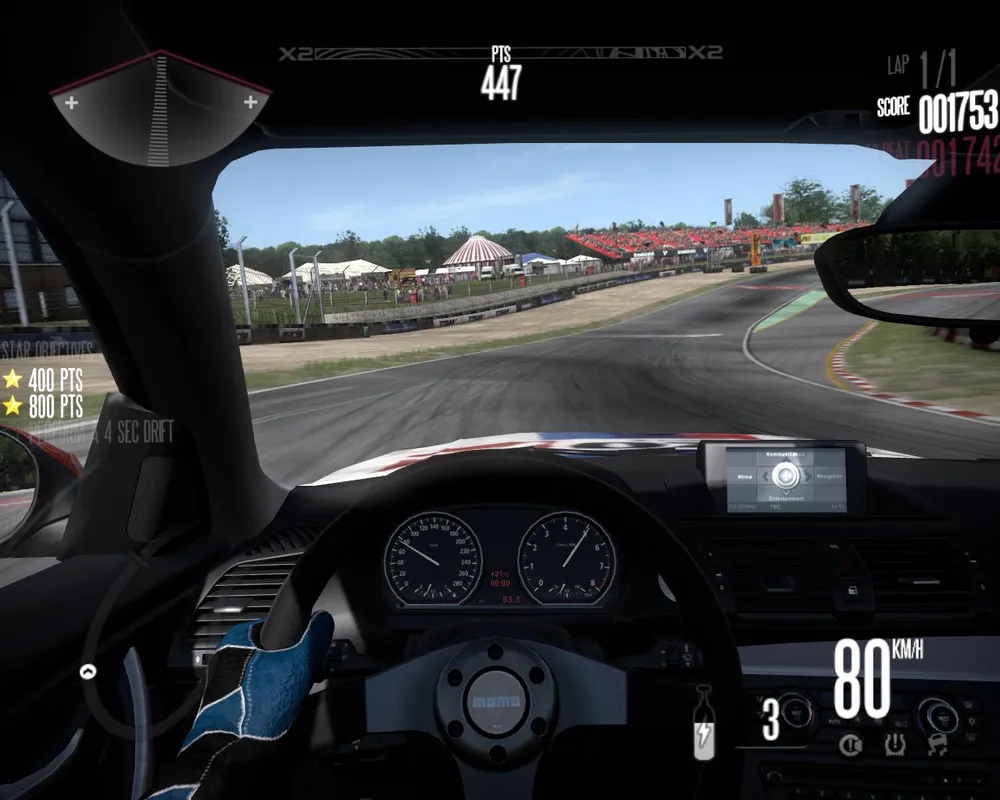
Like clockwork, we started with junkers, only to fly in high-speed cars later. In Need For Speed: Shift it’s almost the same. Initially, we have little money, and we can only buy the lowest tier cars. We’ll have to earn the upgrades (as familiar), but along with the usual circuit races (in our own old wreck), there are factory competitions, where generous manufacturers provide drivers with brand-new vehicles. They can't be customized—which is a bummer—but we can drive different cars (of which, by the way, there's the most in the entire series.) We might have a weak BMW 135i in our garage while driving a Bugatti Veyron 16.4 at the same time. There are also non-qualifying tournaments, for example, SSC vs Zonda. Two cars—pick any and race. No need to complete hundreds of tracks to sit behind the wheel of the coolest ride.
Furthermore, we can add national competitions for variety. Cars can be American, European, or Japanese. Most competitions are mixed, but there’s a special group where you'll only have to race brand cars from one part of the world (or on two brands, simulating the battle of continents). So the player will have to buy new cars in the same class. This means we can personally have around 5-6 cars or more, not just a couple, as in **Underground 2** (remember how money ran out there?). However, the game is not a tyrant. No one forces us to do anything—according to the developers’ plan, we can easily skip entire chains of tournaments. Move on—play what you want. No more boring rides in something lousy. This, I think, is the most significant global game design change. Bravo, salute three times and pop the champagne cork right into the chandelier, not the ceiling!
Tempests of Anger
Now, dear readers, I want to thank you for making it to almost the middle. Those who find the topic uninteresting we've likely already lost. I hope they’ve contributed to this product of thought fermentation. And for that, thank you. To the ones who remain, I will now explain why Need For Speed is "not the same" exclusively on PC. Discrimination? Sort of. Let's delve into history. Not for long—just for a bit. Honest and true.
1\0. The foundation, input-output, all that. In general, our keyboards work on the principle—there's a signal, there's no signal. At the dawn of technology, all consoles had gamepads that worked the same way. We press a button—we get a shot to the forehead, a turn to the left, or a leap off the 16th floor. It’s not the point. No intermediate positions exist.
Now recall how we played… let’s say, any Need For Speed. Need to turn—let go of the gas (which essentially turns off the engine, as the signal is—0); we brake (basically we press the pedal down to the floor); gently press the left arrow key (essentially every time we turn the wheel to the extreme position). Sound familiar? You were probably surprised that in **Most Wanted** the Speedbreaker mode is so awful—speed drops, the car spins out, didn't you? Of course. Here too, the clunky control system is to blame—the car expects a soft turn of the wheel by a few degrees, while we crank it to the extreme in one go, resulting in an instant spin-out.
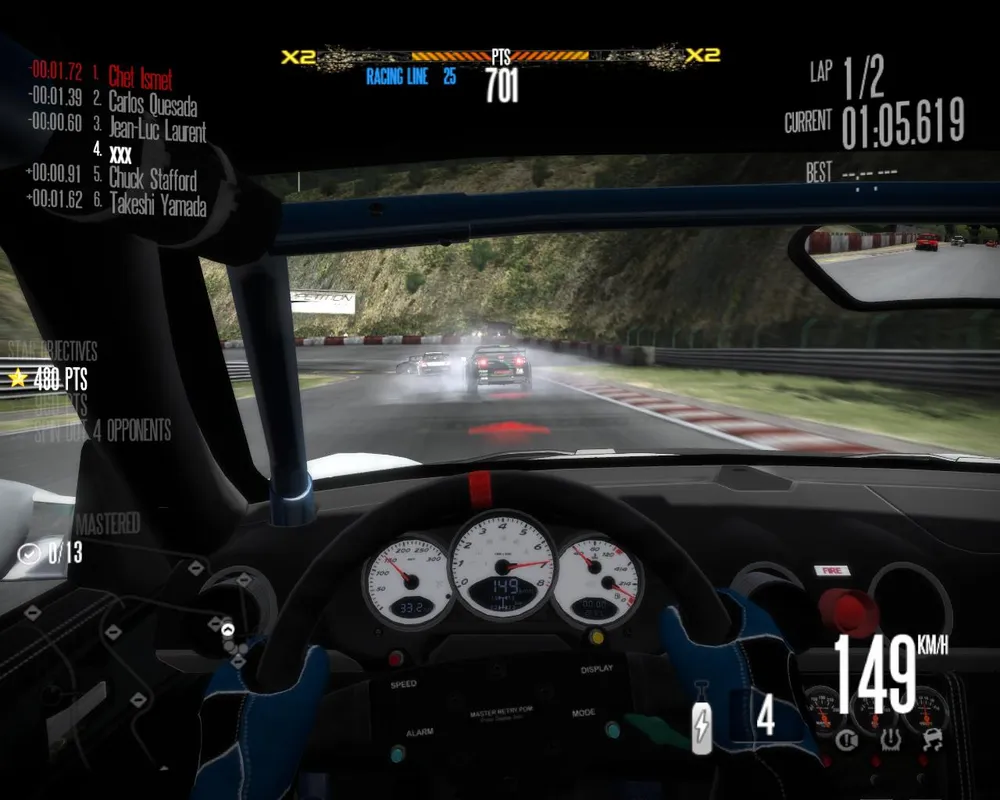
Now the question—how does this relate to Need for Speed: Shift? Directly—the new game features much more realism than the previous ones. Therefore, it requires more from the player. Are you surprised you spin out? Unrealistic? Try suddenly jerking the wheel to the extreme left (or right) at just 60 km\h. Better not try—that could be risky.
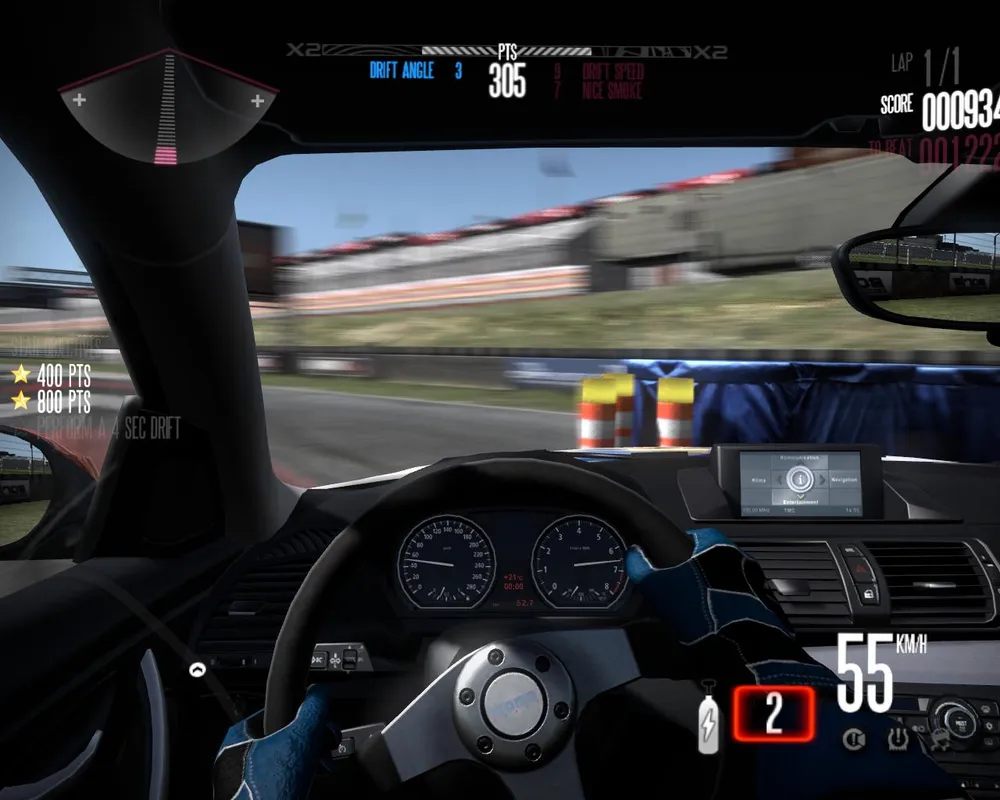
Essentially, all this bouquet of mortal sins grows from the wooden input devices. And also from the equally wooden heads of the players themselves. After all, we've taken care of everyone—if you’re playing on a keyboard, then set the difficulty to Casual, and in the settings enable everything to the max. A sensitive automatic braking system won't let you fly off the track, while stability control compensates for the deficiencies of keyboard control as much as it can. Yes, it’s all nonsense when the car drives itself, but if you can’t drive properly yourself, then how else?
I am sure that most of the protesters, demonstrators, and those offended by life simply raised the difficulty settings too high. Casual is so painful; the car drives for you—also hurtful, it brakes automatically—what impudence! We are smart and know everything! Behind these negative thoughts and opinions lies… a truly excellent simulator with a human face (read that three times). With honest physics, complex opponents, with real track layouts that need to be learned and memorized to achieve results, with a useful tuning system that actually works. A tuning enthusiast will find numerous settings to fiddle with, even when facing the seasoned **GT Legends**, **GTR**, and **Live For Speed** without shame (a bit of shame, but it’s forgivable—not to mix genres).
The human face of the game manifests in that all these tons of settings can be condensed to the simplest view with one press. Just four sliders: gearbox, steering, aerodynamics, tires. Even a monkey could set up a car, though at the lowest levels of difficulty, this isn't even required. Just to drive, you can be even dumber than a monkey—on arcade settings, Need For Speed plays pretty much like, perhaps, **Undercover** or **Most Wanted**. EA did a massive job to clean up the flaws that had accumulated in the series over the years. And they did clean them out—the racing on these tracks can be enjoyed by both seasoned racers with Logitech G25 and… well, anyone. (I hope you didn't take the comment about primates personally).
To sum it up, let's directly answer the main question. No, Need For Speed hasn't worsened under the influence of simulators. It simply matured and shed this shiny glaze, crust, shell, under which it was monotonous, boring, and unoriginal. Shift is a breakthrough for the ossified series; it is practically a revolution, in which the owners of only keyboards are fatally wounded. Buy at least gamepads—the game is worth it.
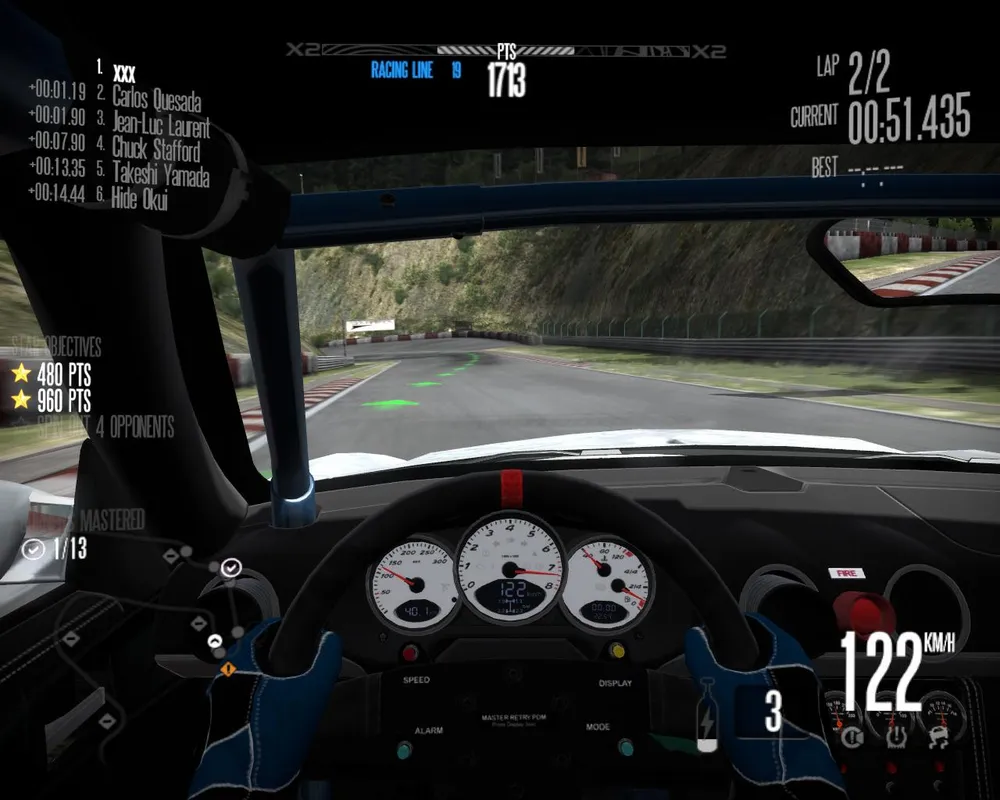
This concludes the review-evaluation section for me, and next, I have something tasty prepared for you. I will tell you about the cars, the tuning, with pictures, of course.
Nuts and Bolts
In general, now I will try to explain a bit about the basics of car tuning through simple examples. I used to be into **Live For Speed** and **GT Legends**, I knew a thing or two, even understood. Since then, I've forgotten everything, but I still have my wheel (which made me incredibly happy since it works wonderfully in this game). So, let’s pretend I’m also somewhat of a novice, tweak the settings, and try to figure it out.
Here’s my car:
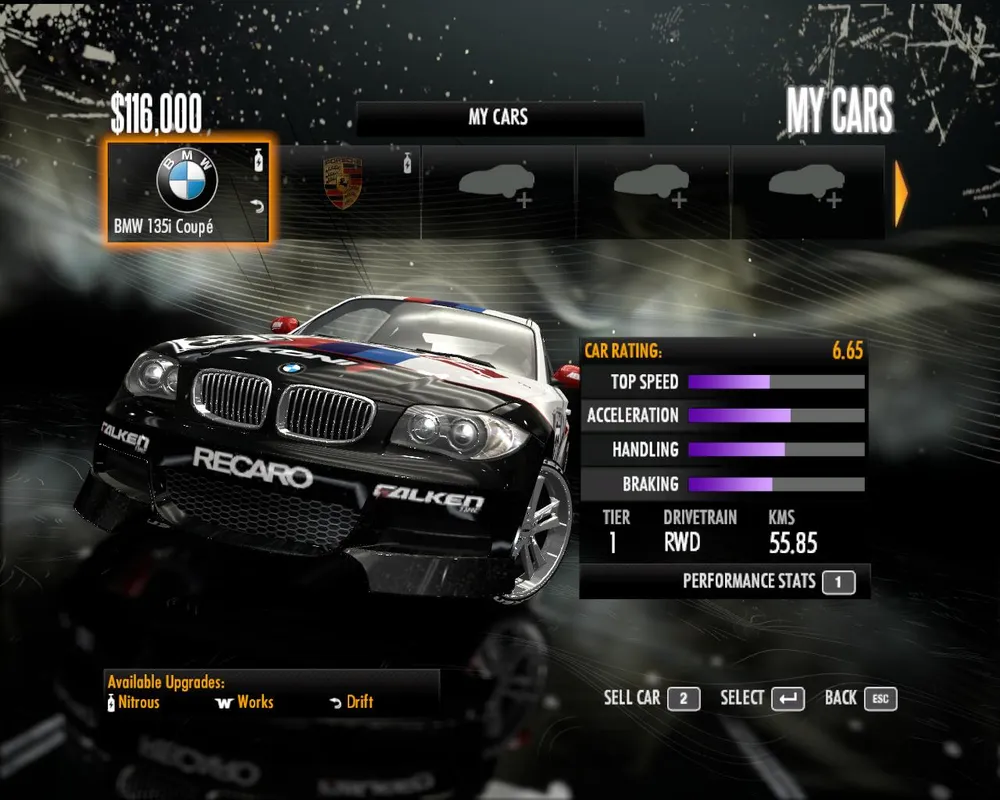
But we won't touch that. Let’s rather tinker with a Porsche because it's cooler. I don't have any Tier 3 cars yet; I just enjoy playing through all the tracks without rushing ahead.
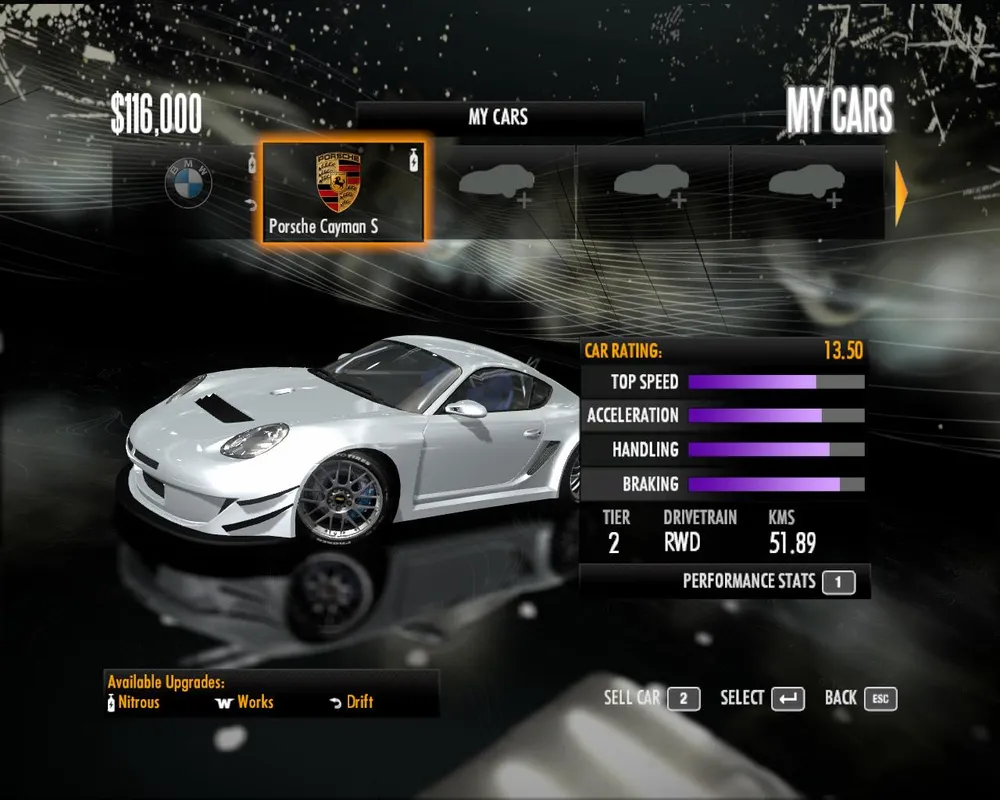
In general, the mission's goal is to universally tune the car so that it behaves obediently in turns, doesn’t tumble, doesn’t stray, holds tightly to the track (so it doesn’t get knocked off), and accelerates to decent speeds so as not to lag on the straights; brakes are also important, of course—bump into something and go off track—you're likely to lose. Ideally, of course, one should tune the car for a specific track. I’ll get to that when I retire.
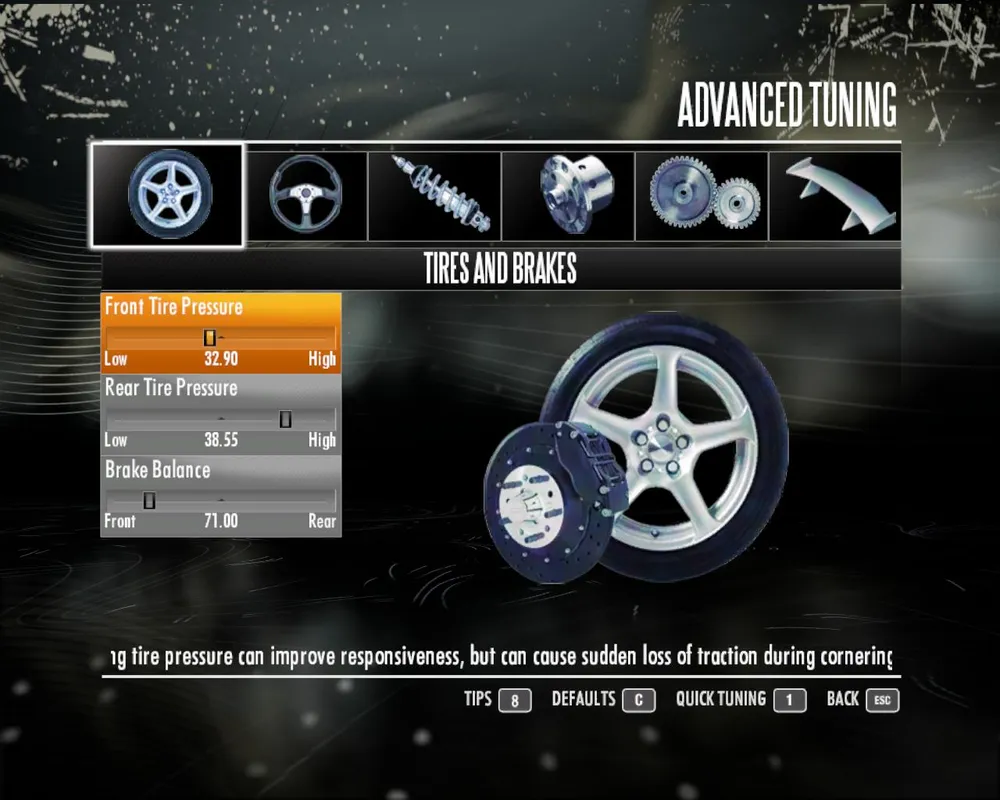
The section "tires and brakes" is poor in options. We can only adjust pressure and braking force ratio. I lowered the pressure in the front tires a bit so that they grip the road better, as most braking force rests on them. I pumped up the rear tires a bit as they participate less in braking, and we won't be steering with them—loss of stability here is not as critical.
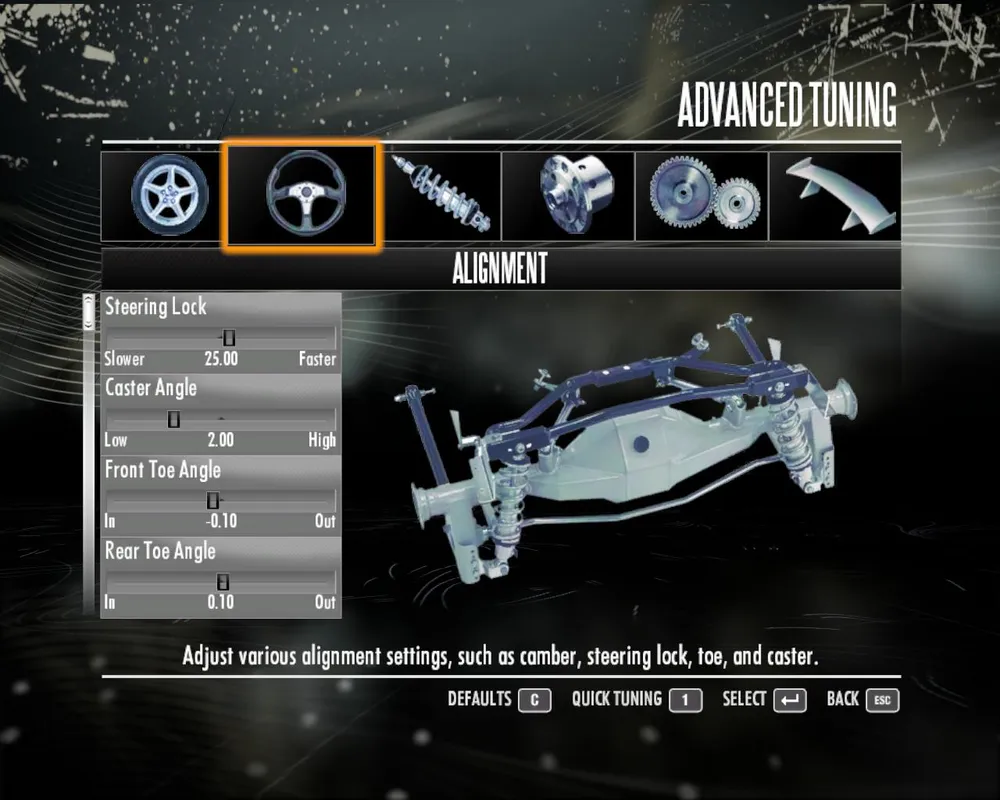
Steering is a complex thing. Among important settings, I singled out only ride height (yes, Drive Height—strangely enough), I lowered the car fully—the center of gravity is lower, which increases the chances of someone being knocked in the side while remaining on the road. Caster adjustment is up to personal preference, as with everything else, actually. I don’t use toe and camber adjustments unless on circular tracks where it’s possible to set the wheels so that the car grips onto the surface with all of its rubber.
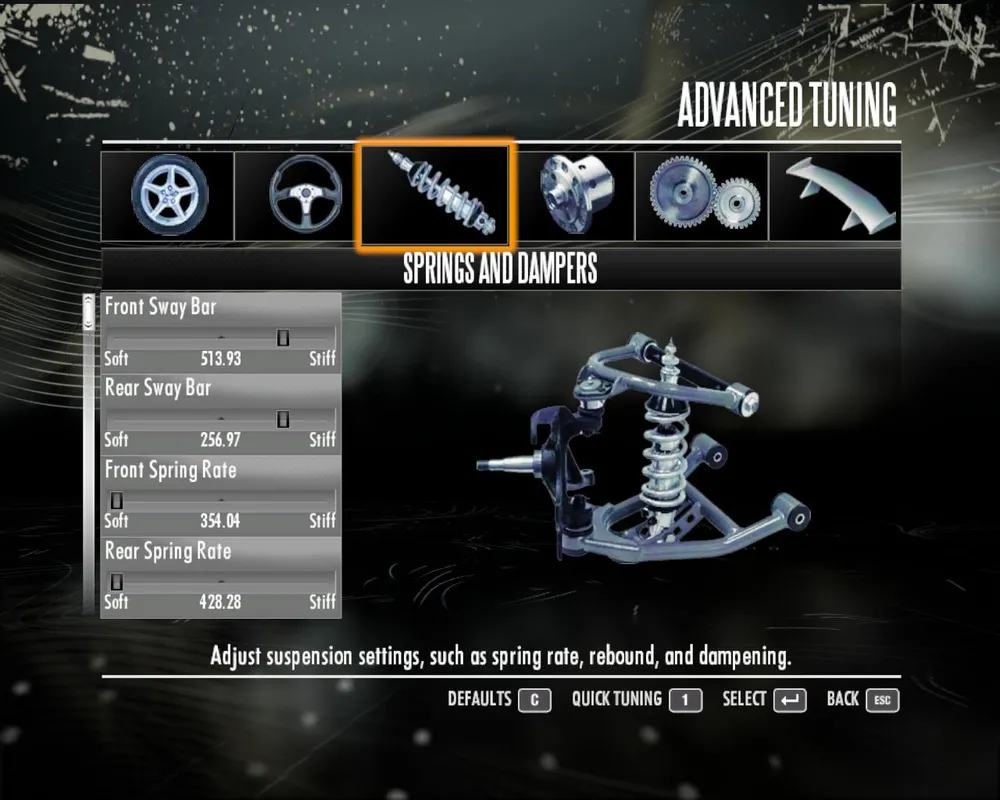
Suspension is, to be honest, a dark forest for me. I tried to stiffen it up so that the car wouldn’t bounce around. As a result—it was pulled away, spun, and swayed. So I made it a bit stiffer than the standard. By the way, the tuning tips in the game are quite useful, but it’s better to search the Internet to understand how everything works.
I didn't touch the differential at all—I didn't notice any significant difference.
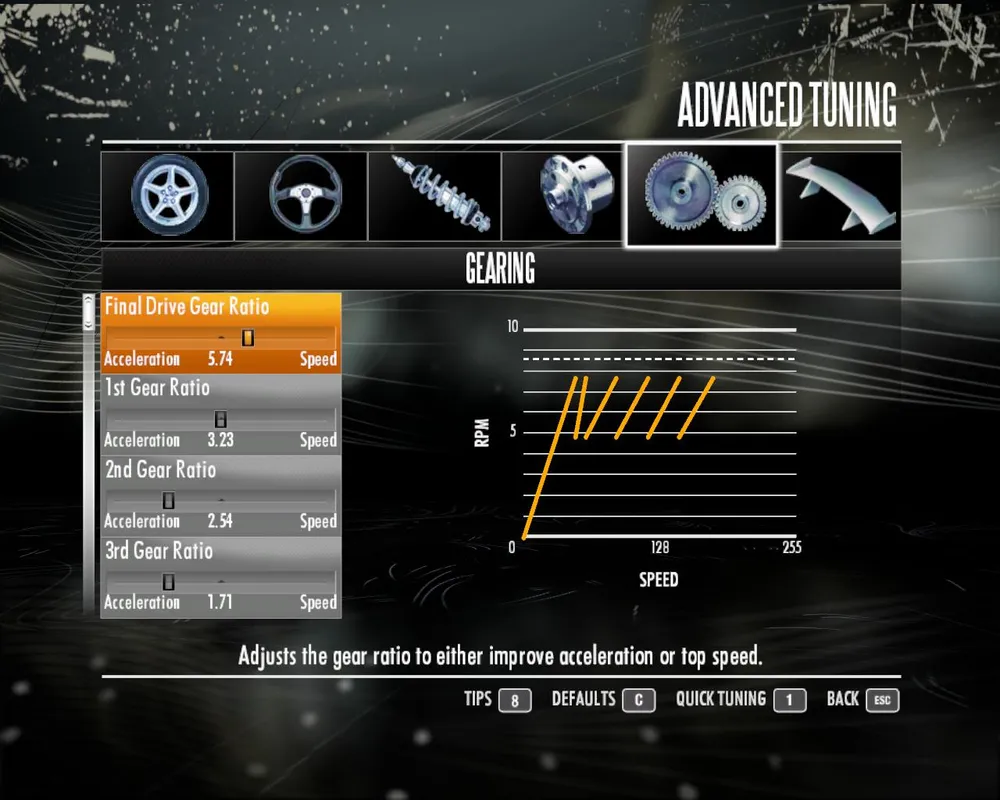
The gearbox, on the other hand, disappointed me. There’s no mouse pointer in the game—gradually adjusting the gear ratios is not possible—the slider jumps to the extreme position. Maybe, it’s just meant to be? The arcade feel is disheartening—I wish to fine-tune the values so the car gains speed more rapidly in lower gears and goes as fast as possible in the higher ones. It turned out mediocre. In Live For Speed, you could set the numbers manually—oh, if only that were possible here…
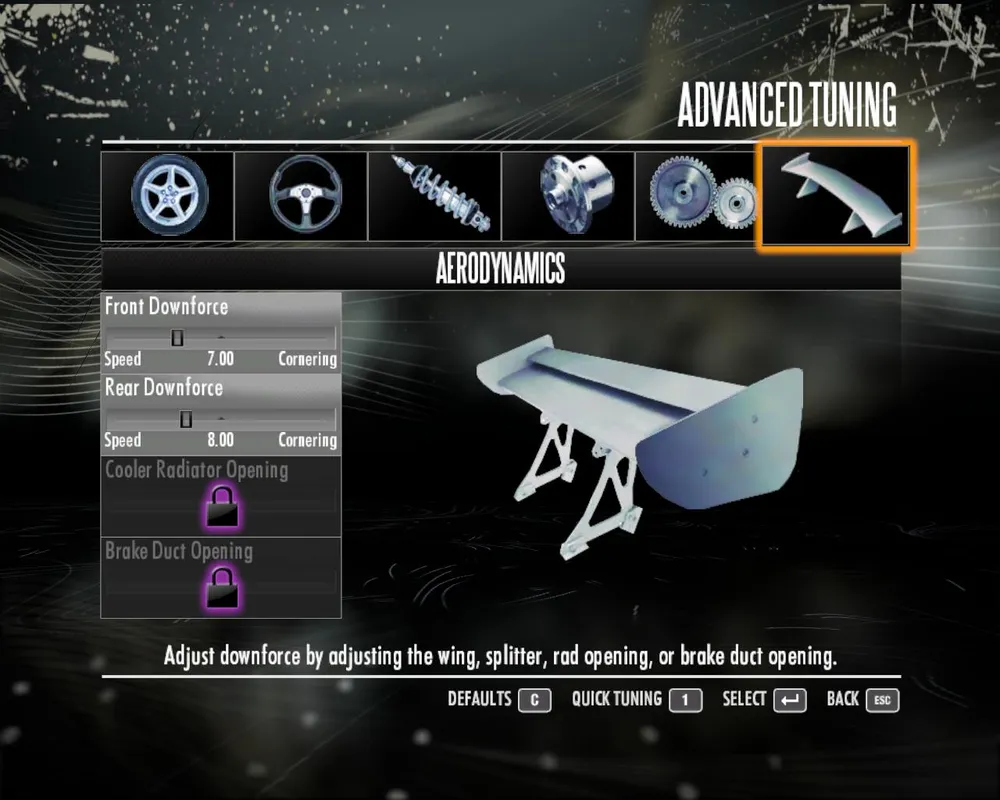
Finally, the last menu—aerodynamics. It’s simple. If the track is straight or circular, we increase downforce. If there’s a lot of cornering needed, we decrease it. I like balance—this way, it drives fast and doesn’t fly off the edges.
But generally, if you find all this bothersome—choose the simplified mode. It also works, though there’s no depth in the settings.
By the way, in memory of the review, I’ll present a couple of pieces of evidence. Compare the reviews from **Play Station 3** and **PC**. They have pads with sticks—no wheel is needed for comfortable gaming, everything is default. Notice the difference in ratings.
Brief Version
As usual, under the spoiler: