
And I will be a nasty pirate... Review of Risen 2
In the Shadow of a Game that Starts with 'G'
You all know very well where the legs of the recently released '[Risen 2](/games?search=Risen 2)' come from. Its ancestor, old lady 'Gothic', is still very much alive, as there are hundreds and thousands of its devoted fans. For the 'Risen' series, she is like an older brother who is constantly held as an example. Look, there's Vasily, a jack of all trades, while you, Gavrila, have a pig's snout and play poorly.
So, when I started writing a review of '[Risen 2](/games?search=Risen 2)' and fearing to produce yet another Goth-fan grumbling and whining, I decided to completely remove Gothic from my mind as a standard. I decided I would assess the game as a separate, completely independent product, that I would be cold and neutral. In general, I decided a lot. But nothing came of it. Fortunately, there were few reasons for grumbling, and there were none for whining at all.

Do you remember the first 'Risen'? It repetitively followed almost all the main aspects of its progenitor, while at the same time not reaching it in terms of plot, world depth, and the distinctive character of surrounding characters. Therefore, the game turned out to be interesting for a narrow circle of fans — fans of Gothic.
However, the number of changes that the developers planned for the second part was astonishing. A global change of setting, the introduction of firearms into the game, full-fledged companions, and changes to the leveling scheme. It seemed that a completely different game would be presented to us, one that was unlike the usual product from 'Piranha Bytes'. All this resembled that the developers decided to prove to the whole world that they could create a modern game free from the clichés of self-copying. What came out of it, I will try to tell you.
The Jungle of the Plot
The same freed titans are rampaging just like before. With the small exception that now humanity’s situation is worse than ever. The continents are under the power of monsters, and people hide on islands like cockroaches in cracks. The game begins in a ruined fortress, where our one-eyed alter ego is passing the time hugging a bottle of alcohol. In the first ten minutes of the introduction, we are plunged into the story setup, while also being reminded of the main events of the first part, as well as the consequences they led to. This is not even immersion — we are immersed headfirst into cold water. For an unsuspecting player in the world's history, it’s easy to get lost. Luckily, this introduction flies by quickly.
The story of the game is strong and full of unexpected twists. It revolves around a legendary weapon capable of striking annoying titans. Finding this omnipotent artifact falls to our hero. To do this, he is sent undercover to the pirates — thrown onto a small island that can be considered the game's launching pad. Its passage is linear, but despite this, it is interesting and sets the pace for the entire subsequent game.
A World for War
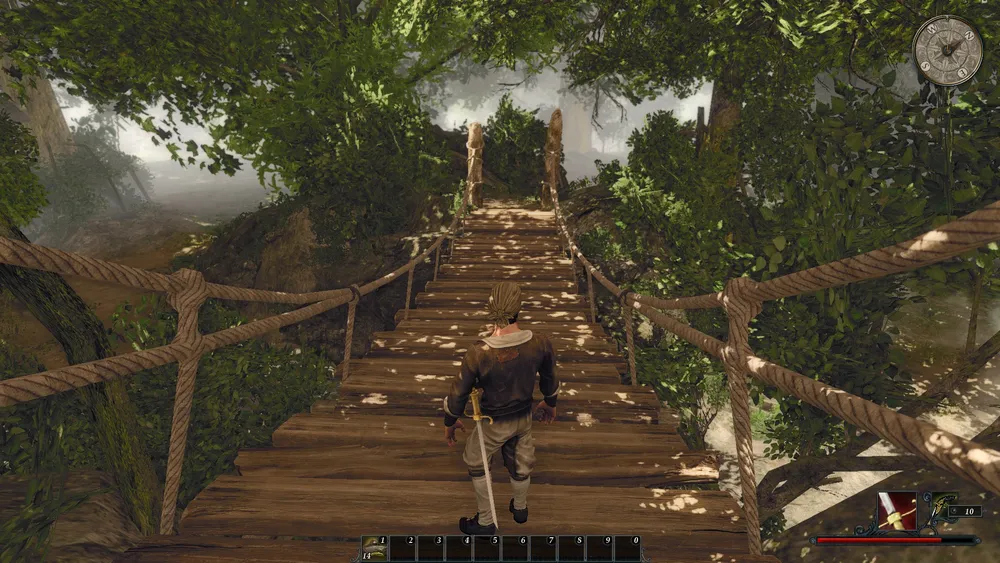
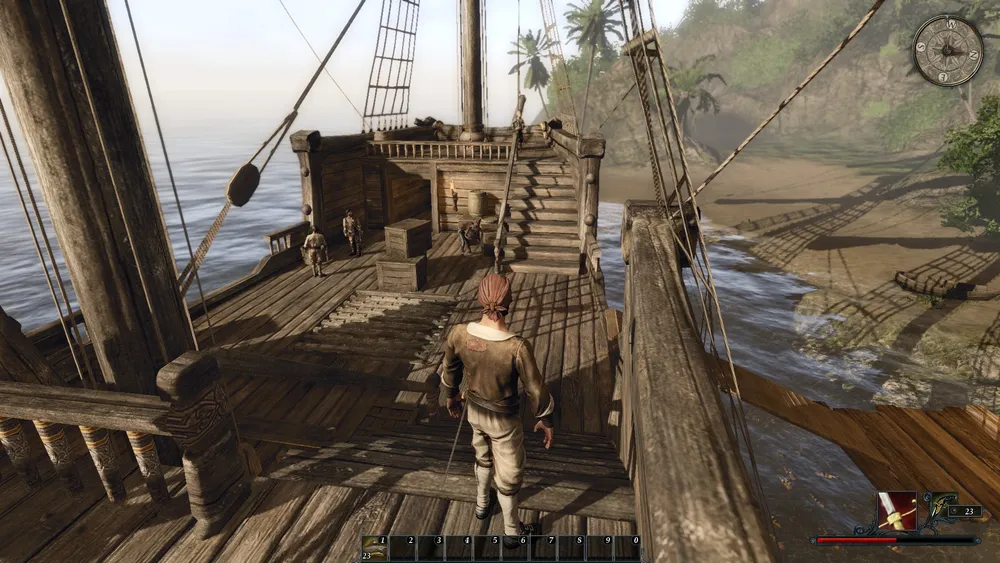
Already on this small island, one begins to understand what an interesting and unusual world 'Piranha Bytes' has managed to create. In this wonderful world, the Inquisition coexists with its fat, thieving governors and cruel soldiers; pirates, with their endless thirst for drinking, brawling, stealing, and deceiving; natives, with their sycophantic worship of ancient idols and mysterious voodoo magic. As you progress through the game, this world will grow, continuously surprising with the depth of its detail. Ultimately, we will have several islands at our disposal for exploration. They are small, yet cozy locations, and we will need to travel between them by our own ship. It also serves as a base for our companions.
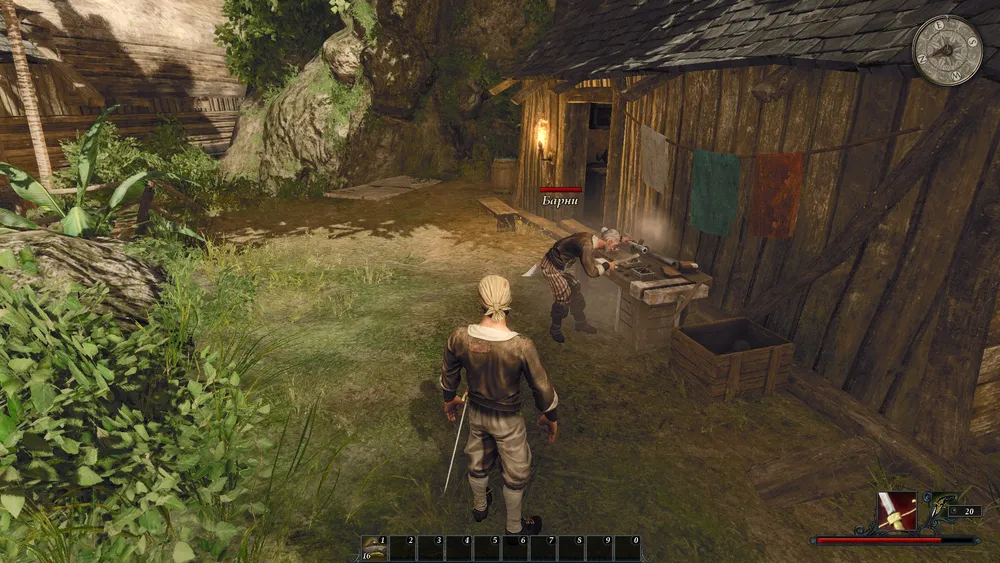
Moreover, the land rats, the world of '[Risen 2](/games?search=Risen 2)' is alive. Don't believe it? Poke it with a stick, and it will definitely move! In the villages, life is bubbling over; NPCs diligently go about their business: slaves work on plantations, clearing sugar cane from early morning until deep at night; guards watch over them, yawning out of boredom, while in the evening they escort the unfortunate ones to their dirty bunks; pirates get drunk in the tavern until they can't remember anything and, swaying, stumble off to sleep by the fire; natives wash gold, gather food, and in the evening hold ritual dances. NPCs are very possessive — rush into someone else's house, and you will be cursed at, stay there a bit longer, and they will jump you with fists.
I confess, I used to think that Piranha would make a beautiful woman in their game only after a crab whistles on a mountain. I sincerely believed that they either turned away from it or were simply cursed. To this day, my heart skips a beat when I remember the 'lovely' crooked-legged dancers from Gothic three. Be that as it may, the vow was broken, and the curse lifted. Sure, we won’t find fatal beauties from '[Mass Effect](/games?search=Mass Effect)' whom a line of men drools over. But the ladies of the second part of 'Risen' are at least cute and charming. The natives, by the way, are even charming.
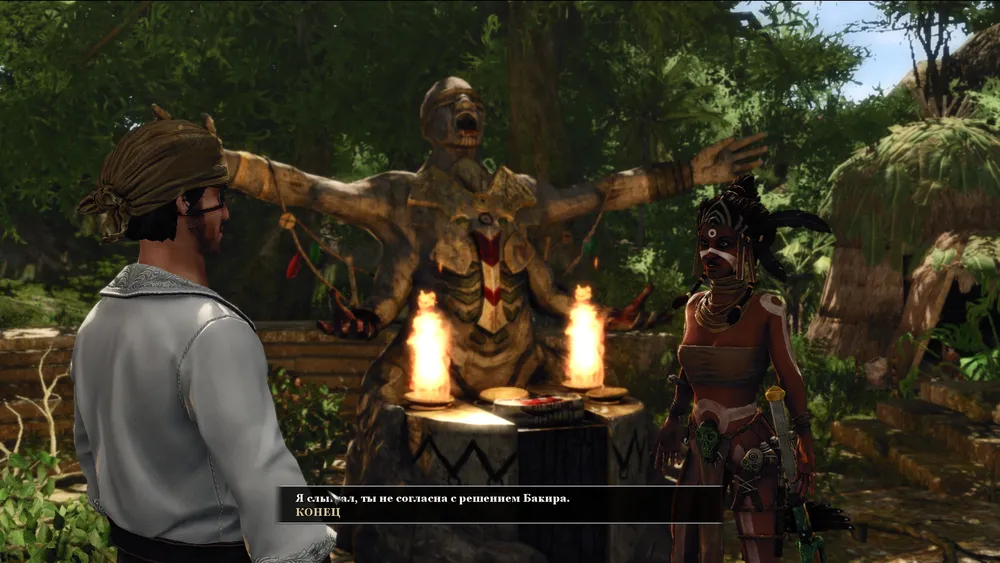
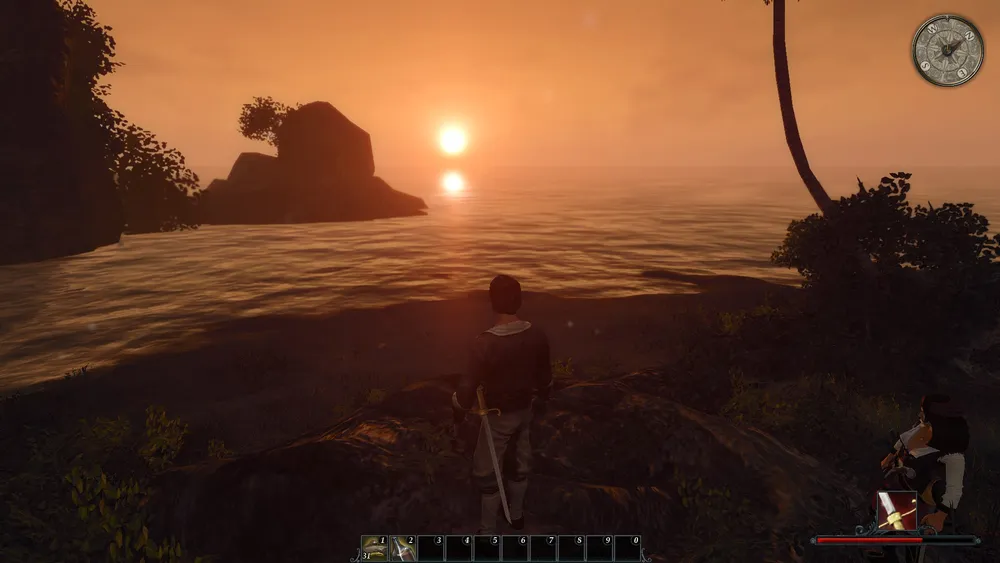
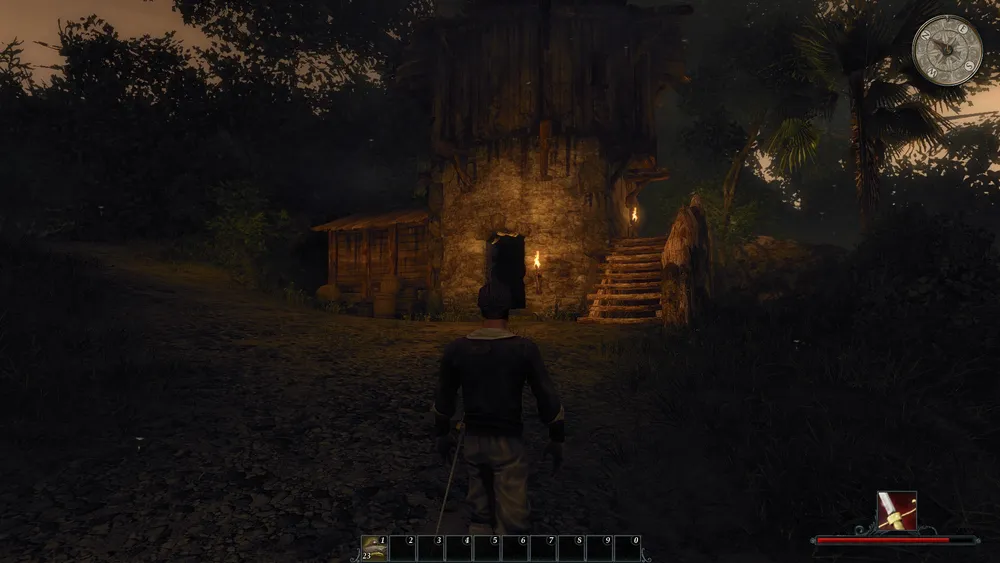
The surrounding nature is genuinely beautiful. Sometimes it is lush and full of colors — the setting sun colors the skies, a slight ripple dances over the blue surface of the water, and the palms are lushly green. Yet all this is in moderation. You know, there were fears that excessive colorfulness would kill the distinctive dark atmosphere of 'the Piranha game'. So, at times, the jungles of '[Risen 2](/games?search=Risen 2)' are darker than the dark caves.
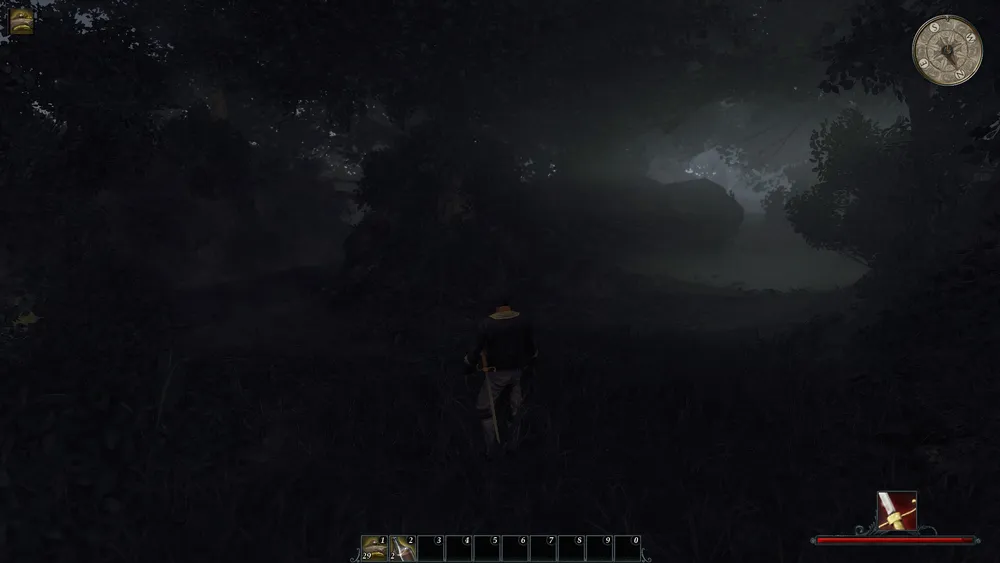
Exploring this world is interesting: somewhere in the jungles lurks a gang of escaped slaves, littering the surroundings with deadly traps; the darkness of the caves hides the most dangerous monsters; and the ruins of ancient temples hold treasures. Although it’s even more interesting in the settlements — one can drink against pirates for money, trade, steal, and complete side quests.
Quests in '[Risen 2](/games?search=Risen 2)' are interesting and diverse. You have to do more convincing, scheming, and watching, rather than purely killing... Often, quests are multi-step: to hijack a ship from the Inquisition, you need to deal with its guards, gather a crew, ensure a supply of water, and sabotage the coastal cannons. Some quests have multiple solutions, but most of the time, these solutions are simply a banal choice between 'Convince', 'Intimidate', and 'Slam'. The truly great choices are not often offered to us, but when they do, they are quite palpable and significant. It boils down to which conflicting side our restless alter ego will side with. Each faction has its own goals and methods of achieving them. Yes-yes, just like in the good old game starting with 'G'.

All factions on the islands exist in a state of extreme tension — the world is coming to an end, yet people still manage to quarrel. Pirates use the natives as a source of cheap gold and military strength. The natives, hating the pirates, make deals with them to annoy the dreaded Inquisition. The Inquisition turns the natives into slaves, labeling them as 'unpaid labor', while also harassing the pirates. Some especially shrewd humans have betrayed humanity and sided with the titans in hopes of keeping their skins intact. Everyone believes they are right and tries to prove it, using their arguments. In general, we will have to make choices about who to befriend and who to fight — there is no escaping that in '[Risen 2](/games?search=Risen 2)'. Here’s where that classic role-playing aspect 'from Piranha' comes to light.
Long Conversations over a Bottle of Grog
The gameplay is also recognizable. To become a pirate, you need to ingratiate yourself with the captain, which requires running errands, proving your strength, outsmarting someone, or flattering someone... Naturally, a huge amount of gameplay time is spent listening to dialogues.
The dialogues are structured in the familiar PB style — at certain moments of conversation, you have to choose one of several phrase options, usually not particularly affecting anything. They are somewhat diversified by the ability to choose special options — intimidation and eloquence — available at certain levels of mastery of these skills.
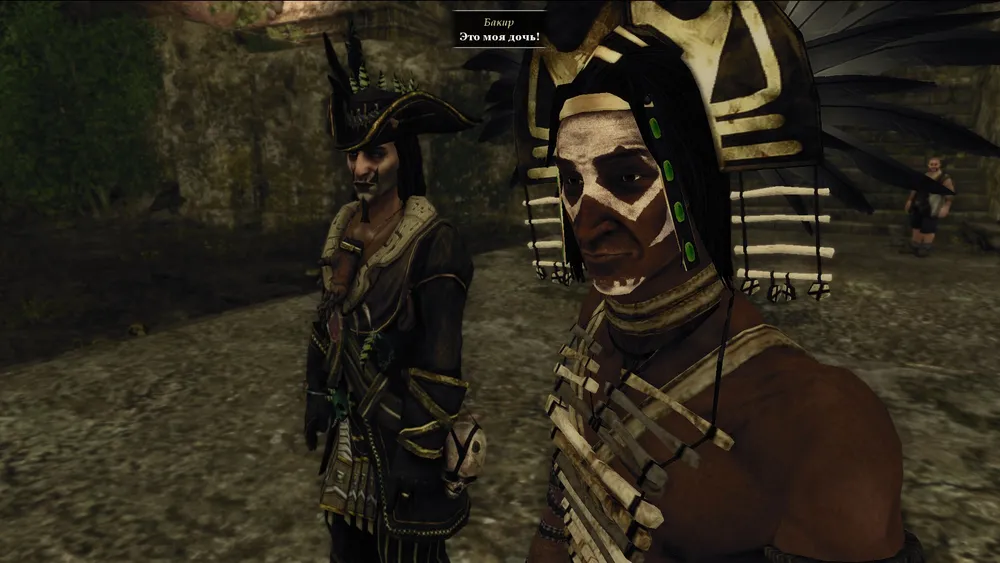
The visual design of the dialogues has significantly progressed — the camera now often switches angles, and more than two people can participate in a conversation. This livens up the narrative significantly.
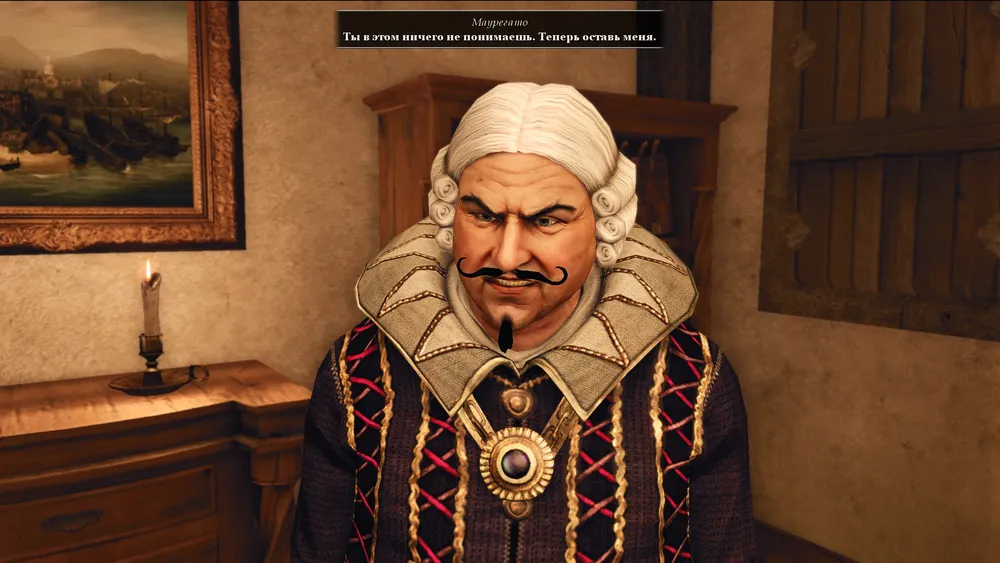
But there is one 'but'... NPCs look quite organic until you engage them in dialogue. The moment they open their mouths, all their flaws become obvious. Their faces are often emotionless, and gestures can sometimes be unnatural, like the movements of puppets. Considering the games from 'BioWare', in which computer characters perform roles as well as movie and theater actors, this undeniably looks like a significant downside. At times, you want to shout: 'I don’t believe it!'. Clones also frequently appear — different personalities with completely identical faces.
War for Peace
Another important aspect of gameplay, the combat, underwent far greater changes. It’s definitely not perfect, but it is the best combat system created by 'Piranha Bytes'. It has both strong and weak sides. Battles with enemies at the beginning are limited to monotonous clicking, but later become more complex. The protagonist learns various techniques, from simple parrying to throwing a coconut at someone’s head or a handful of sand in their eyes. This makes battles colorful, energetic, and interesting. The 'crowd vs. crowd' battles look especially good. Problems arise in fights with multiple enemies attacking from different sides — switching between attackers can be challenging. Using additional techniques can also be difficult — our protagonist can sometimes feel clumsy. The implementation of firearms is successful. Even the automatic reloading isn’t irritating.
You can restore blood (the local health meter) even during battle by simply eating. Alcoholic drinks — rum and grog — serve as first aid kits here. There’s no longer any animation for consuming food and drinks — the main character doesn’t have to munch on giant plants and colossal loaves of bread, pulling them from an infinite pocket.
Enemies behave differently. Take the bipedal ones for example: soldiers are dangerous with their muskets and skillfully wielding rapiers, savages skillfully handle spears and are trained in a form of capoeira, while the drowned are powerful and aggressive. As for beasts, they are just beasts — claws, fangs, and head-on charges. There’s no special approach required for eliminating regular enemies, with very rare exceptions. Sometimes, however, we will encounter bosses. Usually, they are huge, and defeating them requires quite a bit of effort.
One of the curious innovations — crazy fatalities — turned out to be extremely clumsy. We’ve seen such flashy finishers in other games many times, but here they can sometimes look simply ridiculous. Why? Just think: time slows down matrix-like, the hero desperately waves a rapier a meter from the enemy, not even touching them, while blood fountains out of the unfortunate one from an invisible slash on their body. There’s no mention of dismemberment — like a spectacular decapitation or amputation — unfortunately. When I first saw such a scene, I didn’t immediately understand what was happening on the screen.
The School of Young Corsairs
The new leveling system is simple and clear. You can now spend experience points on one of five characteristics: melee and ranged weapons, stamina, agility, or (attention!) voodoo magic mastery. Depending on this, certain skills of the hero will increase. However, to learn any skill, whether it's pickpocketing, parrying, or gun handling, you will need to find a teacher — a thief or a gunsmith. You will have to pay a sound amount of gold coins for acquired knowledge, and a lot of shiny coins, at that. You won’t be allowed to learn everything; to master the most interesting skills, you'll need to thoroughly improve your main characteristics. Trying to pay for a powerful spell with zero voodoo knowledge? Such tricks won’t work here.
Among the skills are some pretty interesting ones that I haven’t encountered in any game before. Just the training for a tamed monkey is worth it. However, the implementation of pickpocketing seemed extremely unsuccessful to me. Theft is done through an additional phrase option in dialogues. There’s no crouching and rummaging through the victim’s belongings, and consequently, no adrenaline — it comes across as routine. And the costly upgrading of this skill doesn’t seem to pay off — you can't rob everyone. Lockpicking is done through a small mini-game.
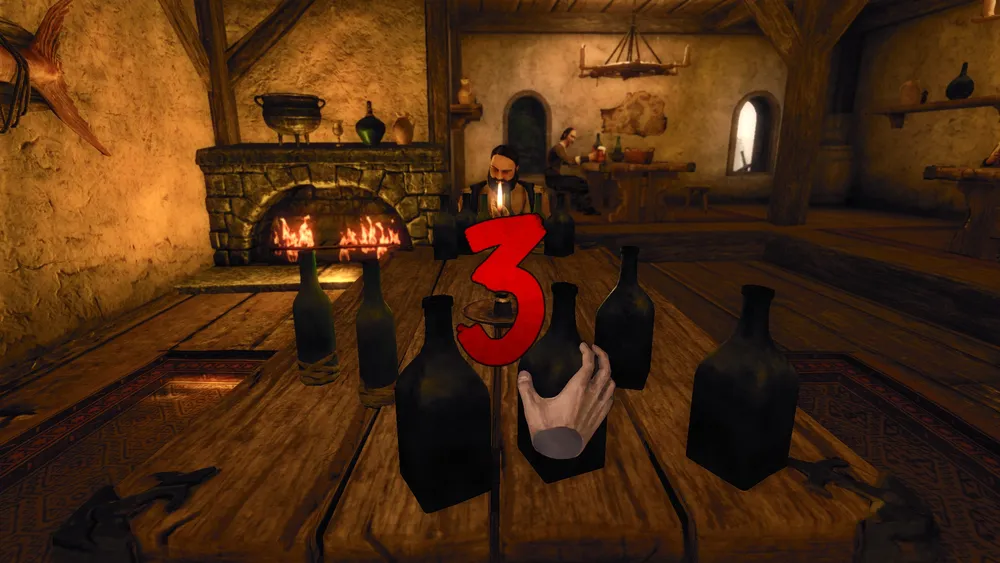
Another Mini-Game.
The introduction of companions in the game has hit just as effectively as a musket. The companions are well-made, each with their own backstory, albeit small and not very tragic, but still. Each has their own character. Each has their own abilities that will be useful to us in our journey. It’s not necessary to worry about their lives in the heat of battle; the point is that they are immortal — they will lie unconscious until the danger passes and then get back on their feet. Their behavior is quite simple, but in battles, their help can be significant, even if just as a distraction for enemies. They don’t deliver any special problems or hassle, except perhaps when they block doorways.
The inventory system has also changed. The number of items we encounter in the game is still vast, but now the findings are neatly sorted in the bag by categories. For example, all food is consolidated into one slot — 'provisions'. So now it’s very easy to find the needed item in the protagonist's bottomless bag.
And there are many more such small changes in the game. Detailing every one of them is simply impossible — such a wall of text is completely unnecessary. These changes do not evoke any repulsion; at the same time, they free the game from many unnecessary trivialities, making it simpler and more interesting.
By the way, bugs during the playthrough were minimal, and there were no crashes at all.
An Anchor for the Dark Harbor! Closing Words
'[Risen 2](/games?search=Risen 2)' turned out to be a solid game with a strong story and characters — both companions and enemies — featuring a completely unusual, fresh pirate atmosphere, a lively world, and voodoo magic! This game pulls you in — one of the few games in recent times that has managed to do this with me. Also, '[Risen 2](/games?search=Risen 2)' is head and shoulders above the first part and a thousand leagues deeper than it. And despite all these changes, '[Risen 2](/games?search=Risen 2)'… forgive me, reader… reminds of Gothic, in the best sense of the word. The unique spirit of 'the Piranha game' hasn’t gone anywhere.
Special thanks to Exstas for composing the words into sentences for you. Special gratitude for proofreading the rough text goes to Surt. "The amazing beauties" will not pass!