
Gamer.ru in the Coosmoos! Report from KRI 2011
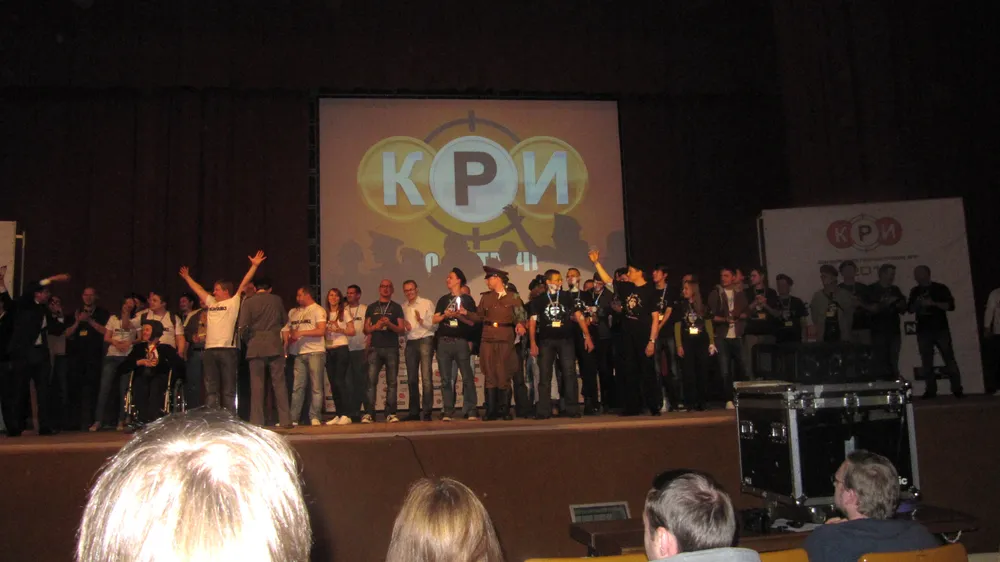
AQuaRity: "Gathering in spring for the Game Developers Conference is a tradition in our industry that is older than Igromir. Behind closed doors, stern gentlemen discuss the high matters of game development and decide what the country will play – this is probably how many average gamers envision KRI (at least that's what I envisioned). However, this year, the GAMER.ru delegation (represented by serick, AQuaRity, and Cannoneer) got the chance to witness this, the ninth event of its kind, and is eager to share impressions with you. Our report is collective, somewhat chaotic, but we hope it helps to evaluate both the conference itself and the state of the industry in general".
It is no secret that long ago the Russian gaming industry turned into a happy farm. Once, the browser game market was in its infancy here, but over time, this variation became the most popular among developers in Russia. So it is no surprise that most of the projects showcased at KRI were indeed of this genre. Single-player games existed, of course, but not in such numbers. It even got comical: "at one of the booths, a single-player game is being demonstrated - one of the few. A Chinese gentleman approaches. Looks at the game for a long time. Then he starts asking questions: 'Excuse me, what is your monetization model? And is this a browser-based product or a client one?' They say the gentleman left the booth alive" (from Konstantin Govorun's diary).

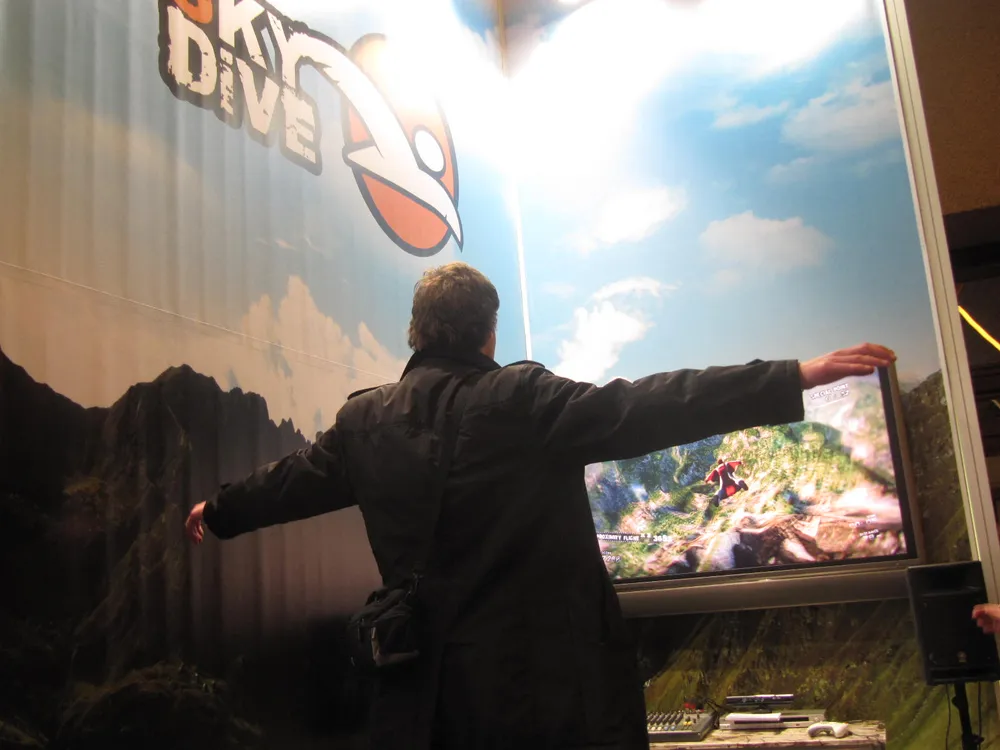
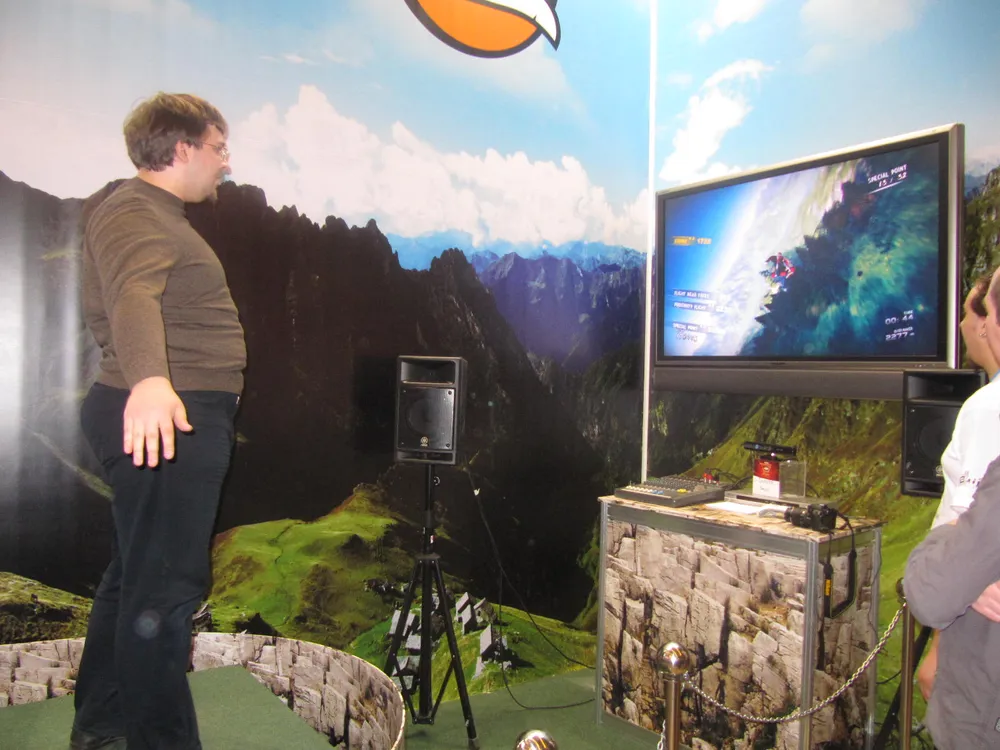
AQuaRity: "In such a situation, the area to the left of the entrance, where the booths of 1C-SoftClub and Gaijin Entertainment are located, is the only breath of fresh air for single-player games. But even here, they managed to surprise – the guys from Gaijin showcased a fully playable version of a new unconventional project – Skydive: Proximity Flight. Well, it’s not entirely new: if you remember, back in 2004, the studio showcased a game called Flight of Fancy, where the player's arm movements controlled a dragon's flight, using a regular webcam as an intermediary. After receiving a portion of awards and thrilling the public, the project fell into obscurity for many years, only to be revived as Skydive. As clear from the name, it's now a simulator of one of the branches of skydiving, or simply put – skydive. The booth showcased the PC version, controlled via Kinect. During the flight, only the player’s hands are active: bringing them closer to the body increases speed, spreading them wide turns the fall into a glide forward through the air streams. You can choose your route, turn in any direction of the well-crafted location, perform flips and daring glides just a few centimeters above the rocks, and if desired – even in first-person perspective!
The visual design is excellently handled: firstly, the speed and feeling of flight are palpable; secondly, the local landscapes are at times distracting with their beauty – one can inadvertently become mesmerized. The platform question hasn’t been fully resolved yet, but it is planned that the game will reach the maximum possible platforms: it's known for sure about PC, and most likely no modern console will be left out. Of course, Skydive is aimed at all age categories, so the landings here are appropriate: no severed legs, heads, and other limbs. Only penalty points and the chance to end the flight too early. And of course, a detailed statistics table at the end, encouraging repeated jumps.
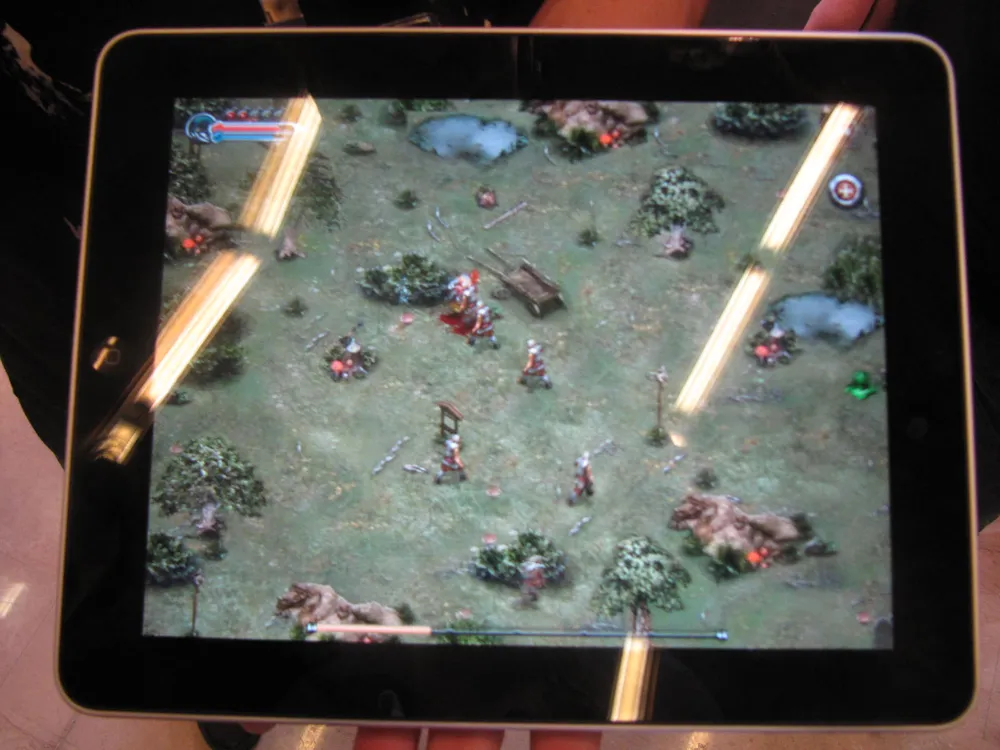
Another project from Gaijin is Braveheart, meant for iPods and iPads. Don’t think that the developers are changing their ways. On the contrary - they have big plans for the future. But they need to expand, and with such talent, that’s a very important and necessary task. Braveheart has received high praise from critics, and the creators only want to improve and transform their game. The project resembles Diablo: characteristic gameplay, top-down camera, and hordes of engaging monsters. This wonder is controlled by fingers, which will be trained to dexterity after just half an hour of play, like pianists. You not only have to control the character’s movements but also wield the sword and bow in a timely manner. There is, of course, leveling up, NPCs, and an engaging storyline. The graphics are also quite impressive. Maybe I am praising the project too much, but that’s excusable since I tried Braveheart for only about ten minutes. Then I simply went to other booths.
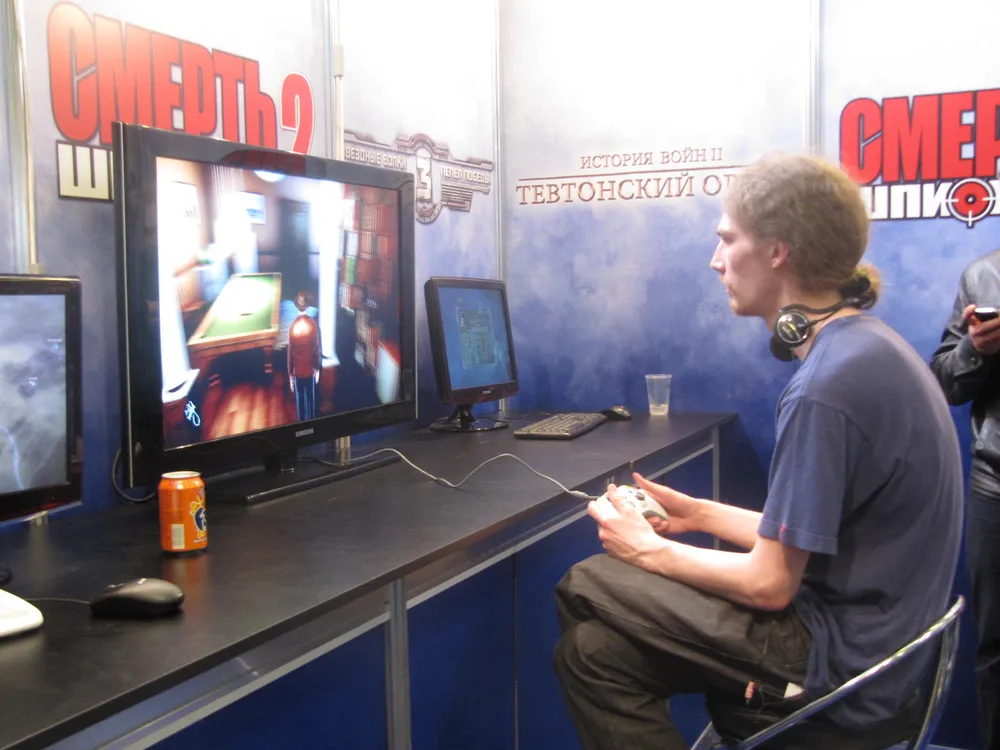
The cozy corner of 1C-SoftClub greeted with three projects: "Star Wolves 3: Ashes of Victory", "History Wars 2", and "Death to Spies 2". You could personally try out two of them: the continuation of the strategic-historical branch and the sequel to the main Russian stealth-action. Read a separate story regarding the first one ([post]Drang nach KRI-2011. Hands-on preview of the strategy 'Teutonic Order'[/post]), while AQuaRity will cover the latter right here.
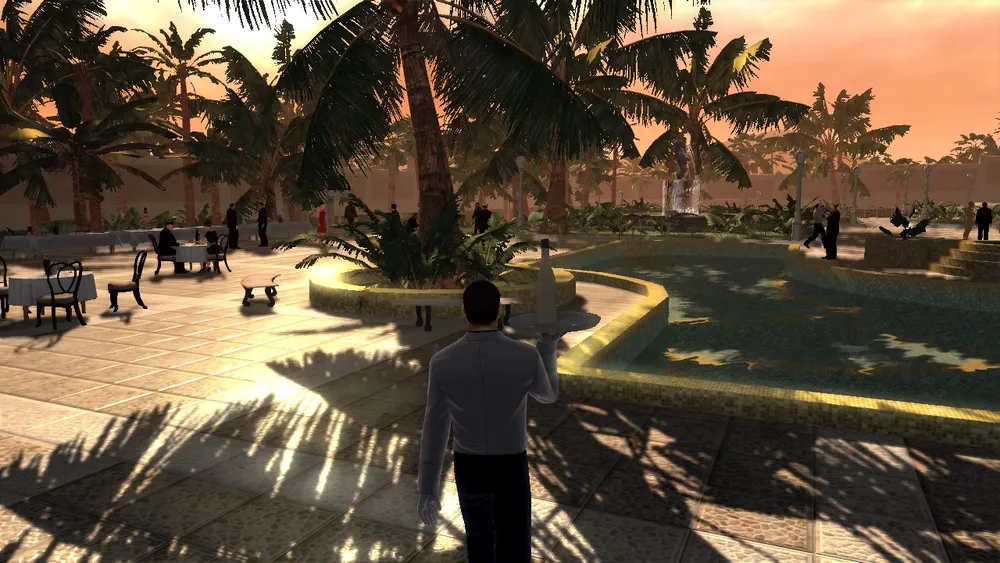
AQuaRity: "First of all, it should be noted that DEATH TO SPIES 2 was demonstrated on Xbox 360. Although the engine remained the same, it adapted excellently to the consoles (the first part, I remind you, was only on PC), but what is essential – it is immediately clear that this is the second part, not an addon. The game's atmosphere changed drastically – the setting shifted from World War II to the Cold War, and the first demo level takes place in the New York subway. Stealth veterans will immediately feel at home – the dimly lit corridors, which can be completely submerged in darkness by shooting out light bulbs, sparse guards, and a few civilians fixing electrical wiring. It’s worth noting that the color palette and light-shadow effects here eerily remind one of Infamous 2: red advertising billboards on the walls, blue electrical sparks, and deep shadows from projectors – it’s hard to believe this is a domestic development. But we need to divert attention and study the main thing – the gameplay.
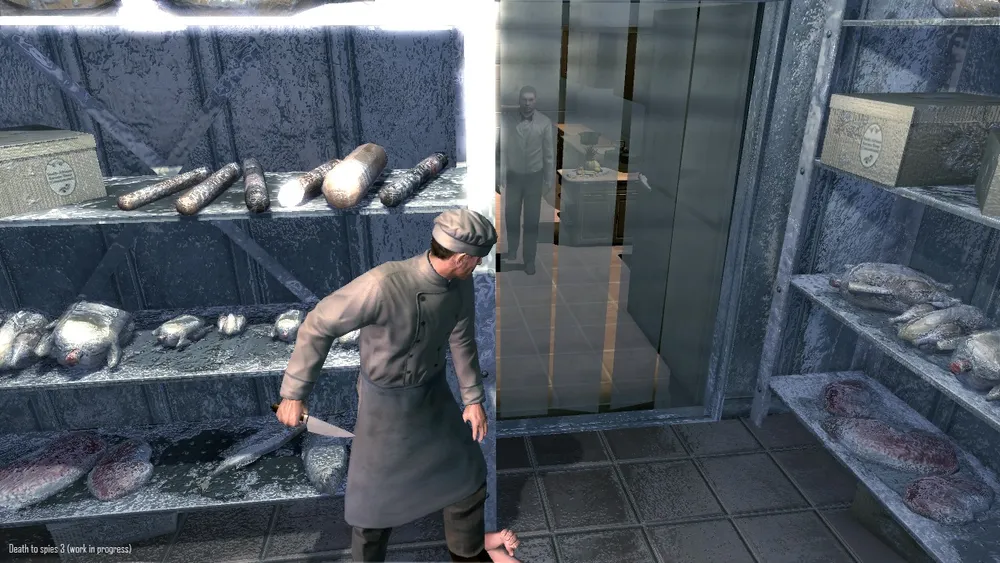
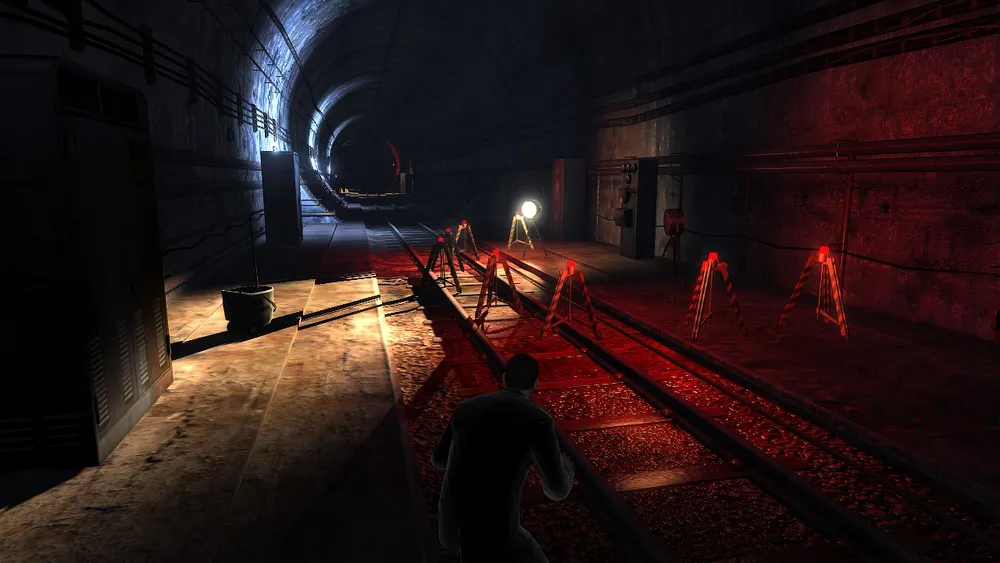
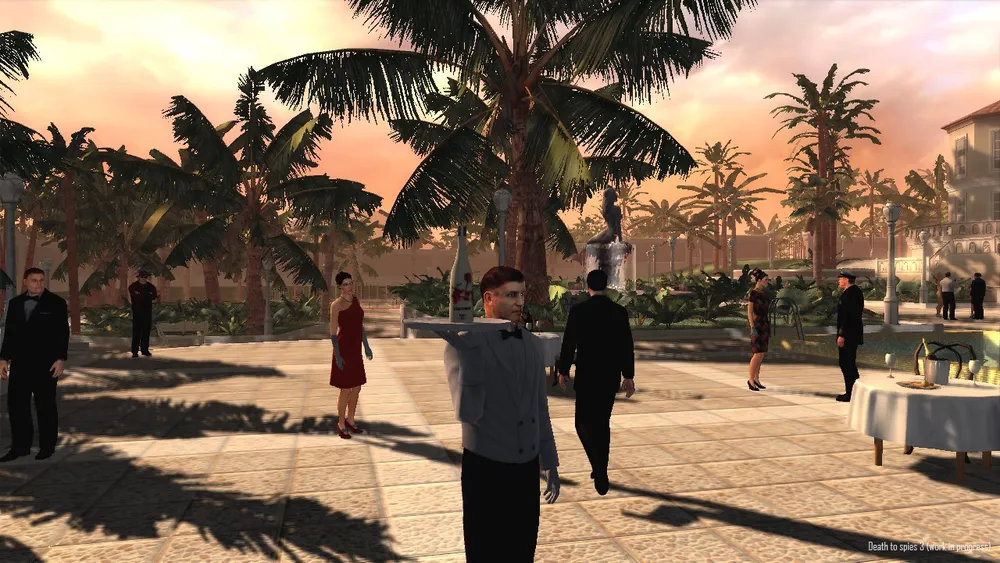
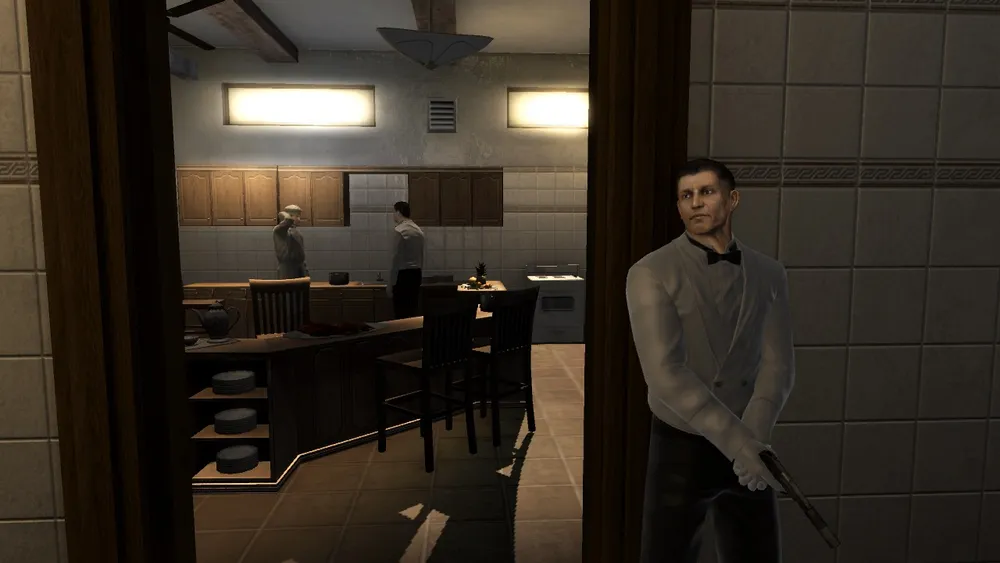
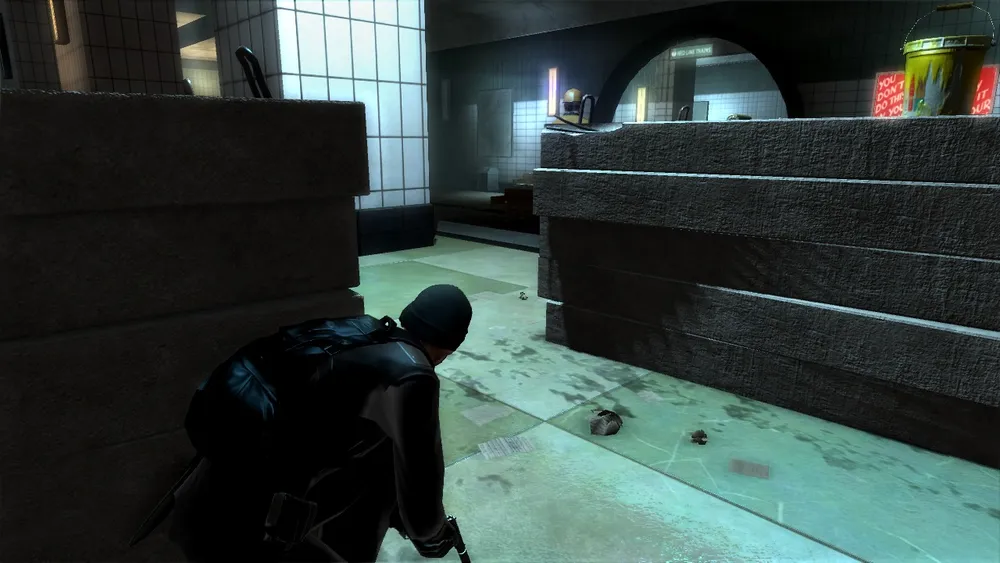
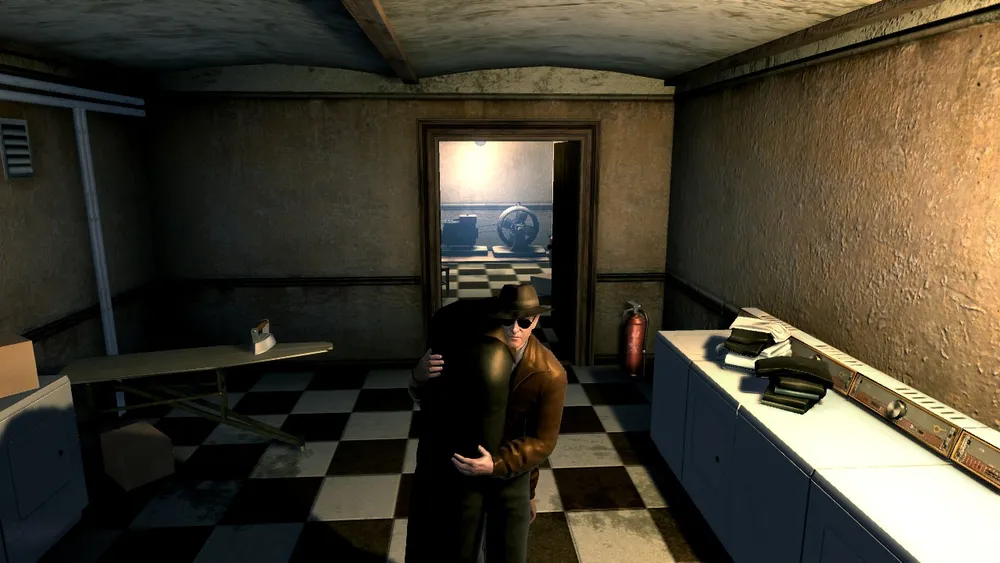
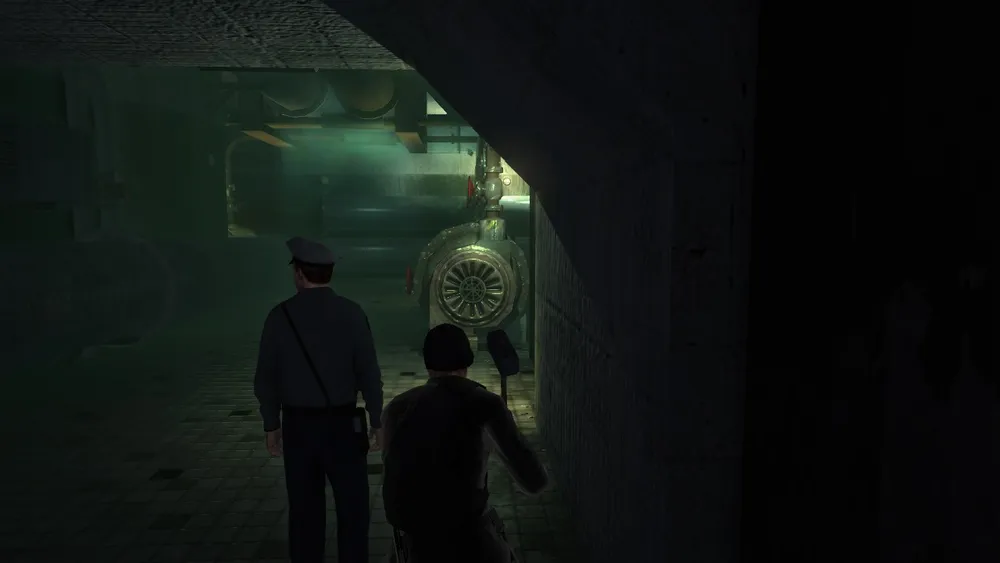
The police are armed with pistols, so we traditionally sneak up from behind and take them out. Then something new for stealth catches the eye: a hammer. Of course, we take it in hand and stealthily approach the next enemy with it. An effective swing, a strike to the helmet from behind, a melodious chime, and the enemy crumples to the floor. The other guards still remain oblivious. The stealth mechanics may crack under pressure, but the impressions from what was seen are stronger – if there are enough makeshift tools scattered around the levels, the routine process of stealthily approaching from behind will be spiced with numerous options. Of course, the arsenal includes tranquilizers, chloroform, and other familiar tools from the first part. Having once again admired the play of light in the tunnels, we move to the second level, which showcased a much more interesting innovation of the sequel. Death to Spies 2 remains a fully single-player game, but some levels will feature cooperative mechanics: up to three characters can be controlled simultaneously, making the gameplay significantly more complex. Each hero – Semen, Olga, and Viktor – has special abilities that dictate gameplay. Olga distracts the guard while Semen sneaks behind him to disable the security, allowing Viktor to climb over the fence. At any given moment, only one character is under player control, but you can switch between them at any time, and for special cases, you can set behavior lines and build entire tactical schemes. This is aided by the level map, which marks the movements of all characters in the level. The first part of Death to Spies was a worthy game, but it had an air of domestic… shall we say craftiness? That is not felt at all in the second part. Crossing our fingers, we hope and wait for the release, which is planned for this year".

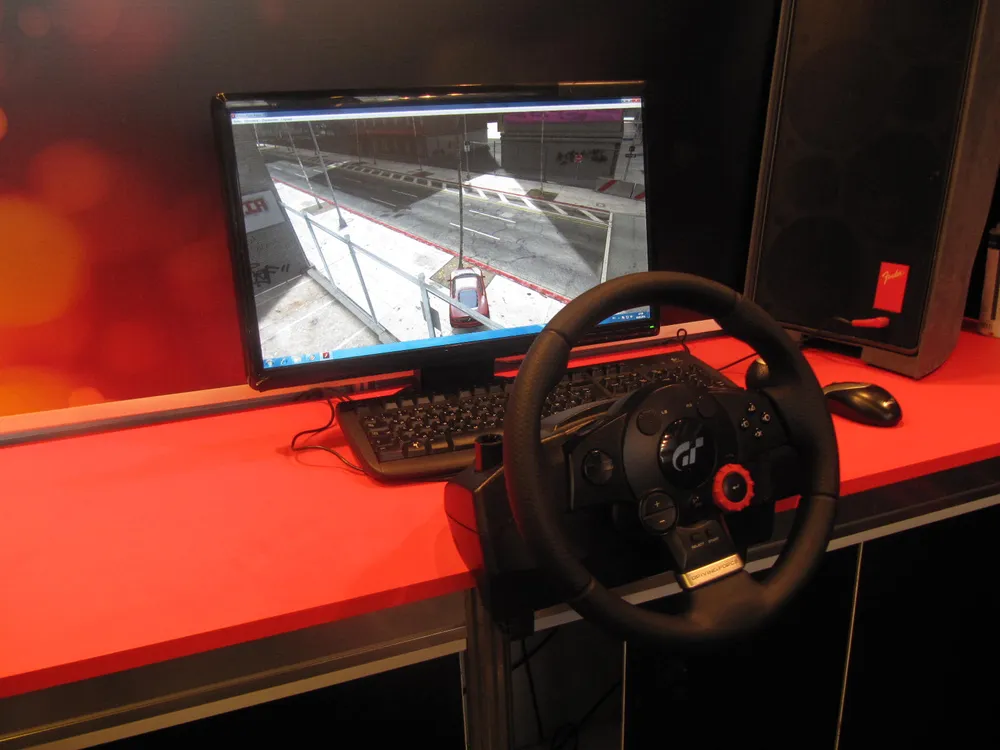
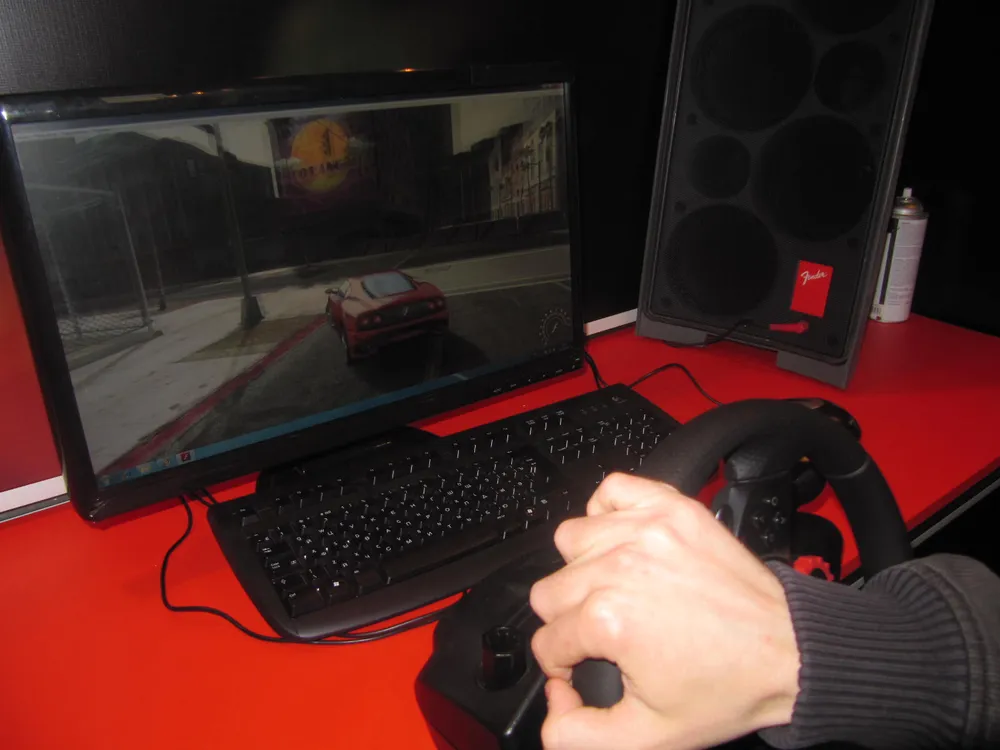
Separately, I would like to mention Max Racer – a racing game developed on Alternativa3D 8 technology for Flash Player 11, which, by the way, received an award of the same name at KRI 2011. A demo version of the project was presented at the booth, equipped with... a steering wheel and pedals from Logitech. Honestly, I didn’t expect to see such stunning graphics. I can't compare Max Racer to any other fully-fledged racing game, but you can believe me – this is a real revolution.
The trend of the Russian market is vividly displayed in the schedule of developers' lectures. Nival (which is now just Nival), led by Orlovsky, devoted almost all of its time to Prime World. You might ask, what's wrong with that? After all, Prime World is a full-fledged client online game. But there are still some hidden nuances. Are they stones? Digital Entertainment decided to share their experience by opening the topic of earning money through advertising in social networks. Mail.ru talked about promoting client and browser games in the current market, while the same Nival waited with a smile for guests at their booth with Kings Bounty Legions. And yes, in Legions, it will be necessary to play on “Facebook,” or on various mobile platforms.

For a time, let’s set aside the booths and stroll to the lecture of Konstantin Efimov – a programmer at “Akella” and developer of the long-awaited Postal 3. Konstantin, despite it being morning and minds still waking up, delivered a rather engaging lecture on the Source engine, the gradual adaptation of the team to it, and past problems that forced significant changes to some ideas. As the speaker noted, Source, despite seeming practical, is, in fact, quite complex and somewhat old-school in its workings. The challenges faced were tied to this fact. It was thus decided to abandon the first-person view (excuse the pun), and consequently, Postal 3 became exclusively third-person. All the “conflict” between the camera and the main character’s model – the positions of the eyes and the camera, which all NPCs look at, did not correspond naturally. Also, due to limitations in the rendering area, some locations were planned to be “built over.” In other words, to ensure the player is unable to peek behind a tall, say, wooden fence. There’s nothing interesting back there. This nuance also relates to zone division, each of which will be loaded separately.

Since the action takes place in a quite large city, there’s no avoiding diverse inhabitants. The developers decided to take the simplest route: create dozens of NPC clones and simply dress them in completely different outfits. The result is a sense of normal background. In Postal, players were always allowed to have fun, play pranks and complete mischief, and this will be possible in the third part as well. Destroyed objects will remain in the level for as long as possible, but only if they are big enough. Like a vehicle, for example. An aquarium, however, will restore itself as soon as the player leaves the level. Another interesting aspect related to the aforementioned engine limitation is updating, or rather, resetting the “history” of the stage. For instance, a player initiates an attack from a bunch of NPCs, and then simply “runs out” of the location. Upon return, just a little earlier, the previously aggressive citizens will have no memory of you.
When asked, “when will the game be released,” Konstantin smiled and said: “well, we will definitely make it before the end of the world.” A badger is undoubtedly a very intriguing weapon, but with each passing day Postal 3 appears to be more and more trashy. As if “Akella” doesn’t overdo it with the claim that “we will release the game when it is fully ready.”
I also attended the “round table” dedicated to the topic of “The Importance of Game Localization for Success in the Market.” Six specialists in the gaming industry discussed whether games are well translated in Russia, the shortcomings of publishers working with freelance translators, and how to properly collaborate with translation agencies. A representative from Nival actively participated in the forum, taking his place in the hall, and a representative from the People's Republic of China asked his question. For a few minutes, he tried to articulate it in Russian until the hosts finally figured out what he meant. “Yes, we in Russia know Chinese, and we successfully localize Chinese games.” That was the gist.
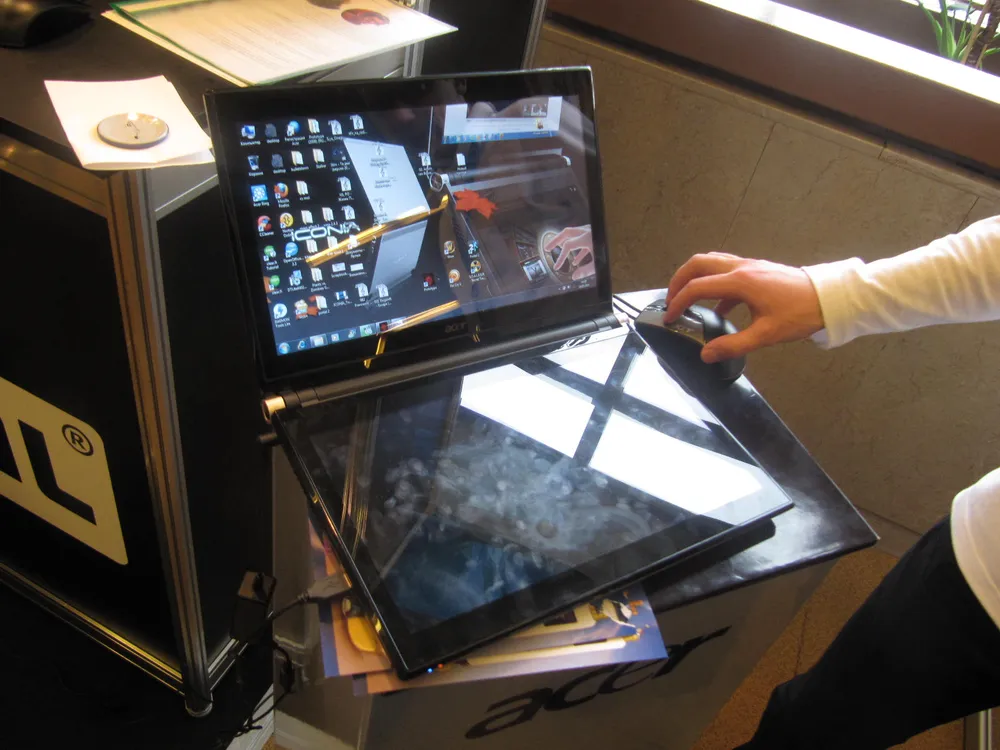
Modestly tucked away between the booths was the representative of Acer with the company’s latest development - the Acer Iconia laptop. The main feature of the model is the presence of two 14-inch touchscreen displays. The new device can also boast of technical specifications: a powerful Intel Core i5 processor, 4 gigabytes of DDR3 memory, a substantial 640-gigabyte hard drive, and a robust integrated GPU from Intel. The development is certainly interesting, but the price is quite steep – on average, Iconia will cost you around 53,000 rubles.

You could find some time to rest, perhaps even sleep; however, missing the talk by Sergiy Orlovsky was certainly not an option. The founder of Nival gathered a large audience and conducted a typical presentation for himself. This time on Prime World – a promising cross-platform social strategy. Note the ‘cross-platform social’. For those who are unaware and hearing about Prime World for the first time, I inform you – Nival creates its own, shall we say, “DotA,” spicing the project with unique ideas and technologies. Thus, Prime World will be based on two engines. The point here is that, in essence, the game represents two parts. It’s noteworthy that Orlovsky emphasized heterosexuality (that is when a boy loves a girl and vice versa). Why is it acceptable for a couple to casually watch a movie together, can weed a garden (though no, he didn’t give that as an example), but can’t play games together? “I’m tired of serious MMO games for a male audience,” remarked Sergiy’s ego. Hence the concept for Prime World was birthed – the project will be divided into two interlinked parts. More about the mechanics, gameplay, and such will be told to you all soon by AQuaRity. I will just mention the game’s graphics – visually, Prime World looks incredibly cool, especially the dynamic change of terrain on capturing control points.
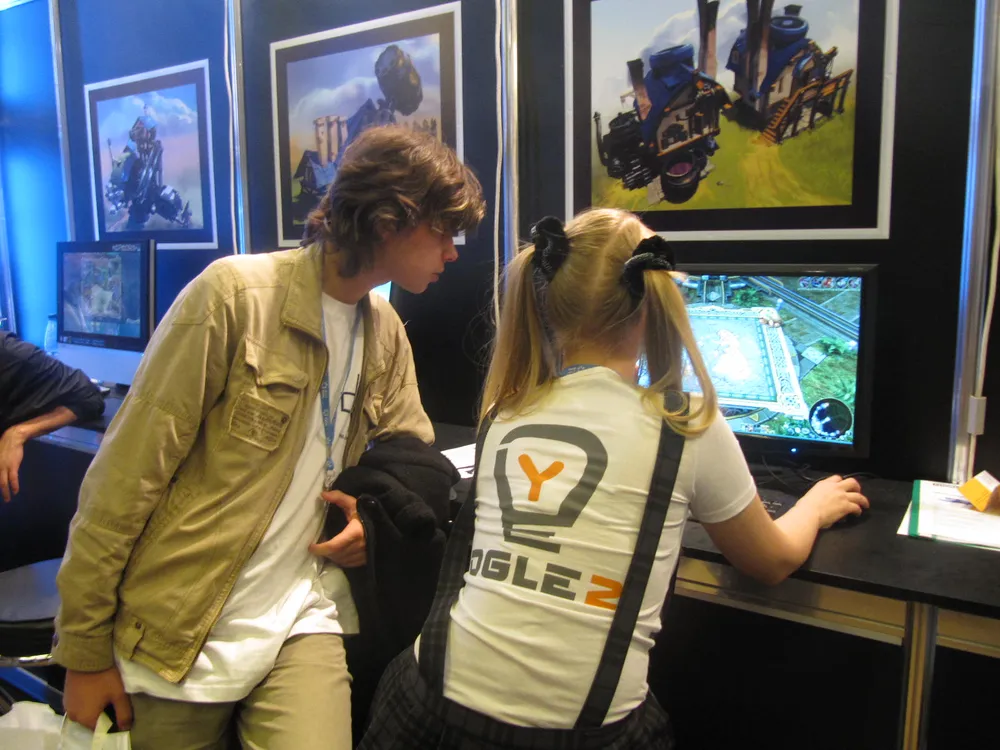
Boys and girls play Prime World together

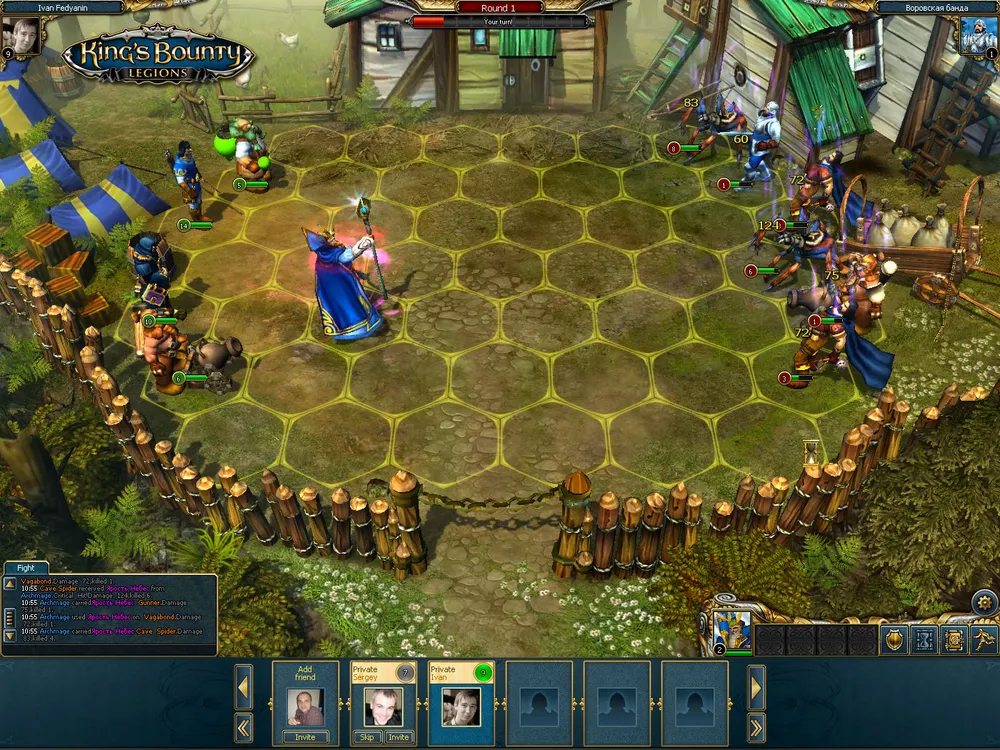
Nival's development trajectory and the company's overall policies are well reflected not only in the concept of Prime World but also directly related to Kings Bounty: Legions - another cross-platform strategy based on the Free2Play system, targeting social networks and mobile platforms. As claimed by Sergey Orlovsky, “we believe that there are already enough people in social networks and on mobile platforms who are interested in serious and deep games”. Legions is set to launch this summer, and the project should certainly please fans of the series: the style and atmosphere are intact. Newcomers who inhabit social networks should be attracted by the friendly interface, visual design, and accessibility. The first fans have evidently already appeared at KRI 2011 - a girl who was waving her arms in Skydive just recently spent nearly an hour behind Kings Bounty: Legions. Yes, the founder of Nival certainly knows what he is doing.

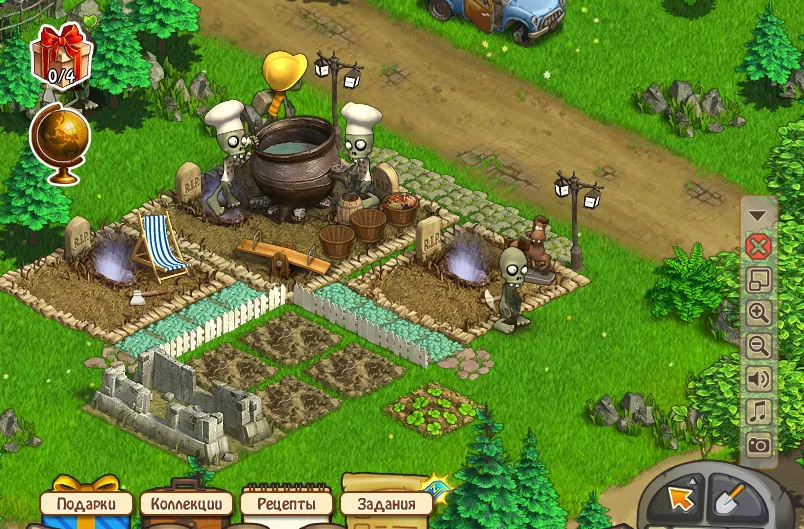
"It was labor that turned a man into a zombie." The company Vizor Interactive, engaged in supporting and developing online games since 2007, launched its first social project - "Zombie Farm" in December of the last year, which almost immediately gained great popularity among users on “VKontakte".
If you used to spend hours playing “Happy Farmer,” the zombie alternative will definitely appeal to you. Here, players must also grow plants, manage their farm, and more. The main distinction – the presence of charming zombies, reminiscent of the undead from Plants vs Zombies. The zombies are ready to work for your benefit by harvesting crops, trees, stones, and other resources. The main problem being that their acute shortage of brains makes them collapse, which is a big problem for the farmer and his estate. However, one can tell a lot, or simply go and try the game themselves. After all, what so attracted visitors to KRI about “Zombie Farm”?
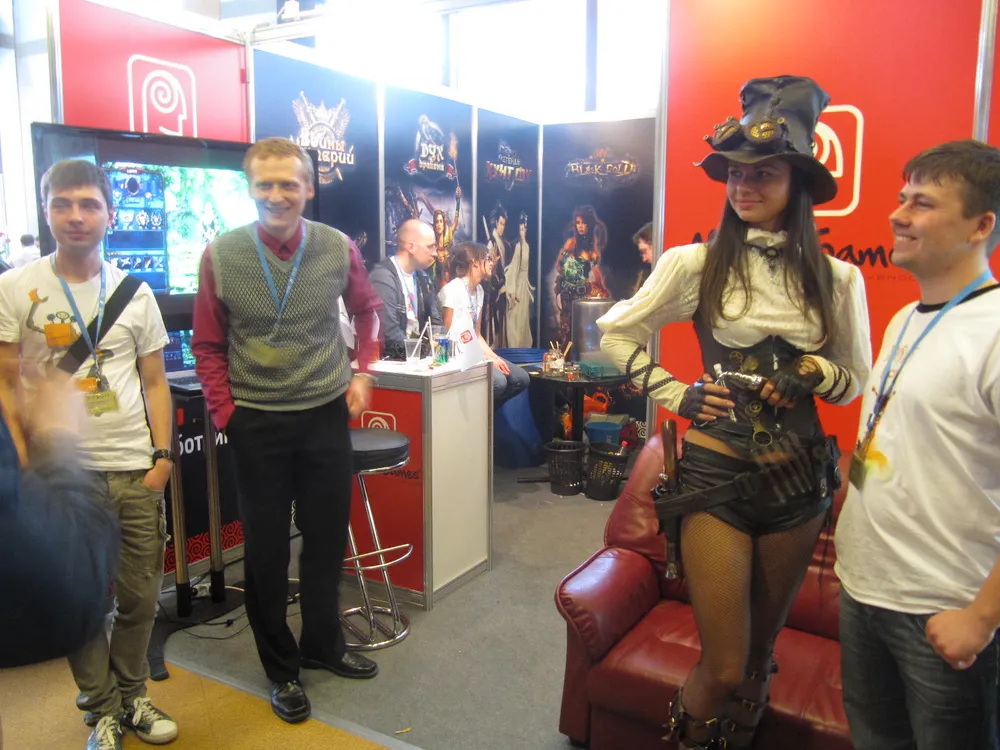
Having stayed long enough, we decided to head to Mental Games, with which the holding "Gaming-Media", owning the social network GAMER.ru, recently signed a partnership agreement. At the booth, one could spot a very pretty girl (the best model at KRI 2011, in my opinion) in a stylish post-apocalyptic outfit, and inside the booth – a real moonshine still, which from afar I initially mistook for a hookah. Then it became clear to me why so many people constantly gathered around Mental Games. The developers had no exclusive information on their projects, so my conversation with the company’s representative turned out to be somewhat general. It is worth noting that Mental Games is one of the few companies actively developing full-fledged client MMOs. Currently, for instance, the team is fully working on multiplayer games like "Black Gold" (release date: Winter 2012) and "Kung Fu Legends" (release date: Winter 2011). Browser games "Spirit of the Dragon" and "Hot KungFu", of course, are also on the work plan. Next year, by the way, Mental Games will launch its social network in 3D – a sort of virtual world of a new generation called "1-st Virtual". So, we keep an eye on these promising guys from Mental Games, especially since they’re closer to our resource than anyone else.
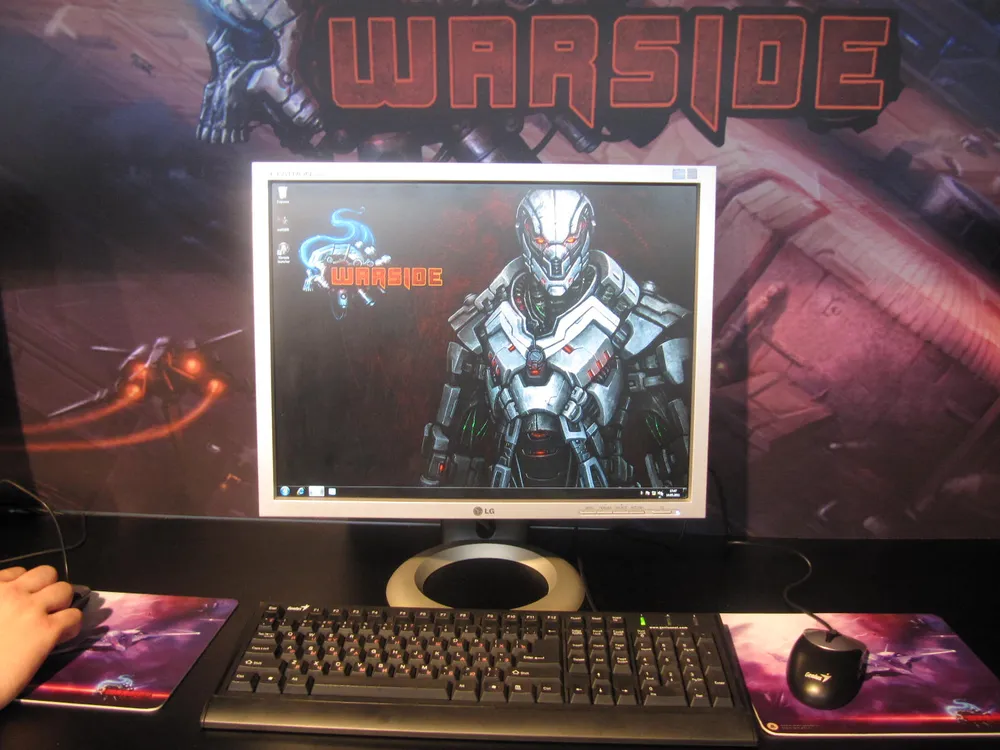
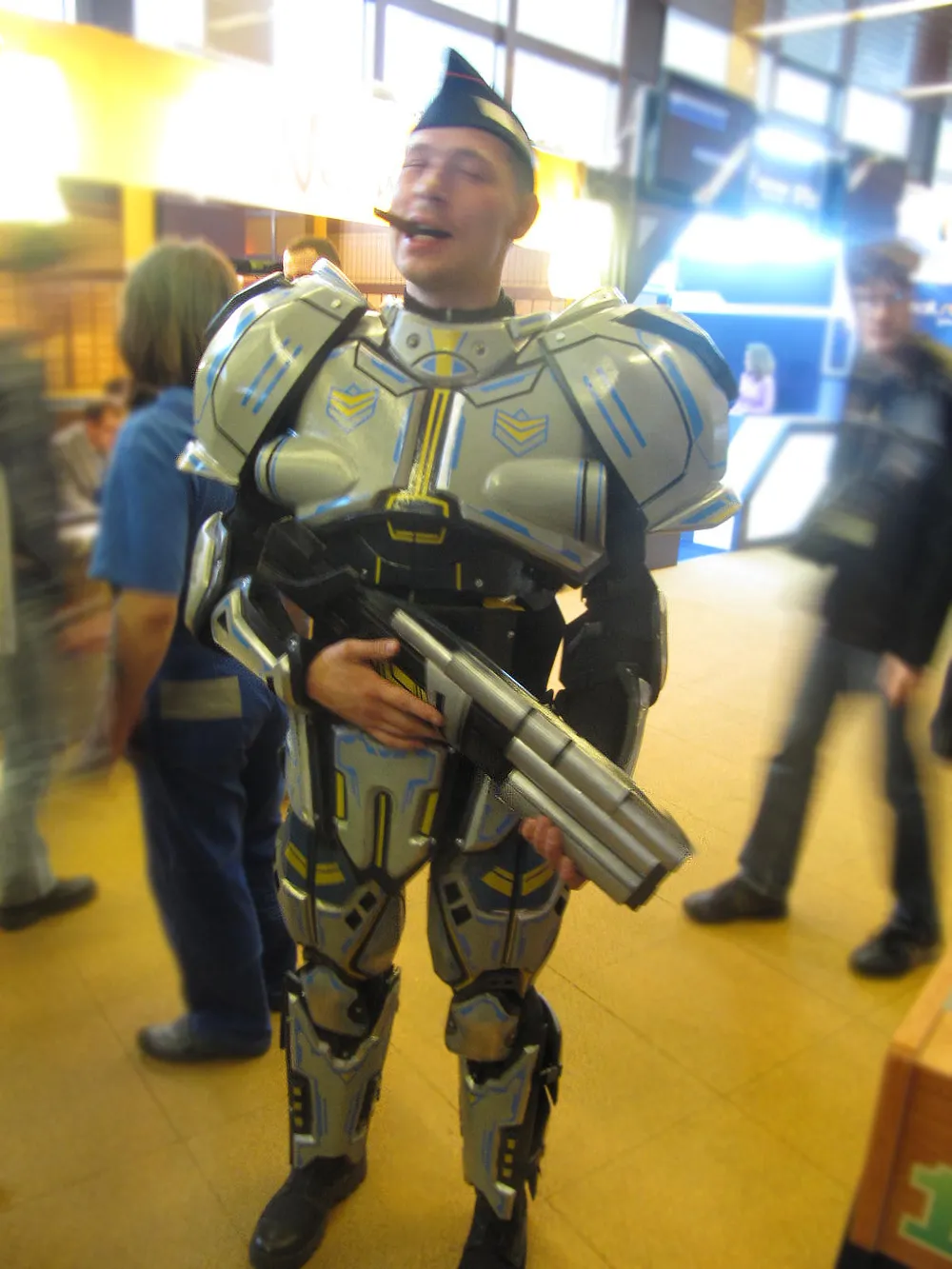
AQuaRity: "Next to Mental Games was the Kraken Games team. The music coming from their booth left no doubt – once again, Warside. I first met the game back at Igromir 2009, and since then the team has been slowly but surely bringing the game to the finish line. Warside is a 2D shooter in the style of Soldat, complemented by leveling and diversity of everything imaginable. Four character classes, hundreds of weapons options, armor, and other elements of customization, and of course, planetary levels, each offering its tactical schemes. The version tested at KRI 2011 shows – progress is being made, and not much is left to finish: to enliven the levels with functioning elevators and platforms and to fetch more players for them so the maps don't seem empty. An open beta test is already quite near, in the second half of this year, and from there one can judge the game as a whole, with all PvE and PvP elements and played teams from all three sides. Without an active community, the future of Warside is simply impossible, although the girls at the booth and the crowd favorite – a marine in massive armor (who slightly resembled the infantryman from Starcraft 2, and nearby, by the way, there was a laptop running the strategy – one could frolic plenty in 3D glasses – a note from serick) shows that Kraken Games is coping with drawing public attention quite well".
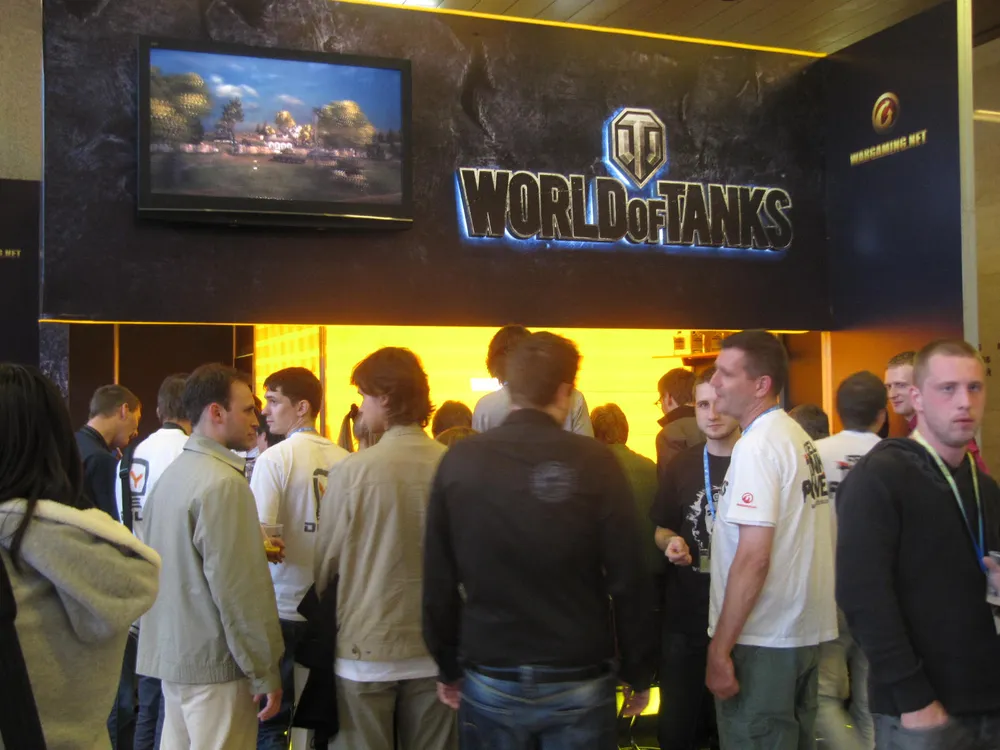

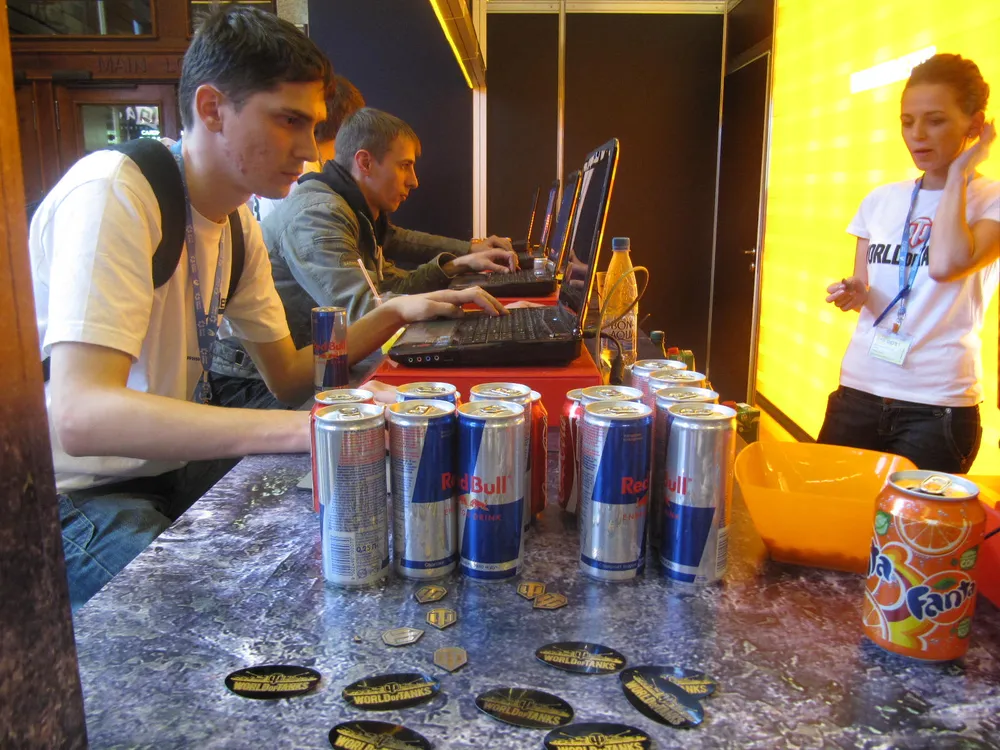
Opposite the booth of Gaijin Entertainment was, one might say, the bar Wargaming.net, outfitted with powerful laptops running World of Tanks – the best client online game of KRI 2010. All who wished could participate in fierce battles via premium accounts, specially prepared for KRI. Outside the conference, the developers do not use them for their purposes. During tank battles, one could sip whiskey with cola, for example, or some other "exotic" drink. In general, whatever your heart desires. And it is for this reason, as I have already mentioned, that the Wargaming.net bar became so cozy and welcoming for guests. Wargaming.net truly did excellent work, fostering a lively atmosphere, assisting inexperienced players, and periodically serving their drinks.
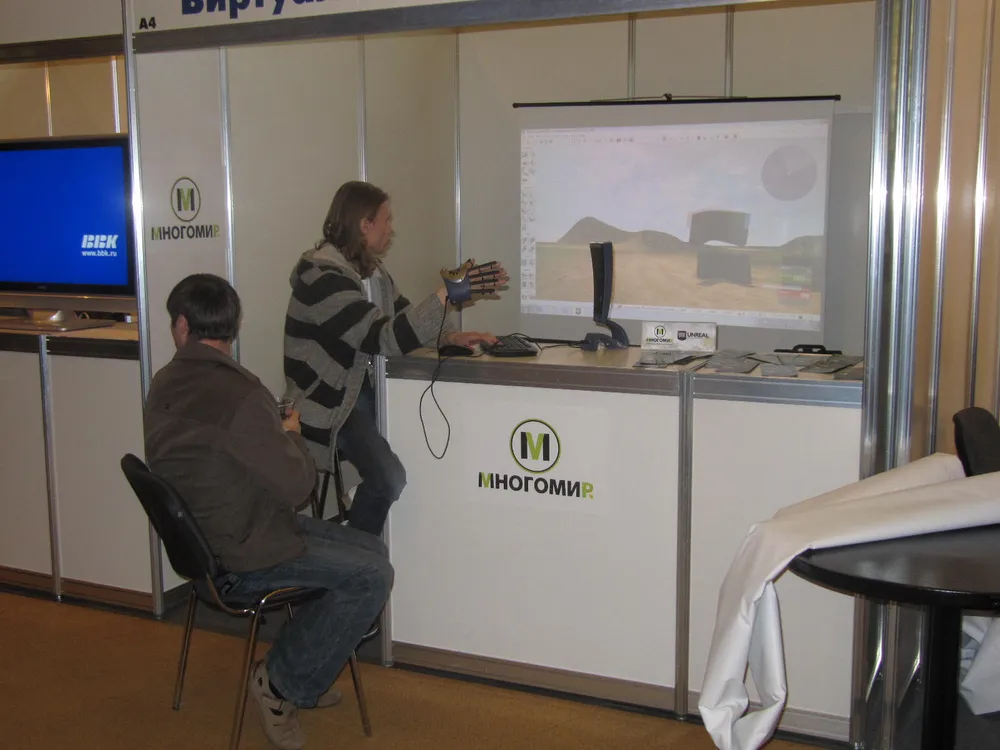
Among the rather standard set of games stood out a project from the company "Multiverse", presenting a virtual reality on the Unreal Engine 3. With the help of the described hand (see photo) and a webcam, the player can perform various actions, such as grabbing objects, for instance. The developer (currently just one person on staff) indeed has grand plans, but the implementation and testing of the project could take a long time. However, the potential is enormous, as with these features one can create the future of Minecraft with beautiful graphics and the ability to manually construct your own world. We will keep an eye on the development.
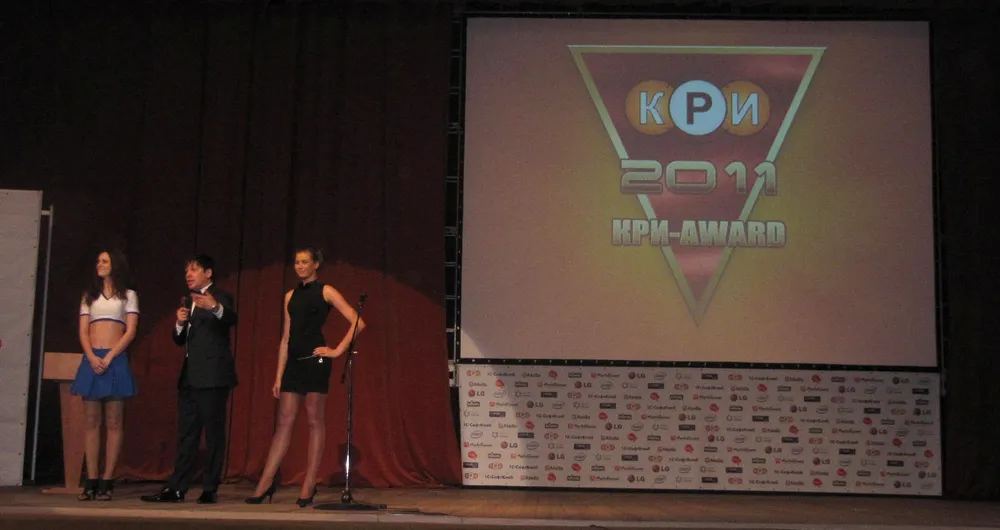
Having seen and touched everything that could be seen, touched, and even not seen, the public headed to the main hall, where Orlovsky had recently given his lecture. It was time for the awards ceremony, where the best teams and best games of KRI 2011 rightfully received their honorary awards. As always, "First Gaming" broadcasted the live feed, with the host trying to entertain as much as possible, teasing the models bringing out the awards, while team leaders expressed their gratitude to the audience, the jury, and their mothers. But KRI wouldn’t be KRI if young developers didn't find publishers for their new games. Thus, right on stage, the “Best Debut” this year and a nominee for the “Best Game Without a Publisher” effectively received a proposal from Nival. Glyph Worlds, which officially lists three people, charmed the jury and Orlovsky with their browser strategy "Paths of History". Congratulations to them. The rest is, in principle, predictable: Skydive turned out to be the most unconventional project, Braveheart was declared the best game for portable platforms, the best technology was recognized as “Alternativa 3D,” the best client-online game was Prime World, and the best game of KRI 2011 became World of Tanks. Wargaming.net, we applaud you wholeheartedly.
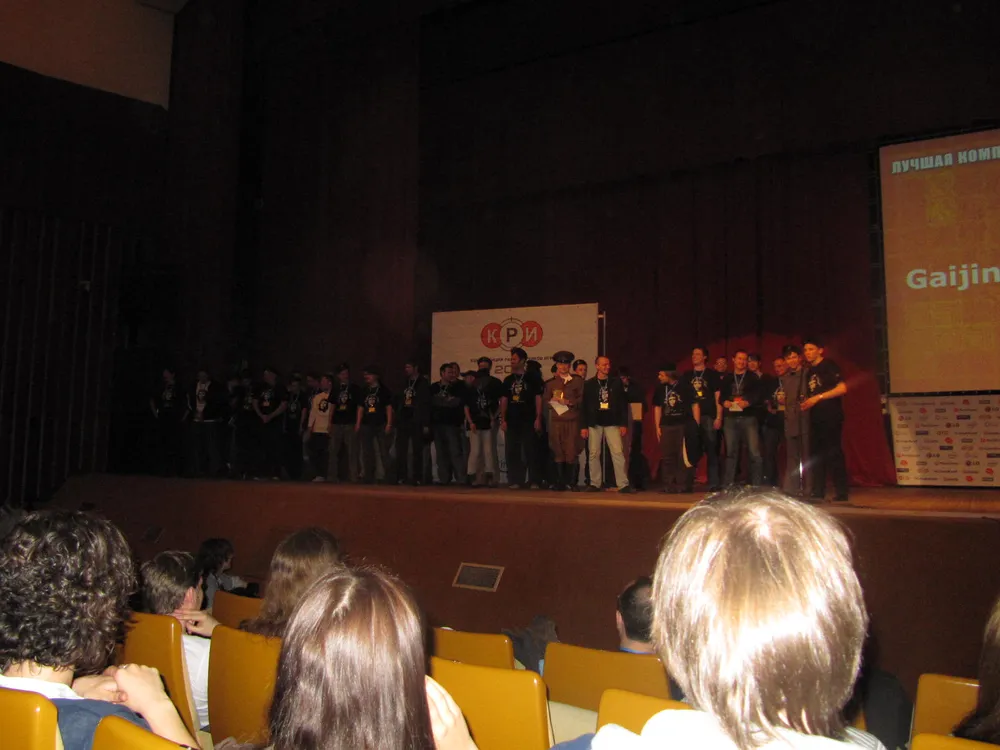
There are indeed a lot of them
Full list of winners of KRI 2011:
● Best Game of KRI 2011 — World of Tanks;
● Best Foreign Game of KRI 2011 — Fortune Online;
● Best Console Game of KRI 2011 — "Steel Birds";
● Best Portable Platforms Game of KRI 2011 — Braveheart;
● Best Casual Game of KRI 2011 — "Evocraft";
● Best Localization Company of KRI 2011 — "1C-SoftClub";
● Most Unconventional Project of KRI 2011 — Skydive: Proximity Flight;
● Best Game Design of KRI 2011 — Prime World;
● Best Browser Online Game of KRI 2011 — "Territory 2";
● Best Game Without a Publisher of KRI 2011 — Contract Wars;
● Best Developer Company of KRI 2011 — Gaijin Entertainment;
● Industry Prize of KRI 2011 — Wargaming.net;
● Best Game for Social Networks of KRI 2011 — King's Bounty: Legions;
● Best Game Graphics of KRI 2011 — "Swords of Time";
● Best Client Online Game of KRI 2011 — Prime World;
● Best Technology of KRI 2011 — "Alternativa 3D";
● Best Debut of KRI 2011 — "Paths of History";
● Best Publishing Company of KRI 2011 — Mail.Ru Group;
● Audience Choice Award of KRI 2011 — World of Tanks