
The History of Computer Role-Playing Games, Part 10
\[post\]The History of Computer Role-Playing Games, Part 1\[/post\]
[post]The History of Computer Role-Playing Games, Part 2[/post]
[post]The History of Computer Role-Playing Games, Part 3[/post]
[post]The History of Computer Role-Playing Games, Part 4[/post]
[post]The History of Computer Role-Playing Games, Part 5[/post]
[post]The History of Computer Role-Playing Games, Part 6[/post]
[post]The History of Computer Role-Playing Games, Part 7[/post]
[post]The History of Computer Role-Playing Games, Part 8[/post]
[post]The History of Computer Role-Playing Games, Part 9[/post]
Diablo and the Rise of Action-RPGs
Given the total and utter success of Diablo, even the most inept market analyst could have predicted the inevitable flood of clones that followed. Many of them were nothing more than flash-in-the-pan games. These included titles like the [Ancient Evil](/games?search=Ancient Evil) series from Silver Lightning, [Dink Smallwood](/games?search=Dink Smallwood) (1998) from Iridon, Clans (1999) from Strategy First, and Throne of Darkness (2001) from Sierra. While each of these games differed in some way from Diablo, none were destined to replicate its success.
[Dink Smallwood](/games?search=Dink Smallwood) was written by Seth Robinson, whose Legend of the Red Dragon we recently discussed. Like his previous creation, Robinson filled it with humor and satire, but it still failed to make a significant impression. Clans added puzzles from adventure games to the standard formula, while the action of Throne of Darkness unfolded in medieval Japan (and in Blade & Sword, released in 2003, players were whisked away to medieval China). Blade of Darkness (2001) from Rebel Act Studios was memorable mostly for its incredible amount of dismemberment.
Some of the more well-known clones of Diablo include Darkstone (1999) from Gathering, Nox (2001) from Electronic Arts, [Freedom Force](/games?search=Freedom Force) (2002) from Irrational Games, [Divine Divinity](/games?search=Divine Divinity) (2002) from Larian, and Sacred (2004) from Encore. Darkstone featured 3D graphics and the ability to play with two characters at once, although only one could be controlled at a time (the other was managed by the computer). The ability to zoom and rotate the camera alleviated many of the isometric issues Diablo had, like items hiding behind buildings and other objects.
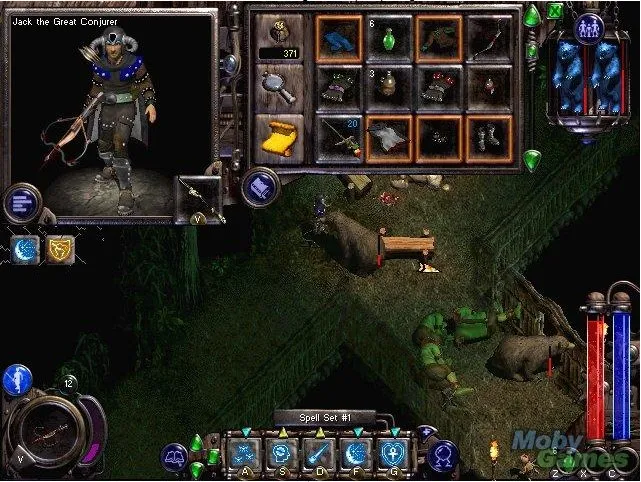
Nox, developed by the legendary Westwood Studios, garnered good ratings and even achieved some degree of success. The developers even crafted an expansion for the game, Nox Quest, and unexpectedly made it free.
[Freedom Force](/games?search=Freedom Force) – perhaps the best game on this list – introduced a comic book superhero setting, providing a great alternative to the "dark fantasy" of Diablo, along with tactical battles. In 2005, Vivendi released a sequel, [Freedom Force](/games?search=Freedom Force) vs The 3rd Reich.
[Divine Divinity](/games?search=Divine Divinity) and its sequel, [Beyond Divinity](/games?search=Beyond Divinity) (2004) – essentially Diablo on steroids with enormous gaming worlds and a vast array of skills (500!). These games also improved the often perplexing interface of Diablo. Critics, though they scoffed at their lack of originality, praised them for their engrossing gameplay and attention to detail.
Sacred went even further, offering players a 3D world where hours could be spent traversing. This game was also warmly received by critics, who enthusiastically welcomed its more open structure, but numerous bugs did not go unnoticed. In any case, at this point, Sacred stands as one of the finest representatives of the action-CRPG genre, even if its depth and complexity do not quite match the model established by Diablo.
It will be interesting to see how far developers will push the boundaries of the action-CRPG genre, as each new gameplay element will alienate players raised on Diablo, which required nothing more than a quick pointing finger.
Taylor essentially reinvented the fantasy adventure by creating a world without stereotypical races and archetypes often borrowed from Tolkien and Dungeons & Dragons/
Peter Sushiu, GameSpy, April 12, 2002.
Perhaps the most well-known action-CRPG to date is [Dungeon Siege](/games?search=Dungeon Siege) from Gas Powered Games - a series that debuted in 2002. Conceived by Chris Taylor and released by Microsoft Game Studios, [Dungeon Siege](/games?search=Dungeon Siege) became a game with a large, diverse, and fully three-dimensional world. The engine loaded it not at the beginning of the gameplay, but "on the fly," so it appeared as one seamless territory rather than a set of enclosed spaces. Leveling up in [Dungeon Siege](/games?search=Dungeon Siege) is defined by the actions of the character rather than the class chosen at the beginning of the game, which brings it closer to the [Elder Scrolls](/games?search=Elder Scrolls) series. Although players could create only one character, other adventurers or pack donkeys (that carried the plundered loot) could join the party later – up to 8 companions in total.
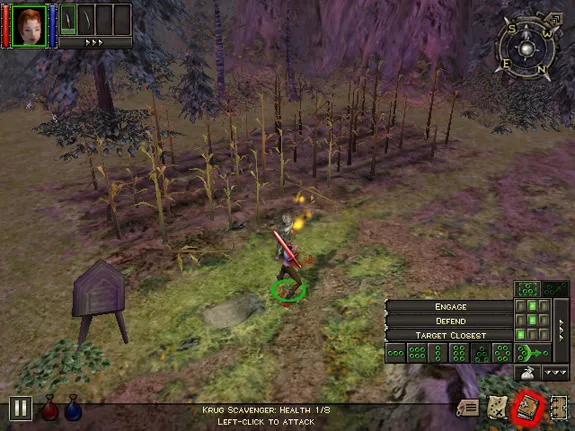
[Dungeon Siege](/games?search=Dungeon Siege)
While critics appreciated the lack of multiple load screens and the free-roaming RPG system, the overly simplistic gameplay and straightforward plot prevented the game from being lauded as a masterpiece. The following year saw the release of the expansion Legends of Aranna, adding a new campaign and a couple of improvements, such as a world map, though its ratings were rather mediocre.
Gas Powered Games released the first full sequel, [Dungeon Siege II](/games?search=Dungeon Siege II), in 2005. While the gameplay mostly remained unchanged, the new skill system (a tree, just like in [Diablo II](/games?search=Diablo II)) made leveling up more engaging. The game’s first expansion, Broken World, was released by 2K Games in 2006. While it is still quite early to talk about this series’ influence on the genre as a whole, along with Sacred, they at least keep the action-RPG genre alive.
Interplay and the Platinum Age
After Daggerfall and Diablo, a typical CRPG enthusiast might have assumed that the future of the genre was real-time games, be they 3D or isometric. However, as we have seen with Dungeon Master, the evolution of CRPGs is anything but a straight line.
Ultimately, skill is more important than innovation, and even though Dungeon Master proved back in 1987 the possibility of creating real-time 3D games, turn-based "gold box" games from SSI sold well during the 90s. Therefore, it is not surprising that Interplay's Fallout, a turn-based isometric role-playing game set in a post-apocalyptic world, achieved incredible success.
Back to the Wasteland: Fallout
In short, let’s get to the point. Fallout and its sequel, [Fallout 2](/games?search=Fallout 2), are among the greatest role-playing games ever created by humanity, and if the period they were released in does not deserve to be called "platinum," then I need a different dictionary. Like Interplay's previous masterpieces, [The Bard's Tale](/games?search=The Bard's Tale) and Wasteland, Fallout is one of those rare games that represents something more than just a set of components.
Here's the standard disclaimer: Fallout is one of my absolute favorite games, and my love for it prevents me from seeing many of its flaws. I recommend you consider my praises excessive, seek out the first two installments, and play them yourself. These incredible games continue to gain new fans even today, many years after their release.
So what makes Fallout so cool? Did not a ton of post-apocalyptic games come out before it, like the aforementioned Wasteland, Autoduel from Origin, or Scavengers of the Mutant World from Interstel? Does it not borrow its leveling system from games like Mandate of Heaven and Daggerfall?
Welcome to Vault-13, representing the latest development in civil defense from Vault-Tec, the market leader in anti-radiation shelters/
From the manual of Fallout.
If I had to explain in one word why Fallout is so cool, I would choose the word "style." Aesthetically, the game represents a surreal mix of nuclear paranoia from the fifties and everything associated with it, as well as films like "Mad Max", "Planet of the Apes", and "Dr. Strangelove." For full enjoyment, the game even has references to "Evil Dead." This unique blend gave us some of the most thrilling moments in video game history, and I doubt there's a single person who hasn’t felt goosebumps from the opening sequence. This strange aesthetic is present literally everywhere in the game, even in the interface.
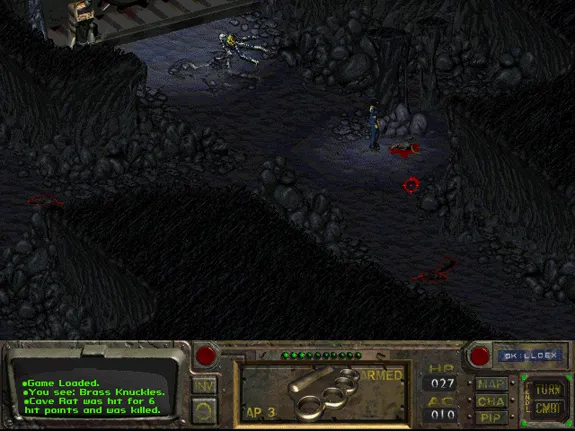
When it comes time to level up, most games switch to a dull numbers-laden screen. In Fallout, all skills are presented in the form of illustrations on "info cards" to maintain the atmosphere. The game manual is even designed as a "survival guide," supposedly an official government publication. It presents the game as a "simulator" that will help Vault dwellers better prepare for the outside world, even including a couple of "survival recipes" – for example, "desert salad." Clearly, the developers were overflowing with inspiration, and their enthusiasm hardly kept the game's boxes from glowing in the dark.
The game's story is an intriguing mix of alternate history, dystopia, and science fiction, and it’s good enough to keep your imagination turning long after you've finished the game. The gist is that about 80 years ago, in the fire of nuclear holocaust, much of the civilized world was scorched, but some survived by taking refuge in giant underground shelters, where they eventually created their own society and culture. One day, in one of those shelters, the water chip broke, and now your character urgently needs to find another. To do this, they must leave behind everything they knew. What initially appears to be an ordinary fetch quest quickly turns into something much larger, and telling the remaining parts of the story would be a crime on my part. It’s enough to say that anyone who has played Fallout instantly remembers what happened after you brought back the chip.
[Fallout 2](/games?search=Fallout 2) was developed by Black Isle Studios, a new division of Interplay specializing in CRPGs. The events of the second game unfold 80 years after the first and bear a strong resemblance to the plot of "Mad Max 3: Beyond Thunderdome." Your hero's tribe is on the brink of extinction, and to save it, you must find the G.E.C.K (in the Russian translation, the acronym received the wonderful expansion: "Generator of Edenic Shrubs, Compact"). Soon you find yourself once again embroiled in a dynamic and engaging story, to whose outcome you can't remain indifferent. The game's climax is one of the hardest (in every sense of the word) moments I've seen in my entire gaming life. The sequel improved dialogues and added a multitude of new items and characters. However, the engine mostly remained untouched.
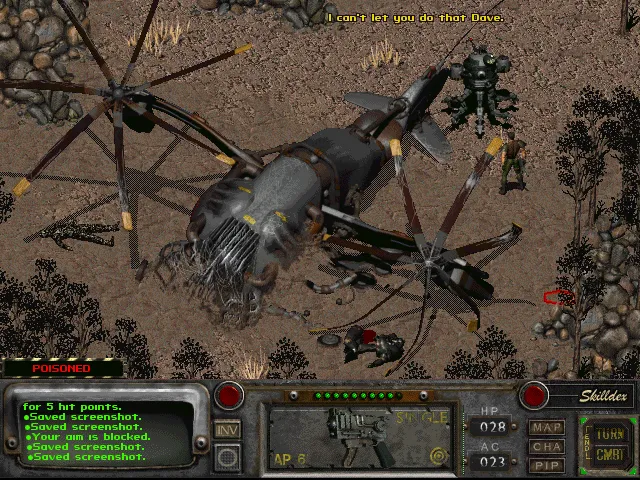
[Fallout 2](/games?search=Fallout 2)
Although both games were beloved by gamers, Interplay never released a third installment. [Fallout Tactics: Brotherhood of Steel](/games?search=Fallout Tactics: Brotherhood of Steel) (2001) is a strategy game based on the combat system of Fallout, although some CRPG elements are still present. A Fallout clone called Fallout: Brotherhood of Steel was released on PS2 and Xbox in 2004, but most original fans did not bother to check it out.
Arcanum: Steampunk and Magic.
Black Isle was not the only developer to abandon the old sword-and-sorcery scheme. Troika Games hit the jackpot in 2001 with their Arcanum: Of Steamworks & Magick Obscura, a game released by Sierra that quickly garnered a cult following. Of course, it wasn't the only game trying to merge magic and technology: early Ultima and Might & Magic managed to be first, but its direct predecessor was probably [Spelljammer: Pirates of Realmspace](/games?search=Spelljammer: Pirates of Realmspace) from SSI. In any case, now when the word "steampunk" comes to mind, we all think of Arcanum, and rightly so.
Arcanum is often praised for its freedom and intriguing world, best described as "the industrial revolution in a high-fantasy world." Mixing magic and technology usually results in a rather strange pairing, but if you blend them well (as the developers of Arcanum did), you get a kind of "magical realism," where familiar objects are placed in a setting that makes them strange and exotic. It is quite amusing, for example, to see a gnome using a silicon pistol as a weapon instead of a clichéd axe or hammer. The outcome of the game depends on whether the character follows a magical or technological path; and this choice is left to the player.
If you are seriously into role-playing games – so seriously that you don’t care about graphics, but want to immerse yourself in [another world](/games?search=другой мир) and try to explore or even change it as much as possible – then Arcanum is a great investment of money, time, and effort.
Greg Kasavin, GameSpot, August 21, 2001
Sadly, Arcanum is not without its drawbacks, especially in such an important gameplay aspect as combat. As we've seen many times, a combat system is often sufficient to either kill or elevate a CRPG to greatness. Although battles in Arcanum can occur in three different modes (real-time, turn-based, and "accelerated" turn-based), none can be termed as ideal, though the latter comes closest to that definition. The main problem is how experience points are earned here: players get them for hits on enemies rather than for kills. This fact prioritizes strength and agility of the character, leaving many more exciting opportunities behind. The balance of the game seems slightly skewed towards magic: technology users have to search for equipment for a long time and learn how to use it even longer. Fortunately, there are often alternatives to brute force.
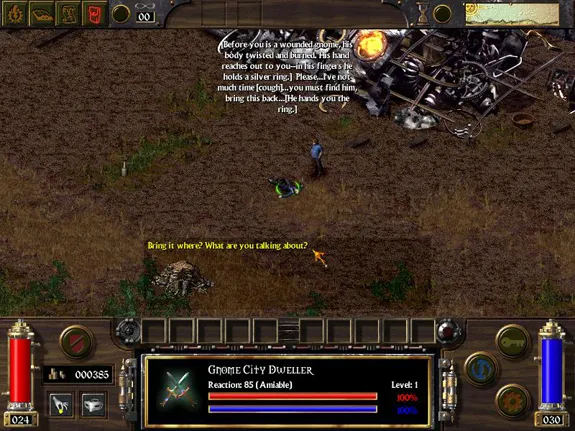
Arcanum: Of Steamworks & Magick Obscura
Arcanum has much in common with the Fallout series, undoubtedly due to the presence of key developers from the latter in its team. Both games contain remarkable humor, and their style is so cohesive and unusual that it allows players to overlook bugs and balance issues. While Arcanum is not as polished as Fallout, it still offers a worthy alternative to traditional fantasy representatives of the genre.
BioWare: The New SSI
We have already seen how tough times fell upon TSR-licensed games after the release of the "black box" games, the [Eye of the Beholder](/games?search=Eye of the Beholder) series from Westwood Studios. SSI's own creations slid from bad to terrible, eventually costing them the exclusive license from TSR. Other companies achieved slightly better results, though they utterly smeared AD&D across their games. Nevertheless, the major AD&D franchises, such as [Forgotten Realms](/games?search=Forgotten Realms), simply could not remain in the shadows for long, and many fans of CRPGs eagerly desired a return to the calm days of Pool of Radiance and Curse of the Azure Bonds, games with excellent stories and engaging gameplay set in the familiar and beloved world of high fantasy. The challenge was to "upgrade" these games to the level of late 1990s games. Two possible models were offered by the [Elder Scrolls](/games?search=Elder Scrolls) and Diablo series, but these action-oriented games had little to offer to hardcore RPG fans of the late eighties.
The team of developers that brought Forgotten Realms games back to the shelves was not SSI, Interplay, or Sierra, but a simple trio of Canadian doctors who decided to become game developers: BioWare. BioWare possesses perhaps the best engine for role-playing games ever created – the famous Infinity Engine, used to create the best CRPGs in history.
Like Blizzard, BioWare's first foray into the CRPG genre not only avoided being a disaster; it turned out to be one of the greatest games of all time: that game was the released in 1998, Baldur’s Gate. Like Diablo, [Baldur's Gate](/games?search=Baldur's Gate) is an isometric game allowing the player to create only one character. Both games were played in real-time, with one key difference: during battles, Baldur’s Gate switched to turn-based mode, making them much deeper than in Diablo.
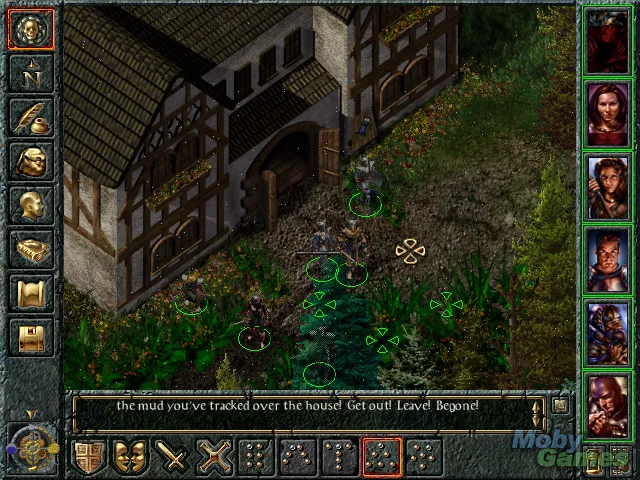
Baldur’s Gate
The engine allows almost all battles to be controlled by artificial intelligence, allowing the player to relax and observe the process. But the player can always hit the spacebar to pause the game, assign all actions manually, and then watch as characters execute them. This compromise between real-time and turn-based modes made the gameplay incredibly engaging and enjoyable for both newcomers and seasoned fans of the genre.
The entire game plays like a true AD&D party, with all saving throws, armor classes, and various calculations taking place in every situation the party may encounter. But what makes everything happening so impressive (and so different from the "gold box" games) is that all the math remains hidden, as it should be… In simpler terms, Baldur’s Gate is the best computer incarnation of Dungeons and Dragons ever created.
Trent Ward, IGN, January 18, 1999.
Furthermore, [Baldur's Gate](/games?search=Baldur's Gate) turns what might have seemed a limitation to fans of SSI games – the ability to create only one character instead of a party – into a key mechanism for unfolding the story. While players can create and directly control only one character, up to five other characters can join the party as the game progresses. Each of these characters not only possesses unique skills but also a distinctive personality and influences the plot. Due to various political views and worldviews, party members may not always get along; some may even betray the party at crucial moments in the story.
Overall, gameplay varies significantly depending on which characters the player recruits (or does not recruit) into the party. Instead of simplifying battles, the real-time aspect adds a new dimension – the time required for an action to be performed (casting a spell, drinking potions, switching weapons), which sometimes makes the character more vulnerable. I can hardly count how many times I started to read a potent spell only to see it wasted on foes that were already dead or had fled. Finally, for full enjoyment, BioWare added a multiplayer option, allowing players to trade their companions with friends. Though this option was buggy and not very well integrated, it allowed the game to compete with Diablo, whose Battle.net had already become a black hole for the money of many parents around the world.
Like any great CRPG, [Baldur's Gate](/games?search=Baldur's Gate) features a wonderful, richly nuanced story that cannot be simply summarized (moreover, such a summary would kill almost all the fun of the game – better to discover everything yourself along the way). It all starts when something (or someone) has caused a severe shortage of iron in the land, leading to an influx of bandits on the roads. Meanwhile, two wards of the wizard Gorion (the lovely rogue Imoen and the player character) find themselves without their protector and must fend for themselves. Gradually, the player learns of a grand conspiracy involving an organization called the Iron Throne. By the end of the game, it becomes clear that both the player character and Imoen are not who they appear to be at first glance. It is a complex yet entirely plausible tale of political intrigue, whose moral does not boil down to a clear-cut struggle between black and white like in most other CRPGs.
Exactly one year later, the expansion Tales of the Sword Coast was released. It added new lands, spells, weapon types, and made a couple of changes to the interface and gameplay. But, more importantly, it added four new quests. Critics agreed that the expansion was just a small add-on that should not be confused with a full-fledged sequel. Some gamers were put off by the lack of story development, but others were simply happy to receive more [Baldur's Gate](/games?search=Baldur's Gate).
The true sequel, [Baldur's Gate II: Shadows of Amn](/games?search=Baldur's Gate II: Shadows of Amn), was released in 2000 and immediately became a bestseller. The game still used the Infinity Engine, but the graphics were slightly improved (including a new resolution – 800x600, although the old 640x480 was retained). Now the game supported the latest 3D accelerators of the time, popular among Windows users. In Shadows of Amn, new classes, specializations, and cool skills like two-weapon fighting were also introduced. Some beloved characters from the first installment, including Imoen, returned in the sequel, and now conflicts and romantic relationships between party members further influenced the gameplay. Critics awarded the game top marks one after another; it was evident it would become a platinum classic. Personally, I consider it the best CRPG ever made.
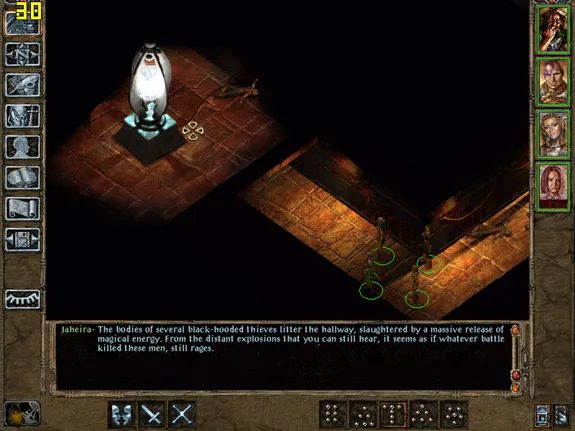
[Baldur's Gate II: Shadows of Amn](/games?search=Baldur's Gate II: Shadows of Amn)
The story of the second part starts right where the first ended (another reason for newcomers to start with the original). Unfortunately, it is quite hard to talk about the plot of Shadows of Amn without revealing the shocking ending of the first part. I can only say that this time the plot deals with the bad blood running through your character's veins. Unfortunately, the search for answers is interrupted by Jon Irenicus, an evil wizard who captures you and your friends in hopes of stealing your powers. But the plot quickly becomes intricate and complex, and throughout it, you will find yourself going to hell and back.
There is no doubt that [Baldur's Gate II: Shadows of Amn](/games?search=Baldur's Gate II: Shadows of Amn) occupies a rightful place among the best games of our time, if not of all time.
GameSpot Editorial Team, March 27, 2006.
One of the most praised features of the game is the freedom it gives to gamers. Many quests are not mandatory, and there are numerous ways to play through the game, including seriously altering plot events. Players can either stick to the main quest and ignore all side branches or, conversely, get so lost in them that they lose track of where the plot is going. And, as in the original game, the player's party influences gameplay much more than just assisting in battles. If you put characters with different moral values in one party, it can lead to interesting and dramatic events to witness at least once in a lifetime – especially considering the excellent voice acting. Multiplayer was not neglected, and a party of gamer friends could experience the game’s sensations through a local network, further resembling the feelings from old-school tabletop games.
In 2001, BioWare released the expansion for the game titled Throne of Baal. It concludes the entire saga, so it’s a must-play for fans of the previous installments. Moreover, it added new items, spells, and class abilities. Additionally, a dungeon called the "Stronghold of the Watcher" was added, accessible during some chapters of Shadows of Amn. But perhaps what stuck in people's minds the most was the godlike power that the character gained at the end of the game. It's a perfect conclusion to a great series.
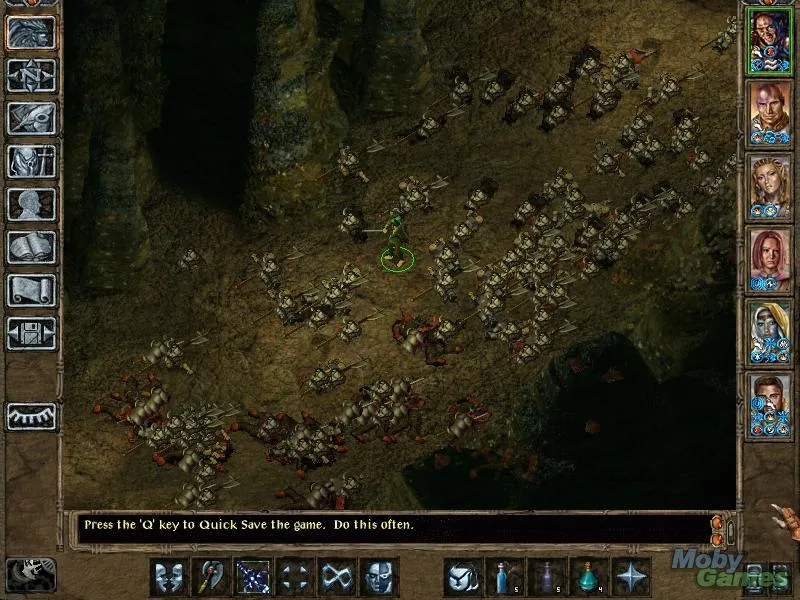
Throne of Baal
So what makes the [Baldur's Gate](/games?search=Baldur's Gate) series so great? Here, it seems, it's all about hard work rather than genius. [Baldur's Gate](/games?search=Baldur's Gate) brings us a good story, great characters, interesting quests, tense battles, and an intuitive interface. The graphics, sound, and music are also magnificent and contribute to creating a unique gaming atmosphere. No single gameplay element stands out among the others. No tricks – just pure platinum gameplay.
Better than [Baldur's Gate](/games?search=Baldur's Gate), simply nothing will ever be.
[Planescape: Torment](/games?search=Planescape: Torment)
It can be stated unequivocally that the Platinum Age has seen its fair share of cult CRPG classics. I doubt one could gather a group of CRPG fans without at least a couple of hardcore fans of Fallout and Planescape:Torment. Both games differ from typical representatives of "high fantasy" like [Baldur's Gate](/games?search=Baldur's Gate) and offer deeper, more thoughtful gameplay than Diablo, Mandate of Heaven, or Daggerfall. Indeed, I have replayed many CRPGs throughout my life, but I can recall very few representatives of this genre that have transcended a mere game status and approached the status of "work of art." Like Fallout, [Planescape: Torment](/games?search=Planescape: Torment) pushes the boundaries of the genre and forces the AD&D rules to serve its own interests. Although Planescape was not as successful as more traditional CRPGs of the time, it nevertheless remains a true role-playing classic and yet another reason to label that period the Platinum Age.
The folks at BioWare quickly realized their Infinity Engine was the best CRPG engine on the market at the time and sold a license for its use to Black Isle, the Interplay division responsible for [Fallout 2](/games?search=Fallout 2). The developers at Black Isle wasted no time, and in 1999 released the cult classic [Planescape: Torment](/games?search=Planescape: Torment). The action takes place in the Planescape setting, which includes several interconnected planes. The unusual storyline and surreal atmosphere of the game charmed players who were already ready for darker and more metaphysical RPGs. Some critics even claimed the game resembles a graphic adventure rather than a role-playing adventure.
For those who typically avoid RPGs in Tolkien-like settings, the world of Planescape may initially be confusing, but then the stunning script and well-crafted characters help them understand why we all love this game so much.
Trent Ward, IGN, December 17, 1999.
Like any good CRPG, [Planescape: Torment](/games?search=Planescape: Torment) attracts primarily with its unique setting, narrative, and characters. The game unfolds in a "multiverse," representing numerous planes inhabited by living beings. Sigil – the city where everything happens – is the center of all these planes, but to move between them, one must find "doors" that may disguise themselves as anything. Different planes are home to creatures belonging to various "factions," or political groups (for example, Anarchists and Believers in the Source). The player can join one of these factions, but in doing so, they will not only acquire friends but also enemies. There’s no clear division between "good" and "evil" – the essence is to make the player ponder ethical questions. It’s an interactive "Divine Comedy," and one does not need to be a researcher of Dante’s works to see the many references in this great piece.
[Planescape: Torment](/games?search=Planescape: Torment)
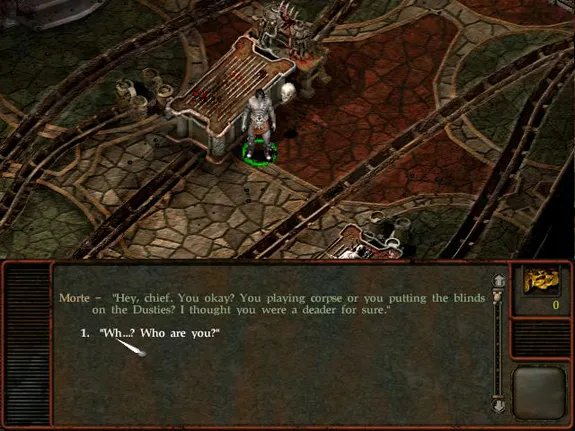
The game begins with the Nameless One, our main hero, waking up on a cold slab in a gigantic morgue. He remembers almost nothing, and throughout the narrative, we must uncover who (or possibly what) he really is. This narrative tactic allows players considerable room for role-playing, but it soon becomes evident that the past actions of the Nameless One do not exactly endear him to those he meets along the way. Fortunately, he will encounter many characters willing to join him, including the famous Morte, a sarcastic floating skull who will become his best friend. There’s even Fall-from-Grace, a succubus who decided to trade sex for philosophy by opening the "Brothel of Intellectual Satisfactions." There’s even a robot named Nordom, a kind of semi-intelligent walking crossbow. Undoubtedly, part of Torment’s success lies in the equal coexistence of serious and comedic themes.
Another feature that distinguishes [Planescape: Torment](/games?search=Planescape: Torment) from most CRPGs is the emphasis on dialogues, not only as a means of revealing the story but also as an alternative to most battles. Many conflicts can be resolved with words. Dialogues also contribute to making characters not just allies of the protagonist but something more significant. There are also other noteworthy features, such as the unique tattoo system, allowing the characters’ attributes to improve and reflecting their progress, or how the actions of the Nameless One altered the world around him. Overall, [Planescape: Torment](/games?search=Planescape: Torment) is a unique game, and I doubt we will ever see anything like it again. It is an excellent CRPG for those who value mind and wisdom over kills and endless leveling-up.
Fighting for the Right to Assemble Parties: [Icewind Dale](/games?search=Icewind Dale)
Most of the top games of the Platinum Age allow players to create only one character. Even though games like [Baldur's Gate](/games?search=Baldur's Gate) and Fallout let the player add other characters to their party, these characters were pre-created, and their personalities and goals were already scripted by the writers. While this system offered new narrative capabilities, some fans of classics like Pool of Radiance and [Eye of the Beholder](/games?search=Eye of the Beholder) felt cheated. They wanted to create their own parties of adventurers and control them directly. Black Isle listened to their prayers and in 2000 released [Icewind Dale](/games?search=Icewind Dale), yet another game on the Infinity Engine, set in the icy region of the Forgotten Realms. The game featured stunning graphics, sound, and a soundtrack by Jeremy Soule, which is still regarded as one of the best soundtracks in video game history. All this felt like a dream come true for fans of old-school CRPGs.
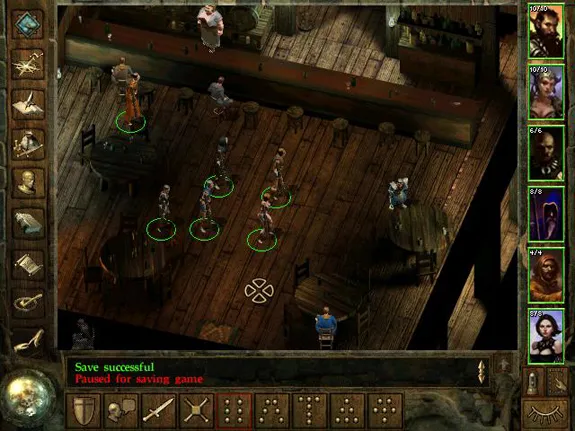
In [Icewind Dale](/games?search=Icewind Dale), players can create and control six characters, and since the game is so battle-focused, creating a well-balanced party becomes a task of utmost importance. Battles can be very tough, and winning often requires coordinated teamwork. For instance, one favorite strategy among players was to send a thief ahead to engage a few enemies, then retreat and lure them into an ambush. As usual, wizards act as the artillery: they deal massive damage but are almost defenseless in melee and need to be covered. Particularly important battles are the most tense and challenging, and their outcome relies on many factors, the primary one being preparation (Who to give which potion? What spell should the mage learn?). The only drawback of the management system is the difficulty of correctly positioning characters: it is easy to hit the wrong button and place the mage in the front line, making them vulnerable, or even accidentally leave a character in one of the already cleared rooms.
[Icewind Dale](/games?search=Icewind Dale)
Sadly, [Icewind Dale](/games?search=Icewind Dale) is not a masterpiece. The strong focus on battles and party leveling comes at the price of an uninspiring story and almost complete lack of meaningful interaction with NPCs. It is merely a linear game set in a dreary world of snow and ice. Personally, the game reminded me of the entirely forgettable Secret of the Silver Blades from SSI. Overall, [Icewind Dale](/games?search=Icewind Dale) received good reviews, but not particularly enthusiastic ones, and it certainly had nothing to counter mega-hits like the [Diablo II](/games?search=Diablo II) and [Baldur's Gate](/games?search=Baldur's Gate) II that appeared the same year. Black Isle released the expansion Heart of Winter the following year, adding five new locations and plenty of new items, skills, and spells. Resolution and artificial intelligence were improved as well. Overall, fans of the original enjoyed the expansion.
In 2002, Interplay released [Icewind Dale II](/games?search=Icewind Dale II), which differed slightly from the first installment. The most notable difference was the shift to third edition AD&D rules, significantly affecting character creation and leveling. The old die rolls for determining starting attributes were gone; now players were given a set number of skill points to allocate as they wished. The catch was that raising a skill above the "average" required more points. This exponential system worked fairly well. A new "features" system was also introduced, a novelty directly borrowed from Fallout. However, this system makes leveling up a much more engaging and varied process, prompting players to think "just one more level – and then I’ll sleep" until dawn.
The skill system provides a wide range for development but comes with a price: for instance, a thief who invests too many points in lock picking may become useless in disarming traps and moving stealthily. Finally, multi-classing is allowed for all characters and is entirely unrestricted – each character can gain a level in warrior or thief just for fun. But there is a cost for this as well: truly powerful abilities are only available to high-level representatives of specific classes. Excessive dedication to multi-classing can lead to the creation of a character who is basically devoid of any useful skills and is completely ineffective.
Does your wizard look thin and unhealthy, with a sickly complexion clearly indicating a lack of physical activity? Give him a couple of fighter levels, teach him how to wield a sword, and watch as his beer belly disappears! Is your druid’s winter wolf useless in battle? Give him a few barbarian levels, and enjoy the sight of him tearing those yetis apart in a fury!
Barry Brenesal, IGN, September 5, 2002.
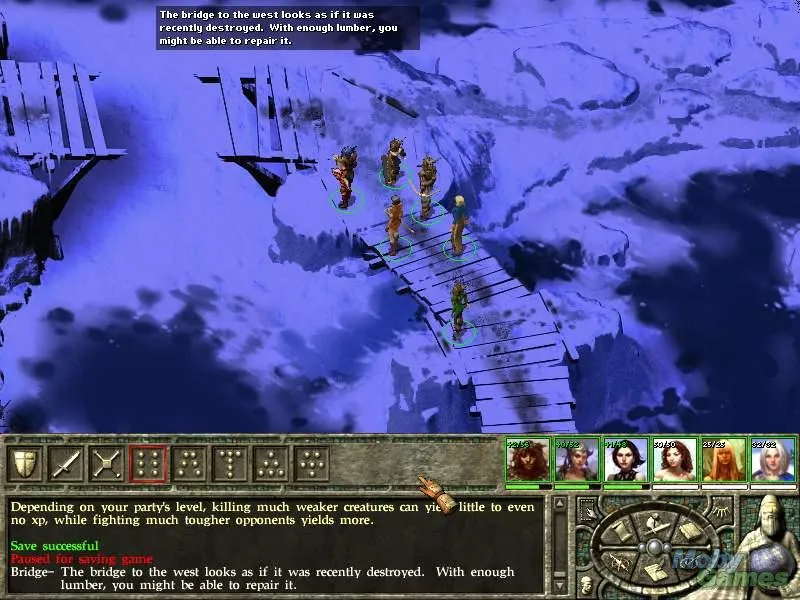
In [Icewind Dale II](/games?search=Icewind Dale II) there were other improvements as well, particularly more significant interaction with NPCs and a diversity of locations. Additionally, the game features excellent voice acting – an important element that usually goes unnoticed by most reviewers (unless it is implemented poorly – then it certainly becomes a cornerstone of criticism). While the story became a bit more interesting, the game still presents itself as a hack’n slash, leaning more towards intense battles rather than tense drama. Contemporary critics mostly highlighted the new leveling system rather than plot twists.
[Icewind Dale II](/games?search=Icewind Dale II)
Of course, another significant game of 2002 was [Neverwinter Nights](/games?search=Neverwinter Nights), which made [Icewind Dale II](/games?search=Icewind Dale II) look outdated even before its release. I will discuss [Neverwinter Nights](/games?search=Neverwinter Nights) next time, but for now, let me say that [Icewind Dale II](/games?search=Icewind Dale II) became the last great game on the Infinity Engine.
Thanks to Midest for the great offline editor and fr4ntic for assisting with proofreading.