
The History of Computer Role-Playing Games, Part 11
\[post\]The History of Computer Role-Playing Games, Part 1\[/post\]
[post]The History of Computer Role-Playing Games, Part 2[/post]
[post]The History of Computer Role-Playing Games, Part 3[/post]
[post]The History of Computer Role-Playing Games, Part 4[/post]
[post]The History of Computer Role-Playing Games, Part 5[/post]
[post]The History of Computer Role-Playing Games, Part 6[/post]
[post]The History of Computer Role-Playing Games, Part 7[/post]
[post]The History of Computer Role-Playing Games, Part 8[/post]
[post]The History of Computer Role-Playing Games, Part 9[/post]
[post]The History of Computer Role-Playing Games, Part 10[/post]
Other TSR-Licensed Games
While all the most popular games of the Platinum Age licensed by TSR were made on BioWare's Infinity Engine, there were rivals: Pool of Radiance: Ruins of Myth Drannor (2001) from Stormfront Studio and The Temple of Elemental Evil: A Classic Greyhawk Adventure (2003) from Troika Games. Neither achieved particular success, though the latter is known as the first game to allow same-sex characters to marry.
Pool of Radiance: Ruins of Myth Drannor, released by Ubisoft, may be the biggest disappointment in the history of CRPGs. It's one of those games whose glaring awfulness is hard to convey to the uninformed, always convinced that reviewers have something personal against games that don’t score well.
Undoubtedly, part of my own aversion to this game stems from its title, which is designed to attract careless fans of the legendary Golden Age game to this soulless, tasteless, and utterly unplayable parody. My disdain for this game almost led me to omit it from my article. I heard about it several months before release, and began counting the days until I could finally return to Faerûn and challenge Tyranthraxus once again.
Having spent $70 and played this game for a few hours, I kept convincing myself that sooner or later it would finally unveil itself and become much better. I just needed to endure a couple more battles with those sluggish skeletons, and my party would surely escape these gray, identical dungeons, and the game would become more interesting. Eventually, I realized it would not get better, and I had wasted around twelve hours of my life on it that I could never get back.
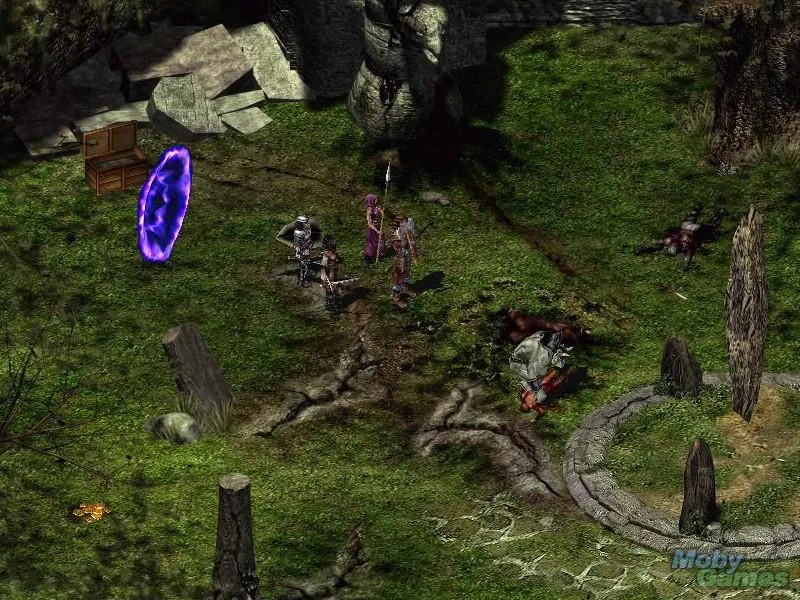
Pool of Radiance: Ruins of Myth Drannor
What makes Ruins of Myth Drannor so terrible? Apart from the incredible monotony of the game world, thousands of bugs (the game even managed to format hard drives!), and tedious, repetitious battles – it is one of the most slow games in history in the literal sense. Turn-based battles quickly become a real torture as you watch your characters and the endless hordes of skeletons lethargically crawl to the required position. Heck, those skeletons eventually look livelier than the unfortunate players! I was so driven to despair that I even downloaded a modification that sped up battles, which improved matters somewhat, but my willingness to push through this game regardless can only be attributed to a penchant for masochism.
Thus I solemnly declare Pool of Radiance: Ruins of Myth Drannor the worst CRPG of all time. What’s worse, it tarnishes the memory of its great predecessor, and I dare hope that gamers unfortunate enough to have tried this game will do themselves a favor and play the original. Although the first Pool of Radiance has "outdated" graphics and interface, it has one undeniable advantage over Ruins of Myth Drannor: it is fun to play.
The Temple of Elemental Evil from Troika is a much more enjoyable game, and its developers clearly targeted old-school CRPG fans. Troika debuted in 2001 with their well-known steampunk masterpiece Arcanum, but The Temple of Elemental Evil turned out to be too hardcore for players whose introduction to the genre began with Diablo or even [Baldur's Gate](/games?search=Baldur's Gate).
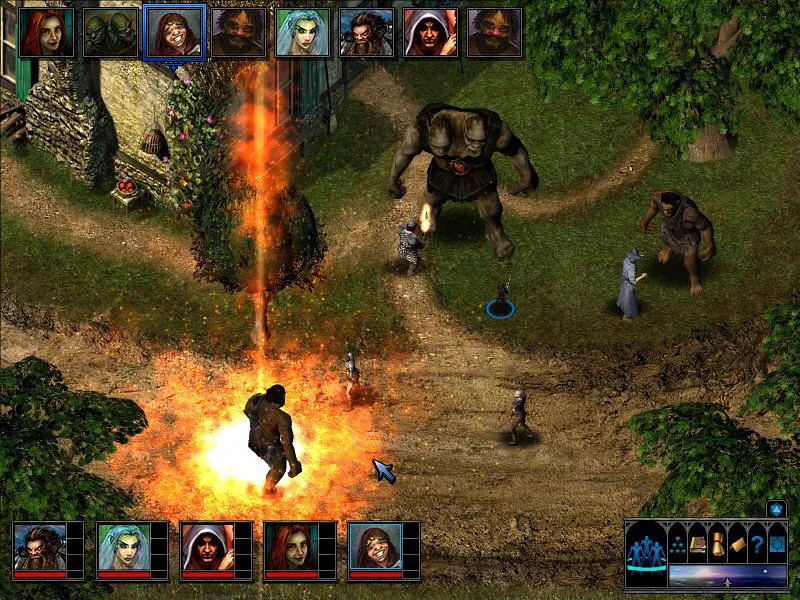
The Temple of Elemental Evil: A Classic Greyhawk Adventure
Like Ruins of Myth Drannor, Temple of Elemental Evil is a party-based game with a third-person isometric perspective, and battles here occur in turn-based mode. Although the game's interface is somewhat inconvenient, its overall pace is much faster than that of the aforementioned abomination, and the fights are challenging enough to keep players on their toes. Unfortunately, the game is filled with bugs, and the lack of a good plot and interesting characters certainly didn’t help it gain popularity. Even the unexpected ability to marry two male characters didn’t draw much attention to Temple of Elemental Evil.
Clearly, not every developer has the qualities necessary to create a magnificent TSR-licensed CRPG. To do it right, not only a fantastic engine is needed; significant effort must also be spent on crafting an engaging story that unfolds based on the player's actions. The best of these games (Curse of the Azure Bonds, [Baldur's Gate](/games?search=Baldur's Gate) II, [Planescape: Torment](/games?search=Planescape: Torment)) reward us with something far greater than experience points and gold coins. They draw us in, claiming whole days of our lives, leaving only one desire in our souls – MORE. On the other hand, games like Descent to Undermountain and Ruins of Myth Drannor vividly demonstrate that without a good development team, a priceless license is worth nothing at all.
Other Platinum Age Games.
Between 1997 and 2001, several important games were released, although they got lost in the shadows of giants like Diablo, [Elder Scrolls](/games?search=Elder Scrolls) and Baldur’s Gate. These include [Dungeon Keeper](/games?search=Dungeon Keeper) (1997) from Bullfrog, which turned the genre on its head by allowing players to take on the role of the dungeon master. It is an incredibly rare and remarkable occurrence for a developer to create a game themed around the game development process. Although [Dungeon Keeper](/games?search=Dungeon Keeper) is closer to strategy than CRPG, it offers a refreshing new take on the old dungeon raids. How do all these evil wizards manage to feed and control such a horde of orcs and dragons? Critics praised the game highly, and Bullfrog wasted no time releasing the expansion The Deeper Dungeons in the same year, 1997. [Dungeon Keeper 2](/games?search=Dungeon Keeper 2), released in 1999, was also beloved by both casual gamers and journalists.
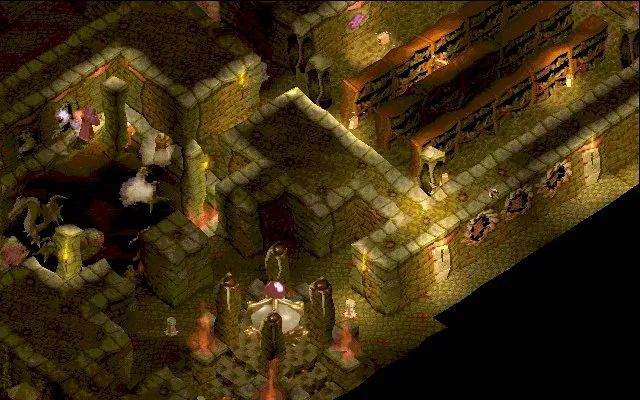
[Dungeon Keeper](/games?search=Dungeon Keeper)
The Platinum Age marked the end of three important series that began during the Golden Age: Krondor, Wizardry and Quest for Glory. In [Return to Krondor](/games?search=Return to Krondor) (1998), players returned once again to Midkemia, the fantasy world crafted by Raymond E. Feist. The series can be somewhat confusing, as the second game, [Betrayal in Antara](/games?search=Betrayal in Antara), has no relation to Feist's world. For various reasons, Sierra lost the relevant license, and the developers had to come up with a new world under very tight time constraints. But then all disagreements were settled, and a year after the second part's release, Sierra published the third and final installment of this fragmented saga.
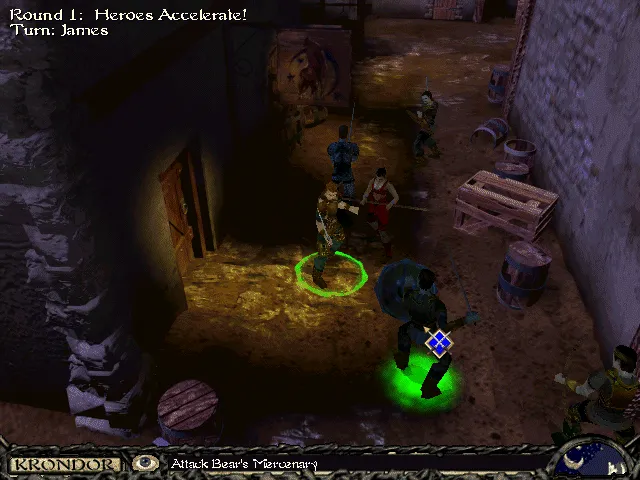
[Return to Krondor](/games?search=Return to Krondor)
[Return to Krondor](/games?search=Return to Krondor) is often hailed as the best game in the series, with a good story (as if one could expect anything else from Feist) and well-developed characters. Although it is more linear than most CRPGs, players are still given plenty of room for character development. The game's combat system is intuitive and well-balanced, and the battles take place in turn-based mode. Unfortunately, the magic system there is fairly monotonous, and the alchemy has become unnecessary due to the plethora of potions scattered around the world. Overall, [Return to Krondor](/games?search=Return to Krondor) is a game with a great story and characters, marred only by a weak engine in every respect.
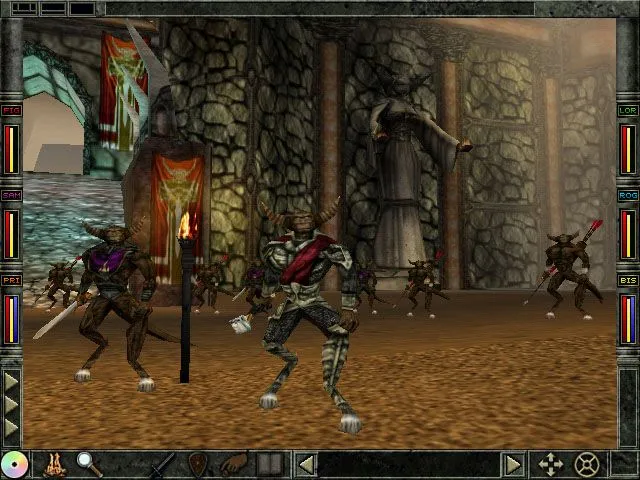
[Wizardry 8](/games?search=Wizardry 8)
With the release of [Wizardry 8](/games?search=Wizardry 8), Sir-Tech managed to conclude their series much more coherently than either Origin or New World Computing did with the final parts of Ultima and Might and Magic. Released in November 2001, the game allowed players to finally deal with their old enemy, the Dark Savant, and for many of them, it became the best game in the series. The game contains so much content and possibilities that it represents a true Cadillac of the gaming world. It featured elements of both science fiction and fantasy, and player decisions genuinely influenced the story's progression. Like the later Might and Magic and [Wizardry 8](/games?search=Wizardry 8), it is a real-time game with a first-person perspective and fully three-dimensional environments. However, the party consisted of full-fledged 8 characters chosen from 15 classes. The game also allows players to choose between real-time and turn-based battles, plus there’s a rather complex spatial system (the player's party can attack or be attacked from all sides). The graphics, voice acting, and dialogues also did not disappoint.
[Wizardry 8](/games?search=Wizardry 8) gives players a sense of a true role-playing game. If you ever sat down for a paper D&D session, created characters, and led them into countless battles, this game will make you recall those feelings once again.
Scott Gelenek, Just RPG, 2001.
Unfortunately, [Wizardry 8](/games?search=Wizardry 8) is not perfect – the game is hindered by quite unpleasant bugs caused by the infamous copy protection program Safedisc. Due to this, on some drives, the game simply wouldn't launch, while on others unpredictable issues could arise. Additionally, some critics complained that after a while, battles begin to repeat too frequently, greatly slowing the game pace. Nonetheless, it's one of the last truly great party-based CRPGs and a worthy conclusion to a historically significant series.
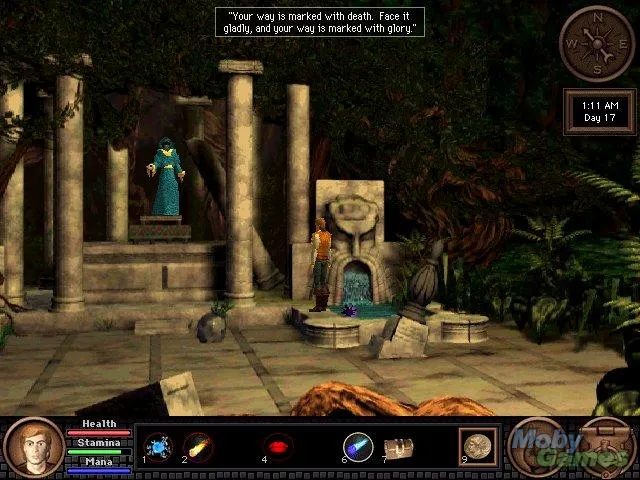
Dragon Fire
In 1998, Sierra released the fifth and final game in the Quest for Glory series, Dragon Fire. The previous game, Shadows of Darkness (1993), received mixed reviews from critics and couldn’t boast of strong sales, but fans begged Sierra to let Lori Cole satisfactorily conclude their beloved series. Unlike previous games in the series, Dragon Fire places a much greater emphasis on traditional CRPG elements (such as the presence of multiple types of armor, weapons, and magical items). Critics generally praised the game, despite its outdated graphics, occasionally poor voice acting, and clunky battle interface. However, everyone loved the soundtrack by Chance Thomas, which lasted 3 hours.
The Beginning of the New Age
The Platinum Age witnessed many masterpieces and failures, and gamers enjoyed the variety of games and game engines. However, by 2002, CRPGs on players' shelves had to make room for MMORPGs and real-time strategies, and the last representatives of the genre (at least in my opinion) look backwards rather than forwards. The evolution of the genre did not stop, but it has certainly slowed down. Many CRPGs released in the last five years were either uninspired sequels or games so derivative that they could very well be sequels themselves. Frankly, we are now at a stage in the genre's development where all its representatives can be categorized into three types – Diablo-like action RPGs, first-person games in the spirit of Morrowind, and endless monotonous MMORPGs.
Perhaps the most significant games of the New Age released to date are [Neverwinter Nights](/games?search=Neverwinter Nights) (2002) and [Star Wars: Knights of the Old Republic](/games?search=Star Wars: Knights of the Old Republic) (2003) from BioWare. Although their long-term impact on the genre is difficult to predict, they seem (at least to me) to be the most direct heirs to the traditions of Baldur’s Gate or even the "golden box" games.
[Neverwinter Nights](/games?search=Neverwinter Nights) and Knights of the Old Republic
[Neverwinter Nights](/games?search=Neverwinter Nights) was the first game on BioWare's Aurora Engine, which allowed for completely three-dimensional and much more advanced graphics than the beloved Infinity Engine, first used in Baldur’s Gate. For the first time, players could freely rotate the camera in any direction. BioWare also included an editor in the game, allowing players to easily create their own campaigns. Like in [Baldur’s Gate](/games?search=Baldur's Gate), in [Neverwinter Nights](/games?search=Neverwinter Nights) players can only create one character, although in time, other characters can join the party, including the player's familiars and two other computer-controlled characters. [Neverwinter Nights](/games?search=Neverwinter Nights) was based on the third edition of AD&D rules, which had already appeared in [Icewind Dale II](/games?search=Icewind Dale II), featuring an intuitive and logical character creation and development system.
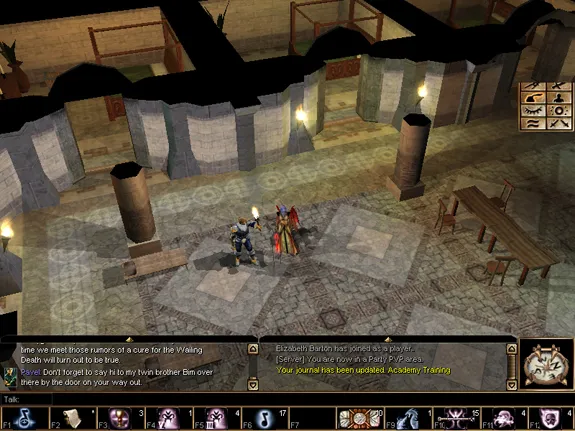
[Neverwinter Nights](/games?search=Neverwinter Nights)
Although these games have much in common, between [Neverwinter Nights](/games?search=Neverwinter Nights) and Baldur’s Gate II there are also many important differences. Perhaps the most important of them is that in NWN, the player character does not play as significant a role in the plot. He begins as a simple nobody adventurer who responds to Lady Arabeth's plea to help Neverwinter. The city is threatened by a deadly epidemic, but it soon becomes clear that the epidemic is merely part of a much larger conspiracy to seize Neverwinter, and the roots of betrayal run very deep. Players are given some freedom in deciding the character's actions: he can be a saint, a ruthless mercenary, or even a raving sociopath. This mainly depends on the choices made in dialogues, but sometimes also on the choice of side quests.
The wait for expansions to the game was not long. The first of these, Shadows of Undrentide, was developed by Floodgate Entertainment and released by Atari (Infogrames) in 2003. Shadows of Undrentide was not what most players at the time were expecting: instead of continuing the original campaign, it added an entirely new one meant to be completed by new characters along with five new prestige classes for high-level characters. The expansion received decent (though not stellar) scores. The next expansion, Hordes of the Underdark, was released a few months later. Fortunately, this journey to the homeland of the drow turned out to be much better than the previously mentioned Descent to Undermountain. Aside from several epic battles that players will likely never forget, Hordes of the Underdark added 50 new abilities and 40 new spells. The ratings for this massive expansion ranged from good to excellent, with some even claiming that its campaign surpassed the original. Kingmaker, an expansion released in 2005, contained three more modules for [Neverwinter Nights](/games?search=Neverwinter Nights).
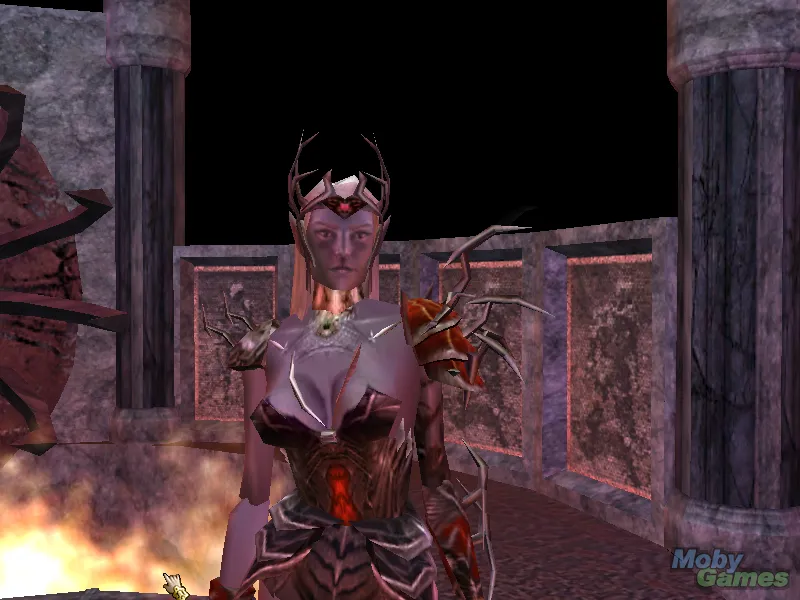
Hordes of the Underdark
The most well-known game from BioWare in the New Age is [Star Wars: Knights of the Old Republic](/games?search=Star Wars: Knights of the Old Republic), released in 2003 by LucasArts. As the title suggests, the game is based on the world of [Star Wars](/games?search=Star Wars) and the corresponding tabletop RPG developed by Wizards of the Coast (the successor to TSR). It's an incredibly ambitious game made on the Odyssey engine (a heavily modified version of Aurora) with a combat system based on rounds. [Neverwinter Nights](/games?search=Neverwinter Nights) impressed critics at the time, but Knights of the Old Republic astonished them so much that some have called it one of the best CRPGs of all time.
On the second day, I sat down to play at 10 a.m. From that moment until 6 p.m., I didn’t leave the game for a second. I didn’t break for food or even a shower. That’s how good Knights of the Old Republic is.
Allen Rosh, GameSpy, November 23, 2003.
The events of Knights of the Old Republic unfold 4000 years before the events of the films, but it's still a story about Jedi. Players can even choose which side of the Force to take. Like in [Neverwinter Nights](/games?search=Neverwinter Nights), players could select between side quests that could shift the character's outlook toward good or evil. The game boasts a magnificent narrative and a wealth of details, as well as about thirty hours of gripping gameplay. Critics praised the script and outstanding dialogues, which, as all CRPG fans know, don’t come around too often. The game has won countless awards and is arguably the most outstanding CRPG of the New Age.
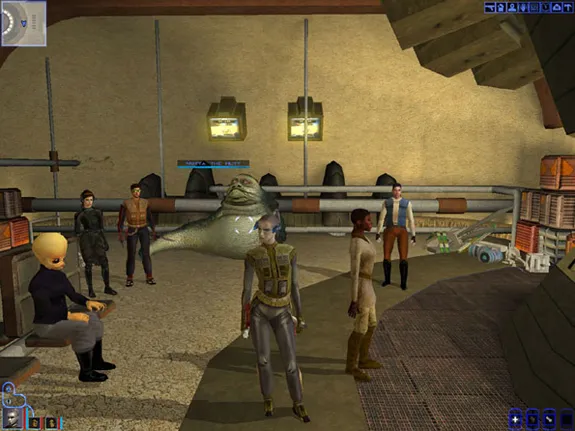
[Star Wars: Knights of the Old Republic](/games?search=Star Wars: Knights of the Old Republic)
The sequels to [Neverwinter Nights](/games?search=Neverwinter Nights) and Knights of the Old Republic were developed by Obsidian Entertainment, primarily formed from former employees of Black Isle Studios. Both games were created on the Odyssey Engine. Unfortunately, neither Knights of the Old Republic II: The Sith Lords (2005) nor [Neverwinter Nights 2](/games?search=Neverwinter Nights 2) (2006) managed to earn the accolades and fame of their predecessors.
Final Thoughts on the History of CRPGs.
Although throughout its decades-long existence, the CRPG genre has seen both highs and lows, history clearly shows that whenever things seem to hit rock bottom, a new company emerges that reignites the genre with some remarkable new game. Perhaps we are at such a moment now: the main CRPG series have either degenerated or have not been heard from for a long time, and many critics claim that online games like [World of Warcraft](/games?search=World of Warcraft) seem to them logical heirs to "old-school" CRPGs. But rather than tracking the lineage of [World of Warcraft](/games?search=World of Warcraft) or EverQuest back to times of Ultima or Wizardry, I believe they are descendants of other games – MUDs. They emerged on the gaming scene almost simultaneously with text adventures and early CRPGs, but they were primarily played by students and others with access to mainframes (and later by subscribers to services like America Online or CompuServe).
While discussing MUDs here is ultimately pointless, it’s worth noting that their entire appeal lies in the thrill of playing with other players. A good example would be the original [Neverwinter Nights](/games?search=Neverwinter Nights), an online game based on the "golden box" game's engine, accessible to AOL subscribers from 1991 until 1997. Instead of enjoying a plot and quests, players spent their time creating and joining various "guilds": the essence of the game was socialization and raising one’s social status. Overall, the difference between a typical MMORPG and a traditional CRPG is as clear as between visiting a Renaissance Fair and reading a good fantasy novel.
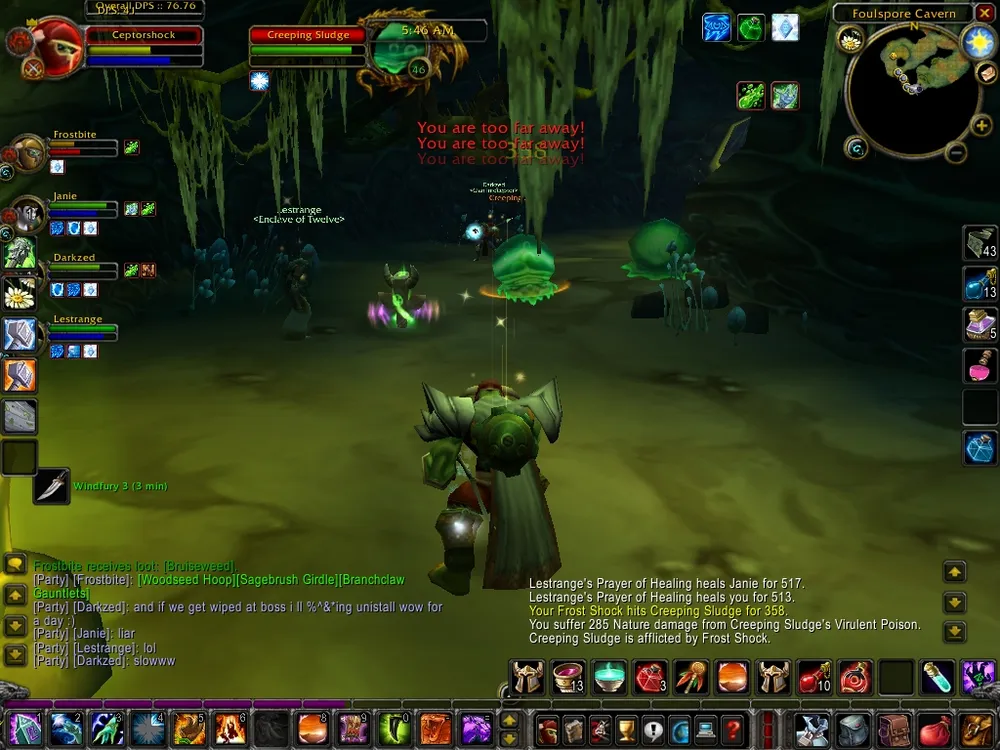
[World of Warcraft](/games?search=World of Warcraft)
While both genres can provide plenty of enjoyment, there’s no point in claiming that players should prefer one over the other, or that they are in any way equivalent. Just as any self-respecting MMORPG fan would prefer to avoid the crowd of drunken fools at the fair mentioned above, every CRPG enthusiast has the right not to be "sheeped" by greedy adolescents.
Of course, the question arises as to whether traditional single-player CRPGs are still commercially viable, and many old-schoolers take a cynical stance. Undoubtedly, the very culture of PC gaming has changed significantly since the days of Wizardry, The Bard’s Tale, or Curse of the Azure Bonds. These games required substantial time investment to learn to play, and needed a lot of time to complete – backgrounds and complex strategies were essential for success, making them look extremely old-fashioned today. Many modern gamers even find Baldur’s Gate II too ponderous; it offers no constant explosions, showcased in beautiful slow motion and instant gratification, leading poor players to doze off quickly. Can you picture those guys drawing dungeon maps on paper or pondering over battle tactics necessary for completing something like Wizard’s Crown?
In the history of computer games, there was a time when CRPGs were considered a "hard" genre, a genre that demanded significant time and effort, but the enjoyment gained compensated for everything amply. These were games for hardcore gamers, computer geeks who prided themselves on their esoteric knowledge and incredible intellect. Some cynics claim that everything started to change when console RPGs began to dominate the market. By the late 90s, they allegedly influenced CRPGs more than the latter influenced them (in reality, at that time, some console RPGs were ported to PC and even achieved success). Naturally, adapting CRPGs for consoles required many simplifications, especially in terms of the interface, which had to be simple enough to control with a gamepad. Additionally, these games needed to be accessible to a much wider audience than CRPGs, whose developers could expect a much greater technical literacy from their PC players than from console users. Although the gap between consoles and PCs has diminished since the advent of "fifth generation" consoles, many old-fashioned CRPG fans remain unhappy with the Japanese influence on their beloved genre.
Nevertheless, there are still plenty of gamers who play Rogue and fire up classic games on emulators or through new services like GameTap. Games like Oblivion, [Dungeon Siege II](/games?search=Dungeon Siege II), and [Neverwinter Nights](/games?search=Neverwinter Nights) II continue to climb the charts, and undeniable masterpieces like Knights of the Old Republic still have the power to captivate both old and young players alike.
I believe the next revolution in the genre is close, though it’s hard to predict which company will initiate it or what form it will take. However, I will continue to assert that the best CRPGs in the history of the genre were products of craftsmanship, not revolution, the merging of many paradigms rather than their destruction. Like Pool of Radiance, Baldur’s Gate, or Fallout, the next major CRPG will not be something entirely new but something done right.