
How Bots Cheat in Arcade Racing - Opinion on the Rubber Banding System
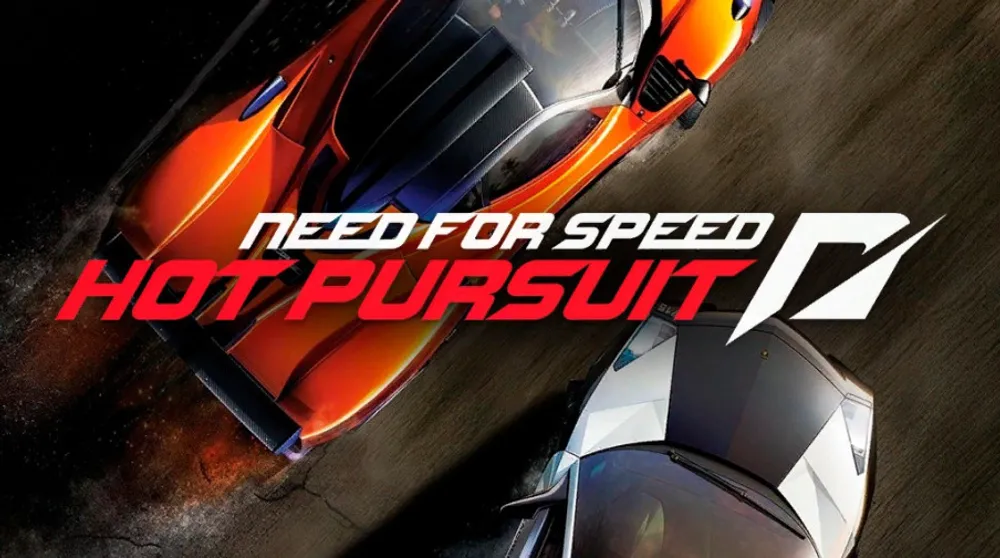
Rubber banding (RB) is a mechanic that pulls lagging racers closer to the leader. This system is implemented through unnatural speed boosts for those trailing and deceleration for the leaders. The goal is to cluster opponents around the player, preventing the latter from falling significantly behind or getting too far ahead. Some competitors are slightly ahead, some a bit behind, but the game tries to keep the gamer among the opponents regardless of the situation. Rubber banding can help a player or complicate their life, depending on their driving skill. For a novice, the game aids them, but as soon as the novice gets better, the cunning system turns against them. When the gamer pulls ahead, the unfair mechanic quickly nullifies any earned advantage by artificially shortening the distance between the leader and those trailing. What could be wrong with making the game more challenging in this way? Well, it's at least deceitful. Moreover, in some cases, it's an extremely shameless deception: once I saw how the game teleported a significantly lagging opponent right to my bumper in Need for Speed: Hot Pursuit (2010). If such a bot gets a few seconds ahead, it's usually impossible to catch up, as their artificially boosted speed always exceeds yours, no matter how high yours is. Strangely enough, such blatant interference in the race's flow, disrupting the natural balance among competitors, is now the norm for many developers. Most gamers aren't even aware of this mechanic's existence, as the aforementioned system is scarcely covered in the Russian internet. Even in the global internet, there aren't many articles revealing the topic, which is strange considering its significance for arcade racing.
Rubber banding is believed to introduce tension and a constant battle for leadership in the race, making it more exciting. However, I believe developers introduce this mechanic to artificially extend the game's playtime. After all, a race completed on the first try takes less of the player's time than a race that requires ten attempts. Now imagine a game consisting of a hundred races, each of which requires an average of seven attempts. In the end, we have a game stretched several times due to replaying the same races. This is very convenient for developers. However, not all gamers appreciate such a trick from the developers. What's the point of the difference in the stated characteristics of cars if an opponent can achieve unreachable speeds regardless of the car chosen? What's the point of improving driving skills if the computer bot drives as if on rails, perfectly navigating turns at speeds of almost three hundred kilometers per hour? Why spend thirty hours on a game originally meant to take six hours? Gamers get angry but don't understand the reason for their constant defeats. People buy the game wanting to feel the spirit of competition and receive a reward for their efforts but end up in a circus of absurdity where their earned advantage is taken away, and they are deceived into not winning. The race's script is predetermined, making it difficult to reverse the course of events. The driver’s skill doesn't matter, and there is only one winning tactic. This can't even be called a race: in a race, each is for themselves, while here only the player is independent; the other participants are part of a corrupt system turned against them. Essentially, the struggle is not with opponents but with the game itself, which, with an invisible hand, controls the race, deciding who overtakes whom or catches up. There are no skillful opponents here; it’s just an immersive theater for the player. An imitation of competition, nothing more. It's the case when the game plays with the gamer while the latter plays it.
As I wrote above, there is only one winning tactic. Overall, this is indeed the case. The thing is that such games do not provide a choice of tactics; they dictate the winning scheme themselves. To win, you need to refrain from leading the entire race and only unleash your 'Mustang' just before the finish, leaving everyone behind. If you refuse to follow the game's dictatorship, you’ll have to endure and be disappointed; if you follow the dictate, you have a decent chance of winning. Because of this, all races feel the same—permanent driving in a peloton with fierce competition at the end.
Rubber banding is outdated and should remain in the past. It began to be implemented back when there was no proper artificial intelligence in racing opponents. But progress doesn't stand still, and opponents' intelligence is improving. True competitors have long existed in racing simulations. Let's not forget about neural networks, which can also provide competitive AI, including gaming AI. An example of this is Grok from Elon Musk, which will compete against esports athletes from Team T1. Enough with the deception. A strong, honest AI opponent should come to every game.
A Brief Aside
Fortunately, the gaming industry, rich in diverse projects, offers plenty of alternatives to games with Rubber banding. Not just among racing simulations and semi-simulations, but also among arcade racing games. Here is a short list of games where Rubber banding is minimal or completely absent: Simulation games: Richard Burns Rally, Live for Speed, iRacing, GT Legends, rFactor series, GTR, Assetto Corsa. Semi-simulations: WRC series, TOCA, DiRT, Shift, Grid, Forza Motorsport, and console Gran Turismo. From arcade racing games, noteworthy titles are Juiced, Midnight Club, FlatOut 1 and 2, and all parts of the NFS series up to Underground.