
Cyberpunk in Games: A Retrospective
The close release of the potentially wonderful [Deus Ex: Human Revolution](/games?search=Deus Ex: Human Revolution) provides a great reason to talk about the evolution of the cyberpunk genre in video games and to recall its most prominent representatives from the last twenty years.
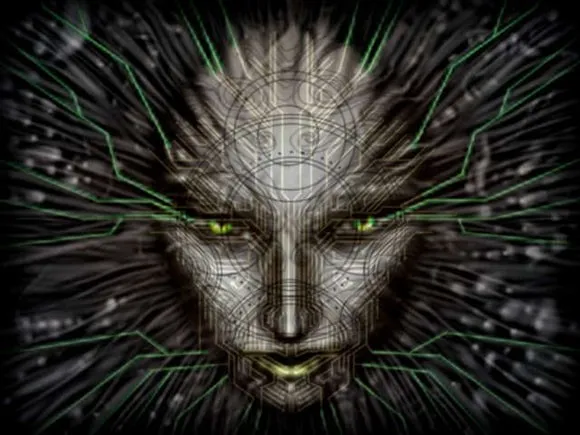
Most people probably have a rough idea of what cyberpunk is, but just to clarify the definition and ensure we are speaking the same language: cyberpunk is a subgenre of science fiction characterized by a) a high level of scientific advancement focusing on the implementation of nanotechnology and bio-implants; b) a low standard of living for the majority of the population, who lack access not only to the high-tech achievements of science but often to basic civilizational benefits; c) powerful transnational corporations with weak or nonexistent states; d) hackers acting as lone wolves opposing these corporations, often embodying the type of anti-social personality; e) the existence and widespread distribution of robots, cyborgs, artificial intelligence, and virtual reality.
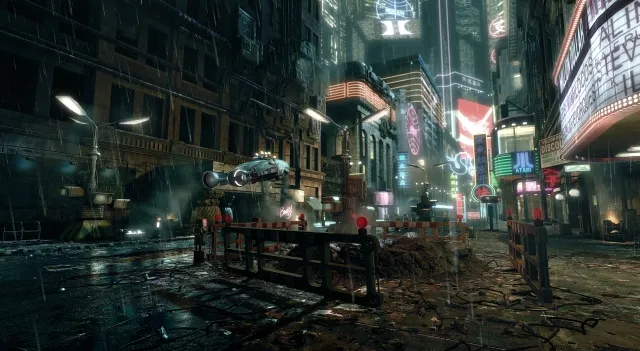
The essence of cyberpunk can best be described by the phrase ‘High tech. Low life’, which roughly translates to "high technology, low standard of living." More expansively but no less aptly, one of its founders, Bruce Sterling, remarked: "Everything that can be done to a rat can also be done to a human. And we can do almost anything to a rat. It's hard to think about, but it's true. And it won't disappear if we close our eyes to it. That's what cyberpunk is."
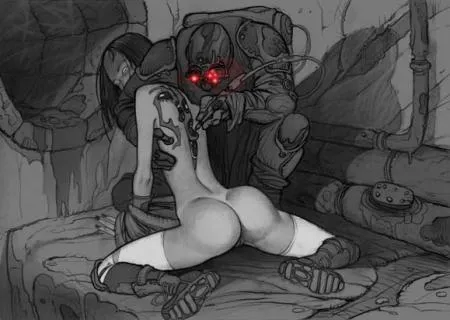
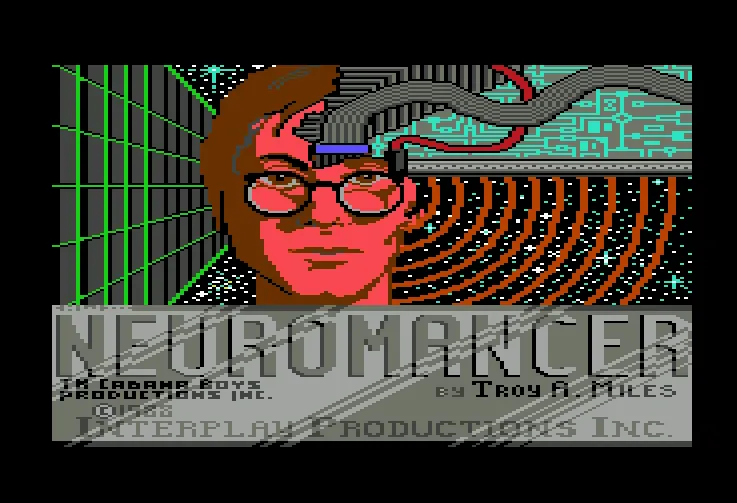
Originally a literary genre that emerged in the first half of the '80s, cyberpunk soon conquered cinema and was subsequently firmly established in its most natural habitat — computer and video games. Perhaps the first cyberpunk game was the 1988 adventure Neuromancer, based on the eponymous book by William Gibson. Although the game only loosely followed the plot of the original, it authentically depicted the book's main realities: stores selling artificial organs, various manipulations with “decks” (as computers are called here), and access to cyberspace known as the “Matrix.”
In the same year, one of the first games from the future genius of absurdist spy thrillers — the adventure Snatcher by the creator of the [Metal Gear Solid](/games?search=Metal Gear Solid) series, Hideo Kojima, was released. Like every game from Kojima, Snatcher boasted a magnificent plot full of intrigue, betrayals, false leads, and other detective tricks. The setting is mostly lifted from Philip K. Dick's book "Do Androids Dream of Electric Sheep?"; it is pure, distilled cyberpunk.

In 1993, a strategy in cyberpunk style, Syndicate, was released on consoles (SNES and Mega Drive) and PC, followed in 1996 by its sequel [Syndicate Wars](/games?search=Syndicate Wars) (PC, PSone): two games that are rightfully considered classics of cyberpunk. The future is divided among several corporations, one of which the player sides with. An impressive selection of weapons, diversity of missions, well-thought-out balance, and above all — a magnificent, truly cyberpunk dark atmosphere — make these games engaging even today.
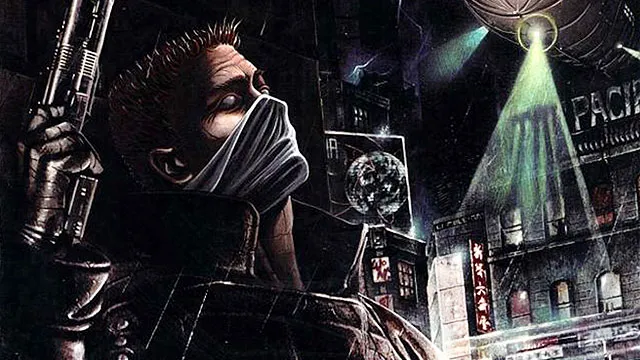
[System Shock](/games?search=System Shock) (1994) / [System Shock 2](/games?search=System Shock 2) (1999). In 2072, when almost all resources on Earth were depleted, the TriOptimum corporation began developing special orbiting stations designed for resource extraction on other planets. The main character, a virtuoso hacker, must stop the rebellious artificial intelligence SHODAN, which has taken control of one of the stations, turned the personnel into monstrous mutants, and plans to use the station’s drilling beam to destroy Earth. The protagonist (who bears the guilt of SHODAN's rebellion) must stop the AI by using his skills to penetrate cyberspace, freely wandering the ship’s decks (which are fully three-dimensional) and fighting monsters (which are sprite-based). This series of brilliant, 100% cyberpunk games features an interesting story, excellent graphics, and gameplay that combines RPG and FPS elements. The games were critically acclaimed, but they failed commercially. However, this did not prevent them from occupying a place of honor in the golden fund of cyberpunk works.
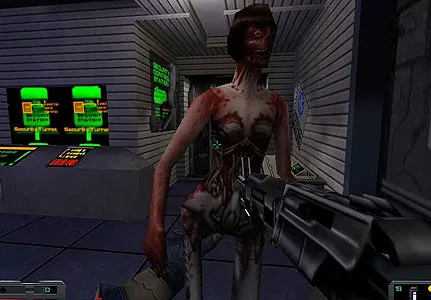
Cyberia (1994) / Cyberia 2: Resurrection (1995). These games, while not fully adhering to the spirit and canon of cyberpunk, possess the most cyberpunk title (correctly pronounced as "Cyberia"). In Siberia, some powerful weapon is being produced, which criminal syndicates want to possess; the protagonist, a former convict named Zak, must stop them. The game combined elements of action, adventure, and puzzle. The second part was rather mediocre and does not deserve much attention.
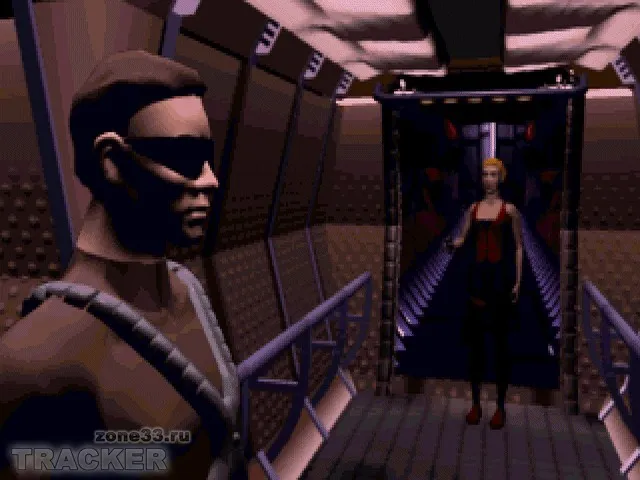
Burn: Cycle (1995). A video quest with a creepy visual style, released on the creepy Philips CD-I platform, tells the story of a hacker infected with a deadly virus and pursued by agents of the corporation he hacked. He has exactly two hours to find an antidote and figure out who is behind it all — a timer ticks in real-time in the corner of the screen.

[I Have No Mouth And I Must Scream](/games?search=I Have No Mouth And I Must Scream) (1995, PC). Another quest on the near-cyberpunk theme, with a title resembling a youth horror film. The virtual world is controlled by a computer that has annihilated all of humanity and, just for fun, left only five people alive (including a man who killed his wife and mother-in-law; a Nazi doctor who once conducted inhumane experiments on Jews; an African American woman who suffered an attack and was raped; a man in love with her; and a retired special forces soldier whom the computer has made resemble an ape). The supercomputer arranges for the five to have constant horrific trials, entertaining itself by placing them in various, as we might now say, "settings": against demons, fascists, religious fanatics, etc. A true art-house from computer games. It, of course, also failed catastrophically in sales.

In 1996, the now cult-classic Shadowrun was released on consoles - an RPG based on the eponymous series of books (published, by the way, in Russia) with a very specific plot: in the future, radical genetic modifications have occurred to humanity, splitting them into dwarves, orcs, elves, and ordinary humans; magic has appeared in the world, and the ruling megacorporations and criminal clans recruit specialists called “shadowrunners” — experts in magic, computer hacking, and heavy weaponry for carrying out their tasks. An interesting blend of fantasy and cyberpunk elements, a charming action-RPG in the traditional PC style, it received a significantly less successful sequel in 2007 for the Xbox 360 in the action genre.
Official promo video for the game.
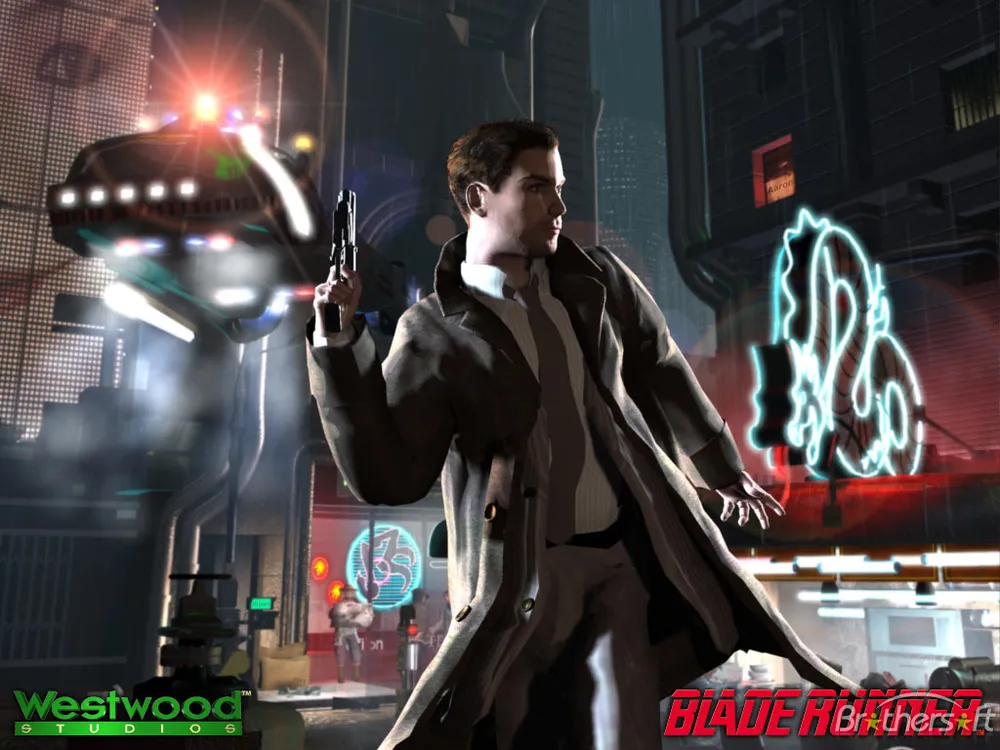
[Blade Runner](/games?search=Blade Runner) (1997, PC). A cult cyberpunk adventure game created based on the cult cyberpunk film, which was in turn based on the cult cyberpunk book. Just like the film did not fully follow the source material, the game also differs from the movie — although the script for it was written by the same screenwriter as for the film, the game features its own protagonist with a biography that changes from playthrough to playthrough, along with many different endings that encourage replayability.
Ghost in the Shell (1998). Created based on the eponymous (and, like most items in our list today, also cult) anime, this video game for PSone focuses on controlling a fuchikoma — a semi-intelligent tank under the command of the heroine from the original cartoon, Major Motoko Kusanagi. The gameplay revolved around the tank's ability to climb walls, and the game was notable for its impressive graphics, dynamic action, and high-quality animation inserts from the renowned studio Production I.G.
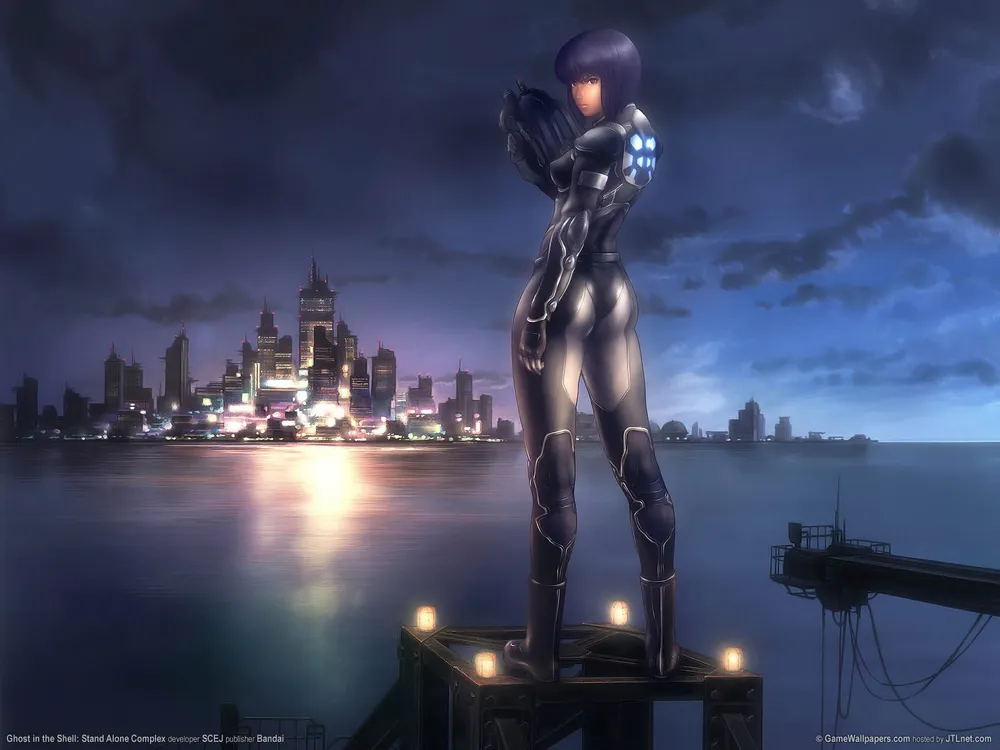
Bio F.R.E.A.K.S. (PSone, Nintendo 64). Who would have thought that a fighting game could exist in the cyberpunk genre — in this unremarkable three-dimensional game, people and mutants filled with cybernetic technologies engage in battles for the entertainment of the unpretentious public of the future. America is divided into eight regions, each of which is under the control of one of the megacorporations. All conflicts are resolved in the arena, where each corporation sends in its best fighter — a cyborg assembled with the latest technology. The game is indeed average and certainly not worth much attention, but… it's a fighting game in the style of cyberpunk!
[Deus Ex](/games?search=Deus Ex) (2000, PC) / Deus Ex: Invisible War (2003, PC, Xbox). A computer game that has become for cyberpunk video games what Fallout is for post-apocalyptic games: a benchmark, and in some ways, an icon. [Deus Ex](/games?search=Deus Ex) tackles complex themes of anarchism, freedom of conscience, and the struggle against totalitarianism in all its manifestations; the gameplay relies heavily on the use of implants, and the story encourages multiple playthroughs. In contrast to the revolutionary first installment, the second felt somewhat disappointing, although it boasted quite impressive graphics and many new abilities for the main character.
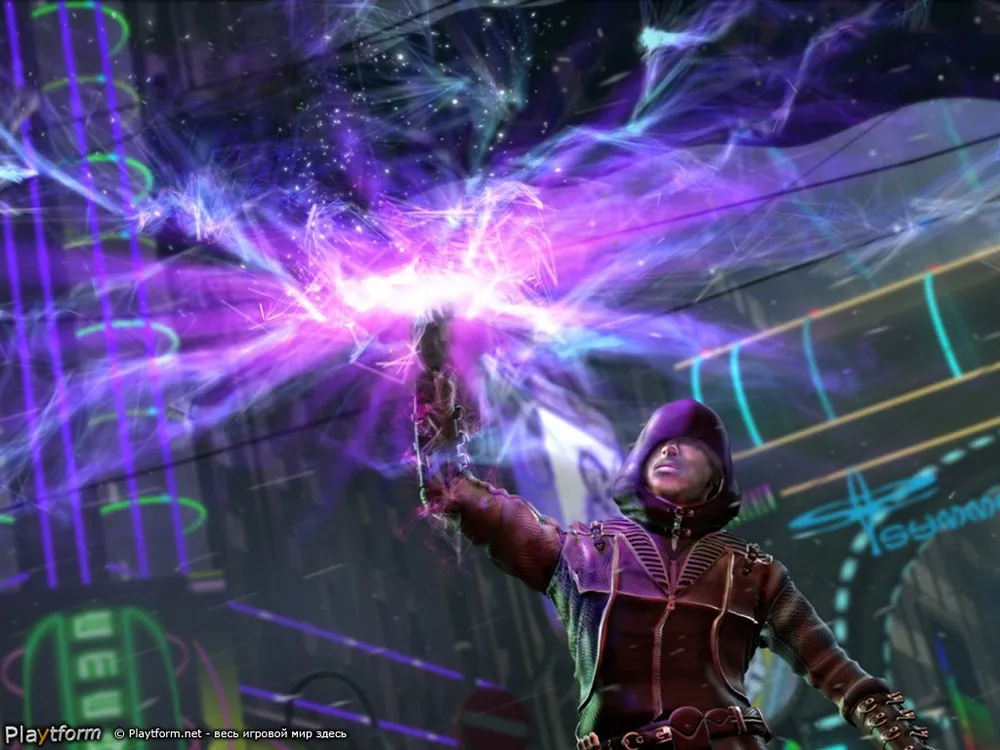
“[Access Code: Paradise](/games?search=Код доступа: Рай)” (PC, 2002) — the first domestic cyberpunk game made in the strategy genre with RPG elements, whose creators, the Zelenograd studio MiST Land (now renamed to GFI Russia), admit they drew inspiration from the novels of cyberpunk classics William Gibson and Philip K. Dick. Perhaps that is why the game features all the classic attributes of the genre: a global network, an artificial intelligence controlling the "paradise on Earth," and a determined hacker who discovers a sinister truth. Shortly after, a prequel was released: “[The Power of the Law](/games?search=Власть закона),” which did not fundamentally differ from the original.

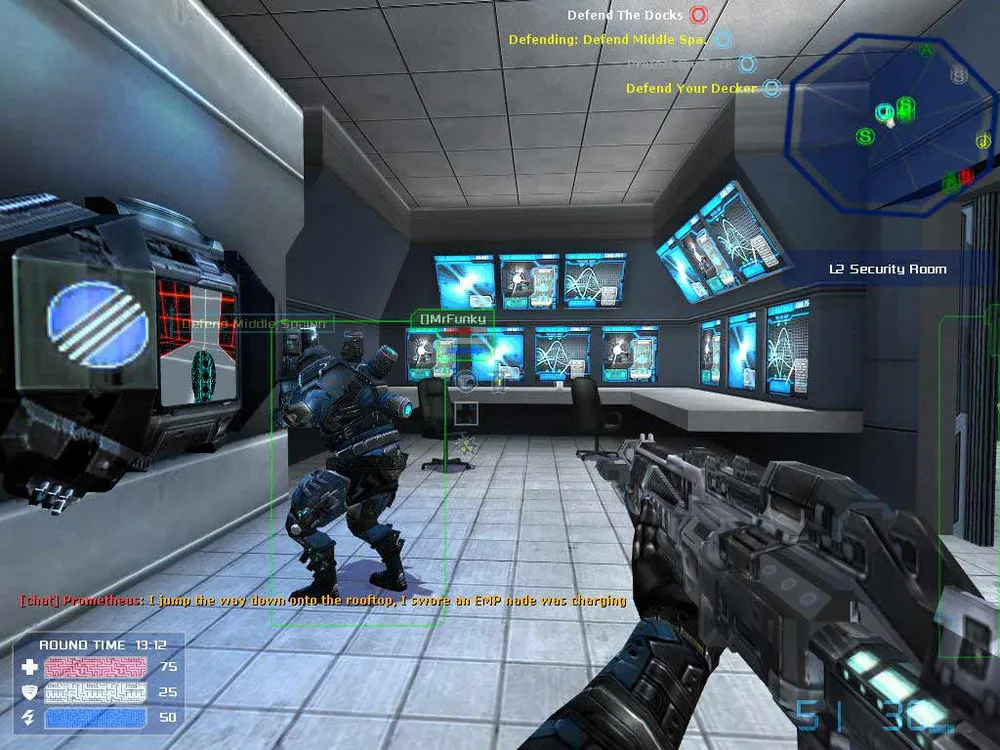
In 2005, the team of enthusiasts Dystopia released a mod for [Half-Life 2](/games?search=Half-Life 2), completely changing the setting and concept of the original game. It turned out to be a solid online shooter in a cyberpunk atmosphere, distributed freely via Steam.
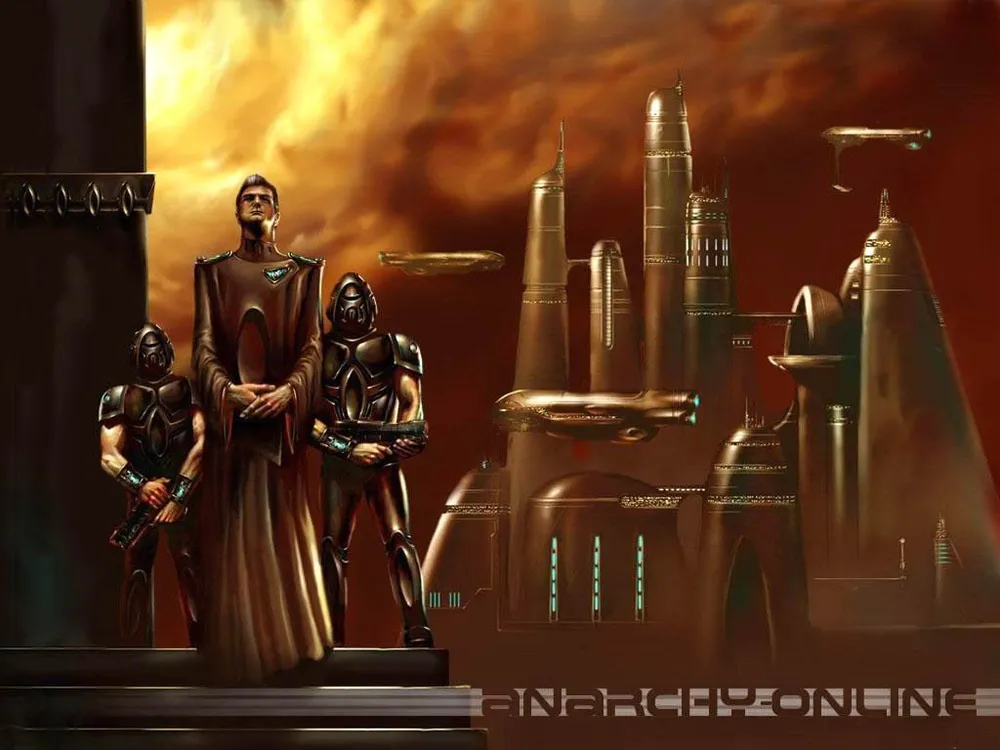
Having tried almost all possible interactive forms (RPG, puzzle, strategy, FPS, third-person shooters, quests, and even fighting), cyberpunk in video games has long hidden in the ghetto of online gaming — where, by its very nature as a network subculture, it arguably belongs. The most famous of the online cyberpunk games is undoubtedly [Anarchy Online](/games?search=Anarchy Online), released in 2001 and still active today. Its story unfolds in the year 29475 on the planet Rubi-Ka and its twin in another dimension, the Shadowlands. The Omni-Tek corporation fights against the rebels collectively known as the Clans for control over the planet and the rare substance known as notum, which serves as an energy source for nanorobots. These microscopic robots can be programmed for any tasks: they can heat and cool objects, heal wounds, protect against harmful influences, and even resurrect the dead through cloning. Nanotechnology has also enabled the creation of genetically altered races that make up the population of Rubi-Ka: Solitus, Opifex, Nanomage, and Atrox. As the first-ever science fiction MMORPG, [Anarchy Online](/games?search=Anarchy Online) boasts a true army of loyal fans who have not swapped it for any other MMO, partly due to the fact that multiple truly large expansions have been released for the game over time. Among other online games with cyberpunk elements, we should mention the domestic WELL Online, the now-closed [Matrix Online](/games?search=Matrix Online), and the Korean MMO Rising Force.
The article mentions only the most prominent representatives of interactive cyberpunk that have left a noticeable mark, but it should be noted that this subgenre of science fiction has had a significant influence on modern cinema and video games, and elements of it can be found in a vast number of works of mass culture (among which are films and games of the RoboCop, Terminator, Aliens, Matrix, and many others). There is very little pure, unadulterated cyberpunk left today — almost everything that could be said on this topic has already been said. The soon-to-be-released [Deus Ex: Human Revolution](/games?search=Deus Ex: Human Revolution) represents a rare example of a game that adheres to all the canons of the genre, and because of that, cyberpunk fans have high hopes for it.
In the meantime, while we have not yet plunged headlong into the third [Deus Ex](/games?search=Deus Ex), I would like to propose for discussion an interesting thought. Writer Bruce Sterling, author of the classic cyberpunk novel "Schismatrix," who visited Russia in the '90s, is quoted as saying: "Russia is a country of victorious cyberpunk." The arguments are as follows: amid the prevailing ruin (broken roads, abandoned factories, non-functioning streetlights at night, shabby design and architecture of buildings, falling airplanes, sinking ships) and the hopeless poverty and powerlessness of the majority of the population, there are individual islands of informatization and high technologies ("Skolkovo," science cities) where development, including nanotechnology, takes place, and places of compact residence of the elite (certain districts of the capital and million-plus cities), while any "software" is almost universally available in practically unlimited quantities — it's enough to go to the nearest pirate stall with disks (or, even simpler, to download everything you need via torrents). There have also emerged their own "fighters against the system" — a notable example is the well-known Alexey Navalny, who uses primarily network technologies in his struggle against corporations (another parallel to cyberpunk). The only thing missing are cyborgs and bio-robots (though they are surely not far off, plus many are surprised at how youthful the Prime Minister of the country looks at sixty). How do you assess the words allegedly spoken by the author?