
Mechanical Heart. The first review of "Machinarium" in Russia.
Machinarium… If you don't know what kind of game this is, you might try to imagine it through a series of associations. Machinarium… Robots, lots of robots, machines... Machines create puzzles… Puzzles, gathering and multiplying, form a quest. And for some reason, the sweet word Syberia floats into my mind with its many rusty yet lively mechanisms. A game with such a title can't be about walking humanoid killing robots, it just can't!

Our feelings do not deceive us – the game's style is just like that. But before talking about it, I should immediately warn you, this is an indie game, in Russian it means - not for everyone. Before Machinarium, the studio Jakub Dvorský created in its own, special genre of adventure. There was either no plot at all, or it was so simple that it could fit entirely in the intro video. The game consisted of a set of locations, the goal of each of which was to use items in the correct order to open the way forward. There was no inventory, and the animation was entirely done in Macromedia Flash… But Amanita Design games captivated with their atmospheric quality. It’s hard to explain, just play Samorost on the official site, it’s free. Many questions will be clarified immediately! Returning to Machinarium, it can be confidently said that that atmosphere exists here as well.
The main character, as well as all other characters in the city of Machinarium, are robots. The developers call them robots, but remembering Syberia, you want to call them automatons, they are so cute, rusty, clumsy, and serious – just like Oscar! But since they aren’t wind-up, we’ll have to call them robots. Although our main character has a suspicious hole behind his neck, quite similar to a keyhole.
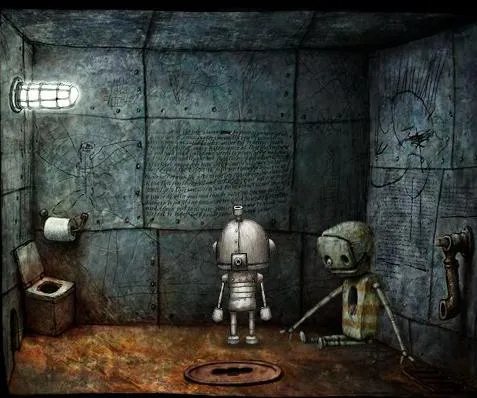
It doesn’t hint at an easter egg, so let’s assume it’s for pouring machine oil. The landscapes are drawn with love and traditional studio attention to detail. Here are a few examples.
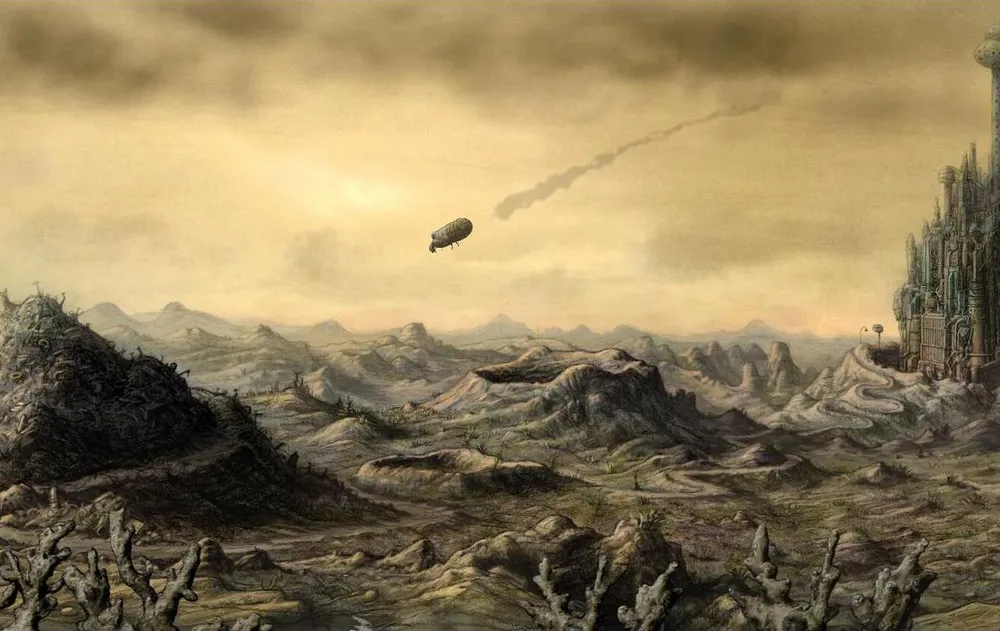
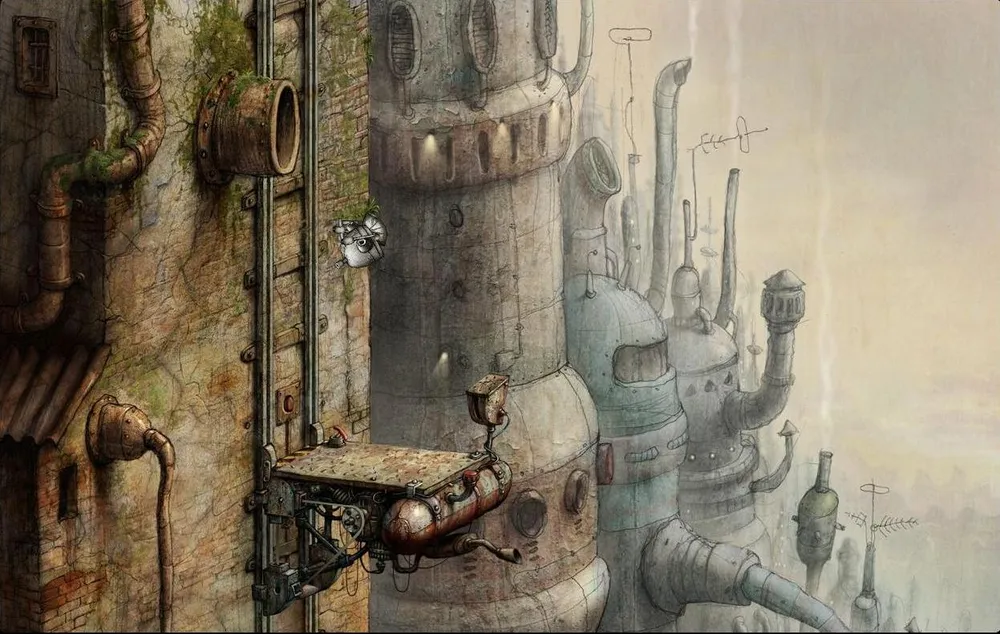
The game again uses Macromedia Flash technology, but here it’s almost unnoticeable – except that when changing the screen resolution, you’ll have to pass the location again. Otherwise, Machinarium is a full-fledged quest with a save feature (don’t be surprised, this wasn’t present in earlier Amanita works).
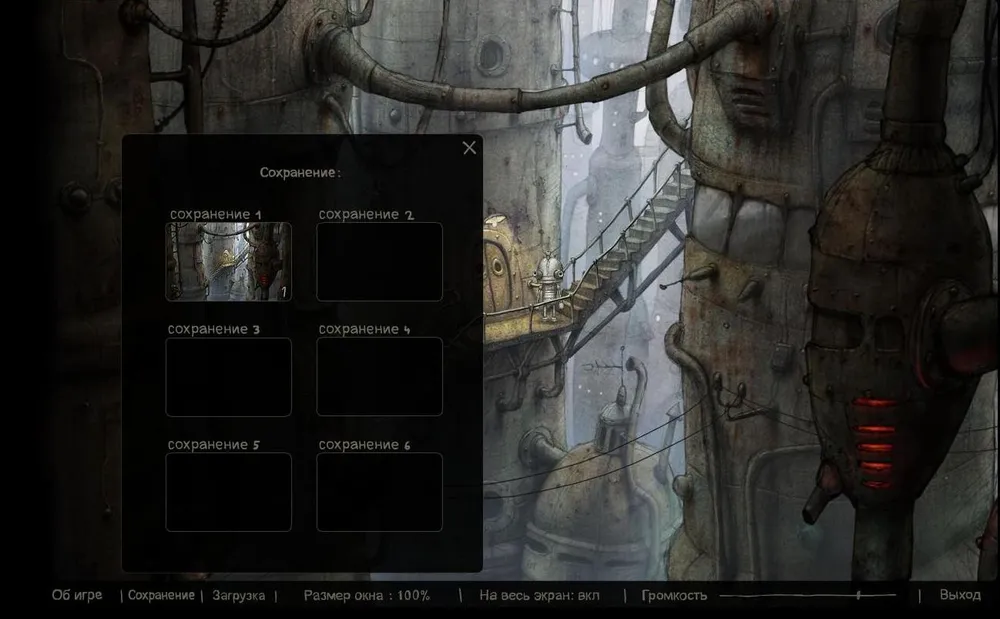
From the demo, one might think we’re again in for the “closeness” of Samorost. You can’t leave the location until you perform all available actions and use all items. The full version initially behaved the same, but when you first step out onto the streets of the robot city, you understand – it’s much more serious here. I was initially shocked that our hero could carry items from location to location. Then I was shocked by the plot. It’s not just present; it invisibly accompanies our hero at all times. Moreover, there’s no obvious setup – the game starts with Little Robot being unceremoniously dumped on a dump outside the city. Only by returning to the city and examining the surroundings, we learn the details of past events. Seeing a local robo-thug, the hero recalls how he interrupted his date with his beloved;
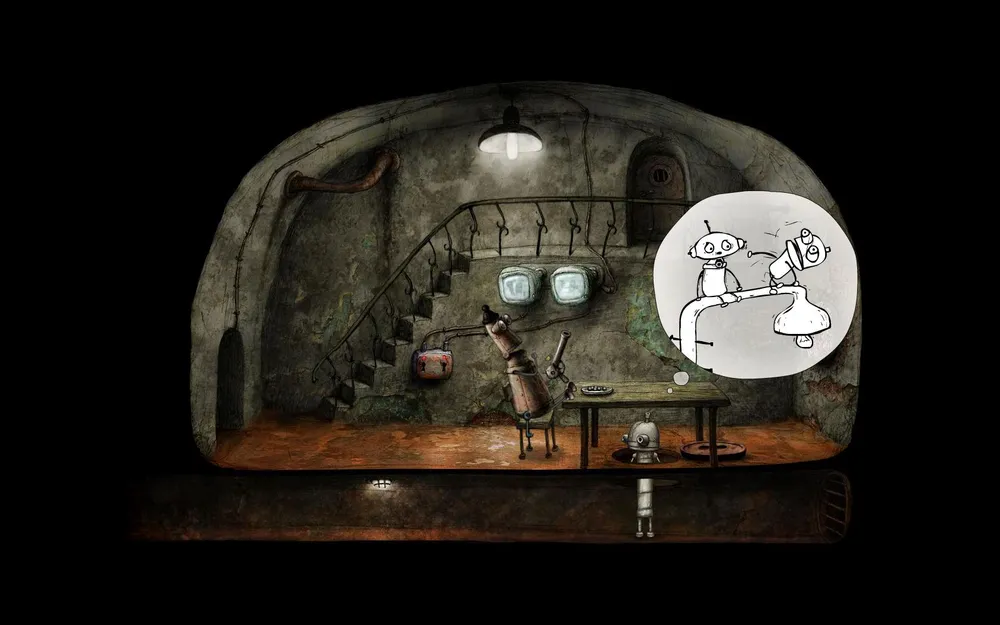
The Great Wrench living in the sewers complains about the authorities' abuses;
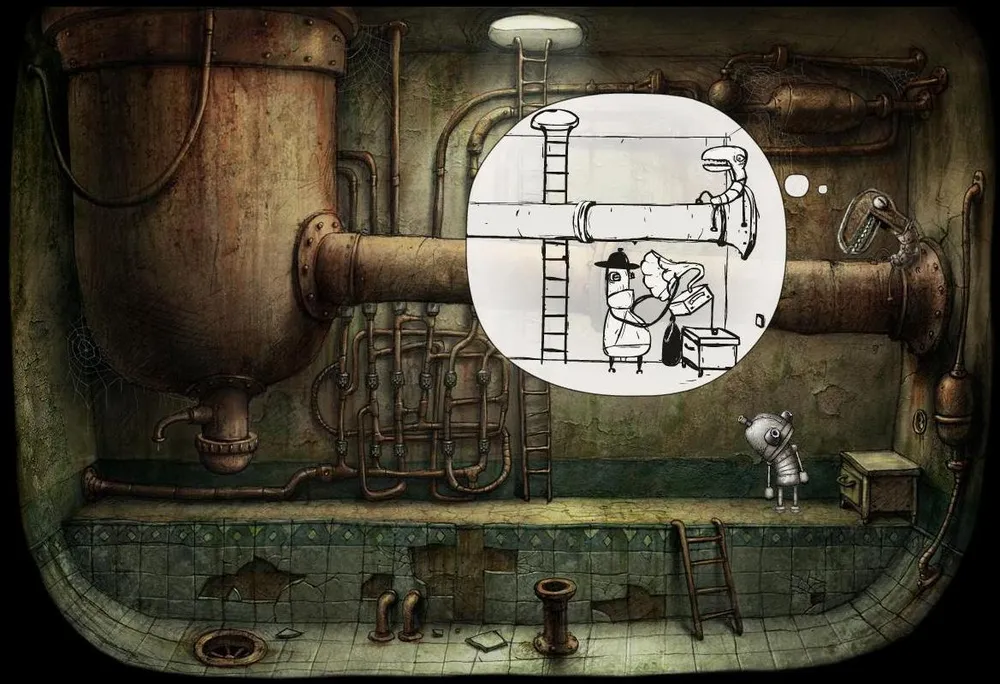
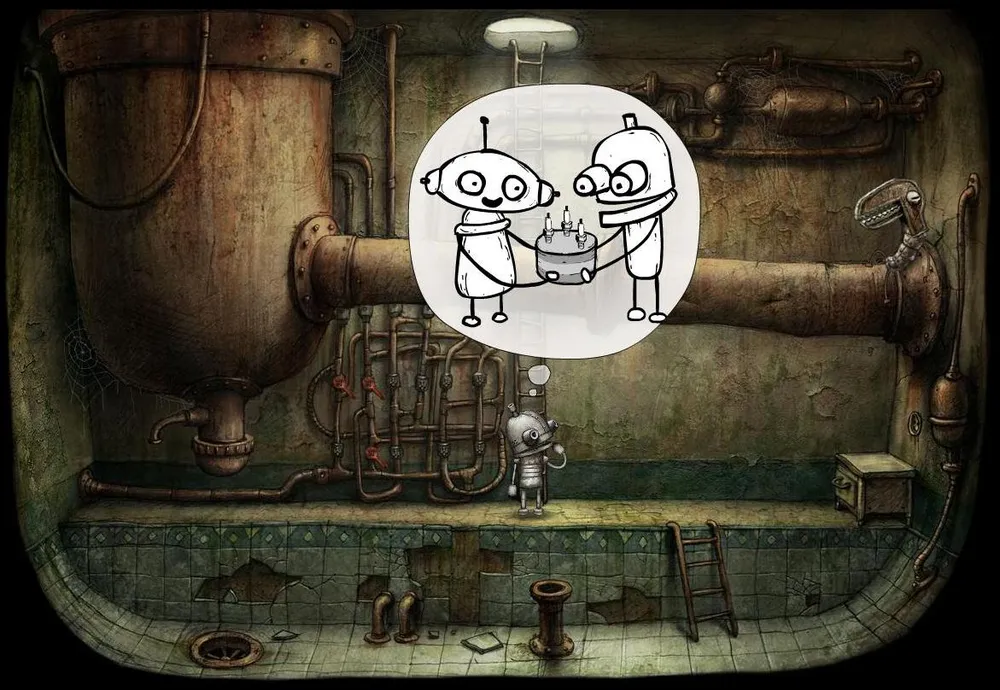
And if our hero is left alone for a few minutes, he will start to reminisce about the best moments of his life…
The main antagonists of the game are a bunch of thugs earning a living delivering something purple and flammable to the city (surely illegal), who in their free time play cards in a bar and mock defenseless musicians. Naturally, we will fight them.
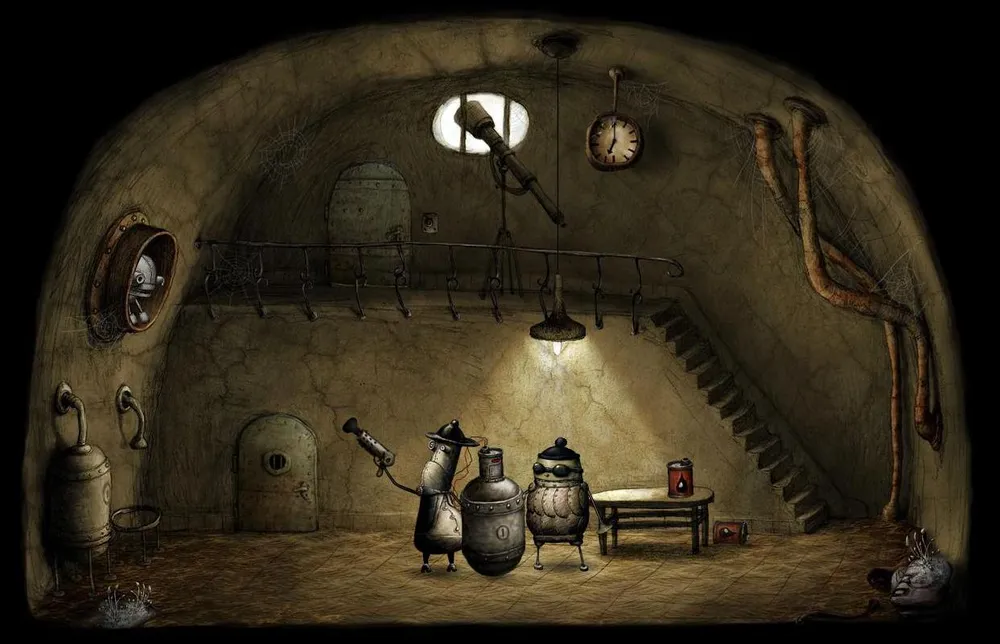
As you can see, all these stories are presented in the form of black-and-white cartoons above the characters' heads. There’s no voiceover, but this can only be considered a drawback if you haven’t seen the game live. In my opinion, it would spoil everything here. It's also worth mentioning the action scenes, another signature feature of Amanita, where certain actions must be performed while another character has turned away or while a specific mechanism is in operation. This part of the game will seem familiar and understandable to anyone who has seen the studio’s previous works. Additionally, for players who have completed Samorost2, it will be a nice surprise to meet one of the characters as a museum exhibit in Machinarium! How he got there, he will tell you himself. It’s only worth noting that several hundred years have passed since the second Samorost… Thus, if you perceive Machinarium as an indie game, it shocks with its seriousness and scale.
Now let's try to look at it from the perspective of a classic adventure game – what is Machinarium like?
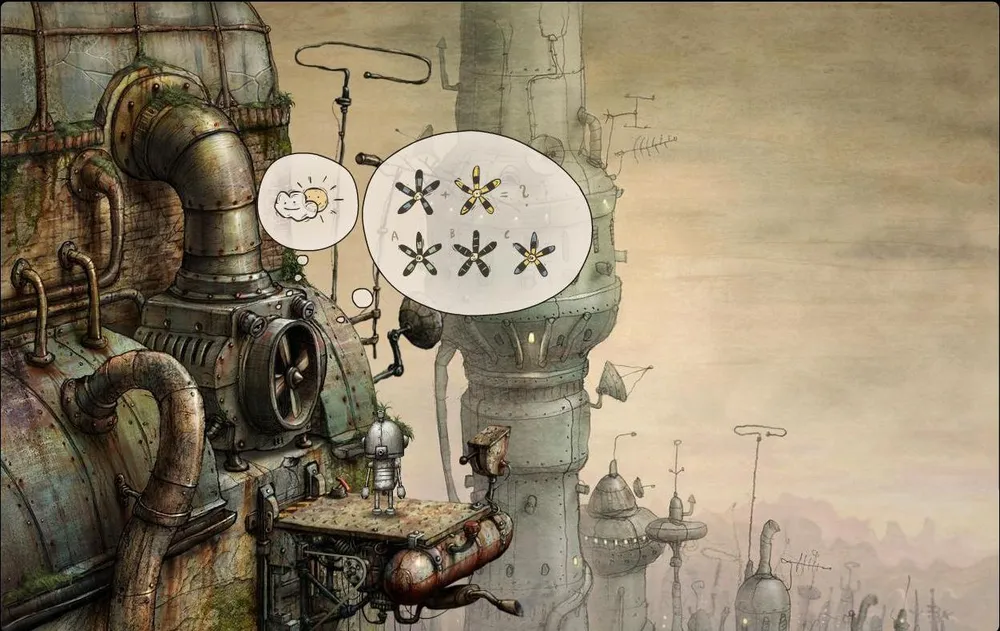
The technology and mechanics of the game are simple and familiar – a two-dimensional world, two-dimensional characters, you can pick up, combine, and use items, talk to others, and solve puzzles. The range of puzzles is quite vast – from banal eight-piece sliding puzzles to a horrific task with balls that need to be arranged by color (I spent more than an hour on it). There’s even a basic quiz:
With these details, Machinarium resembles other adventure games. Now for the differences. First of all, our hero can only take and use items within the reach of his arms. It’s worth noting that Little Robot can stretch upwards or crouch, thereby changing his reach.
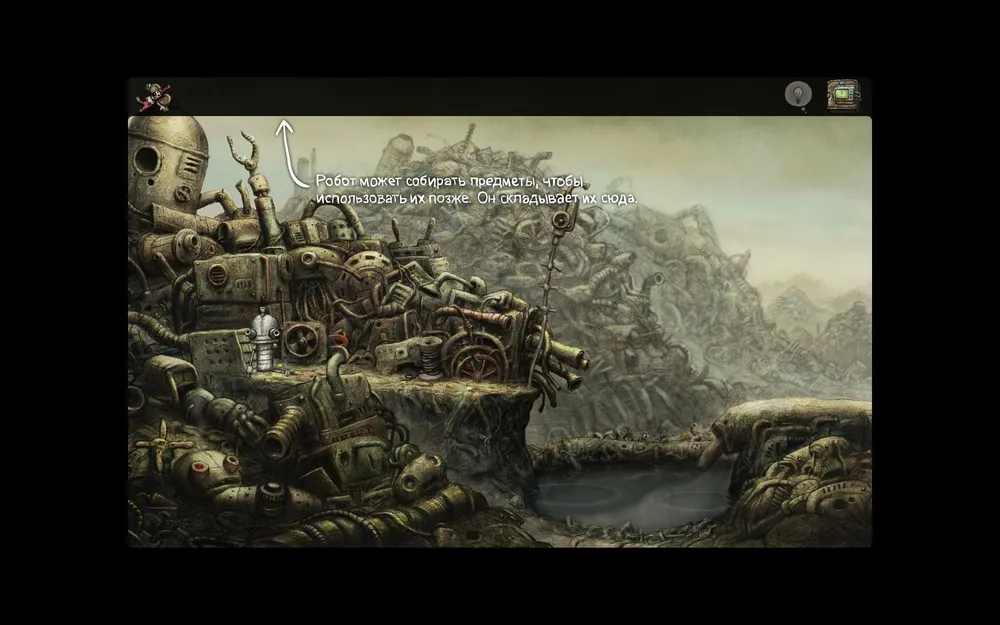
This partially alleviates pixel hunting and forces you to think logically even from the very beginning. However, important items are easily identified with the naked eye, and mechanisms usually occupy such a space that they’re hard to miss. All characters directly state what they need, and our task is simply to choose the one correct path through the game and follow it. For those who get lost, there’s a two-tier hint system. The first level gives us a hint in the form of a cloud, the second shows the entire path through the location. But this hint book won’t just hand over the walkthrough!
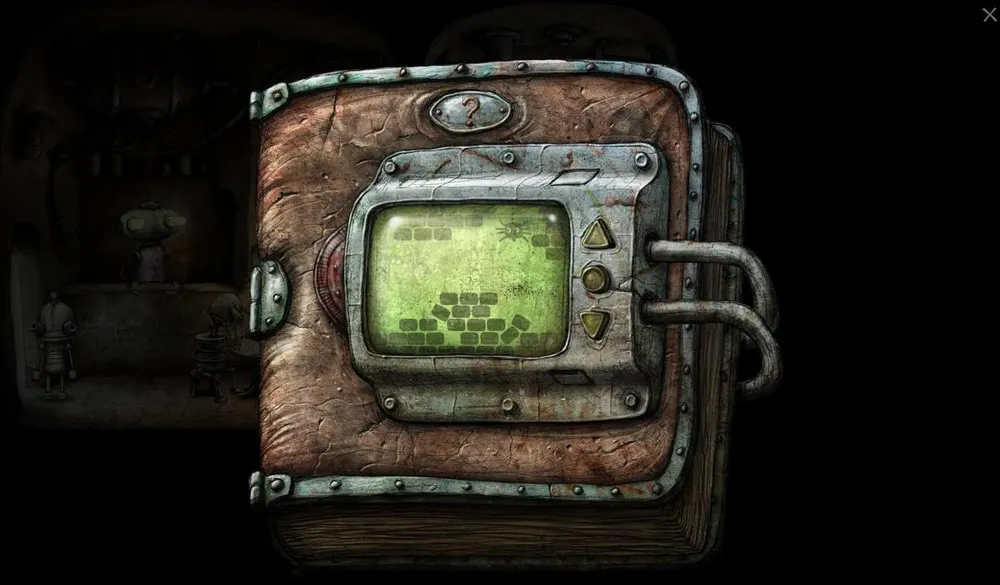
At first, you need to complete the scroll shooter on the cover, and for each location, you’ll have to do it again at new levels.
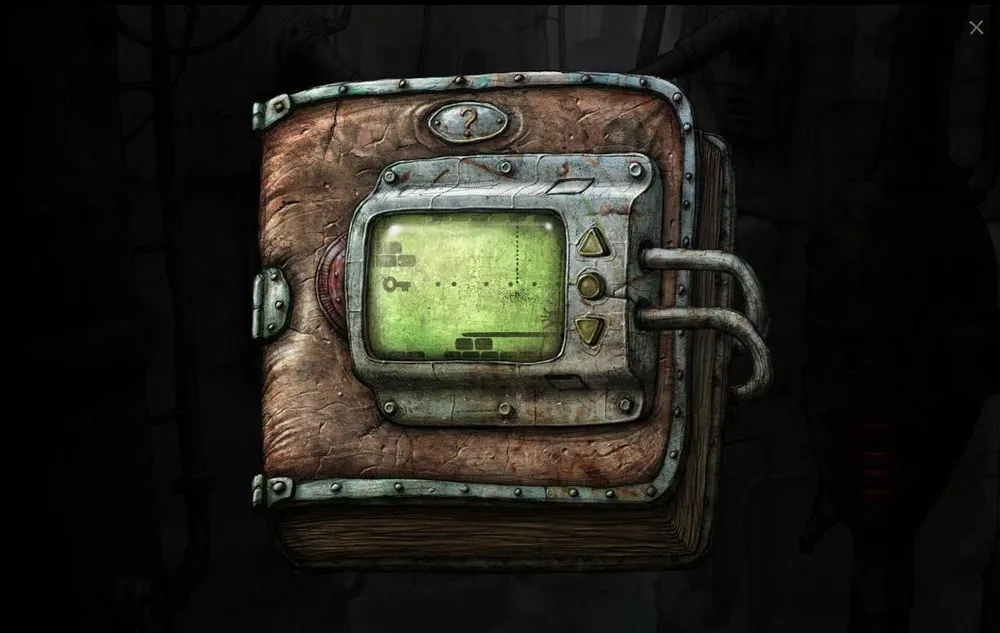
It’s not hard, and after solving the puzzles of the level, I purely for fun shot amoebas and read walkthroughs from the developers. Here’s how the walkthrough is formatted (the screenshot shows a non-story level):
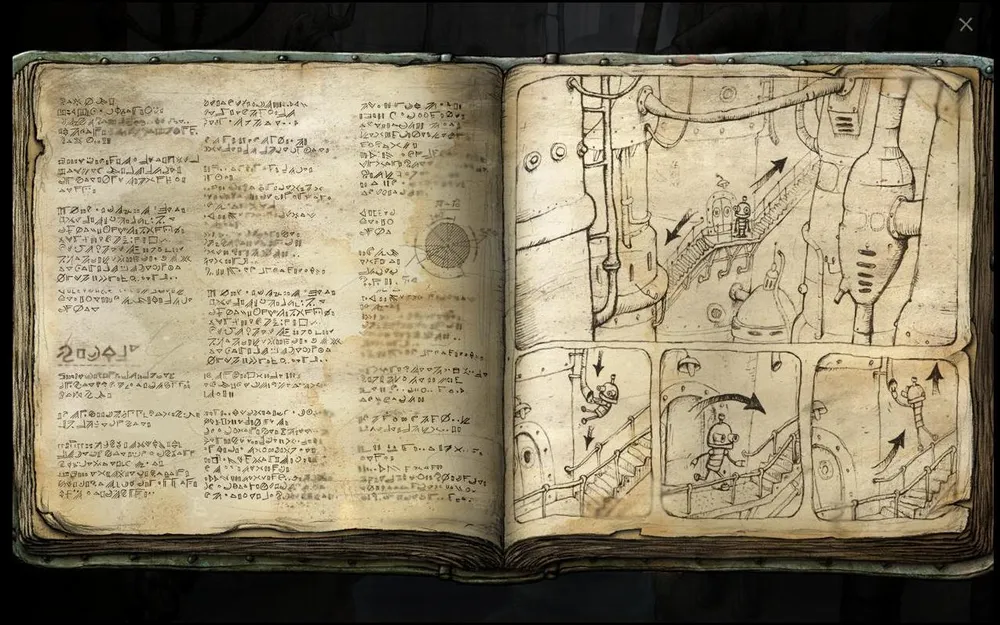
Personally, I needed the walkthrough only once when I tried to take a record from a mechanical crow. This creature sat on a wire above my head and mocked me, stretching and crouching along with the robot!
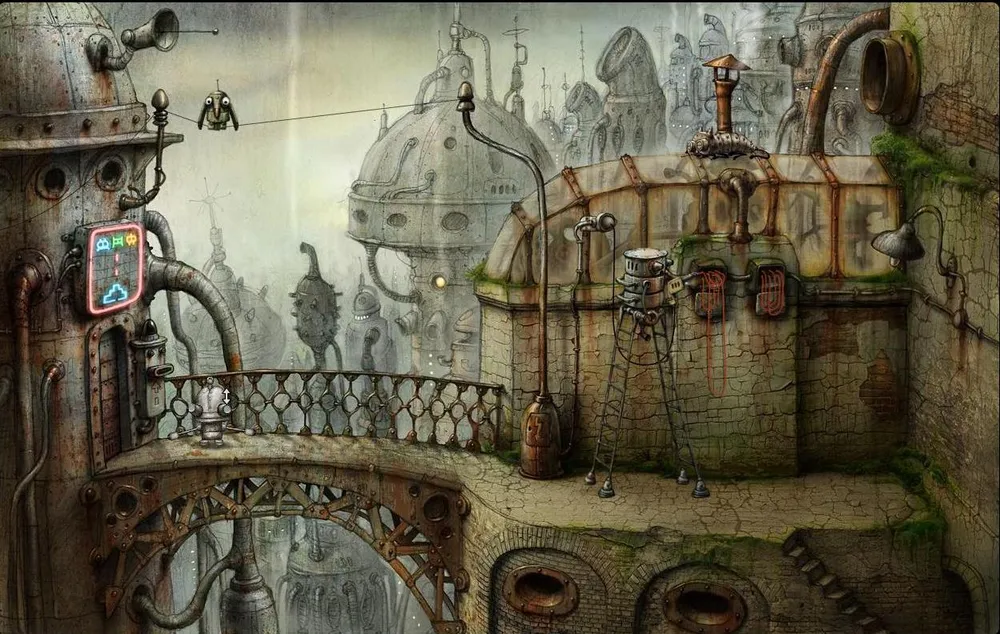
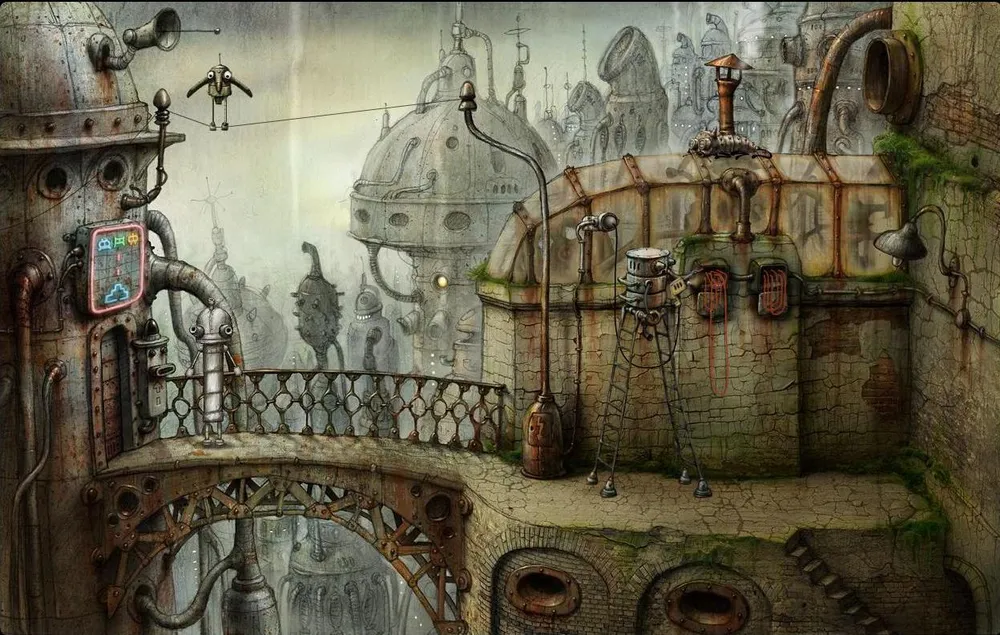
But peeking into the walkthrough, I was struck down. Tell me, did you expect to find a physical puzzle in this Flash-quest in the style of Penumbra? I was pleasantly shocked.
Another atypical adventure game mechanism – in one scene, two heroes (Little Robot and his girlfriend) are separated by a grate but can exchange inventory through it. And you can switch between them! The girlfriend has a likewise unlimited inventory, but she can’t stretch upwards or outwards. However, without her, you can’t make the elevator go up…
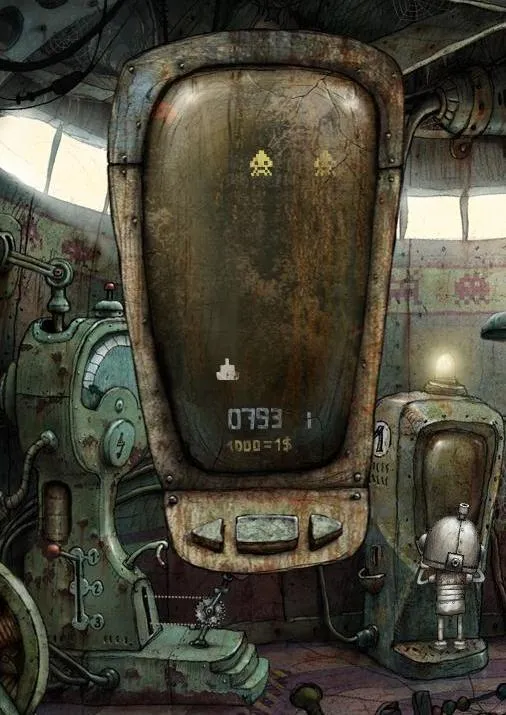
And lastly, I must mention – Machinarium features an arcade machine with Space Invaders! The real classic, controlled with the keyboard, furthermore, you earn a coin necessary for the plot after getting 1000 points. They know how to play on gamers' feelings, right?
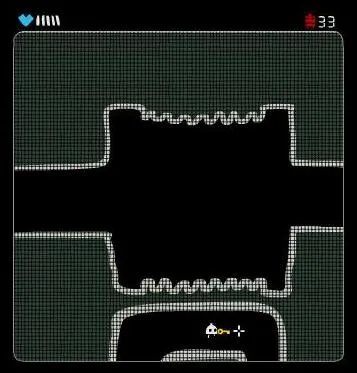
There’s also a variation on the theme of Castle Wolfenstein (the very first one), where you have a top-down view and need to navigate the maze and shoot all enemies before they kill you.
And here are a few more sketches about the game.
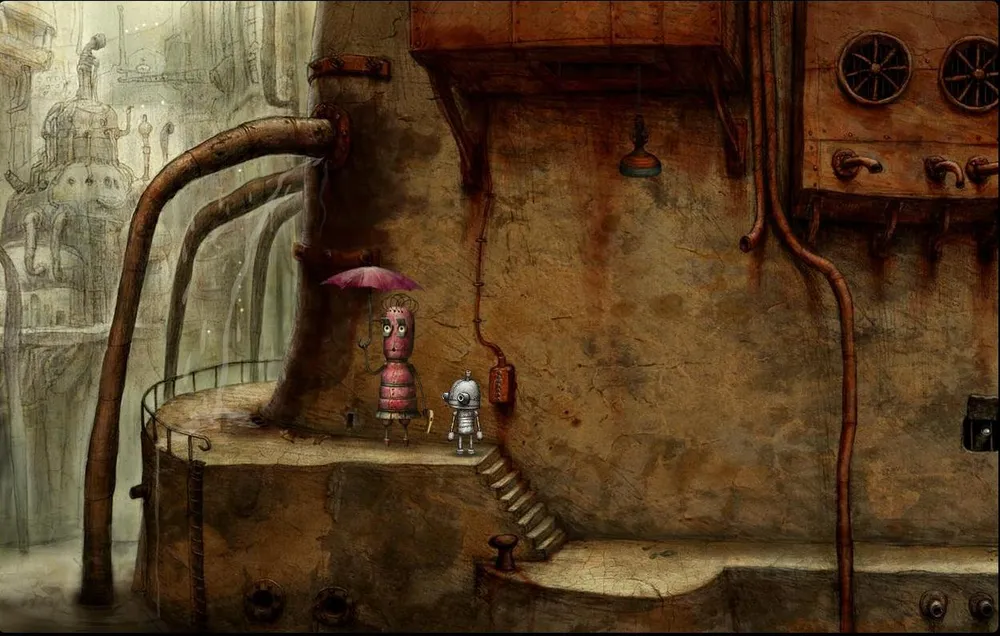
Here’s a glamorous kitty that has lost her robo-dog.
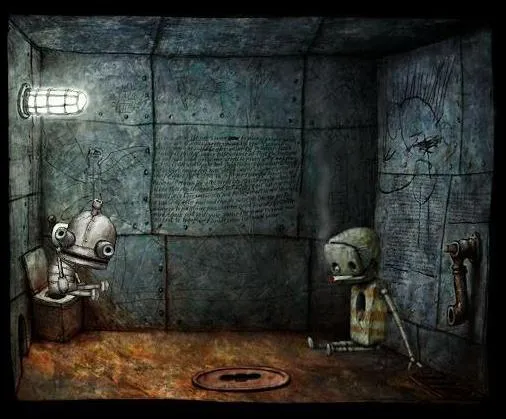
Why do robots need toilets?

And here is an abandoned garden. This location reminded me a lot of the Conservatory from Syberia...
In general, despite the absolutely different gameplay, associations with Syberia arise often. There’s a mechanical city and a multitude of small tragedies of people… No, I’m sorry, robots. There’s a proud old lady sweetly sitting by the church, reminiscent of Madame Romanov, and there’s a strict and clumsy bartender standing at the counter, just like the manager of the very first hotel there…
Maybe I love Syberia too much to see its features everywhere. But tell me, how can you not love it?.. Those five or six hours that Machinarium will gift to the player are comparable to a sip of fine wine – they warm the soul, tone the mind, and evoke pleasant memories of past masterpieces... Don't miss it!
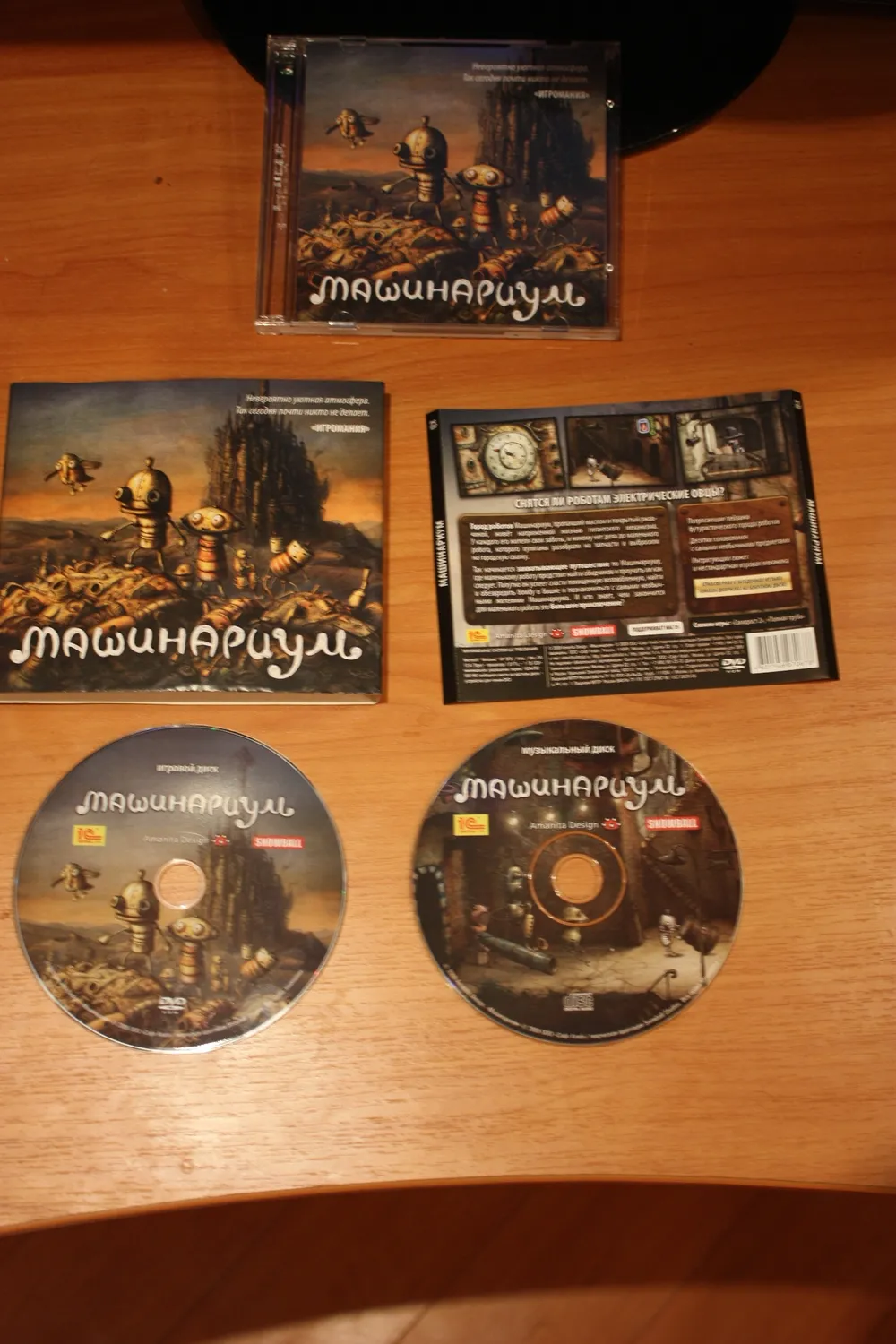
This time, Snowball Studio did not let us down, releasing the game on the same day as the rest of the world. The Russian edition is out on **DVD** (the game itself is small, but in addition to it, there are many demos and videos on the disk), plus in the jewel case, there’s a disc with a wonderful soundtrack. And all this – inside the traditional cardboard frame from **Snowball**. Priced at 250-300 rubles in stores. Believe me, this game is worth its money. And a photograph:
AQuaRity, specially for GAMER.ru!