Overview of the final version specifically for Gamer.ru
I can’t say we waited very long for Majesty 2. The demiurges from Ino-Co are like rockets. They developed a game of this level from scratch in just a year and a half. I remind you that the first part took almost three times longer to create. Here we can either talk about professionalism or, conversely, doubt — did they miss something, did haste spoil the idea? You will find out my opinion on this as you read the article, and soon there will be dozens and hundreds of reviews around the world. Only then will it be possible to say for sure whether the Krasnodar company managed to revive such an unusual and interesting project.
And a couple of words about the review. In it, I will try to focus on what other journalists, I’m afraid, might miss. But you can also expect a quite traditional description of gameplay, innovations, and interesting ideas. But to hell with prologues. Especially since they always drag on.
How boring it is to live...
As is known, two hundred years have passed since the first part. At first, the kingdom was peaceful and solemn, one great ruler of Ardan was killing the undead, exterminating necromancers, and industrially eradicating rats. In general, they were engaged in mundane affairs of majesty — doing good.
However, King Leonard was unfortunate. His heroic ancestors overdid it a bit and did so much good that evil ran out. And what should a ruler of Ardan do without it? Get bored, look at portraits of his grandfathers and envy their glory. And for years, this disgusting tranquility lasted — not a single skinny skeleton, not a single miserable rat — no one disturbed the kingdom. Therefore, Leonard decided that it was time to help the appearance of all sorts of vermin. He asked the sorcerers to summon the Baron of Hell to bravely break his horns and become equal to his ancestors.
As a result — Leonard did not reach the horns. A demon killed him. And a hundred others who tried afterwards to take up the ruler's place. In principle, there are now enough rats and skeletons in the kingdom. Even necromancers and demons with dragons have reappeared. If Leonard were alive, he would smile and beat the villains. But he is dead, the galaxy Ardan is in danger, and only we can save it — the last of the line of kings. Lucky, so to speak.
On the classics map
In general, the beginning is simple but in the style of the first part. After the introductory video, we find ourselves on a map scattered with sixteen missions. Some are open right away, others will become available a little later. The developers did not stray far from the original. Even the difficulty level increases from the first levels to the last. And if at first we will easily destroy monsters and take down the final boss with a single kick, then later we will often have to save and come up with intricate tactics.
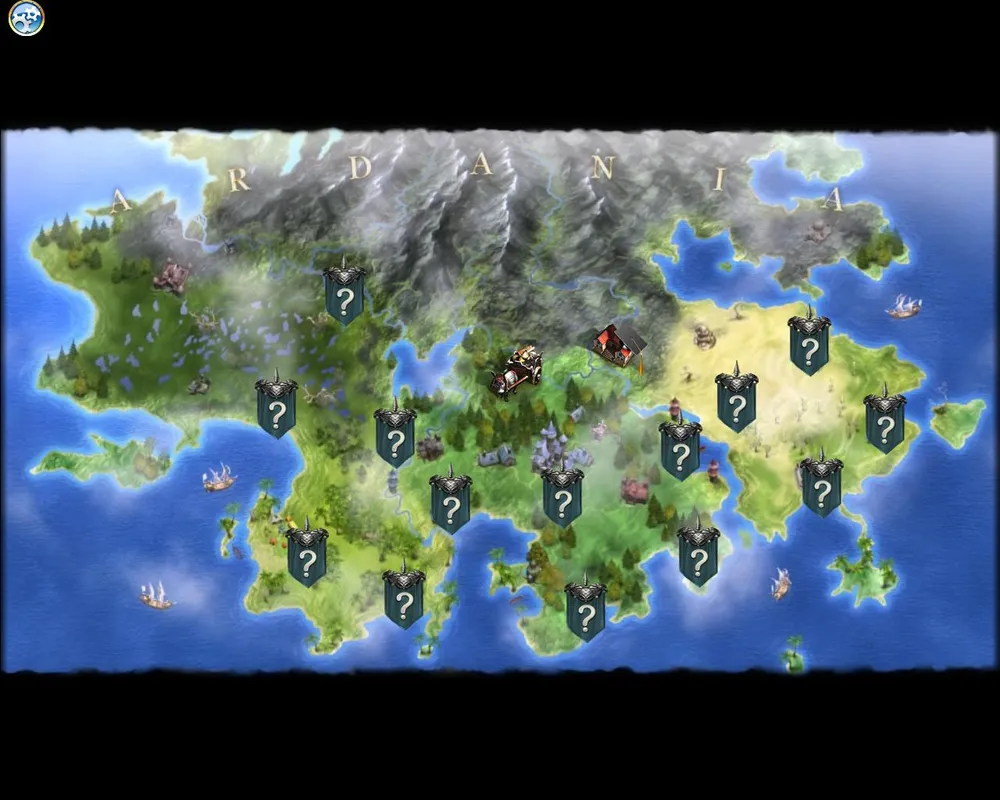
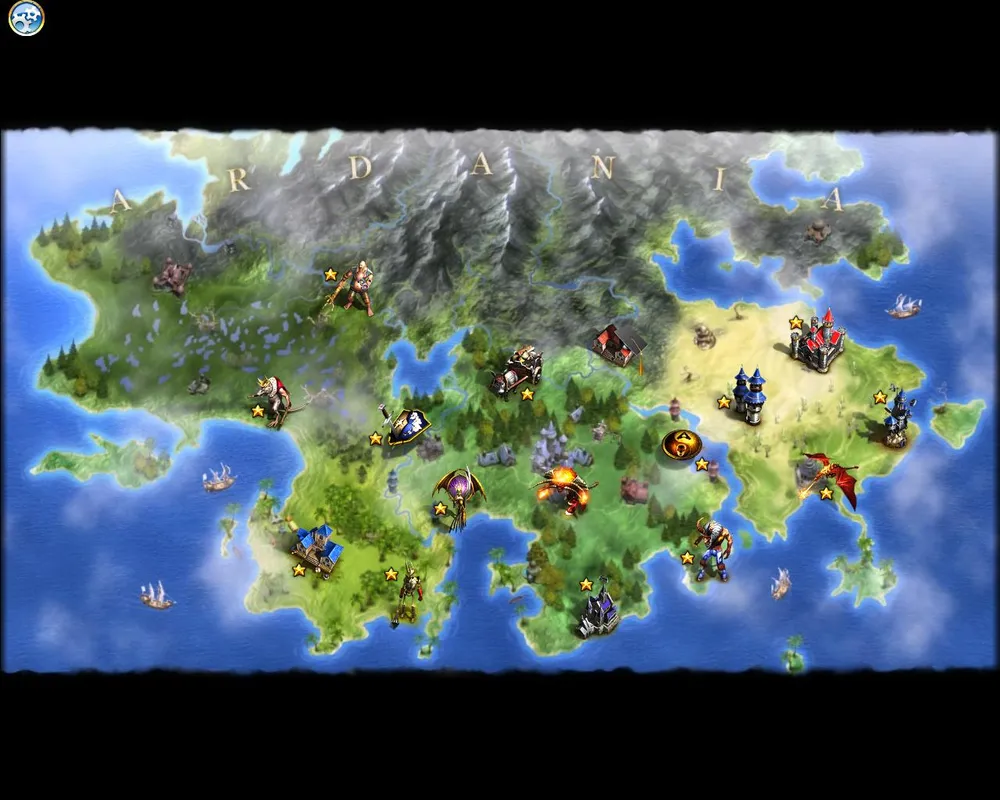
Each mission is, in principle, a separate story that connects into a common plot. That is, we prove that we are the most worthy contender for the throne, that evil in these lands is nonsense and must be exterminated, that anyone who challenges us perishes. And we go through the lands of Ardan, praising ourselves and telling everyone that the demon is finished.
This is kind of the core of the game, but all missions are completely unique. Each has its own particular plot, an interesting story. And — most importantly — all levels turned out to be so pleasant and engaging that forgetting at least one of them is simply impossible.
About friends, trifles and important things, or perhaps the main thing
The developers have particularly succeeded with the image of the advisor-mentor. He is a funny, cunning, and smart old man, more like a superstar's manager. He will negotiate everything, find out the best way to take down a huge dragon, go to an important meeting, and then pass on what the temple elders decided. He will come up with a clever plan on how to catch a huge rat in a trap and how to protect himself from the magic of an evil wizard. He knows the history of Ardan well and often, almost casually, mentions curious facts, tells tales and parables.
Moreover, he is really pleasant to listen to. I didn’t just skip the introductory remarks before missions — I listened to them. Although they are written on the loading screen, and you can just glance through them to get a rough idea of what it’s about and quickly press Enter. But no, I didn’t want to interrupt the advisor. When we got carried away into the desert, where we needed to complete a quest, he began to rant about the sand, complaining that it was everywhere — even in his favorite ale, then he regretted a little and kind of casually said that there was a more serious problem — we need to kill the greatest dragon. The mentor talked for a few minutes about this “flying reptile,” then added that once it swallowed a great monarch who wore a sacred artifact — the cloak of Tivus, which would be very good to have for anyone who wants to seize the throne. And after those words, he switched to a confidential whisper and concluded his speech with a completely different tone, saying: “My lord, I would look into the dragon.” A classic joke, but the delivery is good.
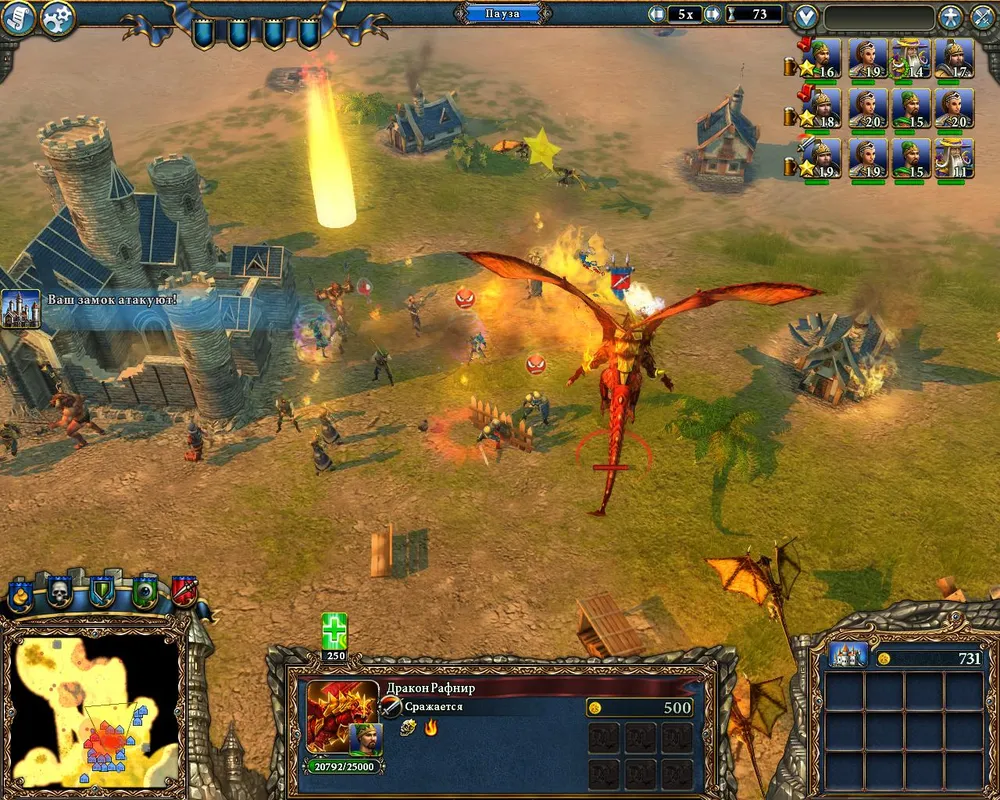
Or another case. A new mission opens on the map, we enter it, and our mentor is almost shouting that such-and-such baron is a scoundrel, and he needs to be killed immediately. It turns out he insulted the advisor (this was said while swallowing words), and therefore “you too, Your Highness!” (and this was already loud, solemn). He didn’t pay, the bastard, on the bill when they were sitting together in a tavern. And this is a direct attack on the treasury — he must be killed immediately! The baron turned out to be a truly unpleasant person, and the list of his wrongdoings was not limited to just this non-payment. After all, we are a good king and do not engage in evil deeds.
Not even in the C&C series did I listen to any of the characters with such pleasure. Kane, for sure, is nice but very predictable and cliché. I won’t even mention Red Alert 3. There, all the briefings from the command are pure clichés. The girls were the only thing that saved the videos, everything else was sadness and boredom. No matter how well the actors played or how famous they might be.
However, Majesty 2 charms with countless delightful little details. Here’s a dwarf, a simple dwarf. The dwarf holds an enormous hammer. Sometimes the dwarf shouts, “This hammer can also be used to hit on the head!”. And when the ranger reaches high levels — what does he do? Ties his eyes — hunting with open ones is already very boring. Before the death of the priestess Agrela, she solemnly, hopefully, and with tears in her voice says, “I will live… forever.” It made me shudder; it was too melancholic. Firstly, they killed the main healer. Secondly, she speaks her last words with such feeling...
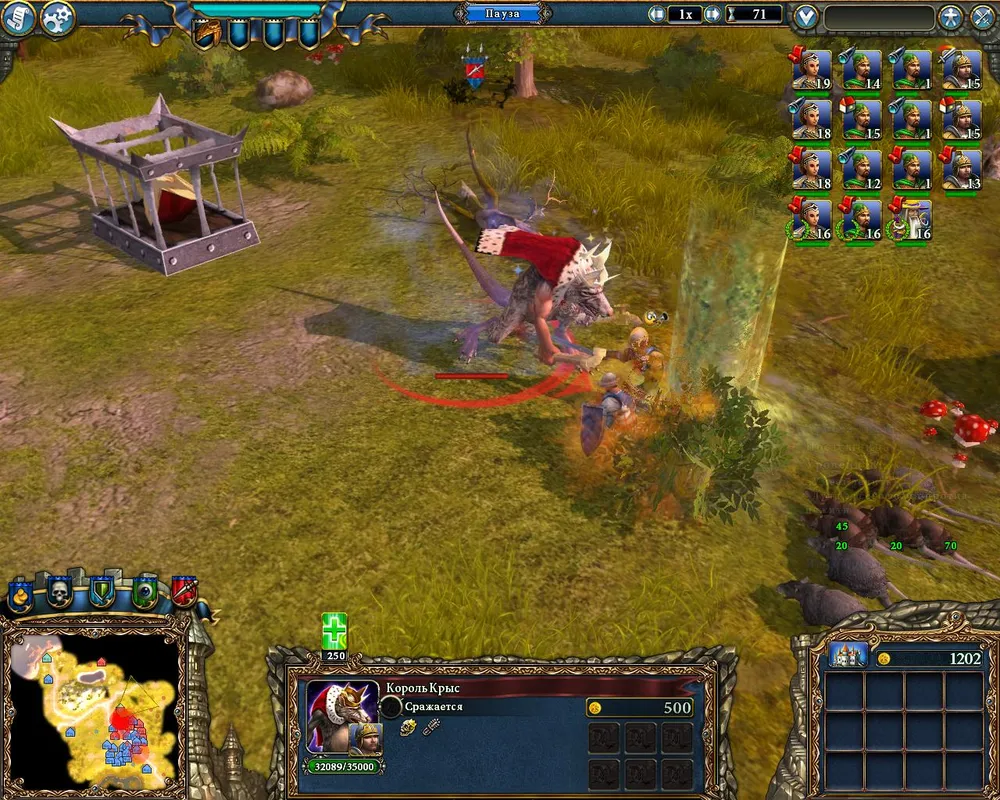
Sometimes we discover additional missions at the level, and they are often quite curious as well. Once we were thrown into the land of vampires — there were hundreds of them. And here we accidentally find some shack. The advisor immediately announces that Van Helsing (name slightly altered) is in need of help — he asks you to escort him out of here. He wants to escape from this land as soon as possible. “He’s probably tired”... And oh, how I want to tell you about the main boss. Honestly, I haven’t seen such a colorful opponent in a long time... I don’t even know if I’ve seen one at all. But still, I will hold back and not say a word about him. I don’t want to spoil the impression, for he is simply a little masterpiece.
But now a reasonable question — why am I talking for so long not about the gameplay, not about the innovations of the second part, and even not about the online mode? It’s quite simple — the advisor, his jokes and introductions, his description of situations, and tales from the history of Ardan, all these rare references, remarks of the characters, the behavior of the monsters — this is an important and very endearing part of the entire game. If you cut it out, remove it — such a share of charm will be lost that I personally will not play through the campaign a second time. And this is in a strategy game. Where there are not even any characters at all. Where you have to build, fight, and earn money. To illustrate: do you remember the quests from “Space Rangers”? If you remove them, how much would the game fade? That’s how it is here too. Therefore, I decided to focus precisely on this part of the game. Majesty 2 has a stunning atmosphere that the first part didn’t have. There’s something in it that belongs only to good domestic games. Like in “KR”, like in “The Legend of the Knight” and in “The Princess in Armor”. A subtle, charming humor, interesting allusions... For all this alone, you can love Majesty 2. But there are also many innovations. Let's talk about them.
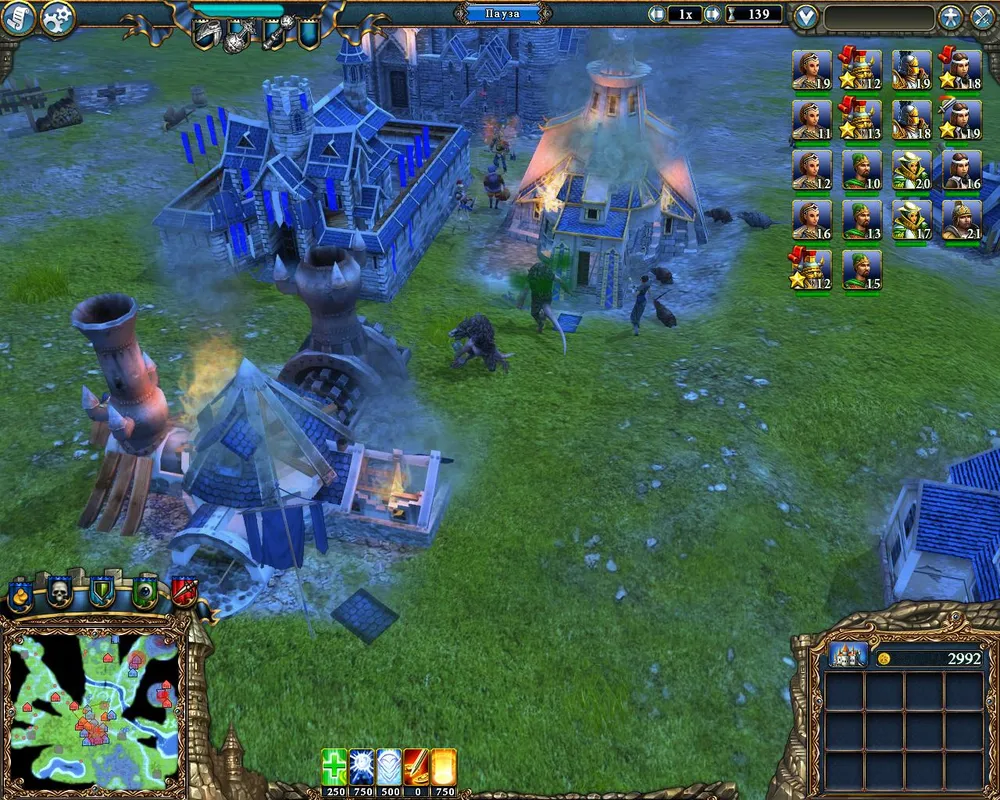
What Ino-Co came up with
I suppose everyone knows what kind of beast this strategy of indirect control is and how great the first part was. I don’t want to talk about it for the thousandth time, especially since thousands of letters have already been penned nearby, and my fellow journalists will translate at least as many explanation letters in the coming days. We are all in the know. So let’s get straight to the main points, the differences from the original, and how it plays.
We will save the new flags and power points for later, and let's start with small changes. As you know, a lord system has appeared. After each mission, we choose exactly one hero, whom we can then buy in any mission. Did you level up a dwarf to level 15 and don’t want to part with him? Award him a title, and he, along with weapons, artifacts, and potions, can now delight you in any other battle.
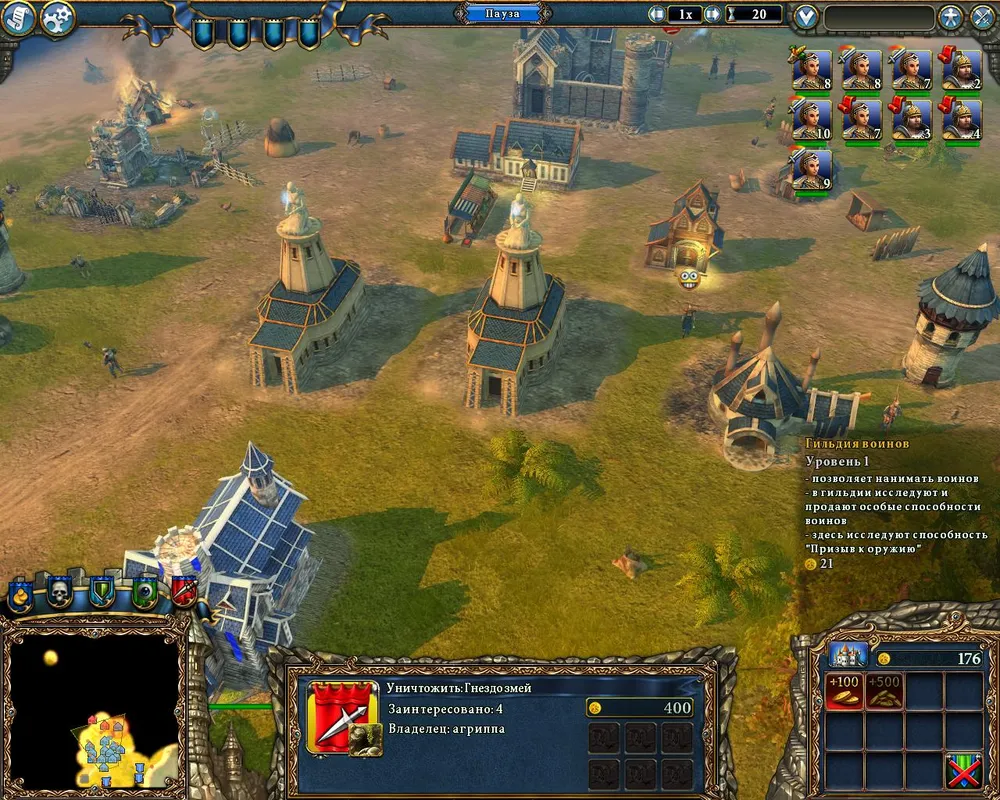
With each mission, the number of privileged heroes only grows. But do not hope that only noble and leveled fighters will fight the final boss. This is impossible, since we hire them not in regular guilds but in the “Hall of Lords,” which can hold only three people. And there can be only one such building on the map — so you can’t have too much fun.
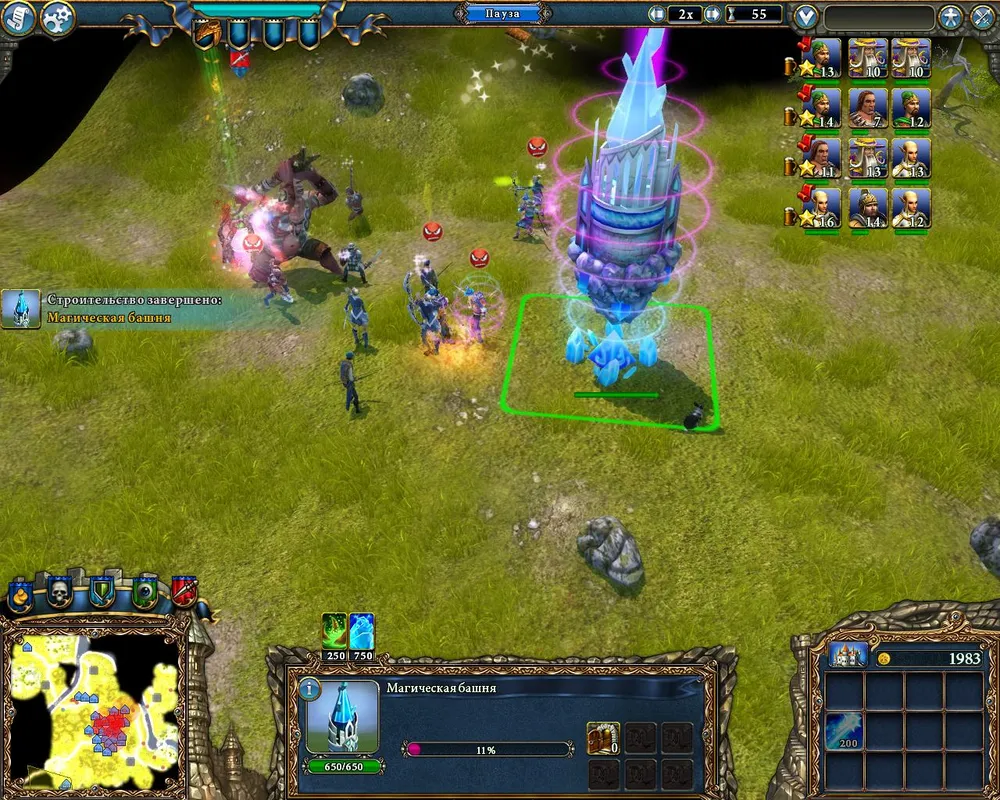
However, there are other problems associated with lords. For example, to redeem a truly strong hero costs fabulous amounts of money. Around 10-12 thousand. We can only spend that much gold at the very end of a mission when we’re going to beat the main boss. So personally, I didn’t feel any special joys from dragging heroes through the entire game. Of course, you can do it, but it’s not such a blessing.
Another innovation is ruler artifacts. We acquire them as we progress through the campaign. For example, the previously mentioned cloak of Tivus casts a spell on all heroes that restores health for a few seconds. Another artifact, when used, increases income for a time. Essentially, this is all the same ruler magic, only it doesn’t cost money and has a long recharge. Plus, it acts truly massively. Other than that — nothing special.
In general, it’s all just cosmetic changes. The key differences and the local gameplay features lie elsewhere. For instance, in the new temple building system.
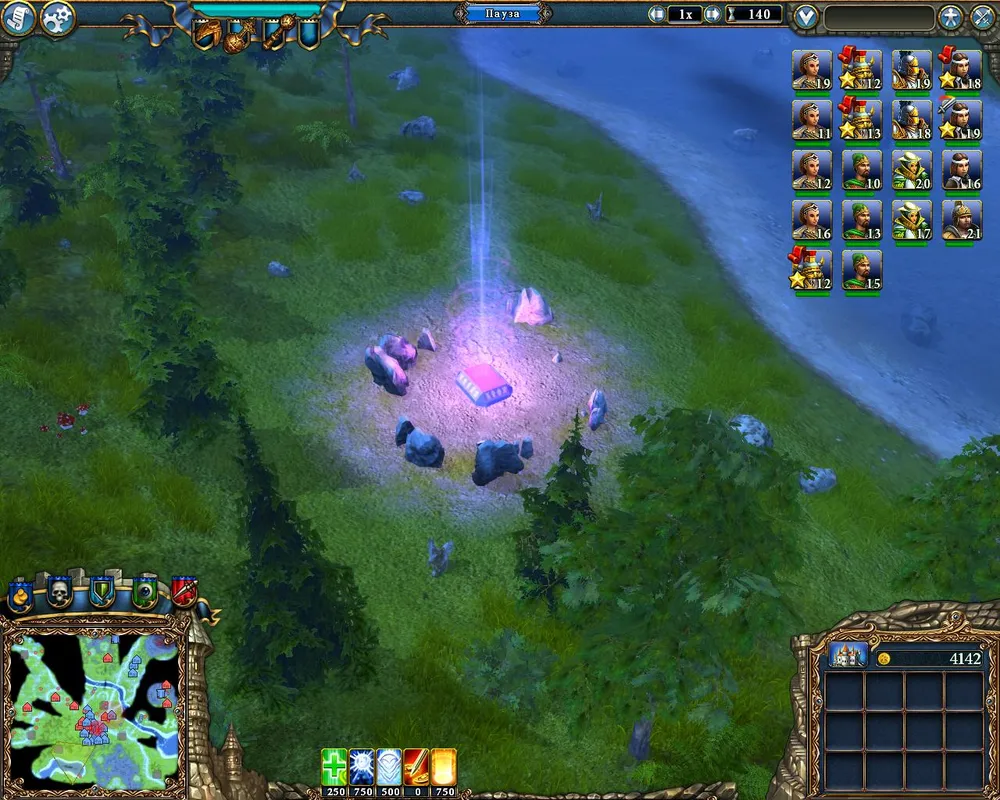
Just like in the first part, at the beginning of the game, we can only build basic guilds — rangers, acolytes, warriors, magicians, and rogues. After upgrading the castle to the second level, the path to dwarves and elves opens up. However, the dwarves need an improved forge, while elves need a market.
And last but not least, of course, are the temples. But unlike the original, there are no mutually exclusive gods here. Yes, Crypta and Agrela hate each other, and there will even be a mission in the campaign where we will have to choose one of the goddesses and fight the servants of the other, but overall, no one forbids us from building temples to both ladies.
But there’s a catch. These temples can only be built at power spots, and they are almost always guarded by a crowd of scary monsters, and to break through to them, you already need to have strong heroes in good armor and with a stash of sweet potions and powerful skills. Otherwise, if you go in unprepared, you'll end up crying by the grave, where resurrecting a level nine mage costs so much that you’re ready to rent out your castle to the forces of evil.
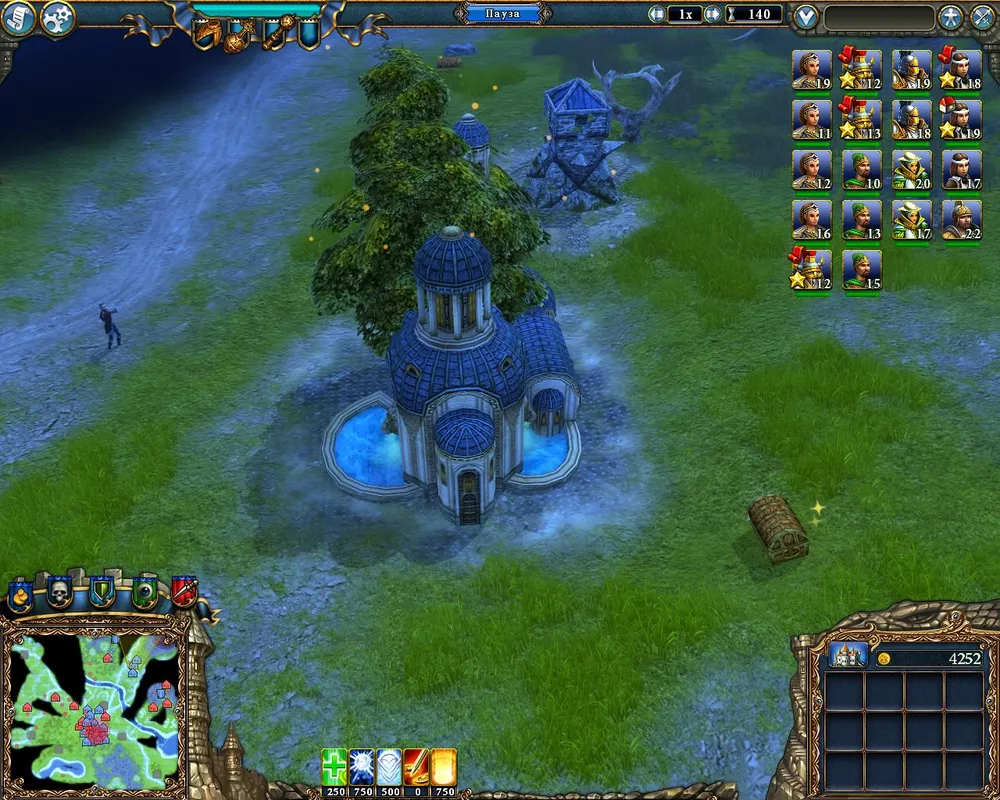
So in the first part, we built temples when the guild heroes were at levels five to eight, but in the new game, it won’t be like that. Imagine, you already have a cool crew, each with a number fifteen or higher blazing by their portraits, and you finally build a temple and get the chance to hire a paladin... of the first level. He already has nowhere to level up, he’s much weaker than a standard warrior — in short, not a fighter, but a burden. In such a situation, he might develop complexes, and the hero will no longer become a hero. He'll be stuck farming the land, occasionally looking at his shiny armor and dreaming of how he could have taken thousands of blows.
But the developers from Ino-Co are good-natured. They wouldn’t let that happen. Therefore, you can now transform a regular hero into a temple one. Did you have a level twenty warrior? Paid a decent sum, and voilà — here’s your fearless paladin of the same level twenty. The only thing is he doesn’t get the weapons, artifacts, and potions he had before the “transformation.” Therefore, you will have to buy everything first, but that’s not particularly scary.
And the same goes for other heroes when they “reborn.” Acolytes, for instance, can become sisters of Crypta, or they can become priestesses of Agrela. Moreover, if you find two power spots, cleanse them, and build temples to both warring goddesses, you can make one girl evil, another one good. And no problems. It’s all in the will of His Majesty.
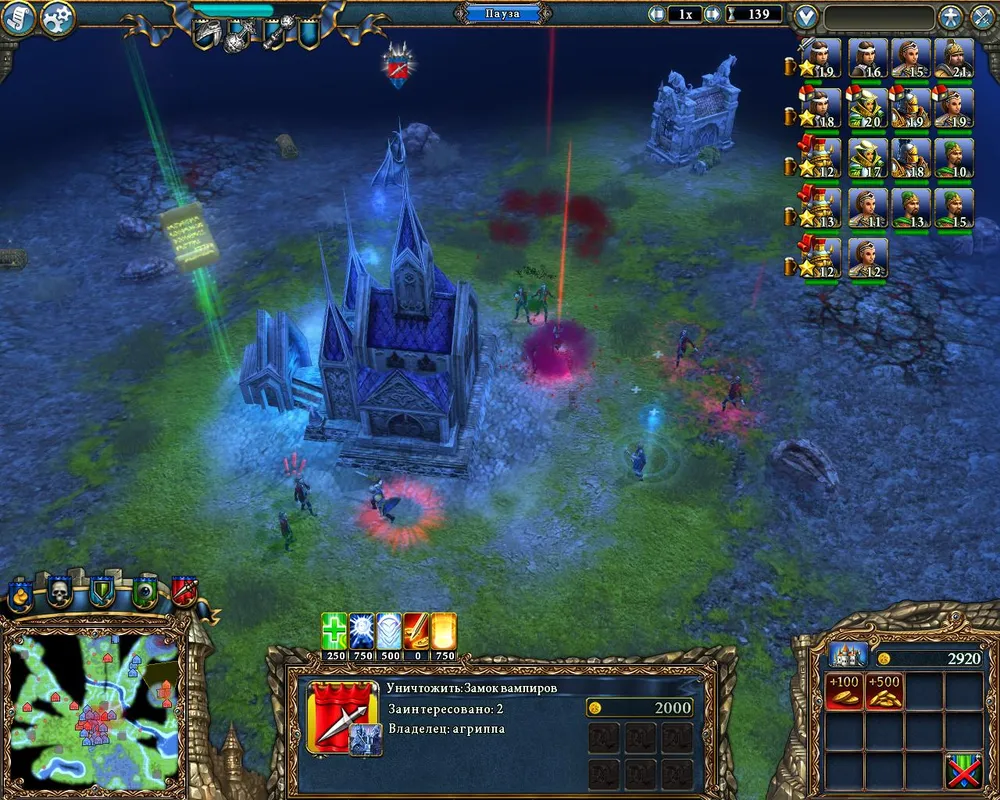
I prefer this system more. Now there’s no need for temple heroes to level up separately. And if you’ve killed the lairs of small monsters, the fearsome paladin won’t have to guard skeletons at graveyards and rats near the sewage. When you feel that it’s time to become stronger, just capture the power spot and immediately receive a powerful high-level fighter. It’s much more pleasant that way.
Now a few words about transformations. Three types of heroes can become temple heroes — scouts, warriors, and acolytes. The ranger either goes along the path of dealing high damage (as a Helia archer) or studies nature and acquires a pet bear (as a beastmaster). Acolytes, as stated earlier, also have two paths — to become a stronger healer and heal, heal, heal, or to turn to the dark side of power and acquire a pet skeleton, a scythe (the one used to cut hay in the fields), and death magic. As for the warrior, he can either become a paladin and tank everything that can be tanked, or become a sword master and start a career of dealing heavy blows. You’ve seen the size of his sword, right? I don’t think this is about complexes...
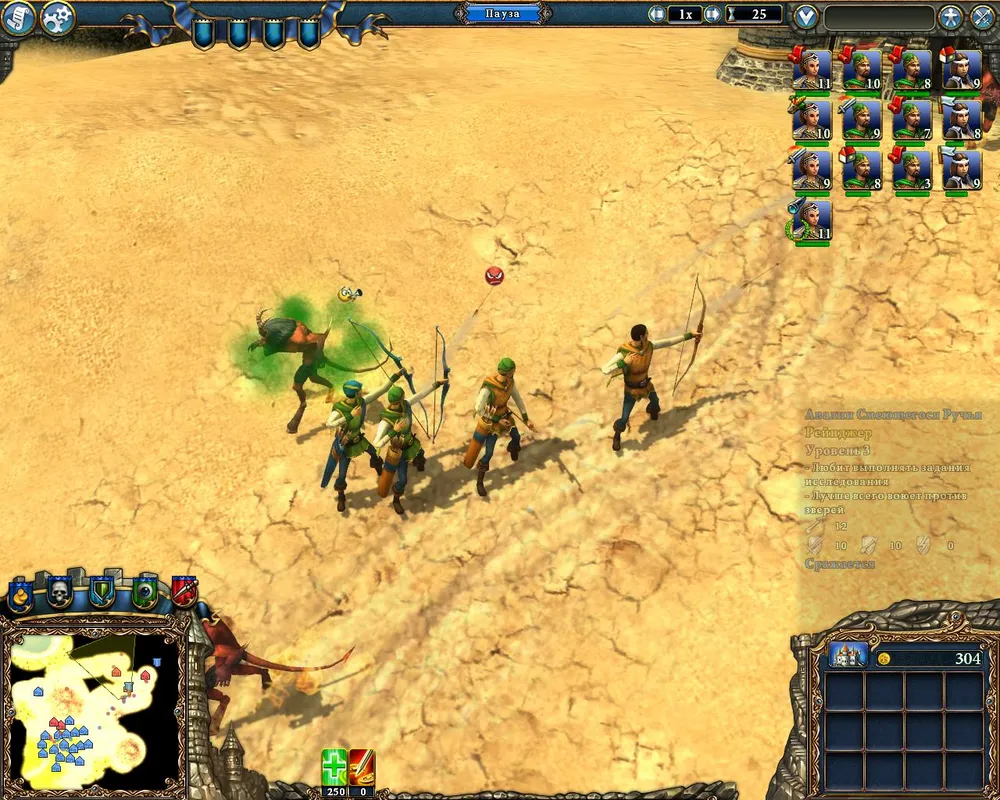
The other heroes simply grow in levels and explore new spells, but they can’t dream of a new career. Although the same goes for wizards or dwarves as well. These guys are charming even without additional changes (although after several expansions, I think no one will be left offended)...
The next important difference in the second part is the new flags. Moreover, they didn’t drastically change the gameplay. They simplified it, removed unnecessary actions, and relieved us from wasting time.
The attack and scouting flags remained unchanged. Warriors still react best to the first, and rangers to the second. As for the new ones — there are fear and defense flags.
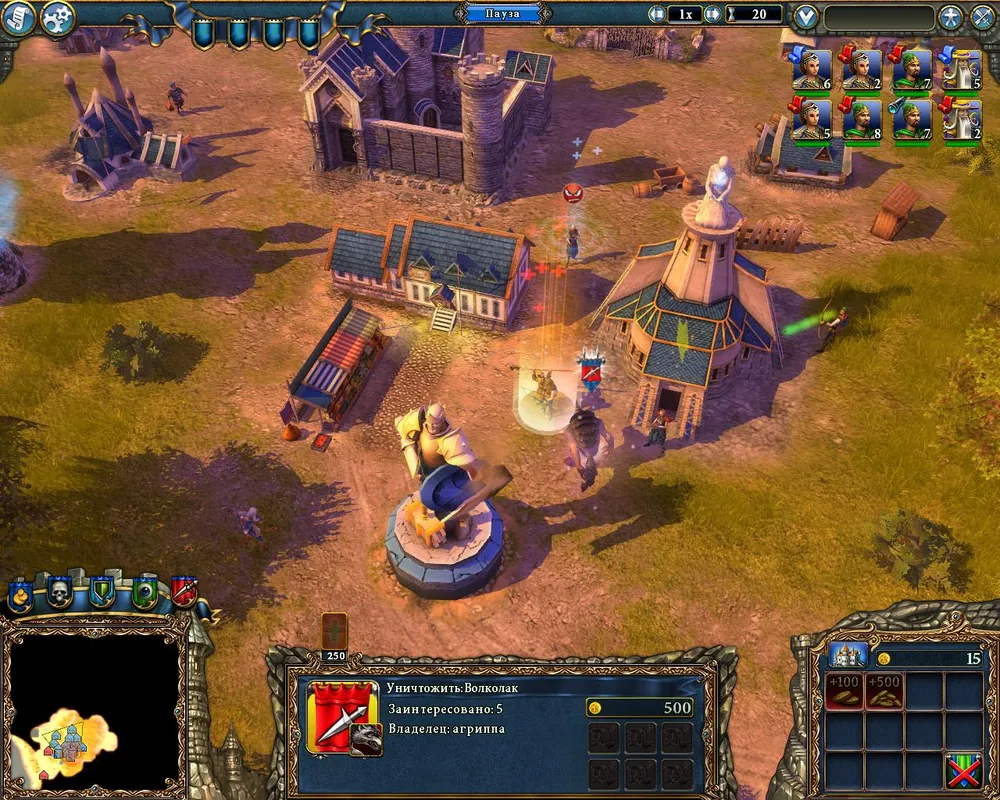
The fear flag allows to protect heroes from the bad influence of the environment. How many times in the first part did a scout kindly point an ogre in the direction of our castle? And how often did curious fighters attack werewolf residences just for fun, and either died by the hands of their underground fiends or dashed back to the castle, bringing evil monsters into the city? All this was sad, but now you can set the flag, and that’s it, nobody will step into the “forbidden zone.” By the way, the level of the threat emanating from the skull flag is proportional to the money invested. If you want a strong fear — don’t be stingy.
The defense flag is an excellent thing. If you hang it on a building, heroes will attack all nearby monsters. If you hang it on a hero, all others will start protecting him. This is particularly nice because acolytes are the first to respond to this flag, and with a shout of “request for protection received,” they run to fulfill the royal will.
But the flags are not the only thing that has greatly simplified life for the ruler. Let’s particularly note the hero parties. We build a tavern, upgrade it, then just press one button, and all lonely heroes gather to chat and drink.
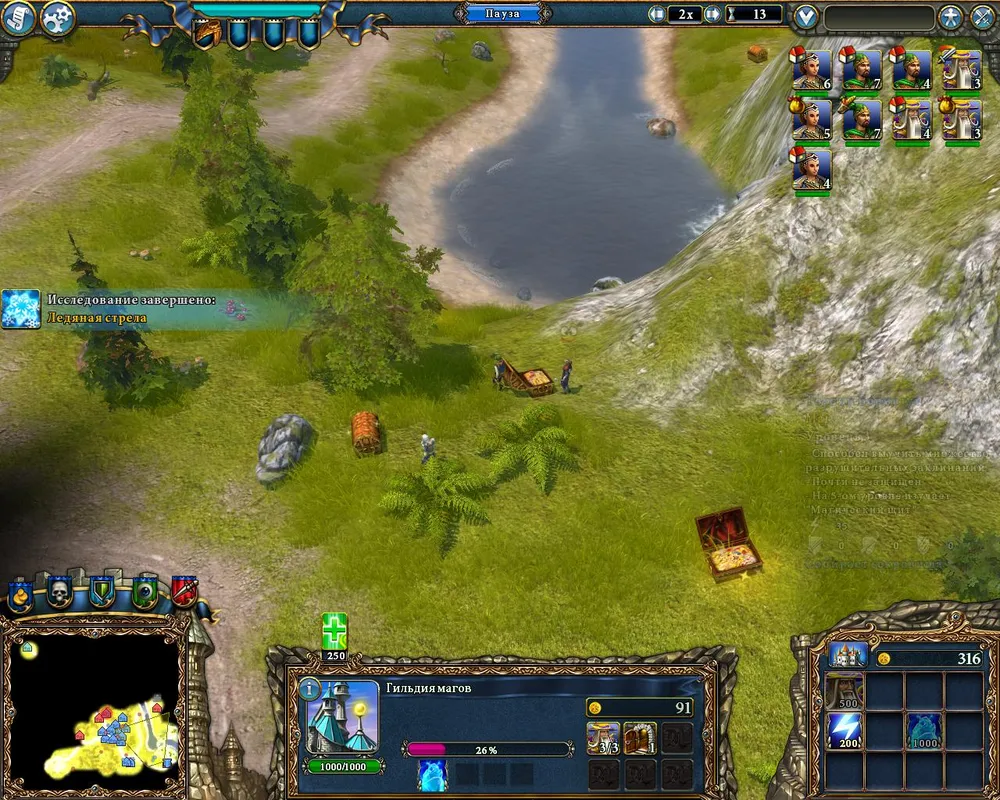
It’s important to appoint a leader correctly, as only his desires will determine where the others will go. If the main ranger, don’t be surprised if your high-level fighters spend most of their time hunting and wandering. So, if you're preparing an attack, hand the leadership to a warrior, dwarf, or paladin. You can also give it to a rogue — she honestly doesn't care what to do. The main thing is they pay, the rest is secondary...
The essence of parties is that now when you set an attack flag on a dangerous monster, you won’t see a lonely mage eager to make a substantial profit. Because it’s a nightmare when a hero at level eighteen dies just because he tried to fight alone. Yes, sometimes characters merge into symbolic squads by themselves. But there, everyone is still for themselves. However, as soon as the designation comes from above, all heroes instantly become chained by one goal — they can’t escape from each other and won’t flee from battle for anything.
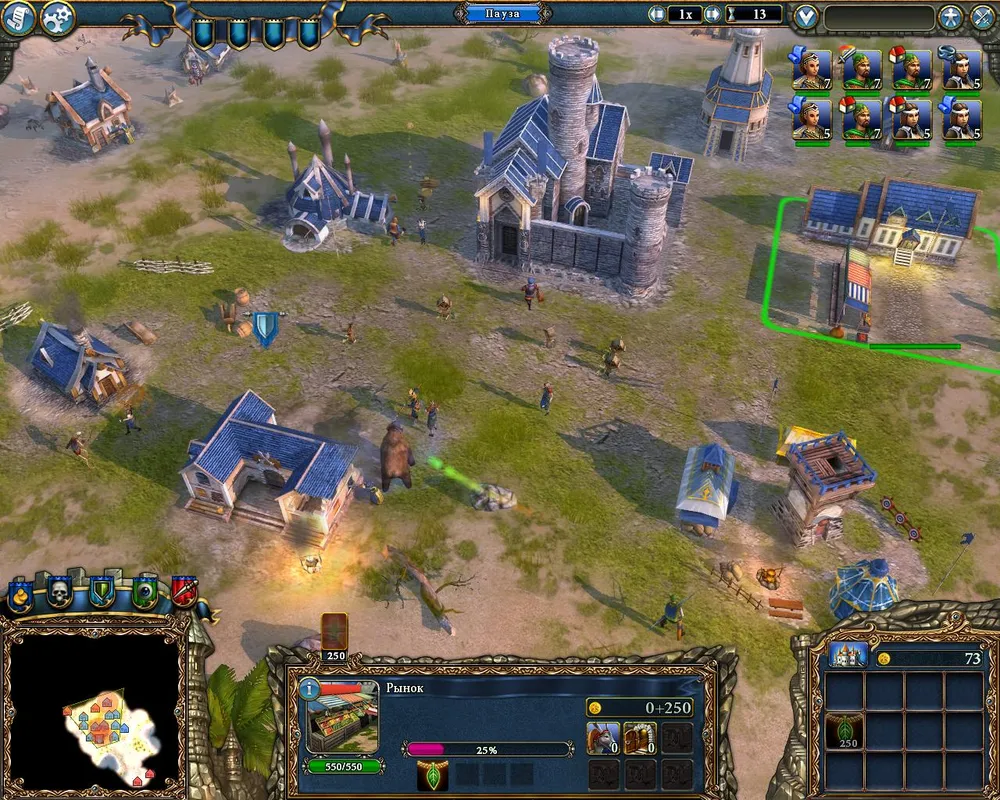
Here they are — all the key differences in front of you. And it can be said that Ino-Co has indeed managed to make the game better* than the original. They created all that was there before, while adding much more. Of course, some things are still hidden and will only appear in expansions, but even the original did not become what we now know overnight.*
And there’s also a great online mode. Sadly, I can’t add anything particularly new to what I wrote earlier. I’ve only played a few times with the developers and have seen nothing new. I can only say that I am itching to fight other players. Perhaps in about twenty days, I’ll write a separate review on the online mode. For now, I just recommend purchasing a license to enjoy this mode, which is indeed appealing. I’ve been fighting in eSports strategies for a long time but haven't felt such sensations in ages.
And as a lovely bonus to the review: feel free to ask any questions if you have them. I’ll be happy to answer myself or ask the developers. So don’t hesitate, I’ll be glad to help.
*Expect a detailed video review. It will appear in a day or two.*
Added by sliph:
Attention those who bought the game through the online store. The message reads:
“Attention: the first activation is possible from 11.09.09 from 00:00 Greenwich time”
This means that in the RF (in Default City) you can activate the game only at 4 AM (+3 GMT +1 summer time). Perhaps there’s an exception, but keep this in mind.
And do not tell me about K.O., for many may not notice this annoying little detail due to their joy.