
Review from gamebanshee.com [translation]
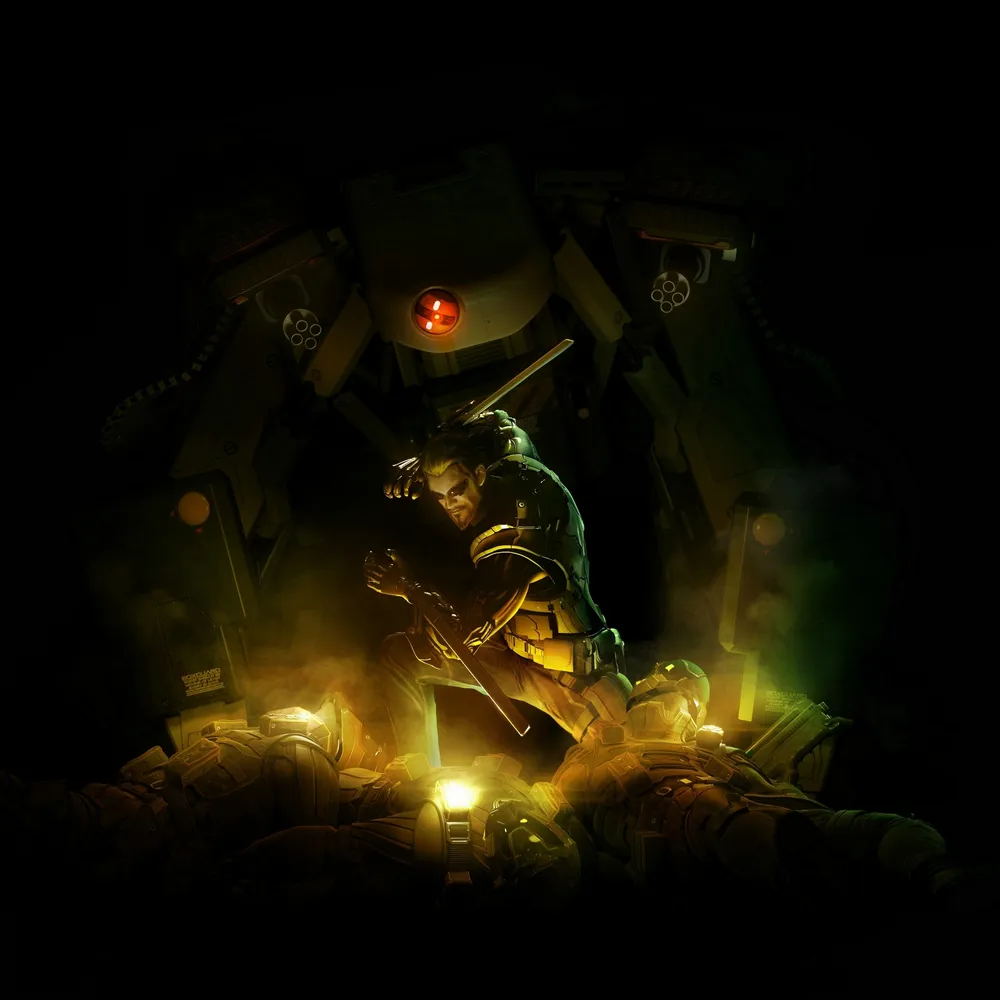
Review of "Deus Ex: Human Revolution"
Eric Schwartz
08/23/2011
It is difficult to become a worthy successor to a legend. "Deus Ex" is undoubtedly one of the most beloved and revered PC games in history. Although it is hard to call it flawless, it is one of those rare games that has always held the top spot in its niche. Other games had better shooting mechanics than "Deus Ex" with its clumsy first-person combat. Even earlier games like "Metal Gear Solid" and "Thief" paid more attention to stealth gameplay. And if we are to consider pure role-playing games, I could name a good dozen titles before "Deus Ex". However, being a cohesive, original, and unforgettable game, "Deus Ex" took the best from PC gaming—genre blending in gameplay, a deep narrative, memorable characters, and a sharp, prophetic social message. Becoming an undeniable classic, "Deus Ex" defined a standard in gaming that few ever strived for, let alone achieved.
"Deus Ex" obviously had a sequel which, in the opinion of most fans, did not live up to the original. "Invisible War" was console-focused, technologically limited, and attempted to appeal to a broader audience of action game fans, which many loyalists of the first part found unpalatable, not so much because the game was poorly executed, but because it was not a worthy successor to the first "Deus Ex"… and for a long time, it seemed that the series had passed into oblivion without a proper swan song. "Invisible War" gradually faded into the shadow of its predecessor.
So, when "Eidos Montreal" and "Square-Enix" announced they were resurrecting "Deus Ex" as a multiplatform game on, oh God, an upgraded "Tomb Raider" engine, developed by people with no ties to "Ion Storm", most of the series' fans were equally skeptical and optimistic. The wait is finally over. Now that "Deus Ex: Human Revolution" is available for download or purchase on disk, only two questions remain: first, is the game good, and second, and more importantly, is it good as a continuation of "Deus Ex" and all that the name stands for?
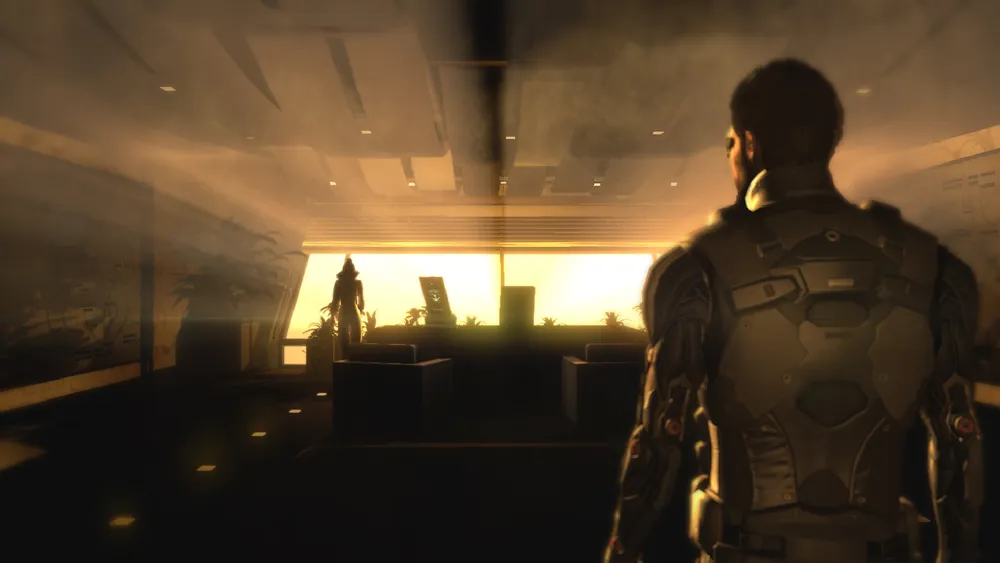
Rabbit Hole
Instead of trying to continue the story of "Invisible War", "Human Revolution", wisely, starts before the events of the first "Deus Ex". It is the year 2027, and decades remain before the nano-augmentation shown in "Deus Ex", so the possibilities hidden within technology and the attempt to redefine what it means to be human are shaking the world. These possibilities, of course, range from improving the lives of the disabled, which modern medicine cannot achieve, to population control and turning the human body into a weapon. Heated debates forged a number of organizations, each led by strong personalities, each with their own complex beliefs, hierarchies, and, most importantly, plans.
Into this world of social tension and political intrigue enters Adam Jensen, head of security at "Sarif Industries". After a powerful attack on the company, which was on the verge of a revolutionary breakthrough in augmentation technology, almost the entire laboratory is destroyed, scientists are killed, and Adam, although he does everything humanly possible, cannot handle the augmented operatives. Only extensive augmentations from "Sarif" save his life, leaving not only a visible reminder of the trauma but also throwing him into the heart of political disputes. After six months, Jensen returns to duty and must rescue "Sarif" employees taken hostage by the pro-human terrorist organization. As is to be expected in a "Deus Ex" series game, the rabbit hole, filled with fragile alliances, corrupt media, and cunning conspiracies, leads ever deeper. Although Jensen is characterized more clearly than JC Denton or Alex D. and his tumultuous past often surfaces during missions, he approaches events with enough skepticism for the player to easily step into his shoes, influence his beliefs, and attitude towards what happens in the game.
Augmentation is the main theme of "Human Revolution", unlike "Deus Ex". While the first part certainly took some time to ponder the permissibility of genetic experimentation and playing God, these were merely part of the narrative. In "Human Revolution", however, the theme of augmentation not only looms over everything; it defines both the plot and characters. Although I do not intend to delve into the specifics of the story, it is worth noting that although sometimes "Human Revolution" seems a tad myopic, it does not merely create a political and social backdrop for action—it naturally weaves gameplay into the narrative, bringing the world and story to a logical and clear conclusion. Yes, a lot of time is dedicated to discussing augmentation, but the theme is fully developed, and more importantly, the player is allowed to form their own opinions about it, which will be rigorously tested throughout the game. If ever there was an example of how well-written narratives enhance a game, it is right before us.
At the same time, some moments in the story do not hit the mark. The conspiracies in "Deus Ex" were grandiose, crafted by the smartest and most powerful people on the planet, and while players often feel like a fly caught in a web, this web is not as intricate as in other games in the series. Many clues and details that tease the player at the beginning, from familiar names to entire missions, largely end up discarded on the way to the finale. Moreover, the philosophical aspect of "Human Revolution" feels underdeveloped; the game leans towards the perspective of the "average Joe" rather than that of someone who holds all the strings. While this is not inherently bad, such an approach may seem somewhat simplistic and cumbersome, making it harder to weave conspiracies or flesh out the motivations of villains and heroes. Fortunately, coupled with the post-credits scene, this allows one to believe that the player is only seeing half the story, even if Jensen's saga and the main themes of the game come to a clear and thoughtful conclusion. The game has a solid plot with a worthy ending, but it is hard not to wish for more.
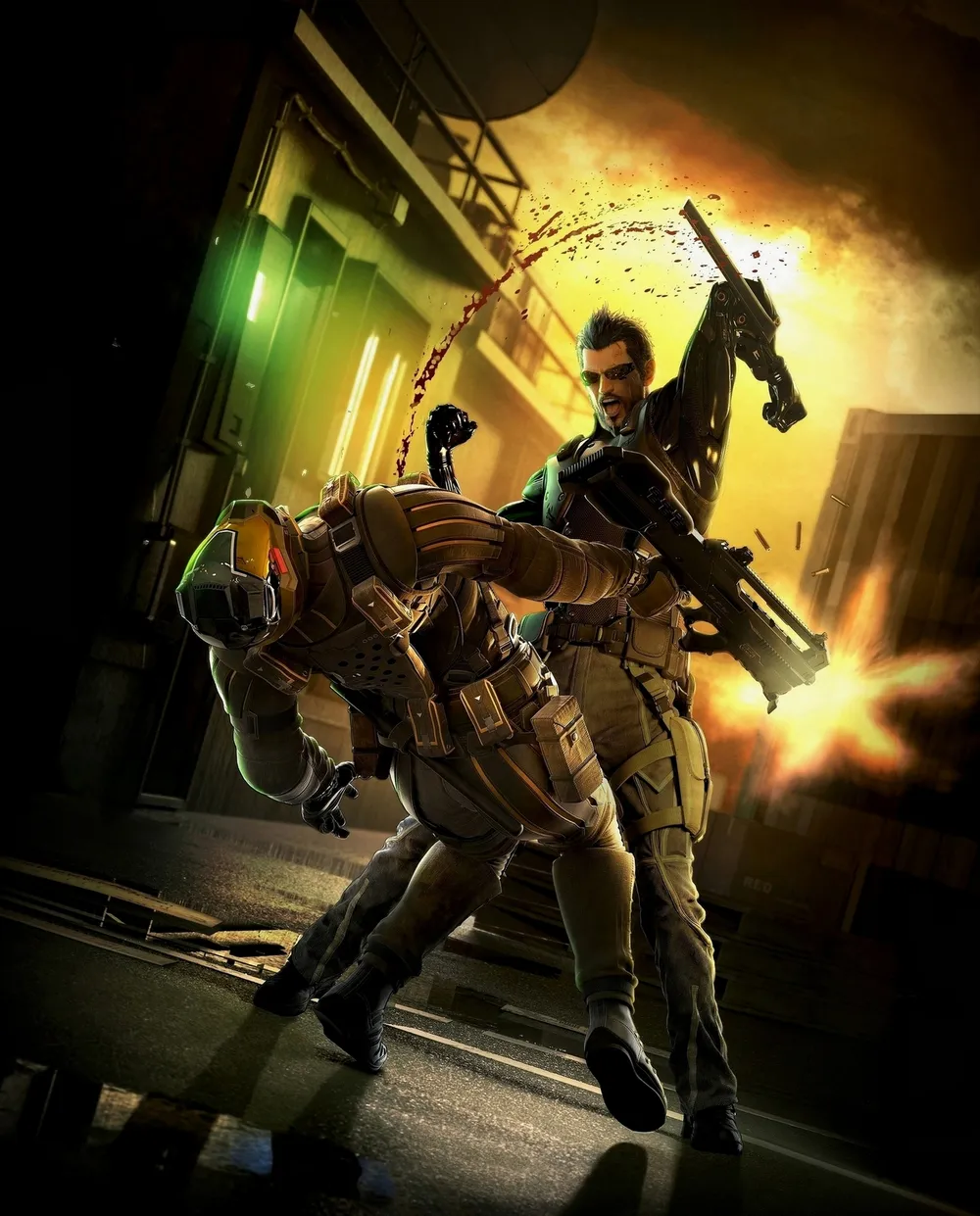
So you want to be a super soldier?
The gameplay of "Human Revolution" generally resembles its predecessors from earlier games in the series and will likely please its fans. Overall, it divides into two main parts—exploration and missions. The former usually takes place in the open residential districts of Detroit and Shanghai and leads to most of the side missions in the game, while the latter is more linear and involves more combat, though this is not always the case. The plot is presented through extensive character dialogues and via text from eBooks and computer terminals scattered throughout the game world, although the main storyline, unlike in the original, is focused on the "main road", while additional reading serves to tie "Human Revolution" into the broader narrative of the series. Structurally, it mirrors the narrative of the original: the beginning and middle are dedicated to exploration, while the end brings the narrative to a conclusion.
Following in the footsteps of its predecessor, "Human Revolution" entrusts the player with choices about Jensen's skills and abilities as well as ways to overcome various obstacles in the game world and during missions. In any situation, the player has at least three different options, usually boiled down to frontal assault, stealth traversal, or acrobatics and evasion. Conversational options are also frequently encountered, usually involving persuasion during dialogue. Sometimes additional options are available that significantly change the game. For example, breaking into a guarded building without the right documents is quite difficult, but if the player spends some time searching for a password, they can progress without a single shot or slipping past guards.
When it comes to character development, "Human Revolution" borrowed more from "Invisible War" than from "Deus Ex", although, truth be told, the developers tried to combine both systems. Skills have been completely replaced with implants tied to an experience system—by gaining sufficient experience, whether through exploring the world, completing missions, or killing enemies, you earn "Praxis" points that are spent on upgrades for Jensen (which is justified, as his implants do not improve themselves, only his control over them does). While they are not as diverse as the implants and skill trees from "Deus Ex", the overall number of options makes the choice sufficiently difficult and crucial to the style of play, especially at the beginning.
In the design of "Human Revolution", there are several glaring issues that are hard to overlook. The first problem I noticed immediately after starting the game was that the surrounding world, especially during the more linear missions, restricts the player much more than the world of the first "Deus Ex", resembling cut-down levels from "Invisible War". While the areas are large, the overall design shifted from "open space with numerous paths" to "branching corridors with side rooms"; while I can forgive this in the first couple of levels, as they are at the start of the game, this system lasts all the way to the last missions, where levels become more open and the gameplay experience improves. Unfortunately, this design did not allow for something akin to the Freedom Island from "Deus Ex". Since the open levels were one of my favorite features of the original, I personally lament their absence. Most importantly, all choice concerning how the player reaches their goal becomes less interesting: it is dull to choose between a gate and a hole in the fence when they are three meters apart. I have never felt that I missed something here, while in the original, I still find something new. Ten years later! However, the residential districts of Detroit and Shanghai are well-crafted and sufficiently vast; there are not only open spaces but also numerous buildings to enter, roofs to stroll on, and sewer tunnels to crawl through. I remember "Deus Ex" just like that.
A more general issue—implants and their usefulness. In brief, the implants in the game could have been better balanced, as many are used very rarely. Hacking and invisibility are used constantly, increases in armor and carrying weight are also quite pleasant, but other implants, say, a gas mask (allows ignoring toxic gas) and the arm upgrade that allows Jensen to break through weak walls, are used so rarely that it is disappointing. I think I saw toxic gas three times during the game, even in nearly 100% completion. Of course, this is partly compensated by many useful upgrades (for example, allowing for lifting heavy objects and thus accessing otherwise unreachable places), but there are too many implants that seem contrived. Or the designers simply could not think of interesting ways to apply them. The potential of upgrades is also limited by gameplay restrictions: for example, swimming is no longer available, though its inclusion would have made the gas mask upgrade far more valuable. However, it should be noted that most implants are enjoyable to use, and they impact the gameplay much more than the barely noticeable additions in the player's arsenal from "Deus Ex".
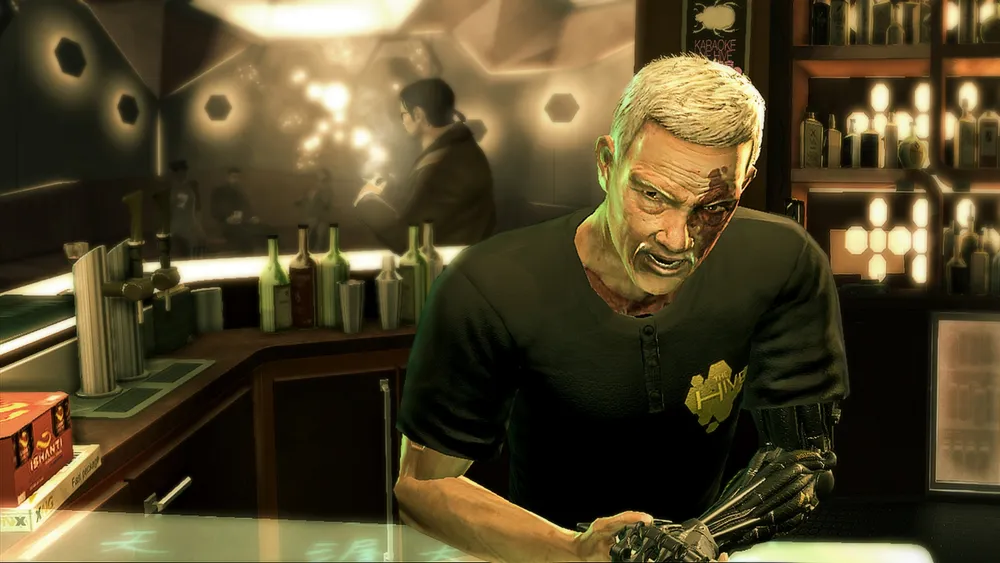
A New Generation
While "Deus Ex" was built on the principles of free gameplay, a complex character progression system, and an earnest attempt to create a game that encompasses the best from various genres, "Human Revolution" ended up in a quirky gray area, not only between console gamers and PC players like "Invisible War" did but also between old and new generations of games. Simply put, it is a child of its time, evoking (in a good way) nostalgia for the old days, so if the game is harshly criticized, it will come from representatives of one of these sides. "Human Revolution" strays the farthest from the traditions of the series with a few additions that were undoubtedly made not due to gameplay needs but due to the timing of the game's release. These additions, while not necessarily bad, certainly deserve discussion.
The most obvious among them are those introduced in the combat system. It was a good move to turn "Human Revolution" into a pseudo-tactical shooter, at least when it comes to shooting; as everyone remembers, one of the weakest aspects of "Deus Ex" was the combat, so attempts to reshape it are understandable and justified. The main change was the introduction of a cover system—Jensen can hide in cover, shoot blindly or aim from behind it, roll from cover to cover, and so on. While I have a rather negative opinion about cover-based shooters, in "Human Revolution", they are implemented more thoughtfully than usual. Using cover does not guarantee automatic victory, and shooting blindly from certain angles is ineffective. Among cover shooters, the game would undoubtedly feel a bit out of place (it's not "Gears of War"), but it accomplishes its purpose. Fortunately, the cover system is not forced upon the player, and the game can be completed in a first-person perspective, so if you fervently hate this mechanic, you can simply ignore it—I personally reassigned the cover key to a far corner of the keyboard and felt no discomfort.
In addition to the cover system, health regeneration was introduced, significantly altering combat compared to the first "Deus Ex". Much has been said about this, but honestly, I do not see it as a significant issue. This is just another concept borrowed from modern games that draws in their fans. Even on normal difficulty, the fights are tough enough that a couple of stray bullets can end Jensen's life, and health regeneration activates after a considerable amount of time, making painkillers essential in difficult situations. Most of the resource management characteristic of the traditional system with health packs has been shifted to an energy system that powers special abilities; the limited number of energy-restoring items and the automatic regeneration of just one single unit of energy prevents squandering powerful abilities carelessly. While I suspect many series' fans will mourn the loss of health packs and the need to heal body parts separately, I do not think the presence of this mechanic would significantly enhance the game, although I generally prefer health packs to health regeneration. In other words, yes, there is health regeneration, but the game did not become "Call of Duty" or even "Mass Effect 2" because of it.
Also related to the combat system, although only partially, is the fact that hand-to-hand combat has largely been removed from the game, replaced with one-button finishers. The finishers, of course, are shown from a third-person perspective, and although executing them is enjoyable, they seem a bit over-the-top, considering that Adam rarely faces multiple enemies and even the strongest human foes are downed in one hit. Similarly, the tranquilizer gun becomes one of the most powerful weapons in the game, albeit non-lethal. I am not sure whether finishers and the tranquilizer were created to reward players preferring stealth gameplay, but instead, they feel too powerful, albeit limited by energy. Instant neutralization does not become any less instant due to this.
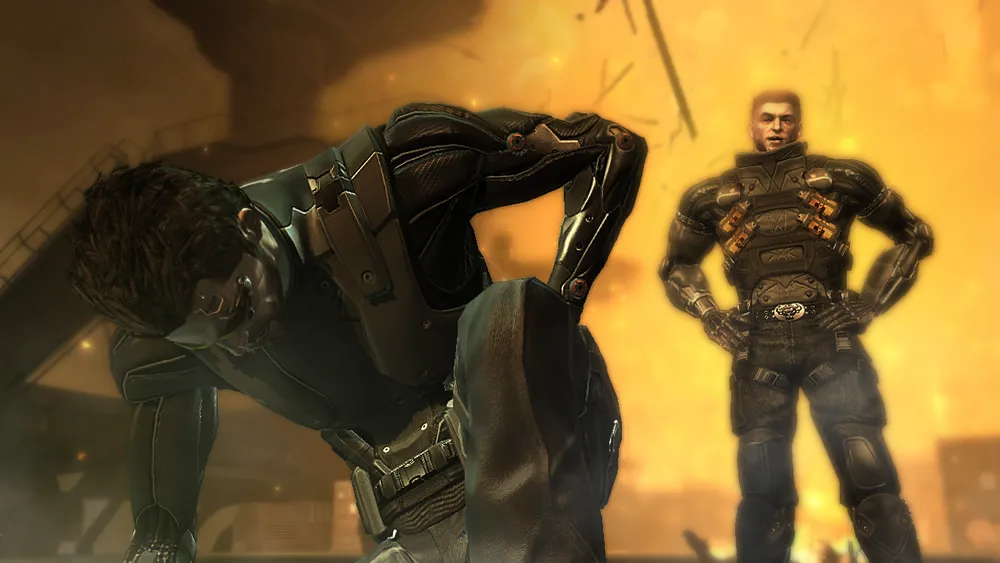
Another modern aspect that I feel should be reconsidered is the presence of boss fights. During the game, you are stripped of control and thrown into a forced duel with some plot-relevant augmented adversary. While these battles are not particularly poor in essence, they do not give the player a choice. "Run in circles and shoot the villain in the face until he dies in ten minutes". If you spent your time sneaking in the dark corners throughout the game, and then were thrown against a superhuman with just a pistol… that is very, very annoying. I even wondered whether I am really playing "Deus Ex". Moreover, no matter how cunning, diplomatic, and skilled your Adam Jensen is, in the cutscenes, he always turns into an aggressive oaf who falls into traps and allows himself to be manipulated. In a game where one of the strengths lies in providing freedom to the player, it does not make sense to force that same player into tedious and unnecessary boss fights, giving no way to bypass them, and it is even more nonsensical to turn Jensen-in-cutscenes into a complete idiot. If these boss fights were the result of conscious choice rather than "kidnapping" the protagonist during a cutscene, and if the health of the bosses were reduced by about seventy percent, I might have accepted that fighting was mandatory. In its current form, they proudly carry the title of a poor element in an otherwise well-thought-out and well-crafted game.
Finally, the most recent innovations are the fairly well-crafted hacking and persuasion mini-games. Hacking is accomplished by capturing key nodes and points and is generally well done; however, like most mini-games, it begins to wear thin by the middle of the game, especially if you have leveled up the hacking skill and can easily dismantle any system. Persuasion is more interestingly executed: although it resembles a regular conversation, the essence lies in analyzing a character's physical and emotional reactions to your statements. Upgrading allows for better control of the process and greater influence over the outcome of the conversation. These dialogues are well-written, well-acted, and well-animated. This mini-game not only makes them more interactive and natural but also allows Jensen to gain new abilities and information and can even slightly alter the plot. In short, this is one of the best implementations of live communication that I have ever seen in games. It is just a shame that not all dialogues maintain that standard.
Dystopia Has Never Been So Beautiful
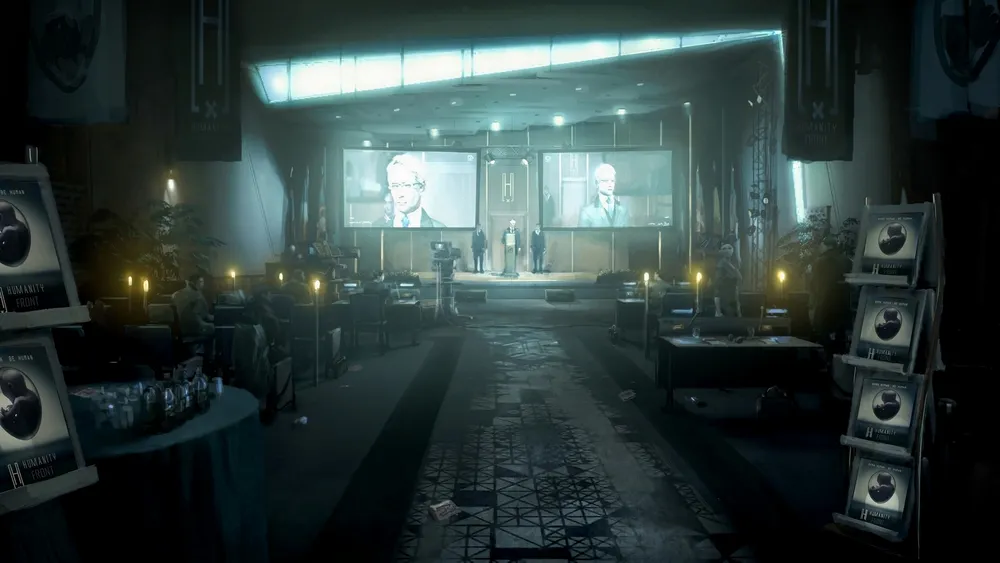
"Human Revolution" is undeniably stunning visually and audibly. "Eidos Montreal" has done an enormous, inhuman job of creating a world that feels alive. Everything has its time and place, from character clothing styles and the design of technological innovations to the clash of architectural styles from the new and old worlds. The game boasts an interesting neo-Renaissance style that beautifully intertwines with the narrative yet never becomes intrusive. Some sets, like the divided cities of Upper and Lower Shanghai, are simply breathtaking; they look not only magnificent but also help to enliven the world. Small details, such as graffiti on alley walls or mess in apartments, also tell a story and help the game not only look good but also embody a certain vision of the world, enlivening the game world and narrative. This is a significant achievement, especially in our time when technology often substitutes for the true purpose of graphics. While some may dislike the monotonous color scheme of the game (especially at the beginning, where there is even less diversity), and the character animations during dialogues may be somewhat clunky, I personally do not believe that "Human Revolution" is diminished by these minor blemishes.
The sounds and music in the game are also excellently done. The music, while not as memorable as the original's soundtrack, still evokes empathy. Instead of catchy motifs and synthetic sounds, "Human Revolution" presents a serene and harmonious monotony, a tense backdrop, and a mix of classical instruments with modern electronics. During combat, everything speeds up, and drums come in, but unfortunately, the music sounds weaker here (many tracks resemble secondary melodies from "Metal Gear Solid") and lacks the inventiveness and subtlety of the background music, although the combat melodies serve their purpose. Sound design is also superb: environmental sounds convey the time and place wonderfully, and the powerful, crisp sounds of gunfire from each weapon delight any shooter. The voice actors also delivered quality performances, chosen not by fame. "Eidos Montreal" wanted "Human Revolution" to feel cohesive, and they succeeded.
Given that the series' roots lie in PC gaming, it makes sense that much attention was paid to how the game would perform on its native platform. I am glad to report that although the console origins of "Human Revolution" are still evident, it has been ported much better than many other games. The impressive list immediately catches the eye—support for DirectX 11 and stereoscopic 3D, anisotropic filtering, customizable field of view, mouse sensitivity on both axes, support for extra mouse buttons, and numerous anti-aliasing options that I have not seen in ages—not just the standard MSAA, but also FXAA and MLAA. The PC interface has also been improved, for instance, by adding a quick access panel that works just like its counterpart in "Deus Ex"; the finesse it provides is very welcome. Of course, there is also support for the "Xbox 360" gamepad if you wish to play with it. "Nixxes" excellently ported the game to PC, and their swift response to fan requests allowed the game to be released with numerous added (and much-expected) options.
Throughout my review, I did encounter some technical issues. The most unpleasant and detrimental of them was the frequent crashes. Once I figured out fast saving and loading, the issue lessened somewhat, but it is worth noting that on my "NVIDIA" card (the game was sponsored by "AMD"), crashes occurred frequently enough to be annoying. Additionally, sensitivity settings seem clearly meant for gamepads, as does the field of view, so many players will likely need to dig into them. I hope a patch addressing these issues will be released soon, or if crashes occur only on "NVIDIA" cards, the company will release new drivers. By the way, the game also requires a "Steam" account, with all its pros and cons—achievements, saves, and the like—but, of course, if you dislike "Steam", you will either have to swallow your aversion or buy the version for "Xbox" or "PlayStation". Personally, I did not encounter any issues with "Steam" during gameplay, but at this point, that platform is no longer new, so there is no real surprise there.
A Worthy Heir to the Legend
As I mentioned at the beginning of the review, "Deus Ex: Human Revolution" can be viewed from two angles: as a modern sci-fi role-playing shooter or as the successor to the original "Deus Ex". I believe "Human Revolution" is good in both respects: it captured the spirit of the first "Deus Ex" in both narrative and gameplay while remaining cohesive and original, which is rarely seen in games nowadays. There are certainly some shortcomings— in my view, the game could have done without elements borrowed from modern games, and there are errors in the narrative, balance, and design—but, as everyone knows, "Deus Ex" was never perfect, and the downsides of "Human Revolution" cannot overshadow the overall bright picture. At the end of my thirty-hour playthrough on the highest difficulty, all I thought was, "I want to play through it again, doing everything entirely differently", which, in my opinion, is the best testimony to the great work done by "Eidos Montreal".
While I strongly doubt that "Human Revolution" will be remembered with the same fondness as the original, it would be hard to expect otherwise—after all, how much weight the name "Deus Ex" carries. I still strive for that ideal that "Deus Ex" defined ten years ago, but like all ideals, it exists more in my head than in reality. The facts are as follows: there is a new "Deus Ex", it is a true "Deus Ex", and it is worth playing and enjoying, whether you hold the original dear or are just coming to the series. So what are you waiting for, agent?
Translation by the author.
Gratitude for the material provided goes to Eversleeping.
Thanks for the glossary assistance goes to Midest.
Thanks for proofreading goes to Soth.
Gratitude for the support goes to Sinmara.