Counter-Strike Creator Minh Le Gave an Interview During the Moscow International Week of Video Games

On November 29, Counter-Strike creator Minh Le (also known by his nickname Gooseman) was one of the guests at the Skolkovo complex during the Moscow International Week of Video Games. Joining the event online, he discussed the current situation in the gaming industry with host and blogger Sergey Hobbit, as well as shared important moments from the history of his creation, which began as a modification of the Half-Life multiplayer.
In addition to his appearance on the "Main Stage" at Skolkovo, Minh Le also gave a more extensive interview to the business publication "Inc." In it, he shared his sources of inspiration, opinions on AI, and recounted the most depressive period in his career, among other topics.
It turned out that despite living in Canada, Minh Le is familiar with Russian culture thanks to the Russian expatriates living there. For example, he enjoys "Night Watch" and "Wanted" by Timur Bekmambetov. Naturally, he couldn't overlook Russian online projects such as Escape from Tarkov and War Thunder.
Regarding Counter-Strike, he began working on the mod inspired by counter-terrorism units from around the world, as well as numerous action films about the fight against terrorism. However, the main impetus may have come from the release of Rainbow Six in 1998.


In 1999, while studying computer science at university, Le became excited about the idea of creating his own game. He found all the missing knowledge about 3D graphics, artificial intelligence, and C++ online (which was not very easy in the absence of modern social networks, search engines, and platforms like YouTube). By 2000, he managed to create his modification about terrorists and counter-terrorists.
In 2000, there were not many games, so Counter-Strike faced almost no competition for players' attention. They discovered the project through ads on gaming websites, followed by word-of-mouth. The game went viral.
When asked whether it's possible to develop games as works of art while also making money from them, Le replied that one must clearly understand their audience. There is always risk, but if you assume you're making a mass-market game while it's niche, that risk multiplies.
Minh Le also talked about his partner Jesse Cliffy, who handled the project website and community interaction. This way, Le could focus on programming, graphics, and other core elements of the mod itself.
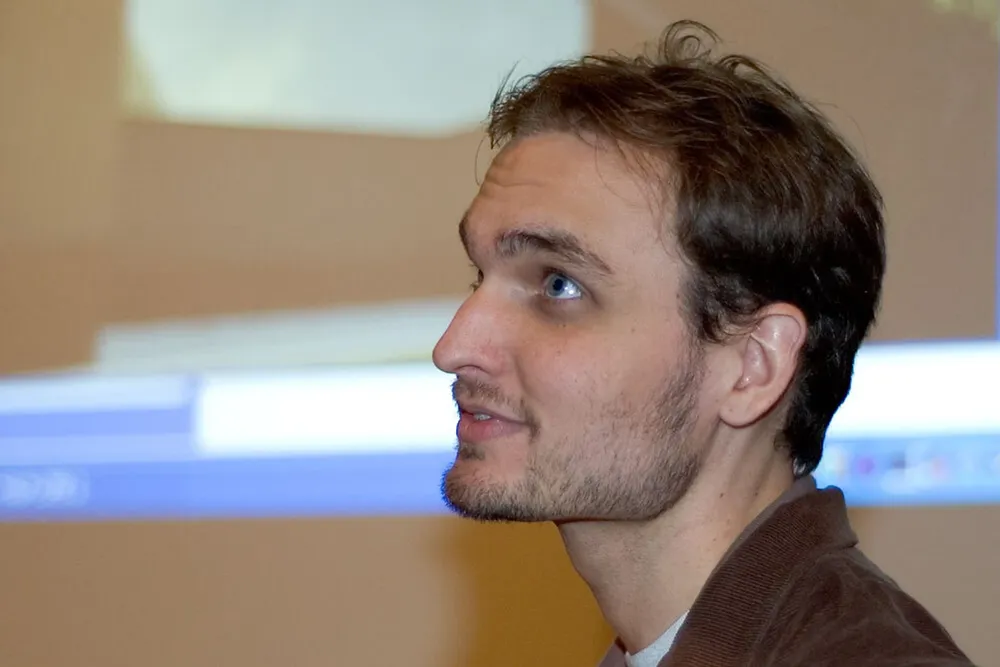
Naturally, all feedback also went through Jesse. Since he lived in the U.S. and not Canada, all communication took place online. Le and Jesse only met in person in 2003. By the way, by that time, Le was already working at Valve, which had sent him a collaboration offer in 2001.
In 2006, Le left Valve and founded his own company, Tactical Intervention, where he worked until 2013. Unfortunately, during this time, he couldn't make his business successful.
Later, Le managed to find work, and even participated in the creation of the well-known online action game Rust, but the failure of his own venture still echoed as a soul-wrenching pain. According to him, it was the most depressive period of his life.
Today, Le continues to work in game development. His new project is called Alpha Response and is an online shooter similar to Payday or Left4Dead. The game is already in early access, but the team today has to spend a lot of effort on marketing. Fortunately, on platforms like YouTube and Twitter, developers/publishers have the opportunity to customize algorithms, even manually selecting channels to advertise on. Automatic recommendations on Steam, and even more so in mobile games, are much less accurate in determining who exactly sees the ads.
On the other hand, today developers have many tools that make game creation many times easier than it was in the 2000s. However, it’s still not wise to rely too much on AI — according to Le, for example, neural networks struggle with level design.
These were the most important things mentioned in the interview with Minh Le. The full version can be found on the Inc. portal.