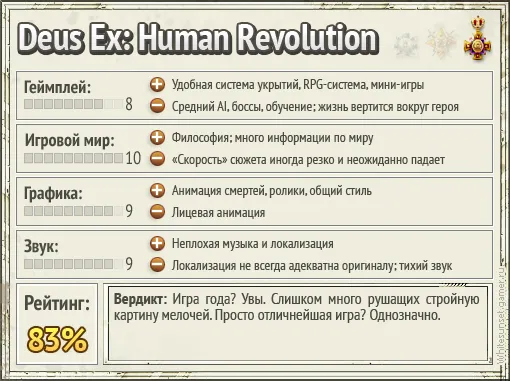
"Fate of Evolution". Game Review
"If I could foresee this, I would have become a watchmaker." Albert Einstein on his achievements in studying atomic energy.
[cut]
Never give people hope. Don't even think about it if you cannot immediately provide them with everything, in full, to everyone at once and equally. Fifteen minutes of fame will be replaced by months, if not years, of criticism.
It's especially difficult when you give hope to the entire world. Some will seek benefits, while others will simply fear change. We all fear change. Even if we want it...
The World Built by DNA
[Deus Ex: Human Revolution](/games?search=Deus Ex: Human Revolution) is a prequel to the two previous installments. I never got to play the predecessors, I confess. So I see Human Revolution as a strictly individual product, which undoubtedly leaves its mark. In particular, there will be no comparisons. We will simply consider what we have.
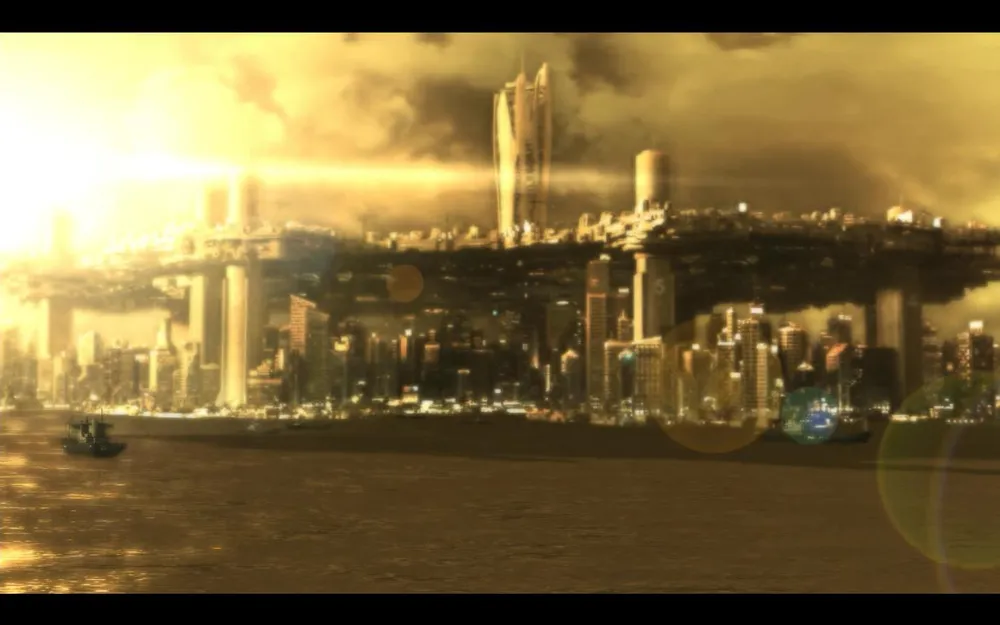
And what we have is humanity. Humanity on the brink. Of a great discovery? A great catastrophe? Even the powerful cannot predict this. A world where implants, vastly enhancing human abilities, are possessed by hundreds of thousands of people.
The invention by Megan Reed, the protagonist's girlfriend, could potentially increase this number exponentially. But perhaps the main discovery in human history is treacherously being postponed by unknown parties. It is at this moment that the game begins.
Jump Higher, Jump Farther
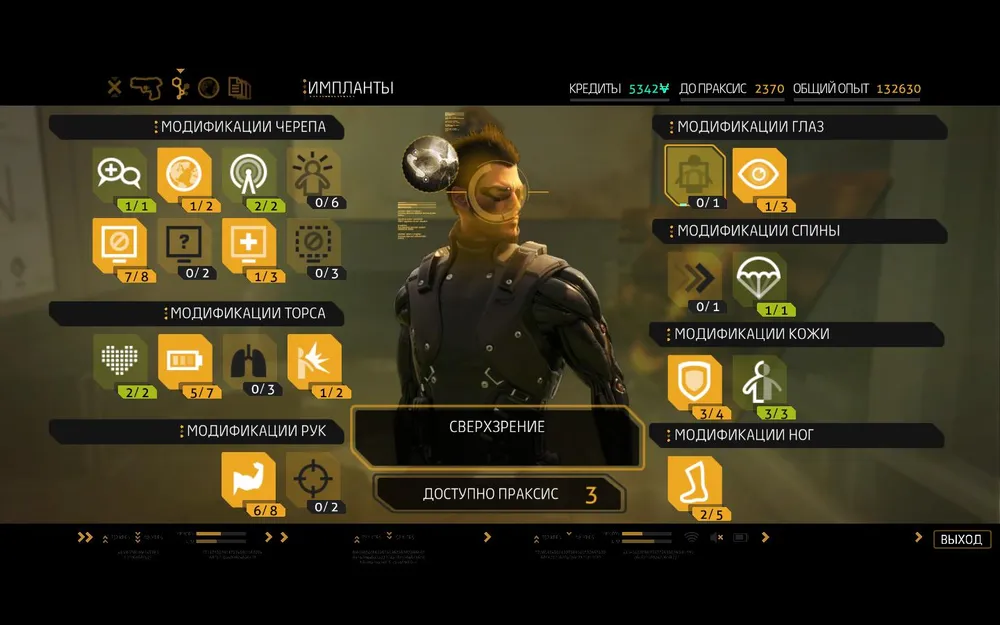
We will return to the plot later. But for now, let’s take a moment to discuss the role-playing system and the gameplay itself. After certain events, Adam Jensen (which is the name of our protagonist) will be loaded with the most advanced implants. This opens up enormous possibilities right from the start, but in the long run, the local equivalent of "character points" can unlock many useful features. Breaking through walls, invisibility, boosting strength, speed. And if by the end (especially if not only following the main storyline) everything critical will be unlocked, then in the middle of the game the hero will indeed be unique.
And this is not done just to check a box. [Deus Ex: Human Revolution](/games?search=Deus Ex: Human Revolution) is known for offering at least two solutions for every task. Usually, there are four or five. The aforementioned wall-breaking or the ability to breathe toxic gas definitely open up unexpected paths. Invisibility will help to run right under the enemy's nose. Want to enhance hacking abilities? Any door is now within your reach. Not to mention abilities like reducing recoil, for example.
However, we are still dealing with a stealth-shooter. Of course, no one forbids you from rushing out from behind a corner with a shotgun in hand, but... it usually ends sadly. So it's preferable, if not to avoid enemies altogether, at least to make use of the cover system, which surprisingly turned out to be intuitive in this game.
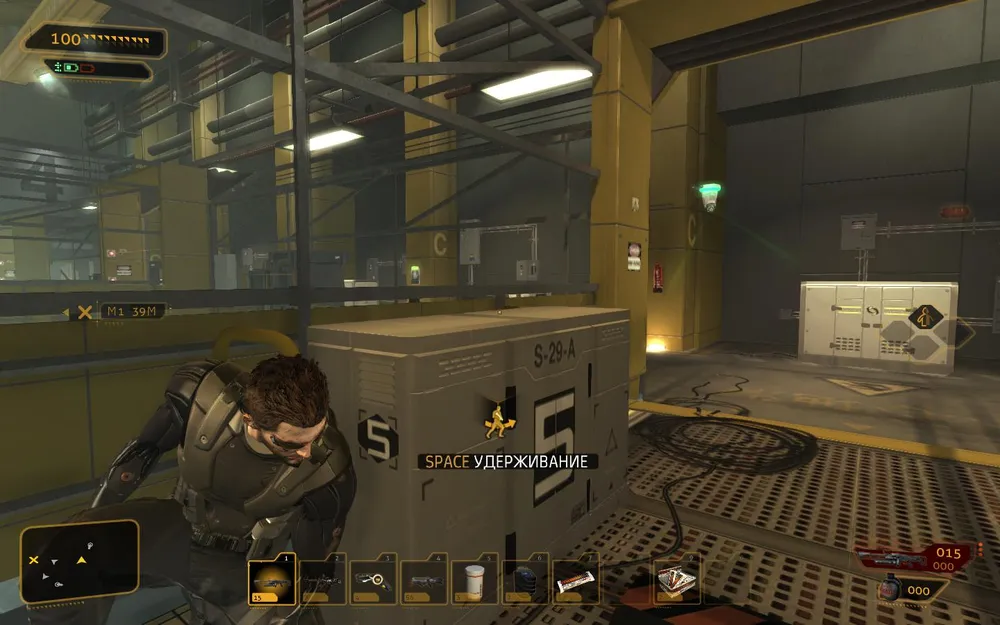
One of the numerous issues with the game can be called the tutorial system. It is implemented in the format of video clips. But what is much sadder is that it lacks even several basics! For instance, I only found out after completing the game that you can disarm mines by crouching and going to a crawl, for example. Or by moving your head in front of the computer while holding the mouse wheel (a much less relevant option, but still). And even the cover system was fully understood only after a couple of practice missions.
Back to the Plot
Honestly, even after completing the game, I still don’t understand why the plot of this game provokes such consistent admiration. Wait to throw shoes and yell about philosophy; let me explain.
The first half of the game is essentially a detective story. We learn fact A, follow the lead to place B, and discover fact C, by which we go... Yes, some intrigue remains, but there’s nothing revolutionary or even just noteworthy here.
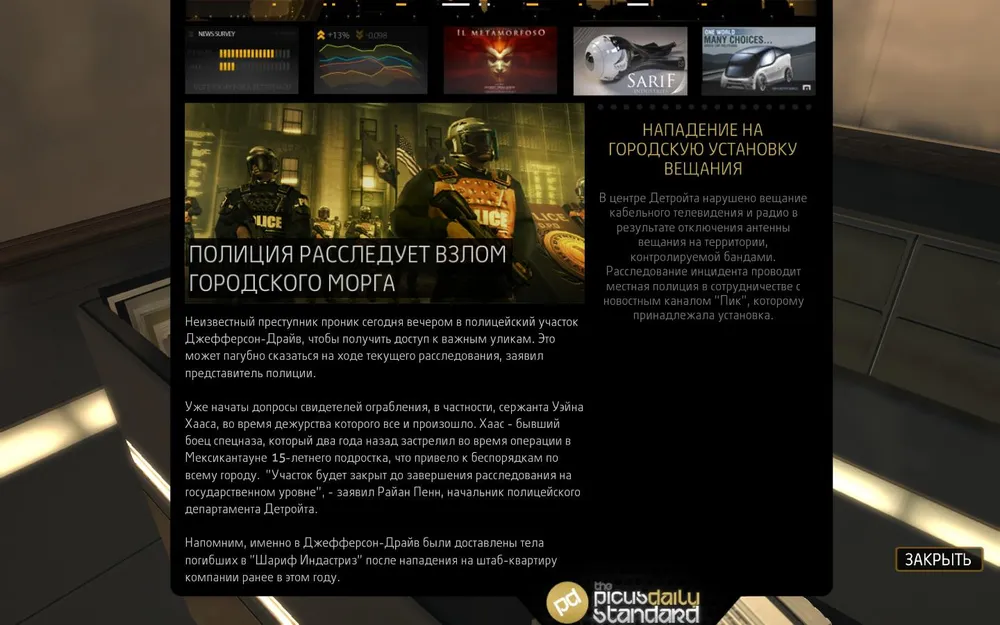
A warm hello to Hitman. Newspapers often feature notes about the hero's exploits. Although there are also plenty of simple news.
After the first meeting with Eliza, the game suddenly begins to soar. From this point on, a real intrigue emerges, but it does not lift the overall picture as a whole.
Many side missions, on the contrary, are very strong in terms of narrative. Especially those related to Adam's biography. They contain real variability in outcomes and completely unexpected events. However, there are also banal ones.
However, they are unforgivably awkwardly integrated into the game. The boss says, "Urgently to me!", the system administrator says, "First to me!", but Jensen... Jensen turns around and investigates murders for several hours, pacifies criminals, and generally does good "on the side". In the first half of the game, such strain can completely undermine the atmosphere of the main storyline.
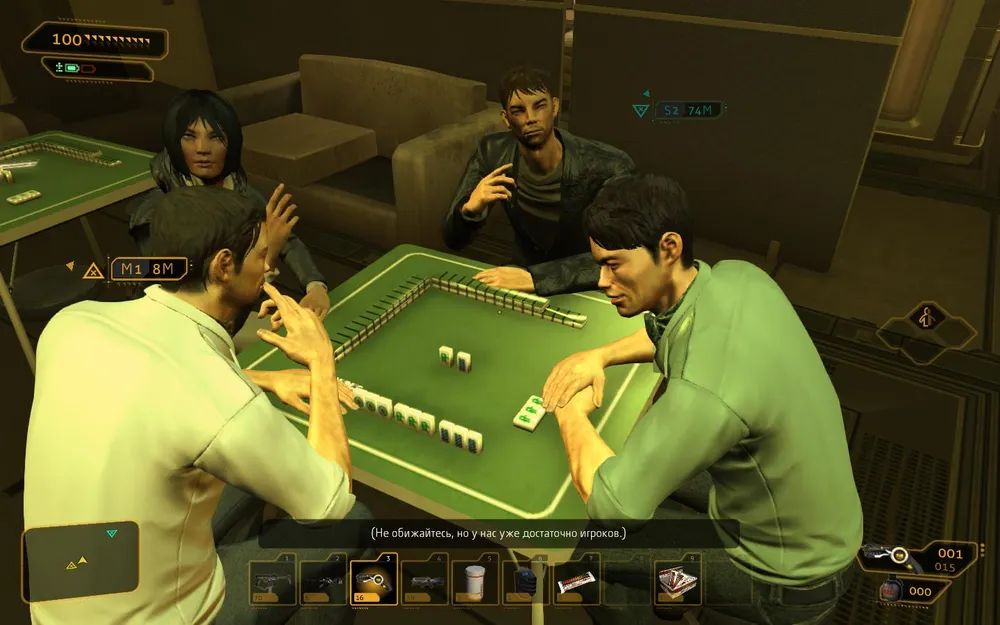
And generally, the game world often behaves quite strangely. Somewhere far away, life is bustling. In the room where Jensen is located, NPCs are demonstrating vigorous activity. But as soon as you run into the next room — life stops. Even if a corpse is lying in the middle of the room, no one will find it or touch it.
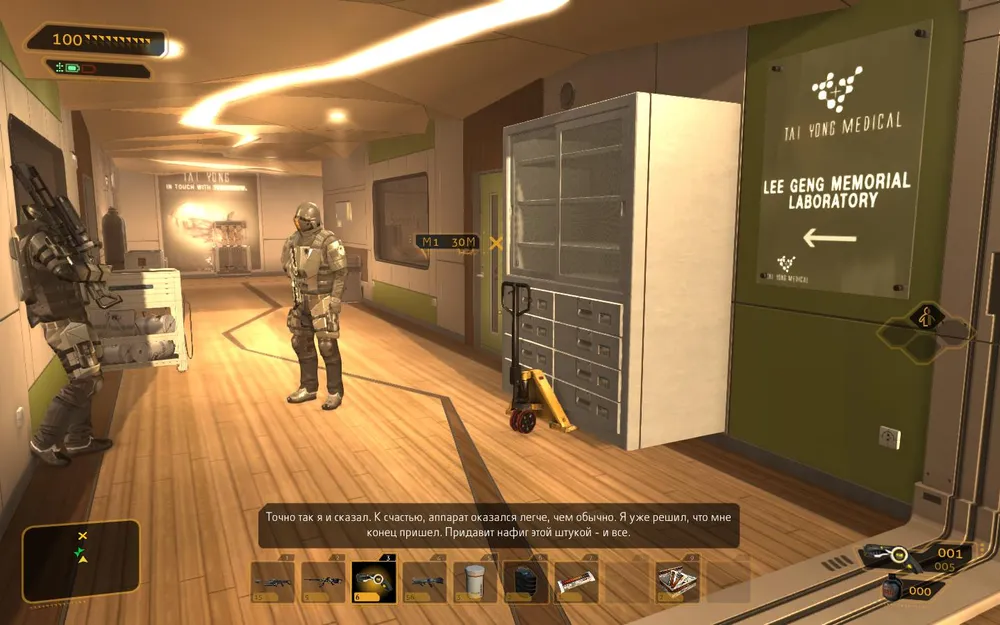
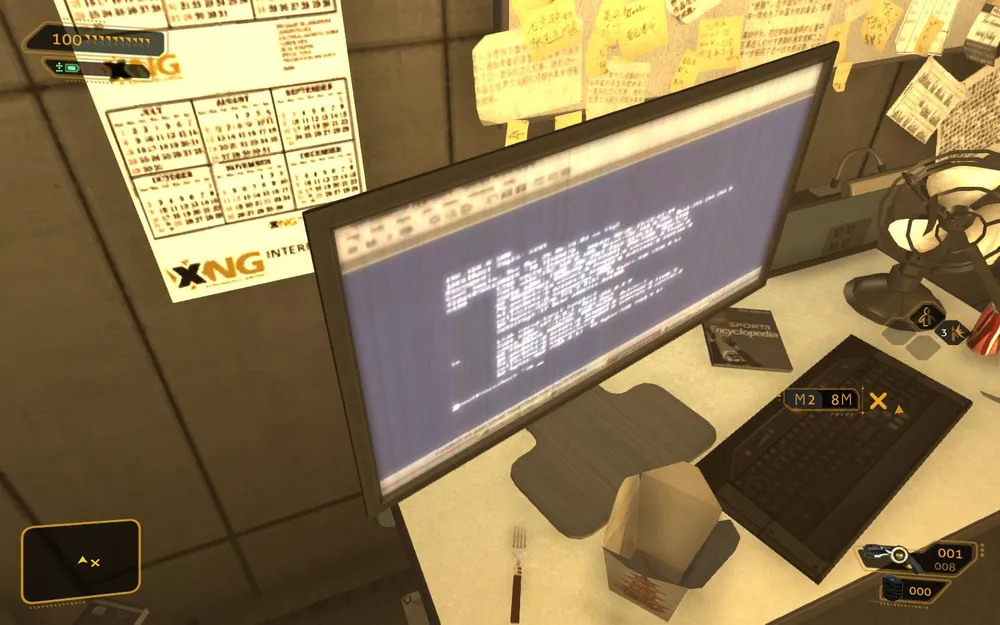
The game's world is where all of the game's "philosophy" is concentrated. A rare case where the story serves merely as a backdrop for the setting. Numerous books, magazines, many computers with both valuable and simply interesting information. And, of course, dialogues. People on the streets love to talk to each other. Throughout all the hours of gameplay, I heard repetitions literally one or two times, which is indeed impressive.
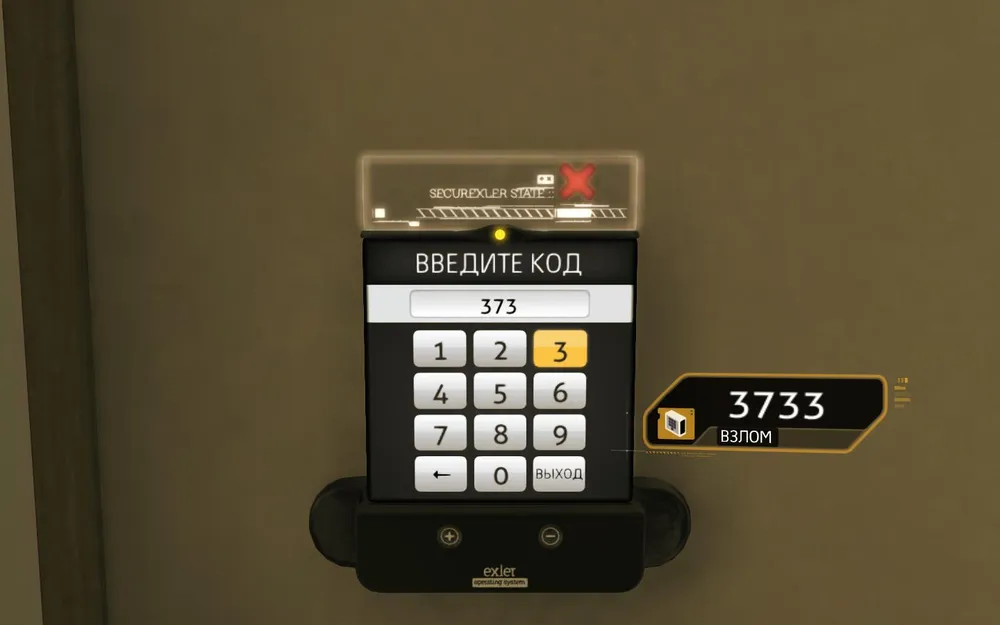
Strangely enough, in its seemingly most advantageous aspects, the game world has several glaring holes. For instance, why do all door locks in the world have only 4 digits? Why do all (seriously, all) passwords in the game consist of simple dictionary-style English words? And all this regardless of hacking difficulty, by the way. Why do books still exist in the world — attention! — in the form of individual electronic carriers?
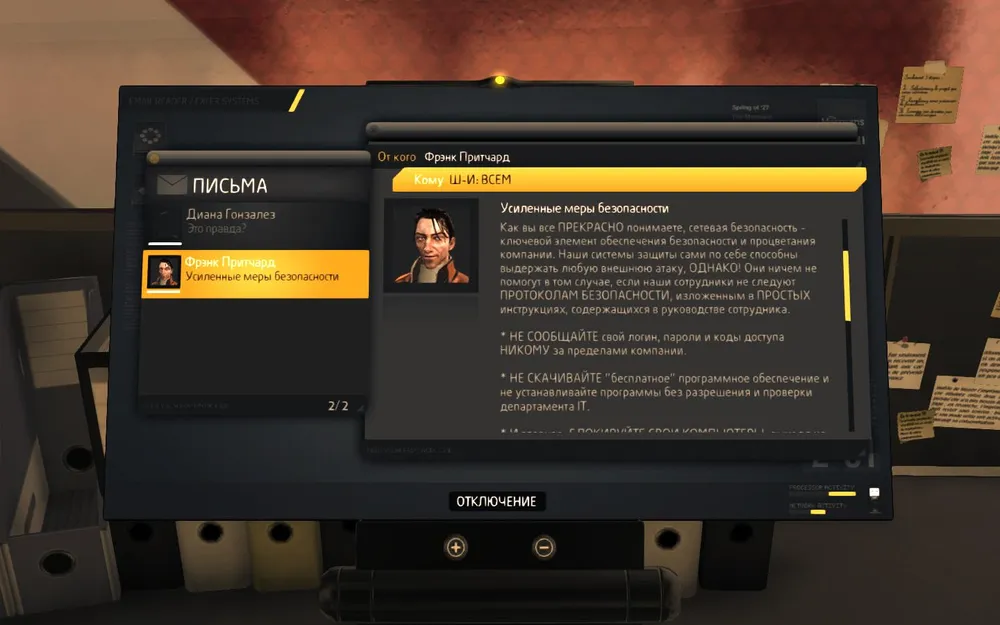
Against this backdrop, I have a sincere sympathy for Pritchard, the main "computer guy" in the game. With such an approach, it is no wonder that information security in the world is limping on both legs.
Masters of the Pictorial Arts
Believe it or not, but the game is made on the same engine as Tomb Raider: Underworld. How the developers managed to deliver such a cute picture and such a gameplay mechanic on this engine is a mystery, but nonetheless.
Seeing how the opponent not just fell to the ground but beautifully crumpled (in western-style), I was as happy as a hippo. Of course, the death animations in such a game should be convincing by definition, but it is still nice to see that the developers surpassed themselves.
Facial animations are more complex. Emotions are mostly portrayed well. I don’t know what Stanislavsky would say, but I liked it. But this is an exception. Usually, characters just talk, and meanwhile, their faces appear peculiar. Especially lip sync with the text: some manage to calmly speak without opening their lips. Well, the discrepancies with localizations are evident, but that cannot be resolved in any way.
By the way, the volume level in the game fluctuates. It jumps blackly, to put it simply. Without subtitles, I would not have caught a good third of the plot dialogues and significantly more than half of all street conversations. Hearing anything from a distance even of a couple of meters often becomes a problem.
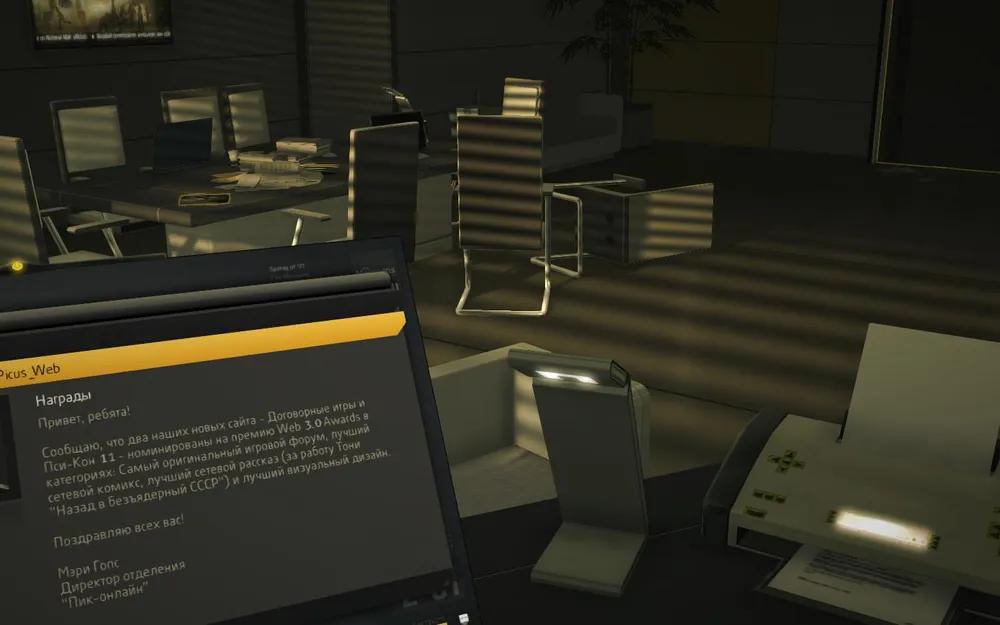
However, the localization was surprisingly successful. Almost everything has been translated. And that’s wonderful. There are hardly any complaints about the selection of voices.
Silicon Dummies
Artificial intelligence is the traditional weak point of such games. The fact that a guard does not react to a half-robot running out of a protected complex (and actually falling out of invisibility right in front of him) given the agitation of the guards behind is perfectly normal. No, seriously, an AI level capable of processing such a combination has yet to be reached in the gaming industry.
That guards patrol the territory and don’t make unexpected moves is also basically commonplace.
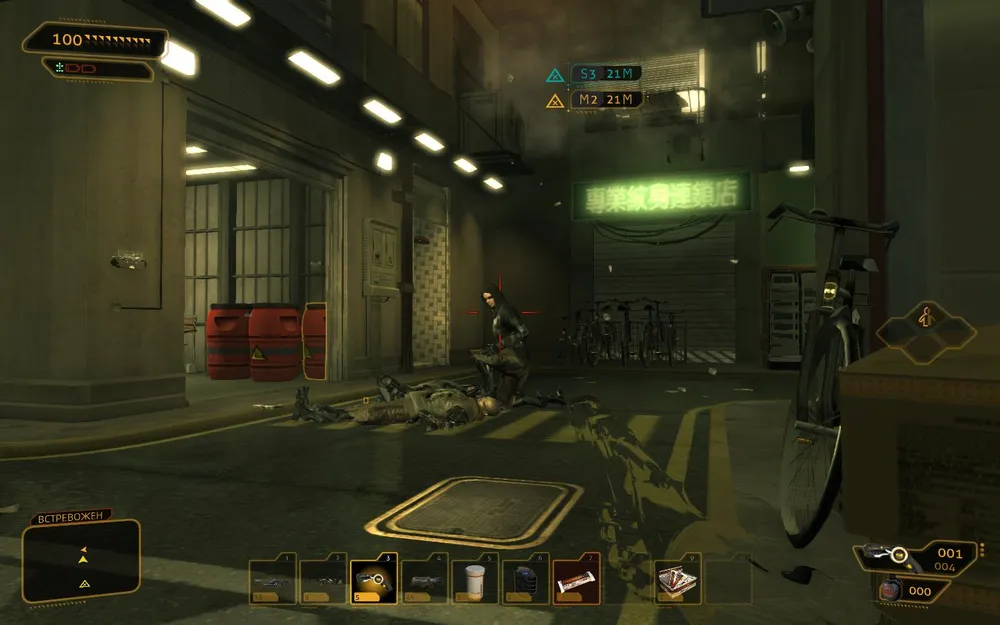
At the moment captured in the screenshot above, I was on the verge of tears. This is true classic, classic in the flesh. An enemy stepped around the corner and met a bullet. The next one saw it but did not see the shot, so he went to check on his subdued partner. The third... I think you already got the concept?
The system of alarm is unusual. In the same Hitman, there is a commotion at the sound of a shot. Here, no one has ever called anyone on the radio to warn of an intrusion. Never was there an instance where enemies searched in groups. But what is most amusing is that even if they enter a state of hostility (visual contact), after half a minute, they will act as if nothing happened.
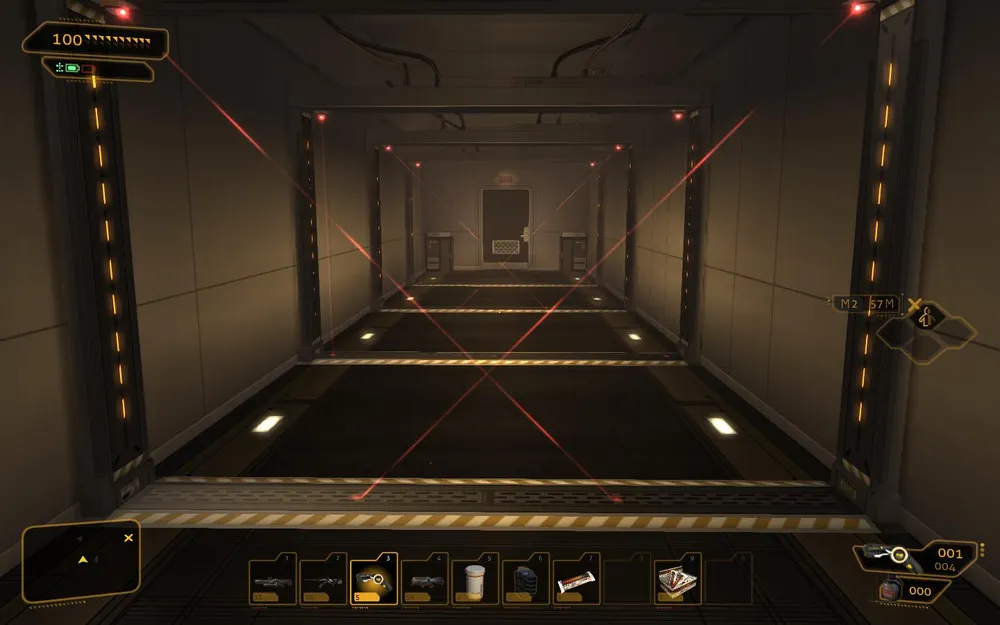
While invisible, you can escape from almost everything.
A real case from the game: Jensen calls the elevator. Everyone knows (according to the story, mind you) that he called the elevator and quickly gathers in the room (about seven people). There was visual contact (!). The elevator takes a long time, so the hero hides in the ventilation. A flashbang grenade flies in there. But after half a minute... you guessed it, right? All seven people disperse. Only two remain, but even they are in "normal", non-suspicious mode.
Meanwhile, the elevator has arrived, and Adam calmly rides it while invisible.
However, it must be noted that on average, the AI behaves more than decently for its genre.
To Throw or Not to Throw?
The game has physics. And there are even objects you can throw. However, there are few of them. The destructibility system has serious issues — unfortunately, making it work on this engine is practically impossible. Despite the fairly deep design of the levels, interactive items are very few. It is a pity that something like the first level of [Half-Life 2](/games?search=Half-Life 2) would have greatly benefited the game.
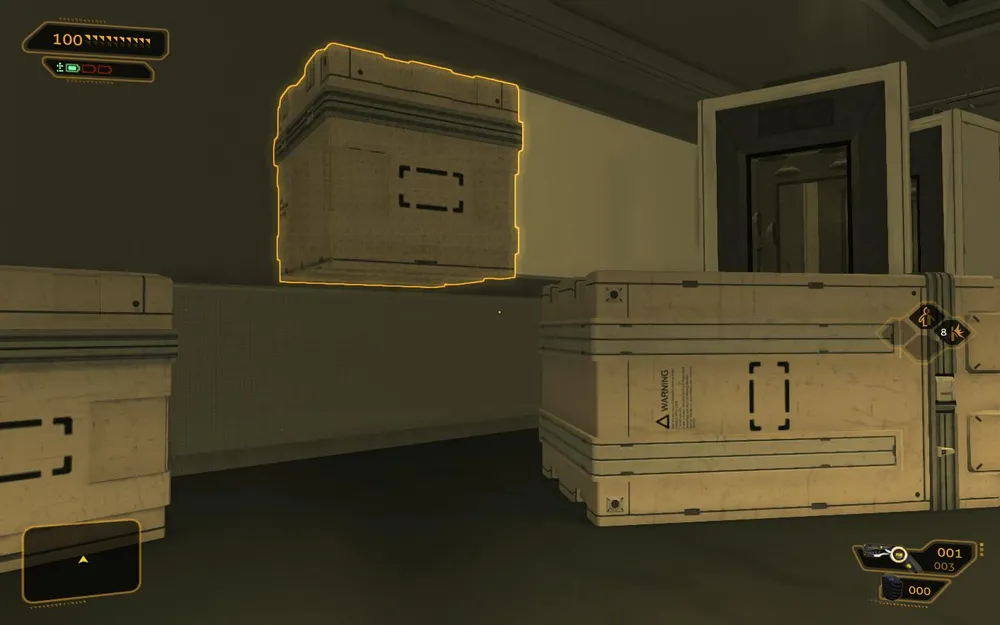
...Well, where would we be without bugs?
The surrounding characters react very nervously to the hero, suspecting him of all mortal sins. For example, as soon as you pick up a box and throw it against the wall, everyone who sees it will immediately want to... kill the hero. Even the police! It seems that the main problem in this world is not the implants, but the judicial system...
By the way, by pushing a trash container against the wall, we can get an extra way to reach our destination.
Bosses
I am convinced that the bosses are the weakest, most annoying, and most deficient part of the entire game. A good third of all players will simply get stuck on the first boss (of which there are four in total).
Consider it yourself. Stealth-action, hidden passage. Weapons that primarily consist of tranquilizer darts. And here is a fully packed tank. A monster heavily equipped with implants. If YouTube is to be believed, then on medium difficulty, he can successfully survive 3 (!) direct (!!) hits from an RPG (!!!), which, by the way, is quite tricky to obtain at this stage of the game (I personally have only seen ammo for it in passing during the whole game).
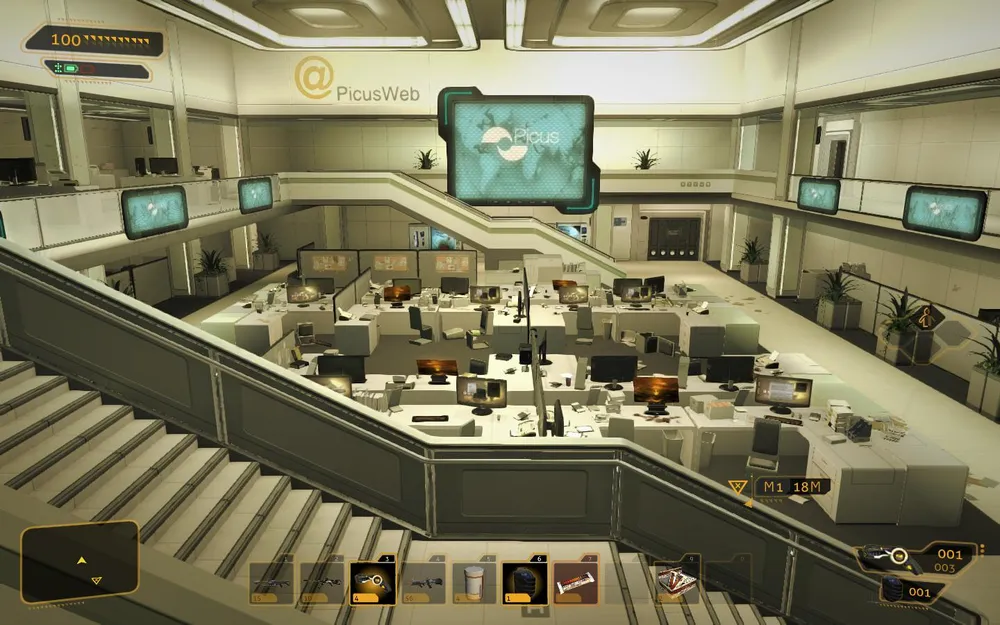
Like in no other game, here the rule holds: if no one is present, it means it will be hot.
If a player does survive this encounter and draws conclusions, the subsequent bosses risk being dispatched by a barrage of mines mere seconds after the battle begins.
Thus, it turns out: either we have a very tough fight, or something vague and unreasonable. Of course, during the battle, you can gather some weapons and apply special tactics... but in the heat of battle, it is quite troublesome to engage in gathering, and developing tactics can take far more than one loading.
Mini-Games
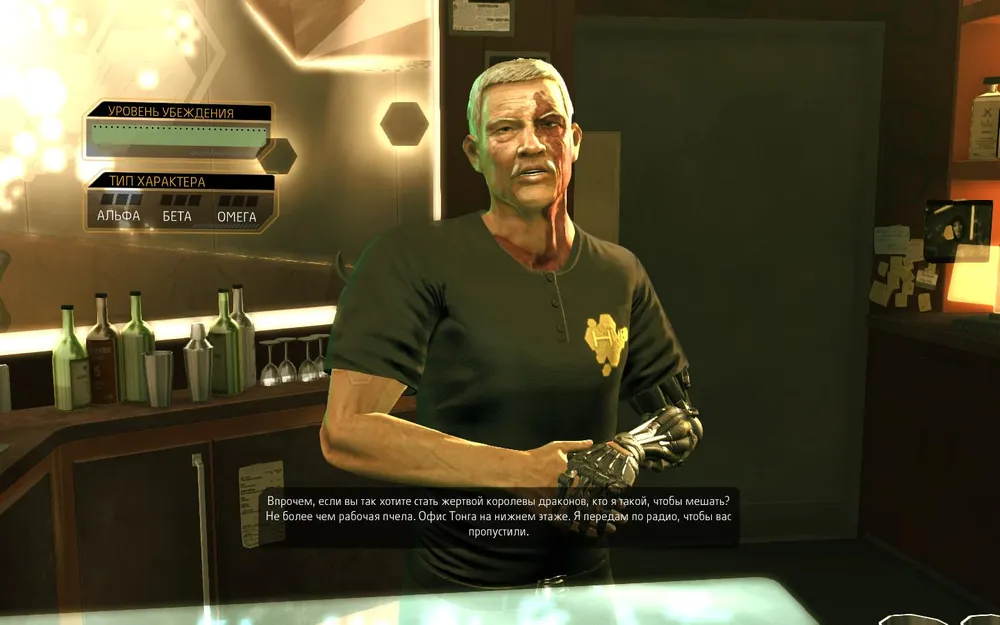
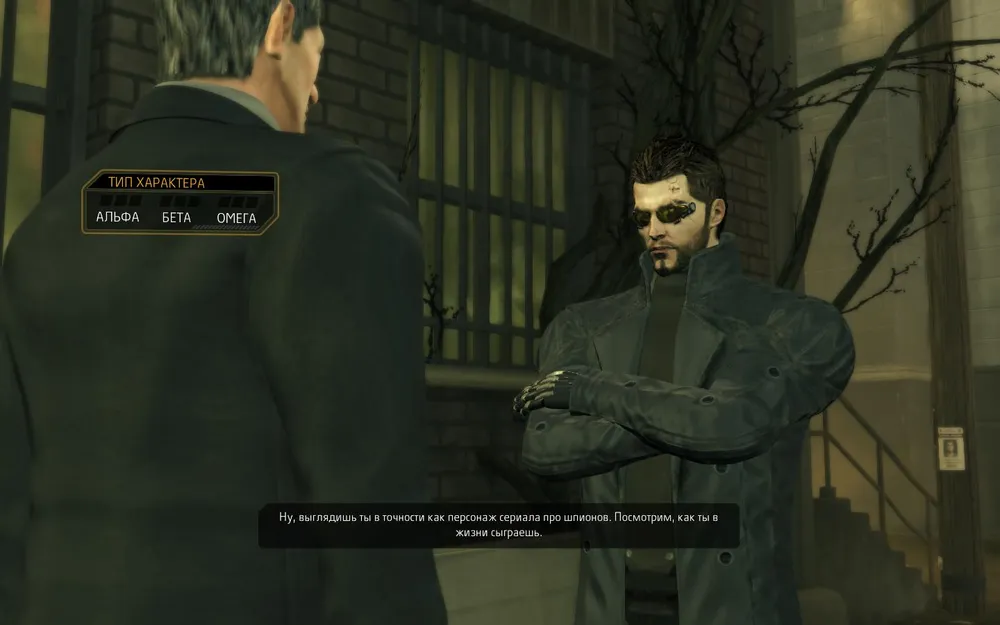
In total, the game features two mini-games. The first is dialogues. Some characters need to be convinced to do something, and a brief description of the character is provided to assist the player.
By the way, the dialogues in the game somewhat resemble [Mass Effect](/games?search=Mass Effect) in their principle, except that if there you chose the "kindness" of the response, here it is more about the style of communication.
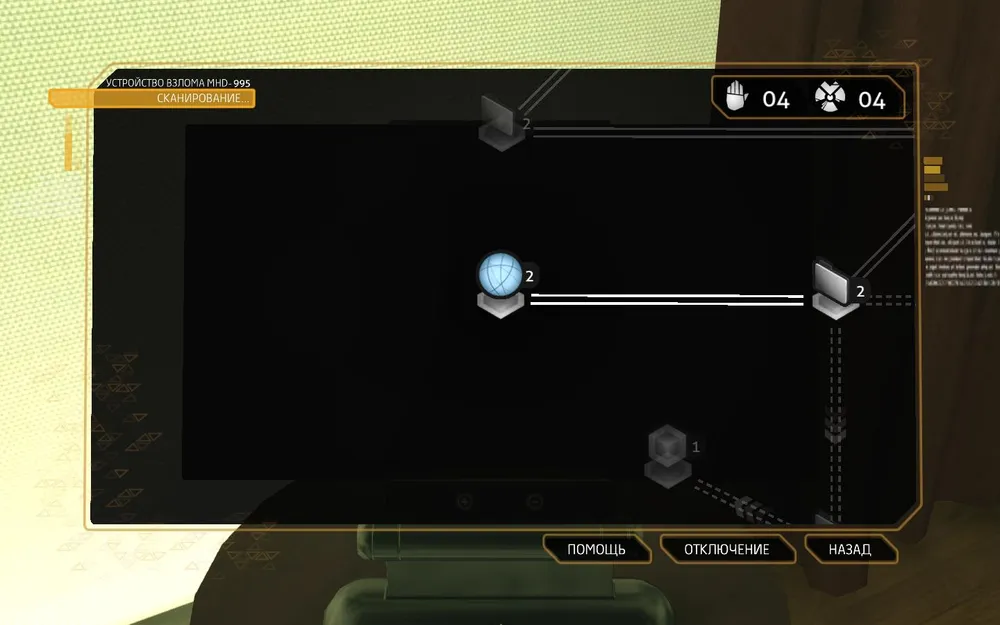
The second mini-game is hacking. A kind of speed capture of points. Explaining the process in text form is somewhat challenging, so I’ll just limit myself to this feedback: hacking in [Deus Ex: Human Revolution](/games?search=Deus Ex: Human Revolution) is an interesting and almost non-repetitive process.
Atmospheric Style
Cyberpunk-style games are rare. Dark tones, "golden filtering" (the game has a distinctly expressed "own" color). News and history of the world directly inside the game. Well-directed cutscenes. All this is present here.
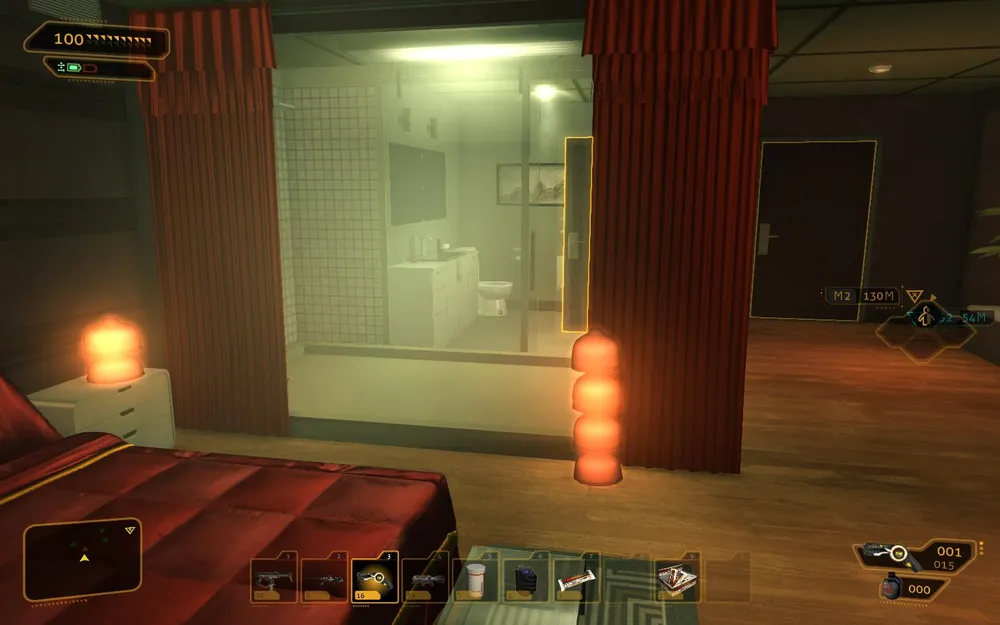
Also, the designers have taste. Or perhaps experience in strip clubs.
However, it should be noted that the difference between cutscenes and videos is genuinely radical. Considering that they often transition into one another, this fact has repeatedly come to light.
Class struggle, overpopulation, numerous ethical questions — all this is also present here. And not only in the format of books or words. Just look around. There’s that bum complaining about not having money for a leg prosthesis. Those guys are a street gang, plotting something unpleasant. Guards don’t speak too flattered about their management.
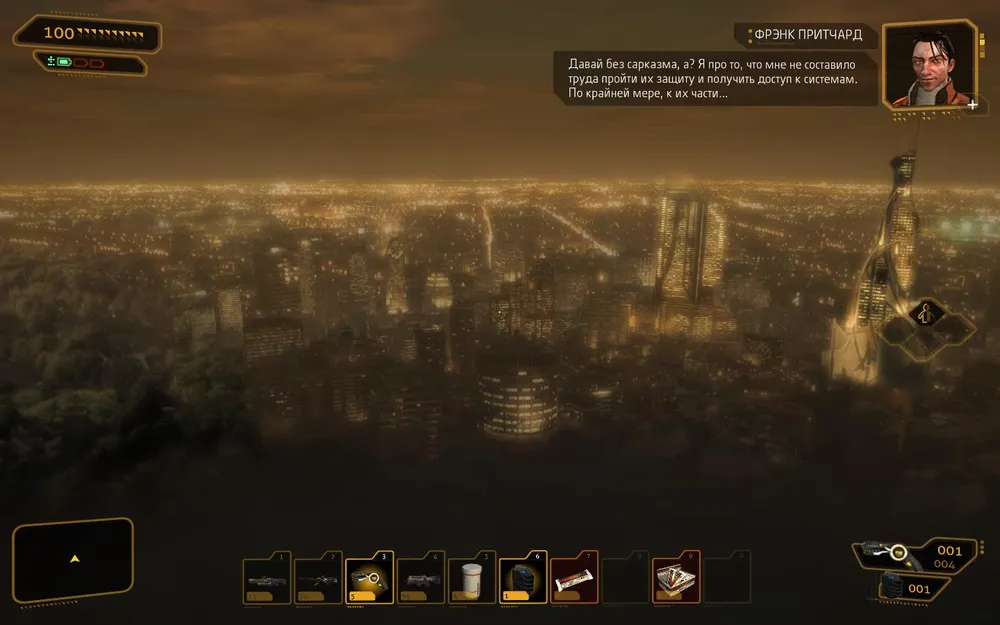
This is the same world as ours. Just with its own problems.
\***
What do we have in the end? "A philosophical stealth-shooter with RPG elements"? Perhaps, if we want to briefly describe this game, we should settle on such a dry formulation. Otherwise, one could go on for a long time about the depth of the questions posed in the game, the multiple paths of gameplay, the world-building, and so forth.
It’s just a pity that there are so many annoying little things in the game.