
In Development: Runes
So, as I promised, I'm uploading a review material on runes in Diablo III. I must clarify that there is currently no reliable and hundred percent information on what form the runes will take in the final version of the game. What you read here may change. Keep that in mind and do not rush ahead.
RUNES IN DIABLO II
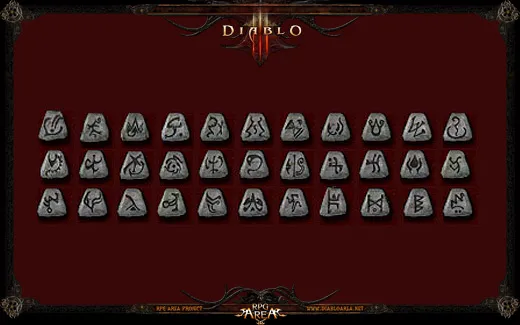
Such dear and beloved little stones... especially that one, the farthest right at the bottom...
Before starting the conversation about runes in the third part, let me make a brief excursion into the history of these tiny stones. Runes first appeared in the second part of the series, more precisely, in the add-on Lord of Destruction. Their introduction, along with the appearance of rune words, instantly shook the gaming values of gamers. Runes became a universal gaming currency, and even countless dupes couldn't stop that. Remember Enis and CoH? If you do, then like me, you probably spent evenings endlessly running to Countess, and when doing the rune quest with the Hellforge, surely crossed your fingers hoping for a Gul drop. Oh, the times... indeed.
In Diablo II, runes were one of the most important components of trading. Everything related to gear somehow involved runes. Want to exchange a dropped item for something else? You are welcome, the rune currency exchange rate is today's figure. Want your hero to have excellent equipment? Please, look for the necessary runes and blanks. Unique items, which dominated in the original Diablo II, had to come to terms with the appearance of runes that could be inserted anywhere. And even where they shouldn't be. In general, as you might have guessed, those 33 little stones caused quite a stir, so the question of whether they would appear in the third part of the series was one of the very first to be raised.
Blizzard thought sufficiently about the old runes, but ultimately decided to reject the 'item' runes. This decision disappointed many fans of the second part (including the aforementioned dupers): after all, the search for those gray stones revolved quite a bit in the gaming community. However, Blizzard reassured players by stating that runes would be in the game. But – different ones. More on that later.
RUNES IN DIABLO III
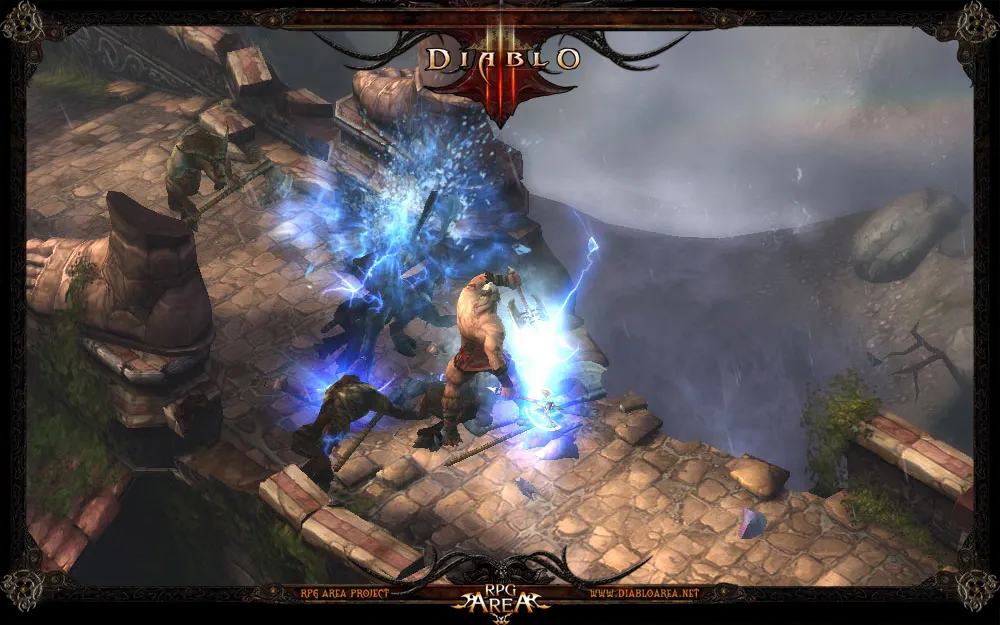
"You have no multi-strike, you fools!"
In the third part of the series, runes are called special small items (the same little stones, if you will) that can enhance active skills of characters. They are no longer associated with items. A rune inserted into an active skill grants various bonuses that often radically change the mechanics of this very skill.
Currently, there are five types of runes (more on them later), each providing its own types of bonuses. Runes can have seven quality gradations, with higher-level runes, as expected, appearing rarely. The quality of runes can be improved through the efforts of the Mystic [Mystic], whom I will also mention in this article.
As mentioned earlier, runes themselves provide no benefit. Except for the aesthetic they might add to your backpack. However, inserting the right rune into an active skill changes the situation dramatically. Runes modify it, and each rune alters the gameplay mechanics of each skill in its own way. Given that, according to the developers, runes can be easily removed (without harming the runes themselves, which is important), this gives players a huge space for "creativity".
Despite the rune names and the main bonuses they provide to the skill, it is far from always possible to predict how a given rune will behave in conjunction with a particular skill. In addition to standard changes, such as increases in damage, casting speed modifications, or just alterations in damage type, runes often also affect the graphics of the skill. For instance, there was a simple fireball, and it became one with sparkles. Something like that. Considering there are 5 runes and 150 skills, the developers will have quite a bit of work ahead with rune ideas.
As I mentioned, the effects of runes are not always predictable, but some common aspects and modifications can already be traced. I will now discuss what runes are currently available in the game and what they bring to the table.
EFFECTS OF RUNES
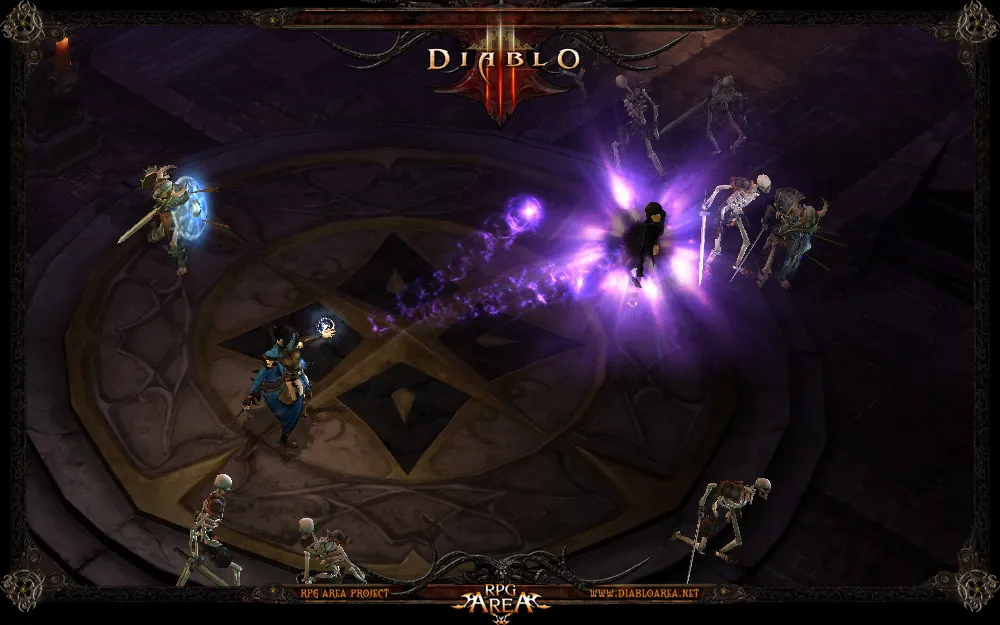
What's better: two small spells or one, but to an Armageddon?
To simplify the perception of information, I’ve put the effects of runes into a table. As an example of rune effects, the table provides descriptions of four skills with runes inserted into them. First, the basic effects of the skills:
• Plague of Toads - summons several toads that scatter in different directions and attack enemies.
• Poison Dart - shoots a poisoned dart at the enemy.
• Hydra - summons a hydra that attacks enemies with fiery spit.
• Throw Weapon - thrown weapon deals damage to the enemy and slows them down.
Alabaster Rune

• Various effects.
• Plague of Toads: toads blind enemies.
• Poison Dart: shoots a snake that bites enemies and stuns them.
• Hydra: hydra becomes purple, damage type changes to arcane.
• Throw Weapon: an enemy hit by the weapon is left confused.
Crimson Rune

• Typically increases damage and/or adds fire damage.
• Plague of Toads: toads become fiery and deal extra damage.
• Poison Dart: adds fire damage.
• Hydra: hydra becomes blue, damage type changes to cold.
• Throw Weapon: adds damage.
Golden Rune

• Typically reduces the cost of using the skill.
• Plague of Toads: reduces the spell's cost.
• Poison Dart: each dart fired steals mana from the enemy.
• Hydra: creates a giant hydra that attacks with Fire Walls [Firewall].
• Throw Weapon: instead of a weapon, the hero throws corpses of enemies. Radius is smaller, but the damage is higher.
Indigo Rune

• Typically makes the skill a multi-strike.
• Plague of Toads: calls down a rain of toads in a chosen area.
• Poison Dart: releases more darts.
• Hydra: hydra becomes blue, spits electric orbs that always hit the target.
• Throw Weapon: the weapon can ricochet and deal damage to multiple enemies.
Obsidian Rune

• Various effects.
• Plague of Toads: summons a giant toad that eats enemies.
• Poison Dart: slows the poisoned target.
• Hydra: hydra becomes green and deals damage with toxic acid.
• Throw Weapon: hero throws not a weapon, but a hammer that stuns the enemy.
A BIT OF DEVELOPMENT HISTORY
Those rectangular runes... beauty?
The five types of runes were described by Jay Wilson at BlizzCon 2009 when he was being interviewed. He listed the effects associated with each rune: "One focuses on increasing damage. Another increases effects; for example, the range becomes greater, and so on. The third focuses on energy, so you spend less on using skills. The fourth concentrates on effects of death, critical hits. The fifth rune... hmm... it’s the strangest one, and we attribute all the unusual things that we can think of there".
In addition to functions, the names of the runes changed. Blizzard, through Bashiok, has repeatedly emphasized that they want players to have a clear connection between the rune name and the effect it is responsible for. However, it later turned out that these precise names in some sense restrict the developers and narrow the space for maneuvering; therefore, the names were revised in favor of a mineral-color approach, so to speak. Here’s how the names of the runes changed:
• Unknown >>> Energy Rune >>> Golden Rune
• Lethal Rune >>> Viper Rune >>> Obsidian Rune
• Multi-strike Rune >>> Hydra Rune >>> Indigo Rune
• Power Rune >>> Strength Rune >>> Crimson Rune
• Unknown >>> Strike Rune >>> Alabaster Rune
The "appearance" of the runes also changed. In March 2009, the runes and their slots were elongated rectangles, and the runes themselves were rather ugly. By August 2010, they became rounded and adorned with colorful glyphs. It stands to reason that the skill rune slots will also become round.
SOME DATA ON RUNES
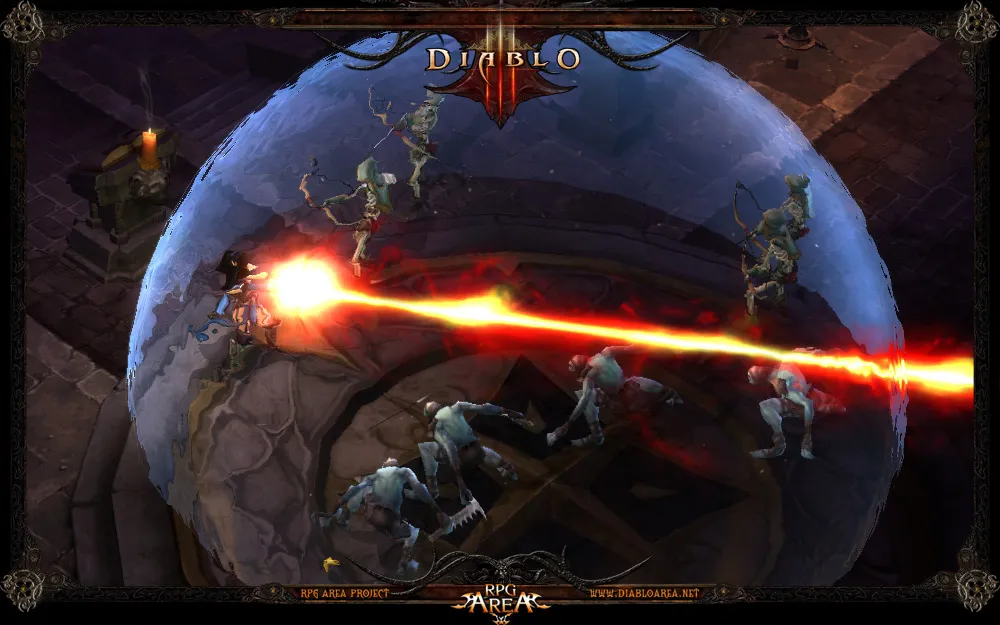
By promises, runes will work with all active skills.
Since not much is known about runes overall, players are asking various questions, trying to pry more details from the developers.
• Rarity of Runes
Players were interested in whether all five runes in the game are equally rare or if some will take longer to hunt than others. Considering that in Diablo II, some runes could buy excellent equipment while others could be dumped, the question is reasonable. Bashiok replied that he doesn’t have that information yet. However, his intuition suggests that keeping track of both the various effects and the chances of dropping runes is pushing it. According to him, situations like "This rune is bad, but at least it’s rare!" should not exist in the game, and ideally each rune should be useful to different players and builds. However, as the runes became more diverse in terms of both effects and visuals, it became clear that players would still prefer some runes over others. Thus, runes that increase skill power are more desirable than energy runes.
• Frequency of Rune Usage
Continuing the earlier topic, another question arises: how will the developers figure out which runes and how to balance them to ensure all are equally useful? Here, it’s quite simple: Blizzard can gather statistics on which combinations of runes and skills players use most often and, based on obtained data, make rebalancing. For example, one rune is used in five different combinations while another is used only in two. Developers can