
"War. War never changes." Fallout is 12 years old!
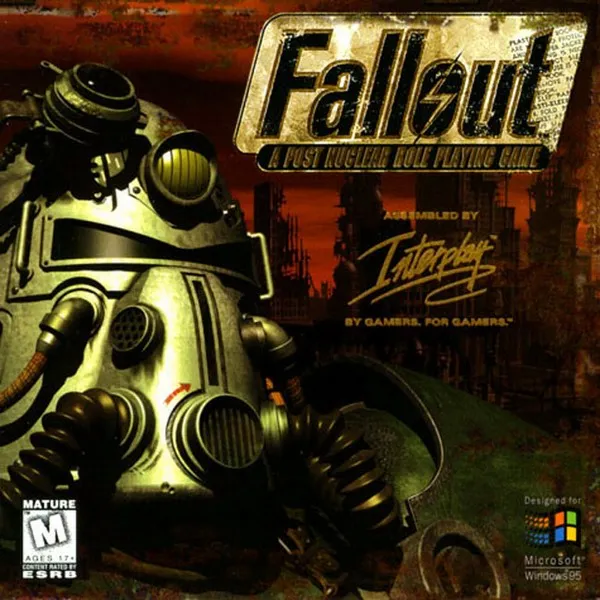
It's hard to believe, but exactly 12 years ago, on September 30, 1997, the financial crisis struck and we were left without money the first Fallout hit the store shelves, undoubtedly a cult game that became a benchmark for many in the post-apocalyptic genre, significantly influencing the development of science fiction works for several decades to come. While young minds are battling it out in Fallout 3 and are blissfully unaware of the great fathers of the series, I would like to take a moment to recall how it all began and what followed.
In fact, the official birth date of the series is considered to be June 15, 1997, the date the game went to print. But it was September 30 that the game became available for purchase.
P.S. I originally planned to write a short article based on several sources of information, but unfortunately, it didn't materialize.
Interesting facts about Fallout:
Not many know, but at that time, Fallout actually flopped in sales.
Official sales in the USA:
Fallout (1997) - 23 thousand copies - 300 thousand dollars.
Fallout 2 (1998) - 36 thousand copies - 550 thousand dollars.
Fallout + Fallout 2 (gift edition) (1999) - 286 thousand copies - 3 million 200 thousand dollars.
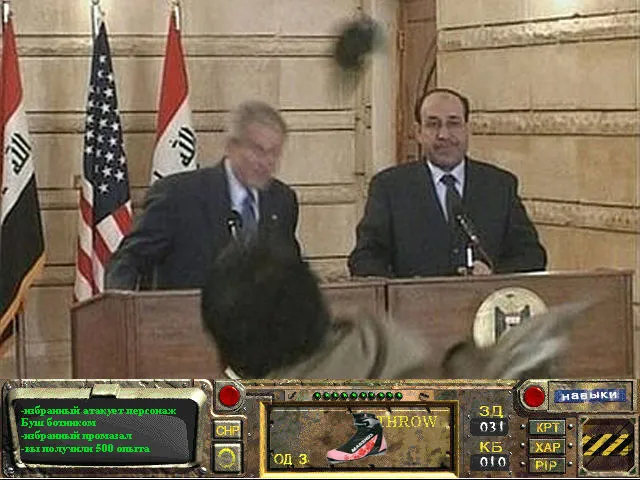
1988 - 1997. The prehistory of genre development.
It all started not in 1997, but way back in 1988. That was when the game Wasteland was released for Apple II. It was the first game in history with a plot set in a post-apocalyptic world. The developer was the beloved studio Interplay, which later gave life to Fallout. The game was released by Electronic Arts.

The prehistory of the game told of the Americans completing the construction of a space station-citadel and the ensuing conflict with the Soviet Union, which involved the entire global community and ultimately led to the division of the world into supporters of the USA and the USSR. A few months later, the Citadel sent out an emergency signal. A large number of satellites around the world immediately soared into the sky. In panic, both opposing sides gave the order to launch all nuclear warheads, plunging the world into darkness. Despite all the plans to save the population and nuclear shields, both superpowers were erased from the face of the Earth. As a result, you are a wasteland ranger, one of the few surviving members of the civilian engineering army of the USA. Your mission is to make the wasteland a safe and livable place. Those who were just starting to delve into computer games at that time could already see in Wasteland the frightening premises that still don't seem so unrealistic.
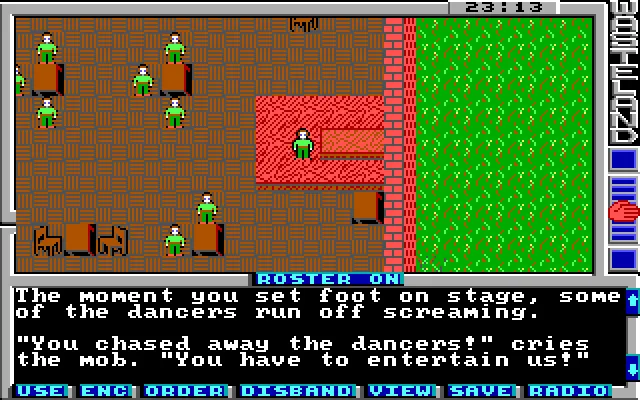
Wasteland featured several branching paths, and the developers tried to give players as much freedom as possible. For example, picking locks wasn't the only way to open a locked door; it could easily be smashed down with your shoulder if the character had a good strength parameter, or cold weapons could be used for that purpose. If nothing worked, many favorite (though expensive) problem-solving solutions came into play: explosives. And it all started with the player being immediately sent into the wasteland after creating their first party, along with small advice on what to do. From the very beginning, there was an inevitable threat of clashes with dangerous monsters that could lead to the entire group perishing. But this did not stop players eager to explore the vast territory of the wasteland, located, according to the scenario, in the southeastern USA. A huge number of side quests and an incredibly expansive, non-linear storyline allowed players to dive deeply into the radioactive world of Wasteland.
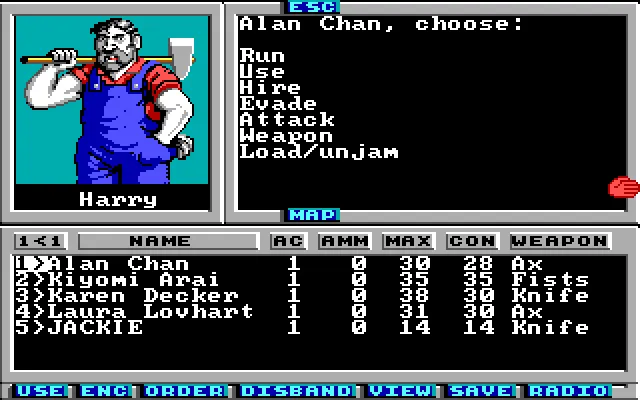
After the work on Wasteland was completed, the development team split up, and each went their separate ways. In reality, the success of this role-playing game was simply overwhelming (Wasteland was one of the most commercially successful games of its time) and this could indicate a possible sequel in the near future. Unfortunately, the next game was not Wasteland 2. Instead, Electronic Arts began developing Fountain of Dreams.
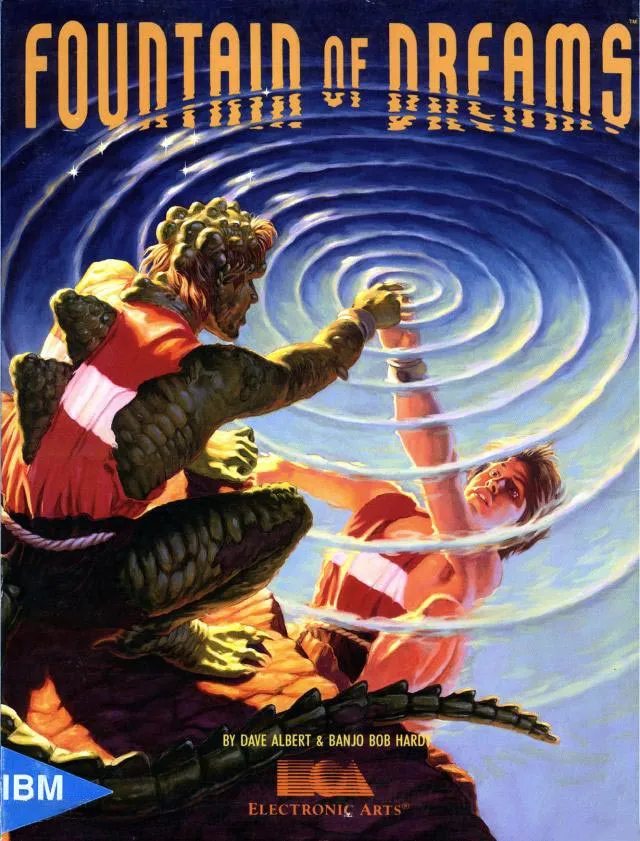
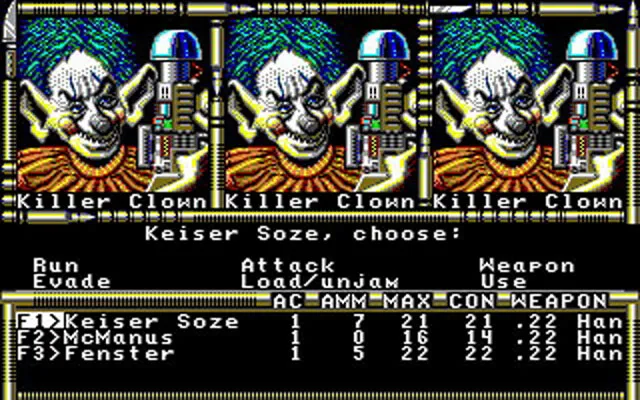
Fountain of Dreams was released in 1990 for IBM computers and used the same engine as Wasteland. Unfortunately, this game did not achieve significant success. The events of Fountain of Dreams unfolded in a post-nuclear Florida, which, as a result of bombing, was cut off from the rest of the USA. The island of Florida was a very unsafe place: mutated animals, raiders, mafia families, and Killer Clowns - a group of former clowns who turned their silly beatings into an effective martial art - Slap-Fu. The game begins at a time when things in Florida couldn’t get worse – in addition to the dangerous creatures nearby, mutated humans also began to appear. The waters of Dreams (Dream Water), the only known means to slow down the mutation process, were running low. This led to unfounded rumors about the legendary Fountain of Youth, the water of which, according to legend, could cure any disease, including mutation. You and your companions decide to set out in search of the fountain to help solve the problem enveloping the entire island.
In 1991, another post-apocalyptic project titled Meantime was to be released. According to the limited information available about the game, the storyline was supposed to transport players through time to meet various historical figures (such as Amelia Earhart and Albert Einstein) and assist them in preventing various future disasters. However, Meantime was unfortunately abandoned in its beta state during the crash of the 8-bit game market. Several attempts were made to revive the project, but ultimately, the game was abandoned forever.
Interesting facts about Fallout:
In the European version of Fallout, there are no children. Ever wondered why? It was simply because one day, Interplay's office in the UK informed Tim Cain that a game containing scenes of child murder would either be banned or at least considered extremely cynical. Tim could make the children invisible or remove them altogether. He chose the latter. According to Chris Taylor, all this was prompted by the Dunblane shootings (in 1996, Thomas Hamilton killed 16 children and their teacher and then shot himself - translator's note).
1997. The beginning of the Fallout era
"Remember Wasteland?" - the tagline on the box version of Fallout
Nearly 10 years after the first post-apocalyptic game on personal computers, its spiritual successor, the culprit of today's celebration, the game Fallout, which is still considered one of the best role-playing games of all time and all nations, was released.
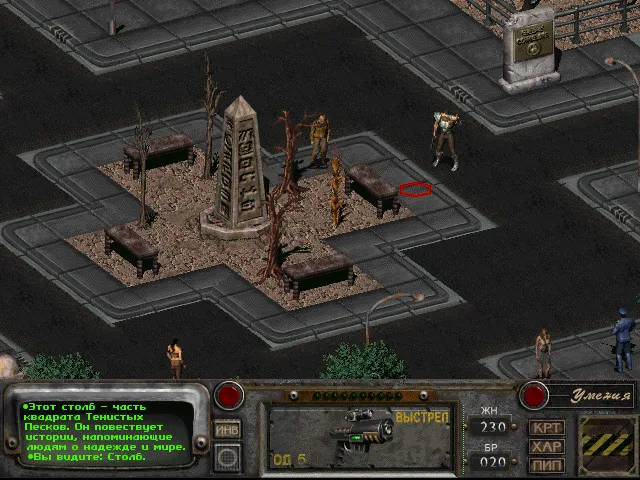
We got to play the mystical Vault Dweller, one of the lucky ones who managed to hide in one of the huge vaults deep underground before the wrath of nuclear energy was unleashed from dozens of bombs and engulfed the world. Vault 13 replaced your home for many years, sheltering you and a small community of others from the dangers of a hostile outside world. However, life in the vault soon changed. The chip for the water purification system became inoperative, and, as you know, no clean water means no vault. By a strange turn of events, it was your mission to go outside in search of a replacement. The future of all those who entrusted their lives to you depended on you.

So what made Fallout such a unique game, which has long since become a classic of the genre? There are many reasons, but perhaps one of the most obvious and significant is its unmatched retro atmosphere. Fallout was steeped in the culture of the 1950s, with all its fears and prejudices. Moreover, during the game, you were constantly haunted by the feeling that your character's actions genuinely affected subsequent events. If you sent a caravan with water supplies to your vault, you had more time to search for that necessary part, but at the same time, you put your home at risk of discovery and subsequent destruction. Also, don’t forget that your actions would not only affect the environment but also the fates of various people, organizations, and even entire cities. Undoubtedly, Fallout is a universe that can easily captivate anyone with its
gaming realities.

The release of Fallout brought Black Isle Studios widespread recognition, and it wasn't long before Interplay announced the beginning of work on a sequel.
Interesting facts about Fallout:
- In "Fallout" there is enough text to fill approximately 1700 A4 pages, typed in size 12 font. Moreover, 700 pages of this text are names and titles.
1998. Fallout 2
Fallout 2 hit store shelves at the end of 1998, almost a year after the first part's release. The events of the game take place eight decades after the last events of Fallout 1, but that does not mean that the wasteland became more appealing than before. After being exiled from Vault 13, the Vault Dweller eventually founded a small tribal village called Arroyo. At the very start of the game, you will understand that the village is slowly but surely dying. As a direct descendant of the Vault Dweller, you are tasked with saving your home. To do this, you need to find the Garden of Eden Creation Kit (G.E.C.K), a pre-war technology that will help the village restore its land to its original state.

Finding the G.E.C.K. (which you understand is not just a game of tic-tac-toe) is much more complicated than the previous game in the series because Fallout 2 was significantly larger in every way. The size and number of areas of the wasteland available for exploration increased, and the player could undertake a much greater number of side quests. Because of the many diverse quests, players could always find something to do besides following the main storyline. For example, information about the location (or even existence) of the G.E.C.K could be obtained in several ways without detailed land exploration. Fortunately, players in Fallout 2 didn’t have to race against time like in the first part. The time limit was conditional and lasted twelve in-game years, so there was plenty of time even to walk all over the gaming area from edge to edge.

At first glance, Fallout 2 didn't differ much from Fallout 1. The engine, interface, and control system remained practically the same, although, of course, they did undergo some improvements. However, players realized how much the game world had changed and eagerly set about exploring it. The wasteland seemed and looked more lively due to the emergence of new settlements, such as the cluttered city of criminals of all sorts - New Reno. People trying in any way to survive in this godforsaken place were not at all against slightly distracting themselves from their surrounding reality and having a little fun with drugs. The wasteland remained the same, but looked much more civilized than in Fallout. Of course, as civilized as one can be in a post-nuclear world.
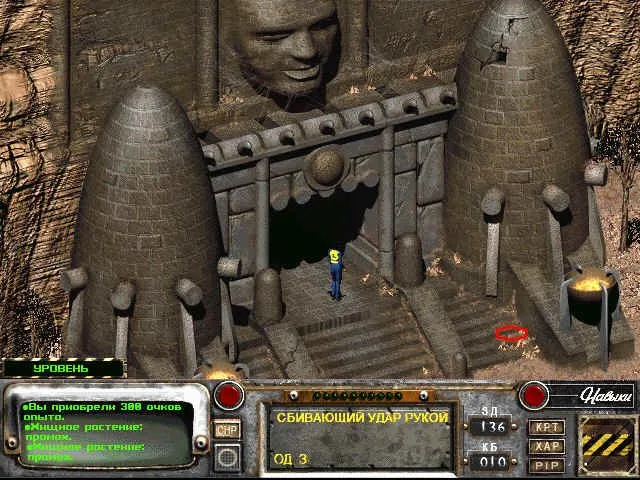
Undoubtedly, Fallout 2 became a worthy successor. The formula that brought success to the first part remained untouched, and fans were thrilled. What could possibly ruin this magnificent game? Unfortunately, we know what.
The dusk of the series
And what followed next is something I don’t even want to write about.
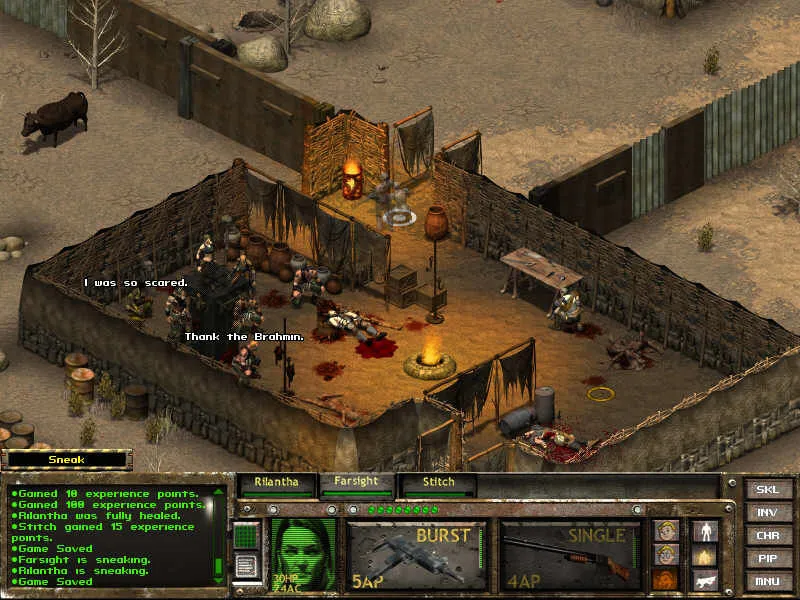
In 2001, there was the disappointing Fallout Tactics: Brotherhood of Steel. This was a completely different game. Instead of adhering to the role-playing concept of the first two games in the series, Fallout Tactics turned into a team tactical role-playing game. It is also important to mention that Fallout Tactics had narrative inconsistencies with its predecessors, and most fans and developers of the original Fallout (Fallout Tactics was developed by Micro Forte) found the script inconsistent with the spirit of the series. Overall, as expected, fans received the game rather coldly. Developer assurances during the development process instilled great hope, but players wanted a third game in the series, not an unclear hybrid.
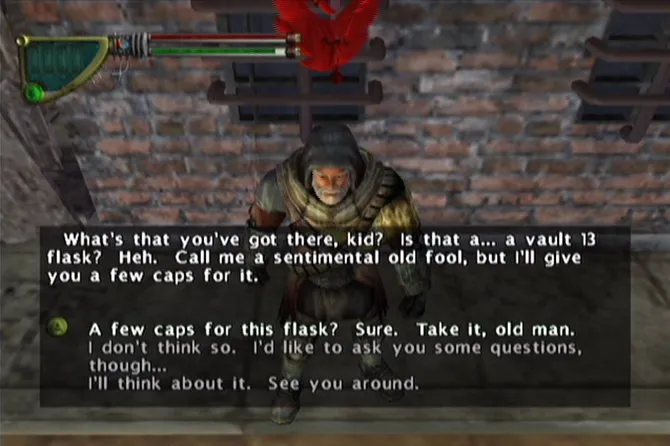
In 2004, there followed an even more ambiguous project in the Fallout universe. Fallout: Brotherhood of Steel was a role-playing game with a strong action genre element, released by Interplay in 2004 for PS2 and Xbox consoles. Even before it hit store shelves, Fallout: BoS had already earned a disdainful reputation. Fans were appalled when they learned that the Fallout sequel hadn’t even been officially announced, and the project’s complete console focus alienated even the most loyal players. The public long criticized the game for substantial discrepancies with the Fallout storyline and a lack of wasteland spirit. But the worst part was that Interplay had disbanded the core team of Black Isle Studios a month before the game's release, meaning that the Van Buren project, which was supposed to be Fallout 3, was doomed to never see the light of day.
The last hope for salvation.

The first mentions of the project as a classic continuation of Fallout appeared on the BIS forum in 2001 during conversations between company employees and fans. The game was planned for release in 2003. Everything was going according to plan, a technical demo was created (from which screenshots were posted on the BIS website). The modification of the SPECIAL gaming system was also planned, changing the damage calculation mechanism and adding several perks.
But after BIS was disbanded in 2003 and Interplay Entertainment announced its bankruptcy, the "Van Buren" project was closed. However, design documents about the failed Fallout 3 began to appear on the internet. They revealed that the game was planned to feature vehicles and armored vehicles. They also contained descriptions of game locations, main characters, and key quests.
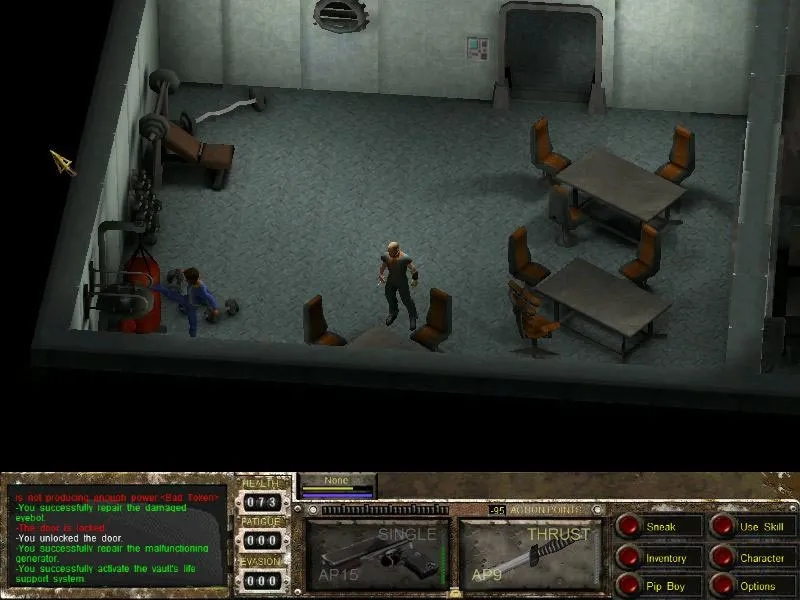
It was supposed that the events of Fallout 3 from Black Isle would unfold ten years after the events of Fallout 2 in the searing wasteland of the Midwest. The player would start in a prison cell, and while pondering how to escape, an explosion would rock the area, and the hero would lose consciousness. Upon awakening, he would discover that the hole in his cell allowed for an escape. According to the developers, the player was to escape from security robots trying to return the hero to prison while unraveling the reason for his confinement.
Apparently, the project was rapidly advancing until its closure. The engine was 95% complete, including a fully three-dimensional environment with the ability to fight in both real-time and turn-based modes. Only minor details needed to be polished, as character creation, the combat system, and skills were already adequately implemented. Most locations were fully prepared, and, as far as we know, the developers even recreated some pre-war objects, such as the Grand Canyon. The creation of dialogues, maps, and other game aspects was in full swing, and the game was set to be released on time.
When Interplay announced the project’s closure, fans were in shock. Meanwhile, the company was continuing to encounter financial failures and ultimately went bankrupt, but there remained a glimmer of hope for Troika Games or another respected role-playing game developer (such as Obsidian Entertainment) to acquire the license for Fallout 3. Ultimately, the game license was purchased by Bethesda Softworks for 5.75 million.
The article about Fallout 3 was stolen by evil Martians was not written due to a lack of meaning.
This article was written using materials from fallout.wikia.com, wikipedia.org, fallout-archives.com, nma-fallout.com, as well as personal stories from The Vault Dweller.
Thanks to Interplay Entertainment, Ksenia Petukhova, mom, and dad. ^^