
Impressions from the conference "IKAK? Games as Science"
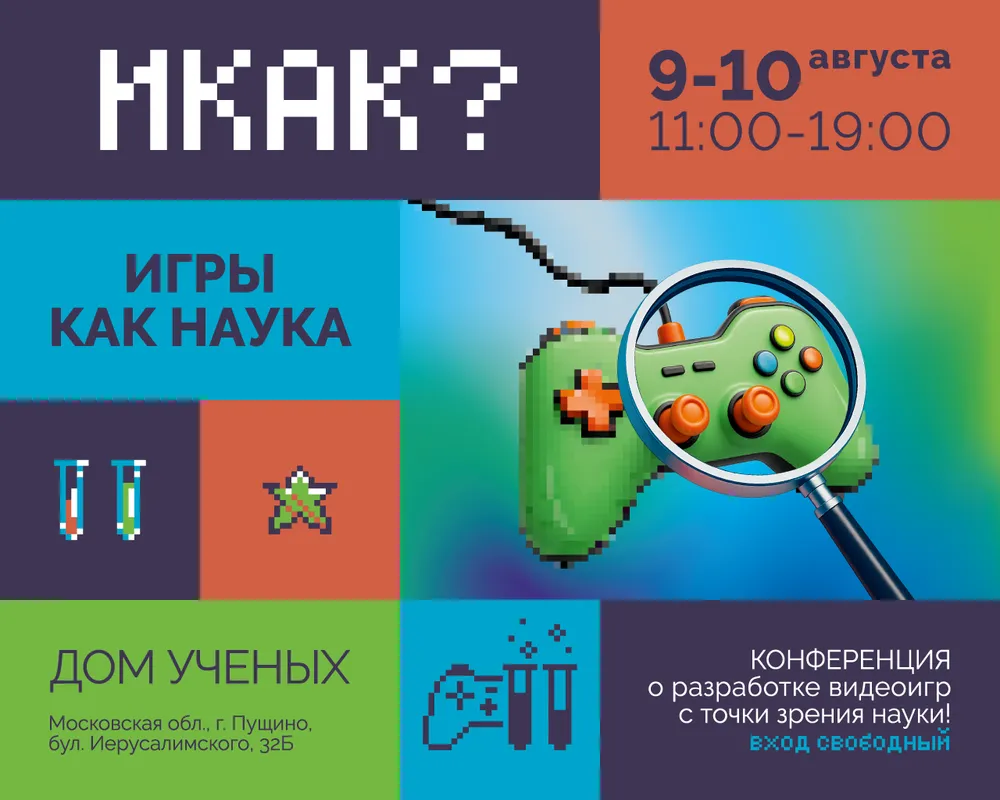
Last weekend, I traveled to the scientific town of Pushchino (about 80 km south of Moscow) to attend the first scientific conference in Russia about video games. At least, I am not aware of any other events of this format where the main program consists of reports on various studies about games (which have recently been conducted in Russia as well) rather than entertainment, like at "Igromir", or discussions about art, like at "Art Russia".
The closest thing I can recall are the lectures at "Red Expo" and "Igroprom". However, there, the reports mainly addressed practical questions and various aspects of the industry. At the conference, organized under the title "IKAK? Games as Science", computer games were discussed primarily in a scientific context, and the speakers' theses (for the most part) were based on experimental results and statistical data.
For the convenience of participants and visitors, the reports were divided into 6 sections:
space in games,
how game mechanics and game design work,
the use of games in therapy and psychology,
cultural representation in games,
philosophical research in games,
empathy for game characters and moral choices.
The topic of space, in my opinion, was covered quite mediocrely. All sufficiently well-known projects on the space theme were mentioned, and the question was raised about how, in most cases, realism and scientific issues overshadow the conventions made for entertainment.
But when it came to realistic space, no one even mentioned Orbiter – a space flight simulator where the physics is developed much better than in Kerbal Space Program. Yes, I understand that the game is not well known, but I expected more from people who, after all, should have researched the topic for their report.
The section on "mechanics and game design" was rather general and more oriented toward those unfamiliar with games, to show that a scientific approach is very applicable in the creation (and analysis) of computer entertainment. For someone like me who already knows all this, it was not particularly interesting. Just like all kinds of general philosophizing.
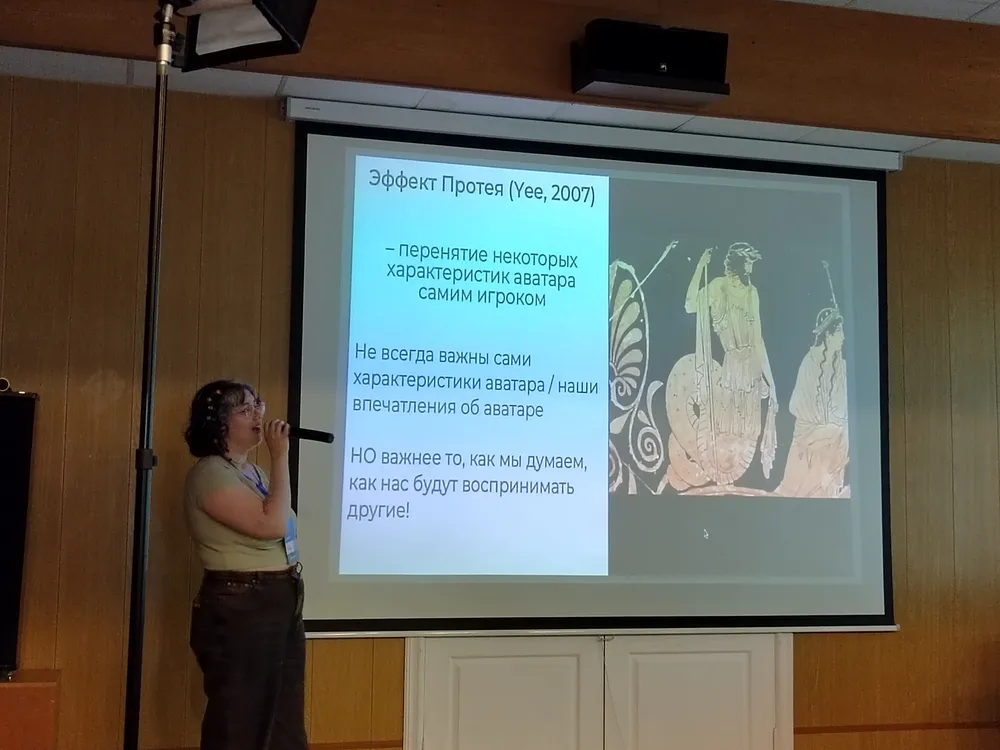
However, I was very interested in the reports on the possibilities of games for psychotherapy and the section on empathy and moral choices. After all, I have been trying myself as a game narrative designer for a long time now, and the impact on the player's psyche is one of the important components for a deep gaming experience. And in general, it’s high time to find something positive about the impact of games on the brain; otherwise, if companies do hire psychologists, it's rather to find ways to squeeze money out of players.
The reports on "cultural representation" provoked, to put it mildly, a critical reaction from me. Especially the first one, where the speaker quickly veered into "equality and social justice", repeating the well-worn dogmas of activists, most of whom have demonstrated their inadequacy for several years now.
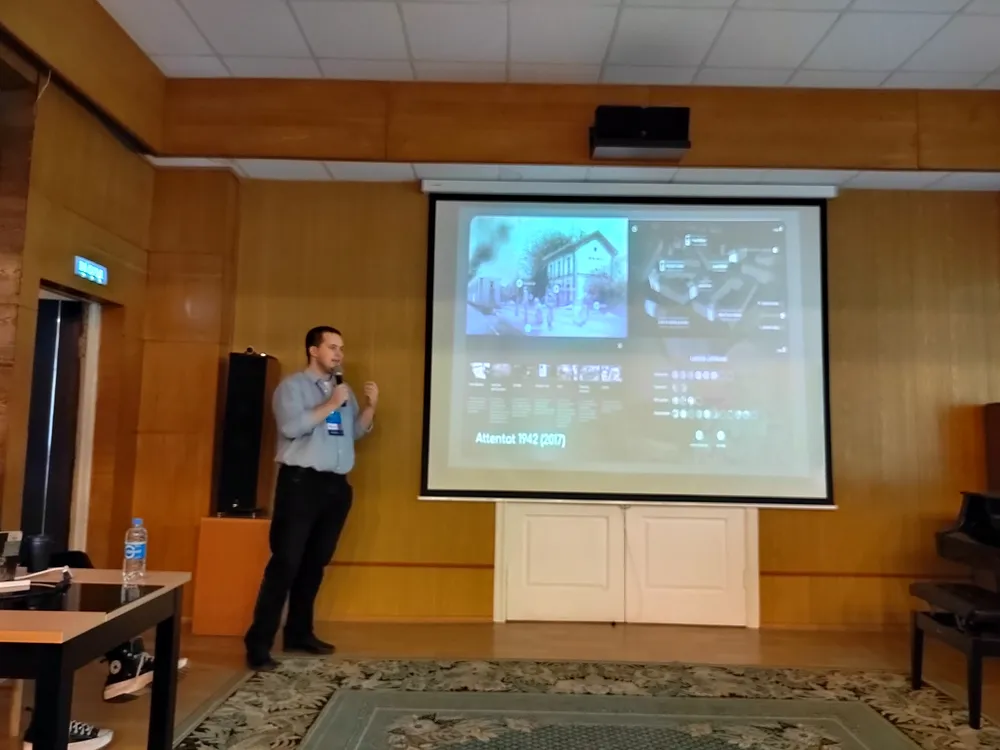
The second report, dedicated to the topic of the Holocaust and its presentation in the game Attentat 1942, presented the topic more reasonably. However, there was very little about the game itself; it was more about how the Holocaust is presented in several museums, which had nothing to do with games.
A separate part of the program was the presentation of virtual suits by Stanislav Lauk-Dubitsky from X-Labs. However, this is just a project, not even a prototype. But they promise that in such suits, various indicators will be measured for transmission into "virtual reality", and in response, there will be feedback through electrical impulses and even movement via electric motors. In general, like in the cycle about Deep Town by Lukyanenko.
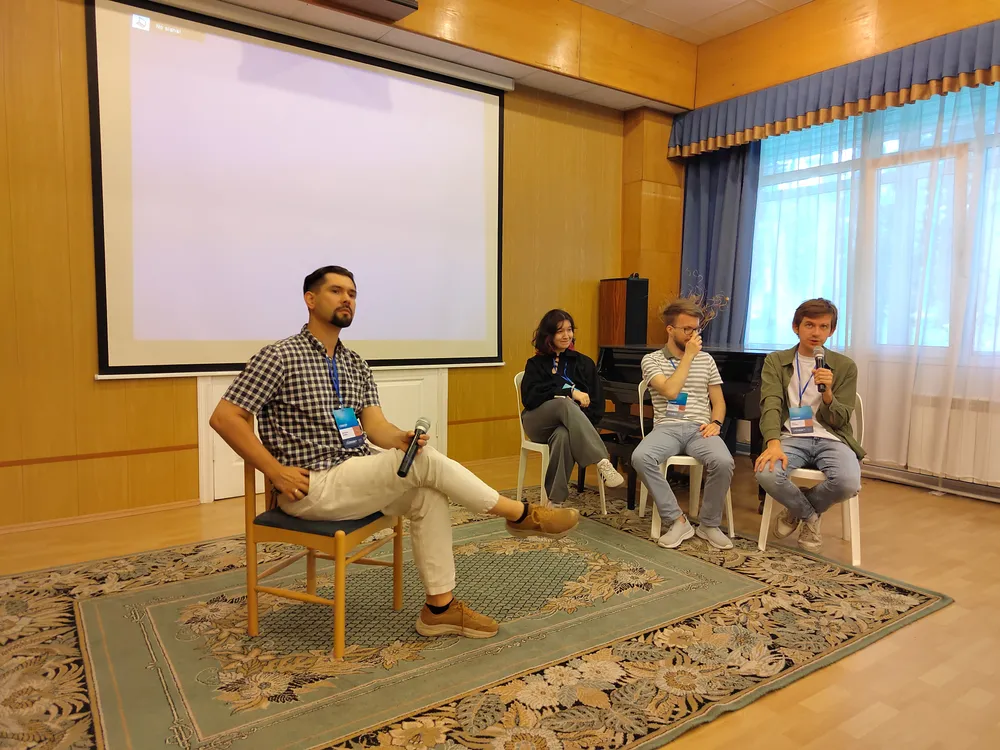
There were also two "round tables" in the program (although the participants sat on chairs without any tables) where the topic of space and the topic of ethics were discussed. In general, the same assertions that were made in the reports were expressed, but here questions from the audience could also be asked.
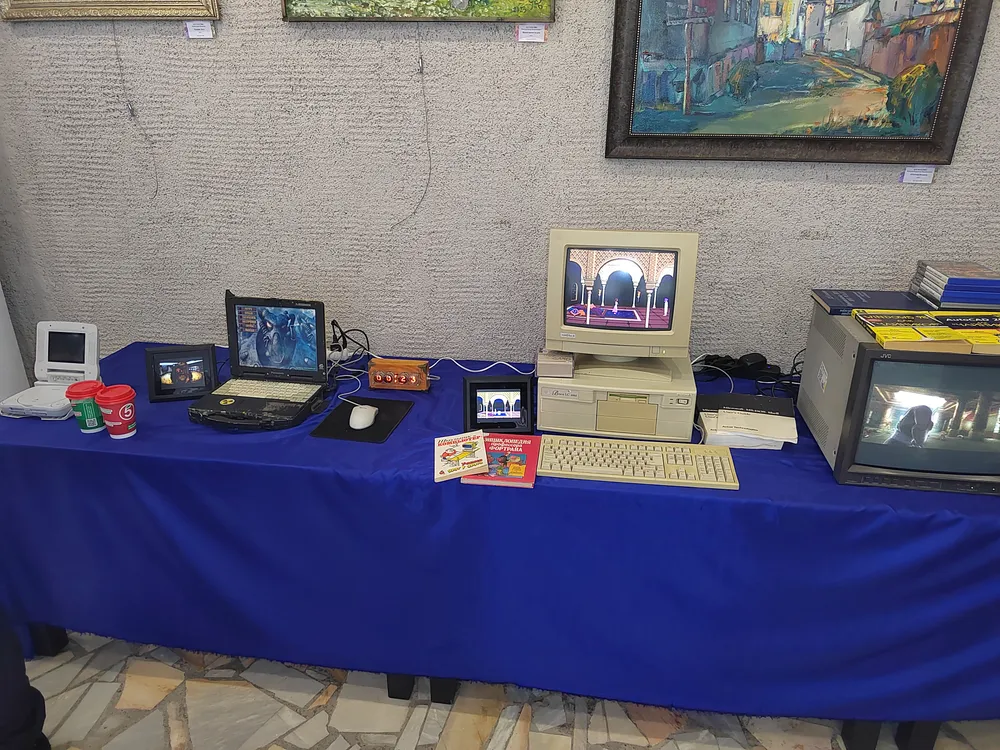
While the "lecturers" were reading reports and discussing topics "at the round tables", another part of the "House of Scientists" (the building where the conference took place) was set up as a gaming area. Visitors (the exhibition was open to everyone) could play well-known retro games, from Fallout and Prince of Persia to "Field of Wonders", as well as several experimental projects that received scientific grants or were diploma works.
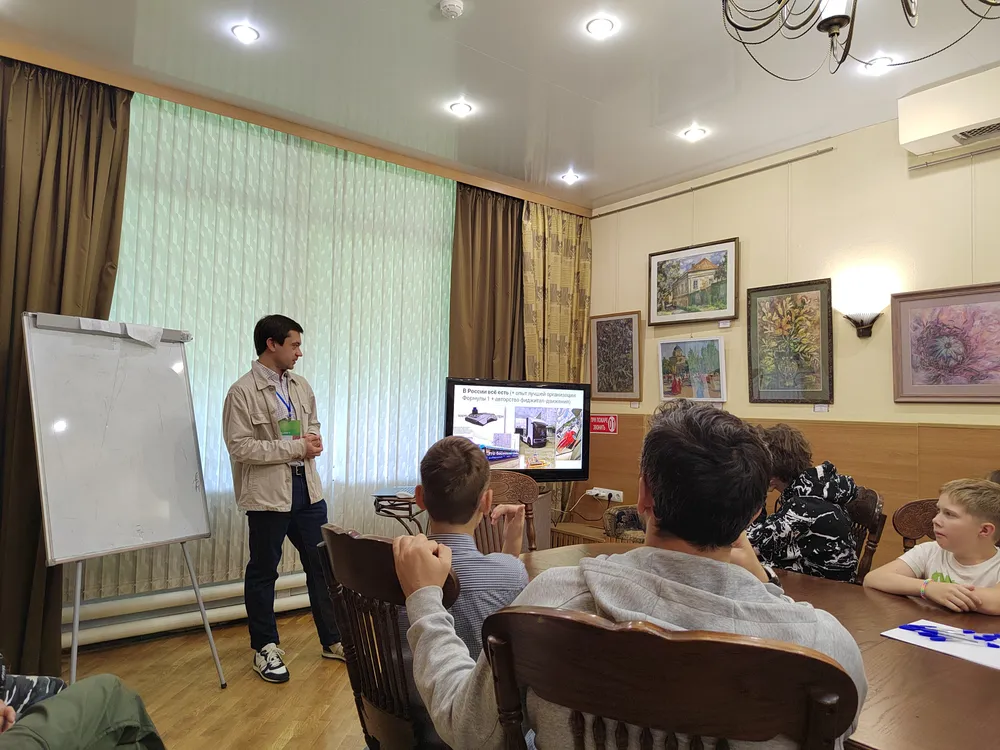
In a separate auditorium, several master classes were held. I only attended one — dedicated to "racing AI". Yes, in general, it is a typical neural network. However, it is trained on various vehicles, both real and virtual (for this, the developers modeled several copies of famous racing tracks).
For visitors, a samovar with cookies and bagels was set up in the foyer to snack and quench their thirst during a long hot day. And participants (primarily those representing experimental games) were awaited at the end with an award ceremony.
Overall, although the event was not very large-scale (only 350 visitors, including children), "IKAK? Games as Science" went quite positively and even warmly. I personally managed to communicate with most of the speakers and developers, learning some nuances that were left out of the reports. So the results of the conference eloquently indicate that it is definitely worth holding again in the future, as well as attending, especially for those who want to stay informed about the development of games from a scientific point of view.
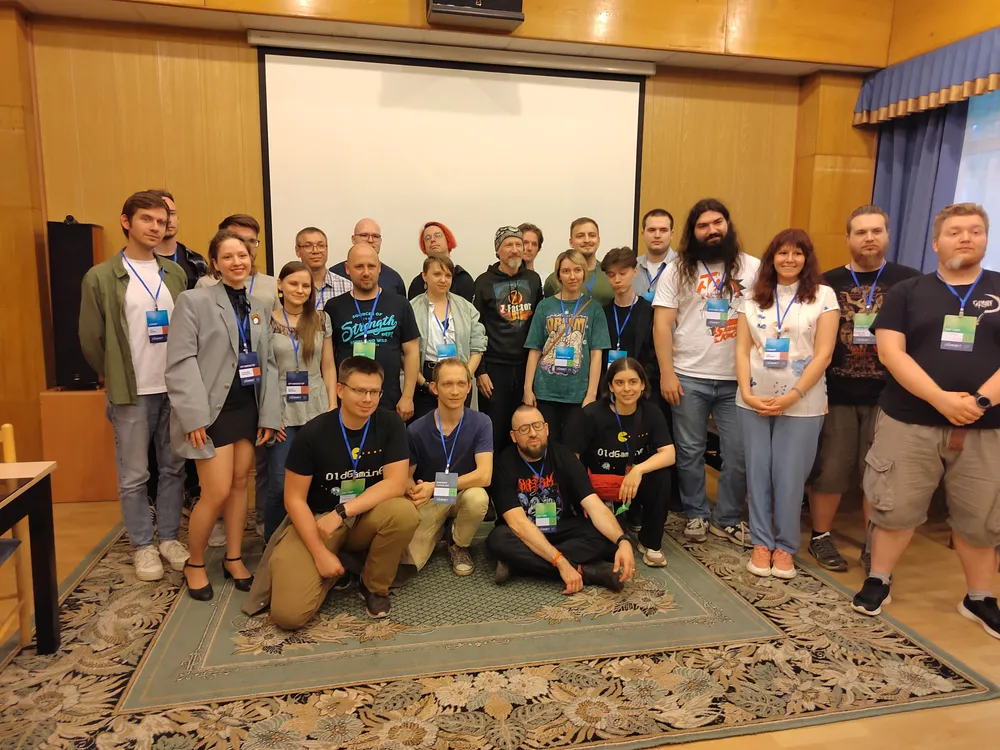
The conference was held with the support of the Ministry of Education (House of Scientists), the Russian Academy of Sciences, the Federal Research Center, the AI Development Laboratory, and the "Great Serpukhov" project (development of the modern science city), the RVI, and JSC "IFSI".
More details about the program, speakers, and presented projects can be found on the website or in the Telegram channel of the event.