
Forget about the kill-to-death ratio and focus on the objective
Translated a rather interesting and timely article on this topic.
You can read my opinion at the end of the article, and share yours in the comments.
[cut]
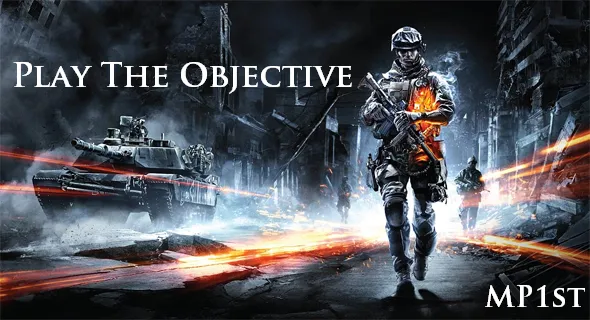
PTFO – Play The F***ing Objective
I don't know about you, but I am extremely pleased that this trend is becoming more and more apparent when playing [Battlefield: Bad Company 2](/games?search=Battlefield: Bad Company 2) and in the YouTube community. I would say that in the YouTube community, this is even more important, because inexperienced players come there to watch videos from popular veterans who share their approach to the Battlefield series games. I think I won't be wrong if I say that veterans have a significant influence on the gaming community since YouTube is easily accessible and is usually the first place where people look for tips on how to become a good player. We have really seen many recordings of the best gamers' gameplay on the internet with amazing single kills and whole series, but I think many are starting to understand that the essence of the Battlefield series is far from just taking heads down without using sights. It seems to me that the Battlefield gaming community is currently changing its priorities from a kill-count-oriented game to a team-oriented play and task completion.
Although [BF BC2](/games?search=BF BC2), for instance, does not reward for kill streaks during team gameplay other than a large number of points, there are very few other games that provide the same range of team gameplay aimed at achieving a common goal. I'm talking about the fact that most existing shooters are indeed about shooting. Most of the time you need to shoot, maybe capture a flag and plant a couple of bombs. Of course, this is an important part of the Battlefield series, but what other game allows you to heal teammates, resupply their ammo, repair friendly vehicles, and mark enemy locations for the team? Our gamer job is to get the most out of the game mechanics. This also includes actions that, it seems to me, bring players the greatest self-satisfaction. They allow you to feel like a part of something bigger. I suspect it also influences that deep down you understand that you are helping another person, who might be on the other side of the world or perhaps in the neighboring house. Because of you, it is even more pleasant for them to play, and at the same time, you get satisfaction from what you have done.
What is the PTFO movement about?
PTFO is a simple idea that you should care less about your kill/death ratio (K/D) and focus on accomplishing the current task at hand. Of course, this is more relevant to games like Battlefield, where game modes are primarily oriented towards achieving a specific goal. You may have noticed that Battlefield is the game where the winning team is the one that played most cohesively and completed the objective. You can be an excellent shooter with cat-like reflexes, but it won't help you win a round if there's no team behind you that you are ready to work with.
Since the exact origin of the PTFO movement is unknown, and many players have played that way since the first Battlefield, it can be said that its popularity has recently surged, especially on YouTube. I think part of this is due to many commentators on YouTube starting to promote this approach in anticipation of the release of [Battlefield 3](/games?search=Battlefield 3). I want to particularly highlight one such commentator, who has had a great influence on my approach to playing Battlefield and, I believe, the first to truly carry the idea of PTFO to the masses. While the entire DCRU (Demolition Crew) is an excellent source of inspiration, DCRU Colin uploads amazing videos that, in my opinion, clearly show what the PTFO movement is about and explain the reasons why I think the Battlefield community is better than others. At the end of the article, I have added the three most important videos from Colin, but I highly recommend visiting his YouTube channel and the channels of the entire DCRU team.
K/D Mentality
You might ask: why do we even need to be inspired to pursue goals in the game? Doesn't everyone already understand that it's the right approach? Ironically, the developers themselves put emphasis on your K/D ratio and other mundane statistics. I personally was a bit disappointed to see that the number of kills and deaths was included in the player stats table in [Battlefield 3](/games?search=Battlefield 3) alongside the player's overall score for the round. I would have preferred to see something like "points per minute" instead. Of course, the K/D ratio should remain in personal stats, but I don't think it should be emphasized and placed prominently in the player table. If I'm not mistaken, the K/D ratio even significantly defined your skill level in [Battlefield: Bad Company 2](/games?search=Battlefield: Bad Company 2), although I don't believe it accurately reflects how well someone plays Battlefield.
Another reason that I think has played a significant role in giving the K/D ratio such importance is the Call of Duty series. Now for many, the games in this series are associated with kill/death ratios, which is quite normal, especially in team deathmatch modes. The emphasis on kills fits this game mode very well, but due to the huge popularity that the series has gained in recent years, this approach has been brought to other shooters as well. You may have noticed that currently on YouTube, videos showcasing fantastic kills and kill streaks are extremely fashionable, so it’s no surprise that players in other shooters want to do something similar. Unfortunately, this playstyle does not fit the Battlefield series. I am sure many will agree that the games in the series are not about that. And the word "Battlefield" for us means something entirely different.
Compete not against the team, but with the team
Based on personal experience, I can say that Call of Duty ceased to be enjoyable for me when I realized that I was playing for a high K/D rather than for fun. That's because deep down, I knew that this was the only factor—at least the one that players/friends could see—that determined what kind of player I was. You see, I think that when you become an experienced player, your expectations rise. Call of Duty was enjoyable for me when I first started playing, until I began to rely on having a good K/D ratio in every game. Later, when I did not meet my expectations, I was disappointed with the game much more than if I had been a less experienced player. I felt like while playing Call of Duty, I was actually competing against my own teammates.
That’s why the Battlefield series felt like a breath of fresh air for me. Switching to it, I began to play with a different motivation. I started competing in accomplishing objectives and how valuable I was as a player in the squad. My striving to maintain a high K/D ratio was left behind.
I want to clarify two points before I conclude. Firstly, while I believe that one shouldn't obsess over the kill/death ratio, especially in modes other than team deathmatch, the ability to shoot well remains an obvious necessity. Eliminating enemies is still one way to help the team. However, if you stop caring about your squad or the main objective in the process, you might lose control of the situation. Secondly, I still enjoy Call of Duty, and I don't want the reader to think that I am disgusted by that game. I just faced these problems. Maybe I should see a psychiatrist.
Promotion
So what can you do to popularize the movement that is currently gaining momentum? It's very simple: pursue objectives, help your team, and encourage others to do the same. Yes, and play [Battlefield 3](/games?search=Battlefield 3) when it comes out!
Please comment on what you think about this. Do you believe that there should still be such emphasis on the kill/death ratio as in the current generation of shooters?
And finally, check out these videos from DCRU Colin!
I practically agree with the author of the article in everything or else I wouldn't have taken on the translation. The only point to dispute might be about including the number of kills/deaths in the player table. After all, if you look at the problem from another angle, a player with a high number of kills and a low number of deaths might end up lower on the list just because they did not provide any support to the team or complete objectives—the sorting still goes by the number of points. So having these statistics isn't really scary.
Another big plus for the article is that the author added three videos from DCRU Colin. I watched them, and they indeed clearly explain the essence of PTFO and provide some simple tips on how to act in the game if you resonate with the idea (I have been playing this way for a while too). If your understanding and comprehension of English is fine, definitely check it out.
During the preparation of this post, the [post]Offline post editor for Gamer.ru [ver 2.6.3][/post] was used.
Thanks for the help in translation: Surt.