バスティオンのレビュー
バスティオンは空飛ぶ要塞であり、人類最後の砦です。災害が発生した場合、すべての生存者がそこに集まることになっていました。災害は突然発生しました。しかし、残念ながら集まった人はわずか二人。老いた語り手と若者、私たちの主人公(原作では彼は "The Kid" として知られていますが、子どもと呼ぶには言葉が忍びません)。バスティオン自体もあまり歓迎するようには見えませんでした。あちこちに破片や廃墟が散らばっています。実際、避難所はあまり意味のない中央に不思議な記念物がある浮かぶ芝生の塊に過ぎません。
バスティオンへの到着から私たちの旅が始まります。災害は突如として襲いかかり、古い世界は崩壊しました。 now.EOur mission is to find survivors and finally learn what really happened. But the main task at hand is to restore the Bastion. For this, we will need special crystals scattered across the ruins of the old world. However, although people have perished, these ruins are far from empty. After the Catastrophe, hordes of monsters have populated the city, clearly none too pleased about our presence. Thus, we must undertake this long and dangerous journey with a hammer in hand and a shotgun at our back (or something else, as in Bastion, everyone will find their preferred weapon).
And while there are indeed many monsters, the process of destroying them never becomes boring. Old enemies are replaced by new ones, the terrain changes, and the Kid finds new weapons that he's eager to try out. Overall, the battles in the game are quite swift. There aren’t moments where you have to hold off waves of similar enemies for even a few minutes, as is common in slashers and ARPGs.
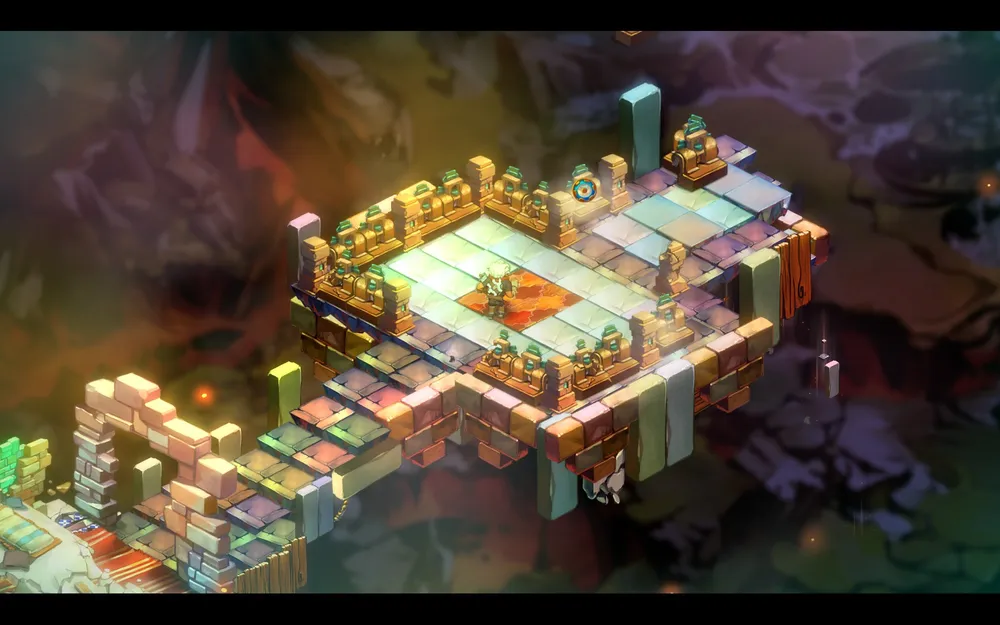
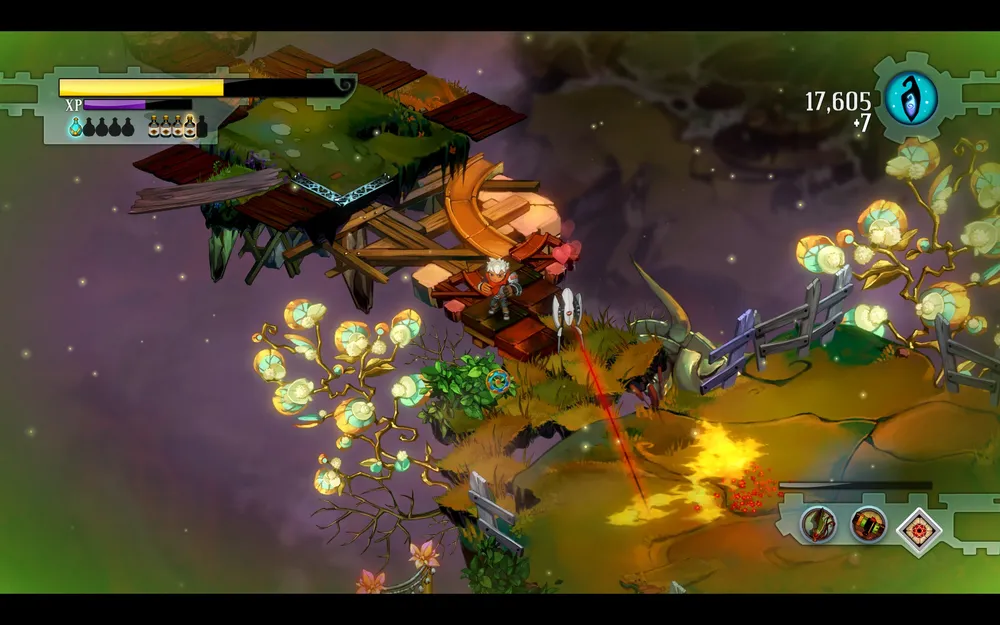
The game environment very much supports this series of events. The terrain in Bastion is not a static picture. Floors, walls, and stairs—significant parts of the environment are constructed on the fly, and can just as quickly be destroyed. The Kid runs, and a bridge literally assembles before his eyes from pieces. Sometimes, the opposite occurs, and the floor collapses. In such situations, there's no time to think about enemies; one must escape. Though for the main character, falling into the abyss is not immediately fatal. If you accidentally slip, the old storyteller will come to your rescue.
The magical phrase "No, it wasn’t quite like that" or something similar, and the Kid will bounce back to the ground, losing a bit of health. The storyteller never leaves us alone for a moment, commenting on almost every action. For instance, if you decide to smash wooden crates hidden in the corner, the old man is sure to say something like, "The Kid is not quite himself, he needs to blow off some steam." Besides commenting directly on our actions, the storyteller gradually reveals the history of the world and describes the places we visit in search of the crystals. For example, if the Kid enters a dense forest, the old man begins to explain what kind of forest it is, who lived there, and when.
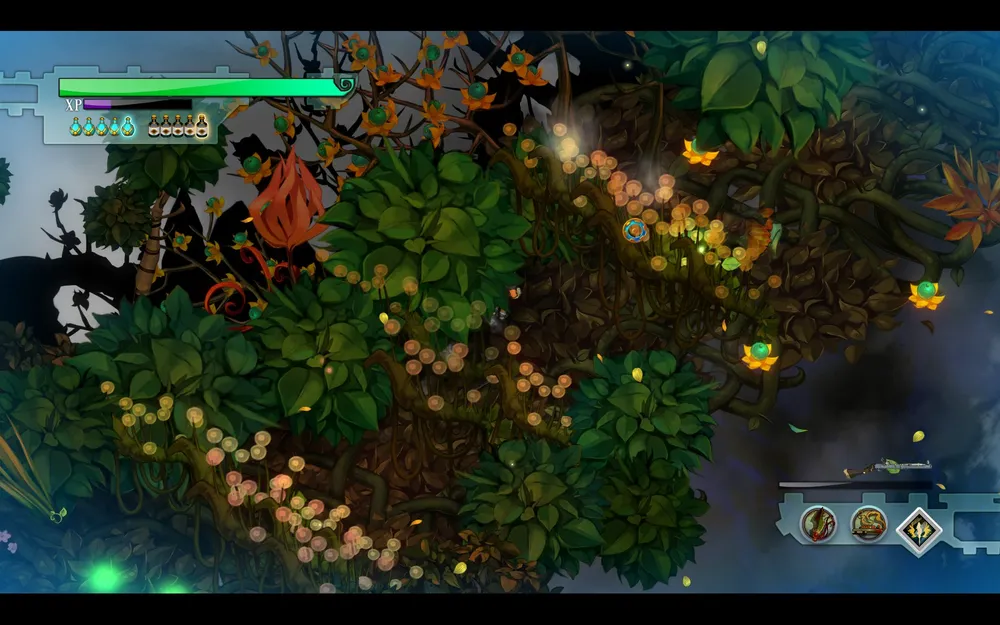
This approach fully justifies itself. How many people actually read walls of text in games of similar genres? Hardly any. This way, players absorb the plot piece by piece on the go, without distracting from the main event—destroying enemies. At the same time, the grandfather’s stories prevent the player from drowning in the series of battles and support an atmosphere of mystery.
After completing each level, the Kid returns to the Bastion. It’s the perfect time to review tactics, choose a different set of weapons, and talk with the grandfather and other characters about the items found. Of course, it’s most pleasant to return to the Bastion with a new crystal. The shelter gradually restores itself, gaining new buildings and opportunities. For example, in time, a temple will appear where you can pick up several idols for worship or a shop where you can acquire new abilities or materials for upgrades.
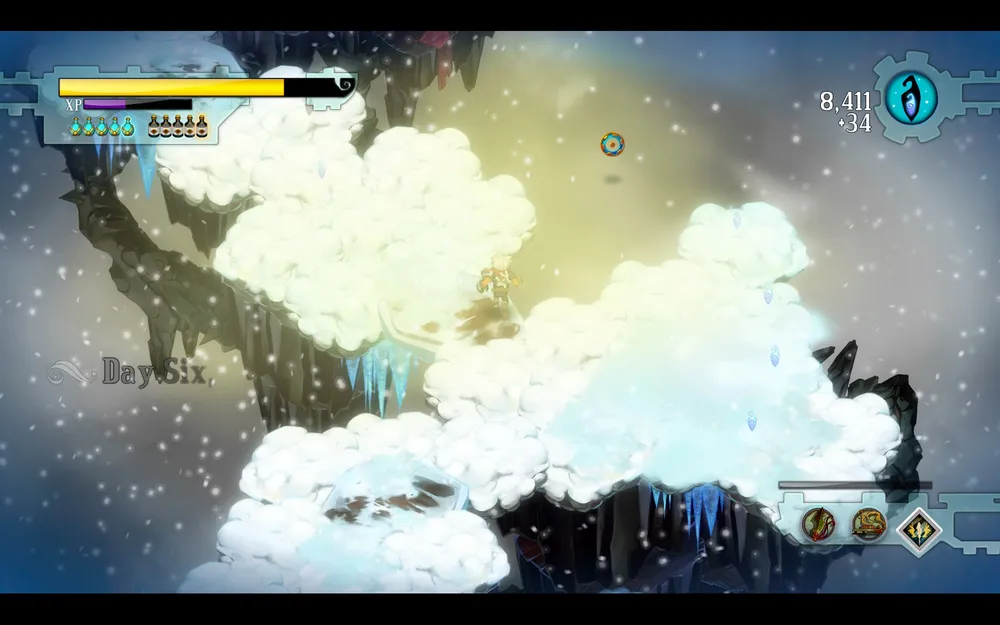
Buying and upgrading, of course, will cost you some money, which plays the role of Fragments in the world of Bastion. Fragments of the old world, those small (and later larger) blue things. They can be found practically at every turn: they might be lying on the ground, flying out of crates or other design elements, simply dropping from the sky when you strike them with something. But no matter how many fragments you have, you can't upgrade your beloved spear or musket without a special artifact. There are a total of five artifacts for every type of weapon (each weapon can thus be upgraded five times).
Some "upgrades" can be purchased in the shop (which needs to be built first), some can be found on levels (a great reason to pay more attention to your surroundings), and some can be earned as a reward for achievements at special training grounds. Each weapon (and shield) comes with a special training area where you can hone your skills with that weapon. For instance, training with the hammer involves destroying a hundred different objects. The faster you finish, the better the reward.
One thing may hinder comfortable gameplay: the save system. The main issue is the complete absence of any checkpoints on the levels. You progress through a level, slaughter hordes of monsters, and then at the very end—bam—die unexpectedly. You’ll have to start all over again. Personally, I don’t consider this approach "hardcore"; it’s just irritating. The saving grace is that the levels are not that large, and some are beautifully designed, so it’s not a shame to see them again. Additionally, there are a few problems with the controls. The world is isometric, but diagonal movement does not align with the axonometric axis. In simpler terms, in half the cases, you have to zigzag to avoid falling off narrow bridges.
P.S. One of the issues was fixed pretty quickly after the publication of the article via a patch, hence it is struck through.
Despite this drawback, Bastion is an excellent game; it’s difficult to pull away after four or five hours of gameplay, when after another death at the end of a level, there’s no desire to replay the entire mission. Personally, during my travels, I constantly felt like I was inside a painting. Moreover, it felt like someone was currently finishing the painting while commenting on every brushstroke. This astonishing feeling alone is enough to make playing Bastion worthwhile.
Supergiant Gamesに感謝しますゲームのコピーを提供してくれたことに感謝します。