Dialogue System: New Details
Perhaps many of you think that everything was fine in Dragon Age: Origins, and that nothing needs to be changed in Dragon Age 2, but just to make more of it. However, BioWare does not agree with you and is not shy about breaking the game and changing many of its elements. The dialogue system did not escape this fate.
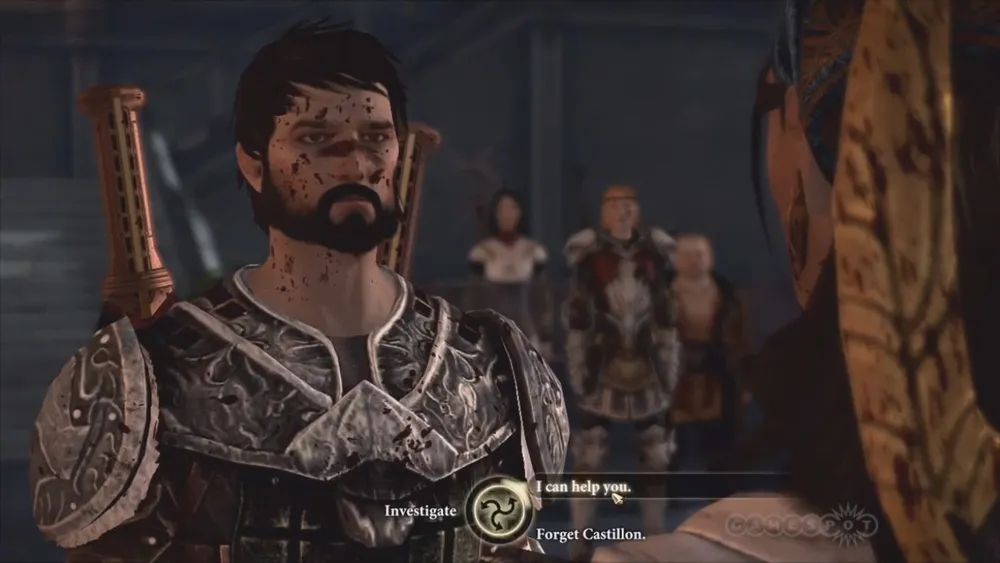
In DA2, dialogues will take after the Mass Effect series - a wheel in the center with choice options around it. Up to six lines will be displayed on one screen, but sometimes one of them allows you to go to a new screen with additional options. However, it’s all the same as in ME.
Instead of long phrases, the player has to read just short paraphrases, which allow for a quick decision on the further course of dialogue and to continue enjoying the characters' conversations. In DA2, this became possible due to the fixed main character and full voice acting. Hawk will speak out a full phrase corresponding to the paraphrase, so there is no longer a need to read it beforehand (unfortunately, in localization, it’s not as pleasant, but that’s a separate conversation).
However, there is a difference. The developers of Dragon Age 2 decided to add a new feature to the dialogue system of Mass Effect - icons, which serve as indicators of the tone and intention of the main character. On one hand, these icons simplify the choice in the dialogue, on the other hand - they clarify the paraphrases, eliminating the possibility of ambiguity.
This post was prompted by developers' comments about dialogues and icons on the official BioWare forum. I present to you their translation, after which I will attempt to systematize the information about the icons in DA2 dialogues known at the moment.
Information from the developers
At first, Mary Kirby answered the questions.
Regarding the fact that the icons express your intention, and not the future reaction of NPCs to your words:
Exactly. Yes. The icon indicates what tone you choose. For example, "I’m going to freak out" or "I’m going to act smart". Not "this option will please the NPC". NPCs can just as well hate your jokes or see your attempt to be nice as brown-nosing.
Is there enough text to express the meaning, why do we need these stupid icons?
That’s why in ME2 there are paraphrases like "I want you, Tain". And this despite the fact that Shepard actually says nothing so vulgar, exaggerated to the point of absurdity. Because 30 characters of a paraphrase must unambiguously tell the player that this point in dialogue will lead to a love scene. Honestly, I prefer a small icon indicating flirtation, and a paraphrase like "I came to you". It seems closer to what I would actually say, and choosing this option doesn't make me feel uncomfortable. I don’t think this is dumbed-down, I think it’s just better. But the usefulness might be different for you.
The paraphrase system also reflects in the game's translation. First, more text needs to be translated, and second, the meaning of a paraphrase is far from always clear without context. Here’s what David Gaider thinks about this:
In fact, it’s not true. Paraphrases are generally easier to translate because they consist of short and simple sentences. The difficulty lies in fitting within the length restriction - but this same problem existed in DAO when it was necessary to rephrase a long sentence to fit the limits.
I can’t agree with David, because short sentences are actually harder to translate if the context is unknown. More specifically, they are hard to translate correctly. On the other hand, writers are people too, and learning about the peculiarities of their work is also interesting.
What if someone wants to use icons? What if I don’t want to see them, if I don’t need these hints?
But you do need these hints. It doesn’t mean that you are being led by the hand - as Mary said earlier, paraphrases were written with the context of the icons in mind. This means we don’t have to try to express tone and intention simultaneously... that would be hard to fit into 30 characters, leading to incredibly crude and even accidentally misleading statements. If the icons are suddenly removed and the paraphrases are not rewritten, the player would find themselves in quite a difficult situation.
Essentially, this issue of tone/intention is not limited to paraphrases. Such situations can occur in DAO-style responses, and even if we were to revert to such a style of responses, I would still include tone icons. It just adds meaning and is not related to the desire or lack of choice options. We are not taking away your choices, thereby making the game worse.
Remember DAO - indeed, often phrases or choices in dialogues came with different notes like "attack" or "lie", now they will just be replaced by the corresponding icons.
There are separate icons for causing harm [attack] and for aggressive tone in dialogue. The icon eliminates the need to write comments in parentheses - we got rid of things like [Attack] or [Lie] and so on in paraphrases; for this, there is now an icon.
>> And perhaps, a flirt icon, depending on whether Cary Kirby was serious or just hypothesizing.
Quite seriously. This is one of the most useful icons, as well as the Lie (Lie) icon.
It seems that the number of different icons in the game will be much greater than we had assumed. Accordingly, a reasonable question arose about interface training.
I’m not sure what exactly the training consists of or if the icons will even be listed in the manual (most likely they will). In most cases, they are intuitive, and they also have corresponding colors.
>> Can we still use Persuasion, and is there an icon for it?
There is no single "persuasion" option. In your usage, dialogue options like Diplomacy, Charm or Intimidate will be available from time to time, depending on your dominant tone [!]. And they will have their icons.
"What if you say something sarcastic and Morrigan "doesn’t understand" that it was sarcasm?" - asks one of the forum members. "Either we will have that problem in DA2 again, or the icons should somehow tell us what the NPC’s reaction will be.
In my opinion, the question is quite unreasonable, but David answered it as well."
The icons convey the intention of the writer to the player. If your character says something sarcastic, and we convey this to you in the paraphrase along with the relevant icon for clarity, and you choose that option, Morrigan will respond to the sarcasm. How she will respond, you won’t know in advance - you receive the intention of the character, not the effect of the phrase.
They also recalled Sten with his love for short phrases on the case. Once you grasp this feature, you can almost automatically choose the right dialogue options, says one of the discussants. Is that really so? I didn't quite manage to get along with Sten, so I can’t confirm these words.
Will it be the case in DA2 that you get used to the right icons for each character quickly, and you might not even read the text of the paraphrases?
Well, that’s where you overstepped. I don’t know any companion in DA2 who reacts consistently to one tone of voice, going against the expressed opinion - more often they react to the choice that prompts action, not the choice of a particular tone.
But, I think it’s your prerogative to assume otherwise? Of course, it’s better to imagine the worst-case scenario and then ridicule the system for what you imagined, right? ;)
Known icons
Now let’s try to gather the information about the icons that we already know. Unfortunately, images are not available for all of them.

Diplomacy
This icon represents the most peaceful and calm option in dialogue. Perhaps this is indeed the Diplomacy mentioned above. But there is no certainty about that. Maybe there will be two different icons, one just for a peaceful dialogue option, and another specifically for diplomacy directed at persuasion in a given situation.

Humor
Sarcasm, mockery, teasing. If you enjoy joking and want to hear surprising lines from both Hawk and his companions, you will definitely love this option in the dialogues.
Aggression
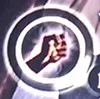
Perhaps this option should be better called "urging to action". A choice for hot guys and girls. If you are tired of chatting and want to finally get to business - choose this point.
Decision Making
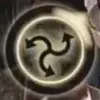
This is a very important point in dialogues. It influences the plot, causes various variations in it, and also affects your relationships with companions.
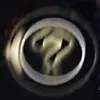
Question
Here it’s simple. If earlier extracting various information from your interlocutor looked like regular conversation points, now they are marked with this icon. Convenient and clear.
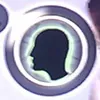
Order (?)
I am not sure about the purpose of this icon; I encountered it a couple of times in the game demo. In one case, it was an order for Bethany.
Unknown icon
Flirt
Where would a BioWare game be without romantic relationships? If you are looking for them, or on the contrary, trying to avoid romance, this icon will serve as a convenient signal for you. Most likely, it will take the form of a heart.
Unknown icon
Attack
Unlike aggression, in this case, Hawk will not speak at all; he will simply attack.
Unknown icon
Lie
We learned about this option in this post as well. Lies have traditionally been marked in dialogues somehow. Now this will be done in the form of an icon.
Unknown icon
Charm
One of the options in dialogues that allows you to influence the decision and actions of your interlocutor.
Unknown icon
Intimidate
One of the options in dialogues that allows you to influence the decision and actions of your interlocutor.
As we can see, despite its seemingly simple nature, the new dialogue system turns out to be not so trivial. We can confidently state that dialogues will have variety, and we won't get bored.