
The History of Computer Role-playing Games, Part 8
\[post\]The History of Computer Role-Playing Games, Part 1\[/post\]
[post]The History of Computer Role-Playing Games, Part 2[/post]
[post]The History of Computer Role-Playing Games, Part 3[/post]
[post]The History of Computer Role-Playing Games, Part 4[/post]
[post]The History of Computer Role-Playing Games, Part 5[/post]
[post]The History of Computer Role-Playing Games, Part 6[/post]
[post]The History of Computer Role-Playing Games, Part 7[/post]
The Pagans at the Dark Gate
One might expect that Origin would use the Ultima Underworld engine to create games in the main series, but this did not happen. Ultima VII: The Black Gate, released in the same year as The Stygian Abyss, was graphically far superior to its predecessors, yet still relied on the old top-down view. Perhaps the biggest change in the game was the shift to real-time gameplay, which made battles play out completely differently. Furthermore, this was the first game in the series that could be easily controlled with just a mouse – the manual states that "Lord British strongly recommends playing with a mouse." Today, we don't think about this much, but at that time, most PC users did not even own mice and certainly did not consider them as gaming devices.
Although Black Gate did not dare to transition to 3D, it is still regarded as the best game in the Ultima series, only rivaled in popularity by Ultima III. The game's main strengths were its captivating plot, well-developed characters, and meticulously crafted world. The level of interactivity in the game was simply incredible. How many other CRPGs do you know where players could milk cows and change babies' diapers just because it was possible?
Overall, The Black Gate provided unforgettable experiences for those who spent 60 hours of their lives completing it (which is how long it took), and it seems that it will always have devoted fans. Unfortunately, the game is completely incompatible with modern Windows, but, to everyone's delight, this problem is solvable – one can play Ultima VII using Exult – a program that allows it to run on modern operating systems.
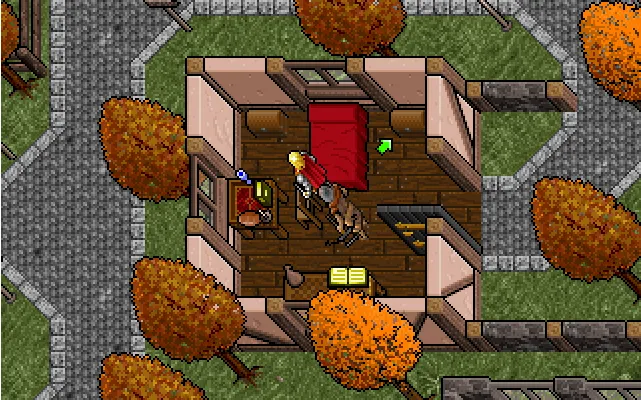
Ultima VII: The Black Gate
The plot of The Black Gate is quite complex compared to other games from that era, and, as in the other games in the Ultima series, it is full of references to religion and politics. At the very beginning of the game, the Avatar encounters the infamous Guardian and is subjected to his mockery, and then he is swept into Britannia, where about 200 years have passed since the last visit by players. He arrives just in time and to the place – to the site of a recently committed ritual murder. Later, he learns about a cult called the "Brotherhood," which some critics believe is a reference to the Church of Scientology.
Perhaps even more than the plot, players loved the game's characters, who were much better developed here than in many other CRPGs. Instead of just standing in one place waiting for the player to give them a quest or direction, they walk around and engage in daily activities, and at night, they even go to sleep. The dialogues with these characters were also more convincing, and players could talk about several topics. The game was also praised for its open gameplay. In The Black Gate, there are very few artificial limitations – a fact that might seem either exciting or intimidating to inexperienced players. It is quite easy to find yourself wandering around the world with no clear idea of what to do next. Of course, the lack of precise instructions won't scare those who were raised on Rogue and other sandbox games, but those accustomed to "do X, then Y, and then Z" in games can easily lose their orientation.
Just to give you an idea of how exciting the world of Black Gate can be, I'll provide an excerpt from Oleg Roshchin's detailed review on Mobygames. At one point, Roshchin's party encountered a unicorn, which, according to legends, only speaks to virgins. Fortunately, Roshchin's Avatar happened to be a virgin, so they had an interesting dialogue. However, before his next visit to the unicorn, the Avatar slept with a prostitute in the "Pirate's Nest," and the unicorn refused to talk to him. As usual, Garriott's message is easy to understand: yes, you can sin, but you will have to pay for it sooner or later. A little later, a similar level of interactivity will appear in the [Elder Scrolls](/games?search=Elder Scrolls) series from Bethesda.
In the same year, Origin released an expansion for the game titled The Forge of Virtue, and in 1993, Serpent Isle was released. Instead of calling it Ultima VIII, Garriott chose the title Ultima VII: Part Two. This peculiar principle seems to stem from Garriott's belief that two numbered parts of Ultima should never share the same engine.
Serpent Isle, while sharing the engine with Black Gate, was much more linear and story-oriented than its predecessor – a fact that divided critics' opinions roughly evenly between these games. The story begins 18 months after the events of the first part and follows the characters' journey to Serpent Isle to restore the balance disturbed by the Guardian. It is evident that due to pressure from the new owner of Origin, Electronic Arts, the game was made very quickly, and as a result, it was full of dead ends (those unfortunate enough to run into one had to reload previous saves). The struggle between Origin and Electronic Arts eerily resembles the earlier conflict between Garriott and Sierra On-Line. That conflict also led to the creation of one of the less successful games in the series, Ultima II. In 1993, Origin also released an expansion for the game titled Silver Seed.

Ultima VII: Part Two - Serpent Isle
For a moment, stepping away from the main topic, I will mention that in 1997, Ultima Collection was released for DOS and Windows – a collection that included the first 9 games in the series (including a PC port of Akalabeth) and both expansions. Unfortunately, not all games work properly on Windows, but a little effort and a program like DOSBox can make them functional.
In 1994, Origin released Ultima VIII: Pagan, a rather dubious game that failed to excite fans of the previous installments. Garriott returned to development and decided that players needed physical, rather than mental, exercises. Thus, like many console hits of the time, in Pagan, the Avatar can run, jump, and climb on moving platforms. Battles devolved (or evolved, depending on your perspective) into a series of quick mouse clicks, and winning them now required speed rather than strategic thinking. As expected, the game greatly disappointed some fans and excited others, but everyone agreed that it did not meet the standards of Ultima. Many innovations that made The Black Gate successful, such as realistic day and night cycles, were minimized or completely ignored. As if that were not enough to condemn Pagan to a public burning, the game was plagued by so many bugs that even the most seasoned fans of the previous installments were left perplexed. Once again, Garriott blamed EA for everything and the ridiculous amount of time allocated for the game's production. But the worst was yet to come.
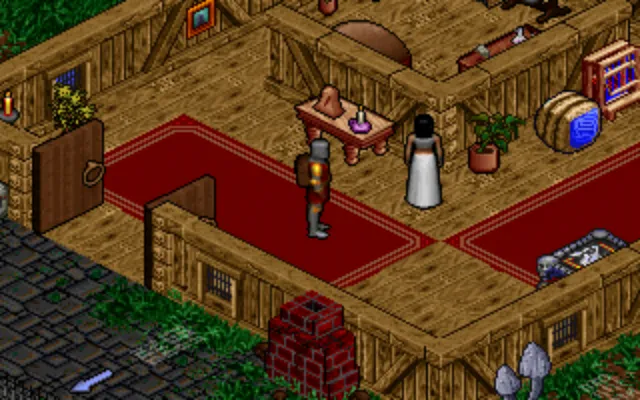
Ultima VIII: Pagan
The worst happened in 1999 when Ultima IX: Ascension was released, disappointing fans even more than Pagan. The problem this time lay in Garriott's politics, as he promised everyone a game that would be closer to the classic representatives of the Ultima series and even sought advice from fans. The fans were quite diligent with their suggestions. Unfortunately, everything from the start went wrong, and at least 4 versions of the game code were written during development.
[Ultima Online](/games?search=Ultima Online) was also in production at that time, which undoubtedly added chaos to the development of Ascension. The final product turned out to be buggy and even more action-oriented than Pagan, and the by then canonical isometric perspective was replaced with complete 3D in a third-person view.
Most critics blasted Ascension to shreds, but strangely enough, the game found its devoted fans. Both detractors and defenders were plentiful. One of the primary complaints was that the game is more of an action-adventure than a true CRPG – a result of the limited role-playing system and linear plot. Fans of The Black Gate were also outraged by the "imposition" of numerous plot events, such as a love story that some expressed was "stuffed down the throats of fans" by the developers.
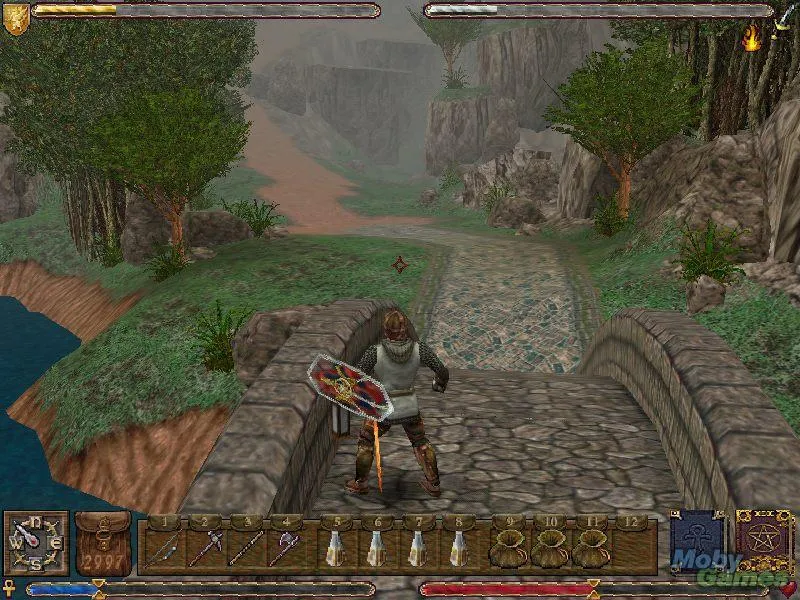
Ultima IX: Ascension
However, no one complained about the decent graphics, the return of the day and night cycle, and excellent music, along with high interactivity. But the combination of uninspired voice acting, dull dialogues, and boring characters, of course, did not help the game win the hearts of fans of previous installments, let alone other categories of players. Even the special edition titled Dragon Edition, which included a couple of trinkets – a nod to the older, more revered games in the series – did not please the fans. I suppose it goes without saying that Ascension became a very sad end to this grand series. It's like if Lucas had died right after the release of the film "Jar Jar and the Ewoks Save Christmas."
The Gothic Series
Though Ascension turned out to be an absolute failure, the Germans from Piranha Bytes managed to successfully follow it, pushing the boundaries of the genres even further. The Gothic series began in November 2001, and the first game introduced gamers to a fully three-dimensional world in third-person view and real-time gameplay. The gameplay focused on solving puzzles using various items and fairly complex arcade battles.
The game is most famous for its dark, realistic world and open gameplay, reminiscent of The [Elder Scrolls](/games?search=Elder Scrolls), but with a focus on interaction with characters. Despite the awkward controls and bugs, the game won the hearts of many devoted fans. In 2003, Piranha Bytes released [Gothic II](/games?search=Gothic II), and in 2006, the third part saw the light of day. Both games differed from their predecessors with enhanced graphics and controls.
When the gaming landscape looks like a postcard, but the Hero's shield gets stuck in his shoulder socket, someone should seriously reconsider the quality control system.
Tim Taket in the review of [Gothic II](/games?search=Gothic II)I, December 18, 2006.
In some ways, these games resemble the aforementioned German games from the [Realms of Arkania](/games?search=Realms of Arkania) series. They have something to attract players, but for some reason, they never received the recognition they deserved among gamers ("Just not in Russia, Matt, just not in Russia!" – translator's note). While one of those reasons was undoubtedly fierce competition, there are other explanations for the rather mediocre ratings of games in this series. For instance, poor voice acting and translation into English in the second part, while the third part was killed by thousands of bugs.
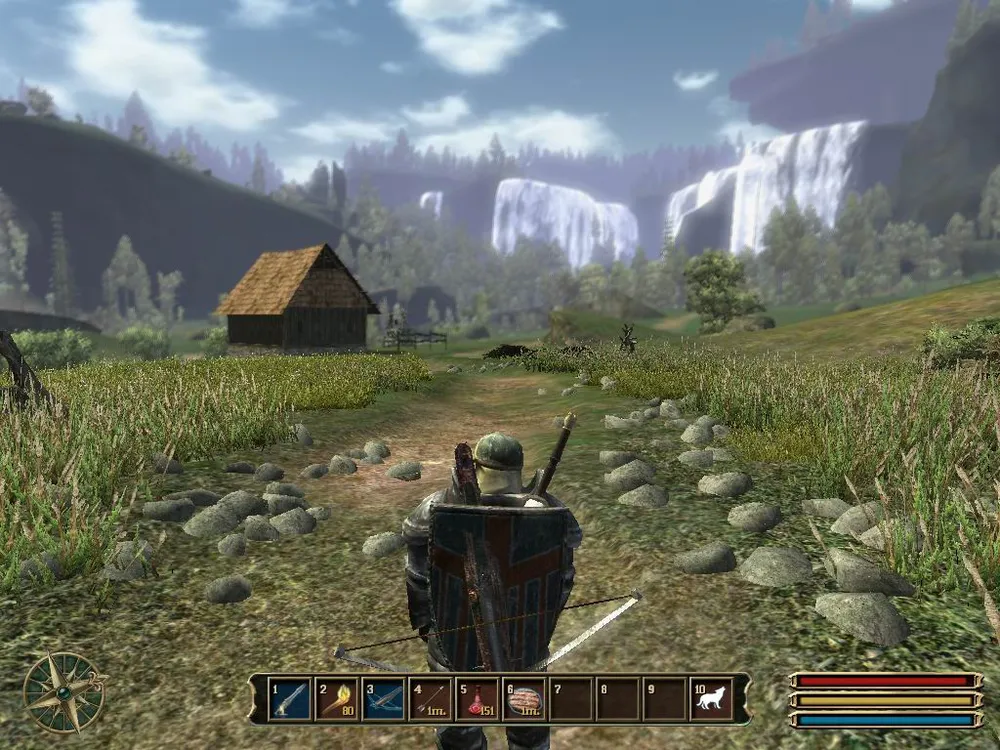
[Gothic 3](/games?search=Gothic 3)
Critics did not forgive the games for their awkward combat system, although they never reached a consensus on the quality of the games.
The Decline of SSI: Kingdoms Easily Forgotten.
If Ultima finally died in 1999, SSI began its relentless decline in 1993. Although this developer and publisher proudly passed through the Golden Age with licensed TSR games of the "golden" and "black boxes", games in the spirit of [Spelljammer: Pirates of Realmspace](/games?search=Spelljammer: Pirates of Realmspace) caused fans to turn away from the company. At any rate, SSI continued to struggle for a couple more years, although they switched back to strategy games before completely fading into oblivion.
After the peak of their "boxed" series, SSI developed and released other games under the TSR license, but none of them managed to repeat the success of prior releases. In 1993, the company released Dark Sun: Shattered Lands, a top-down CRPG based on the eponymous post-apocalyptic setting by TSR. Despite its intuitive controls and intriguing world, the game did not receive much attention from players due to mediocre graphics, jerky animation, and numerous bugs.
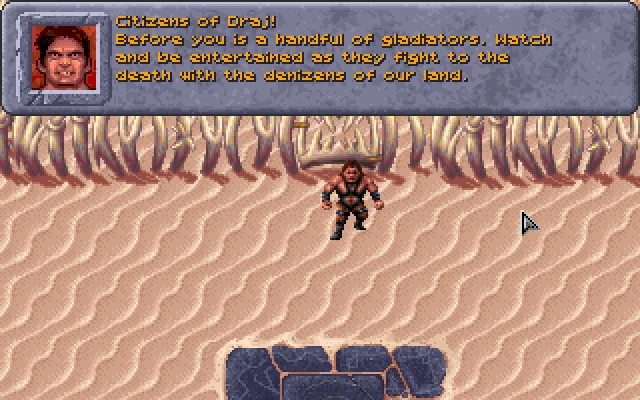
Dark Sun: Shattered Lands
Surprisingly, SSI even released a sequel to the game titled Wake of the Ravager in 1994, but although the graphics improved, the bugs returned in full force. One particularly malicious and noticeable bug was soon dubbed by players as the Bug (yes, not very original). Because of this, monsters would suddenly stop attacking the character, which turned the game into a leisurely stroll rather than the tense adventure it was intended to be. While such bugs can today be easily fixed with downloadable patches, in the early nineties, this practice, as you understand, was not widely adopted. If you were unfortunate enough to purchase an early version of the game, you had to live with the bugs.
SSI also released several games in the Ravenloft setting. The first of these, Ravenloft: Strahd's Possession, was developed by DreamForge and released in 1994. Like Ultima Underworld, Stradh's Possession was a three-dimensional game with a first-person view and real-time gameplay, although turn-based mode was also available. The sequel titled Stone Prophet came out in 1995, its main innovations being improved graphics and new abilities such as levitation.
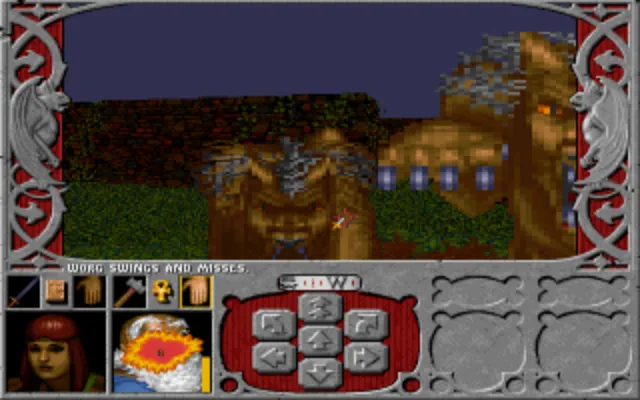
Ravenloft: Strahd's Possession
Both games exploit gothic themes and were released right at the peak of the popularity of various vampires, a trend that began with Neil Jordan's film "Interview with the Vampire" in 1994. Why the games themselves did not achieve particular popularity is hard to say. Perhaps it is related to critic reviews, which found nothing good in them – however, neither anything bad. At any rate, they were certainly better than Iron & Blood: Warriors of Ravenloft from Take-Two Interactive, a rotten fighting game released in 1996 for DOS and PlayStation.
SSI's last game under the TSR license was the infamous (in part due to its difficult-to-pronounce title) Menzoberranzan, released in 1994 for DOS. Another game with a third-person view and real-time gameplay, Menzoberranzan seemed to possess everything needed to become a hit. It even featured one of TSR's most famous characters, Drizzt Do'Urden, who owes his popularity to Robert Salvatore. Moreover, the developers (Dreamforge) took all the criticism into account and significantly improved the game engine. However, gamers quickly began to complain about the endless boring battles that broke the entire gaming pace. This was particularly noticeable in the beginning of the game: to reach the point where something interesting began to happen, players had to put in quite a bit of effort.
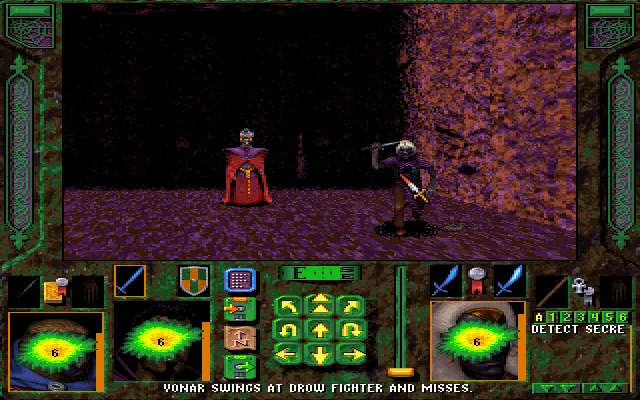
Menzoberranzan
The poor sales of these games, combined with the not-so-successful console titles Slayer (1994) and Deathkeep (1995), were undoubtedly the last straw that broke the back of the agreement between TSR and SSI. TSR decided to stop selling exclusive licenses and distributed rights to produce its games to several companies, including Interplay, which, together with Black Isle, released Baldur’s Gate from BioWare in 1998. I'll cover this series in one of the next installments.
SSI also released a few other CRPGs during this time, mostly developed by Event Horizon (later renamed Dreamforge). These include The Summoning (1992) and Veil of Darkness (1993), isometric games that were met rather indifferently by critics and players. In 1994, SSI released Alien Logic, another isometric game developed by Cerdius Software and based on the tabletop Skyrealms of Jorune. Critics praised the game for its engaging gameplay and unusual premise, but complained about the complex installation procedure and confusing interface, and the game ultimately faded into obscurity.
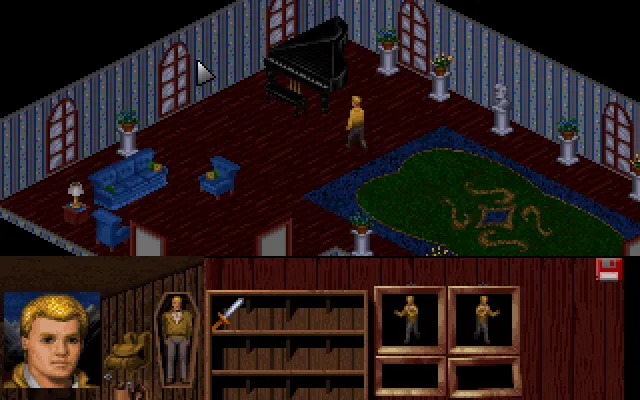
Veil of Darkness
In 1995, SSI developed World of Aden: Thunderscape and (in collaboration with Cyberlore) Entomorph: Plague of the Darkfall. Both games took place in a world similar to Sierra's Arkanum: swords and magic coexisted with steampunk. The first game is in first-person mode, while the second returns to the old good isometric perspective. Unfortunately for SSI, these well-made and fairly captivating games did not receive the attention they deserved from genre fans, neither then nor now.
The story of SSI's slow but steady decline can be told in one phrase: death by mediocrity. The company simply failed to create another masterpiece like Pool of Radiance or [Eye of the Beholder](/games?search=Eye of the Beholder). Games like Menzoberranzan and Shattered Lands simply lacked the polish of their competitors, and even improvements in graphics and interfaces could not hide the old engine. Poor programming and testing were the final nails in the coffin of what was once a great publisher.
AD&D: Stupid and Stupider of the Stupid.
Although TSR was right in considering that SSI was no longer the best candidate to represent their interests in the CRPG market, they did not immediately achieve success with their next partners. Many of the subsequent licensed games from the company were action games and strategies, but among them slipped a couple of CRPGs, such as [Birthright: The Gorgon's Alliance](/games?search=Birthright: The Gorgon's Alliance) (1996) from Sierra and Descent to Undermountain (1998) from Interplay.
Birthright, developed by Synergistic Software, is a mix of strategy, adventure game, and CRPG. It is based on the successful TSR game Birthright, and one of its advantages is the excellent plot that tells about an unknown evil named Gorgon, which kills kings and steals their divine blood to maintain its power. The game featured numerous political intrigues and multifaceted characters, and players could manage not just a party of characters, but an entire kingdom! Lastly, it had Sierra’s reputation as a publisher of numerous hits, including the Quest for Glory series.
Unfortunately, [Birthright: The Gorgon's Alliance](/games?search=Birthright: The Gorgon's Alliance) failed for rather mundane reasons. This rather promising game was filled with bugs to such an extent that even the most patient players could not forgive it, but an even greater problem was that the game attempted everything but failed to execute anything properly.
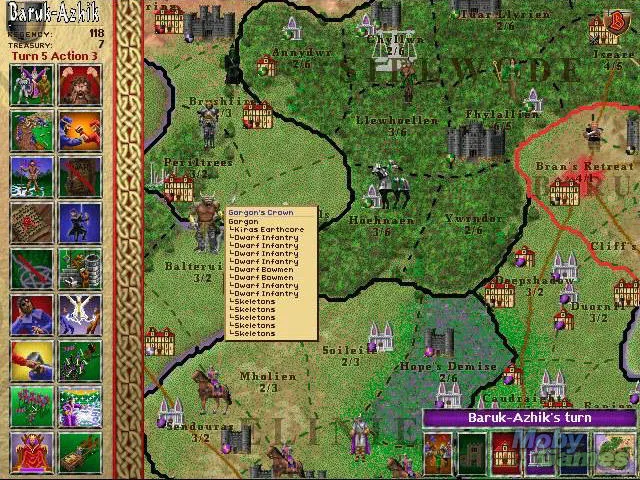
[Birthright: The Gorgon's Alliance](/games?search=Birthright: The Gorgon's Alliance)
Birthright was neither a strategy, nor a CRPG, nor an adventure – it tried to please fans of all gaming genres while failing to be good for any of them. But learning to play this mishmash was harder than conquering Everest – a fact that only the most devoted fans would endure. The so-called "adventure mode" also turned out to be out of place, and the developers couldn’t properly integrate it into the game. Although there are bright moments in the game, it is deservedly forgotten.
Interplay's Descent to Undermountain turned out even worse than Birthright. The game attempted to capitalize on the popularity of the Descent series by adapting its shooter engine to the needs of a CRPG. The plan seemed good, but due to the ridiculously short development time, one of the worst CRPGs of all time was released.
The task of redesigning a great FPS engine developed by Parallax Software for CRPG turned out to be much more serious than anticipated. Besides a multitude of bugs, the game suffered from a general lack of polish. The levels were tedious and too uniform, and many players disliked their confusing labyrinthine structure. The pale graphics and stupid AI finally led the game to an expected result – it immediately went into the trash can. Undoubtedly, TSR was beginning to regret its falling out with SSI!

Descent to Undermountain
Fortunately, everything changed rapidly with the release of Baldur’s Gate, a game that finally drew the public's attention back to TSR-licensed games. I will discuss Baldur’s Gate in one of the next installments.
The Dawn of the Platinum Age
The picture of the CRPG genre in the first half of the nineties that I have been describing so far was rather bleak, but in reality, it wasn’t so bad. Perhaps the key problem for developers was catching up with the times after the release of Doom and Myst. These games took the market by storm, and all publishers were desperately eager to release something similar.
By 1996, nearly all serious PC gamers (and many not so serious ones) had upgraded their computers and installed the latest hardware of the time – CD drives and expensive sound and video cards. Additionally, the previously unappealing mishmash of incompatible cards was transforming into standard industry practices, and for those willing to fully utilize this advanced hardware, vast opportunities opened up. The credo of publishers was simple: either 3D, first-person view and real-time, or shareware. Ultima Underworld from Origin fit all these criteria, but it was simply too ahead of its time. Hence, the market was wide open for young and bold developers ready to put Doom-style graphics and gameplay into CRPGs, and then came Bethesda.
Bethesda and The [Elder Scrolls](/games?search=Elder Scrolls)
Bethesda entered the fray with a truly big stick – their [Elder Scrolls](/games?search=Elder Scrolls) series still feels excellent today. However, the people who joined the party after the release of Oblivion may not know about the series' roots and the crucial role it played in the genre's development.
The first game in the TES series, Arena, was published by U.S. Gold on DOS in 1994. Like many of its sequels, Arena was a real-time game with a first-person view in 3D. Furthermore, it boasted a gigantic world with 400 cities, towns, and villages available for exploration – a true cornucopia of CRPG delights. Although today the game is not as well-known as Morrowind or Daggerfall, you won’t have to look too hard to find TES fans who will declare it not only the best game in the series but also the best CRPG of [insert relevant period]. I will not go that far in my praise, but I will not deny that the game holds a respectable place among the esteemed representatives of the genre.
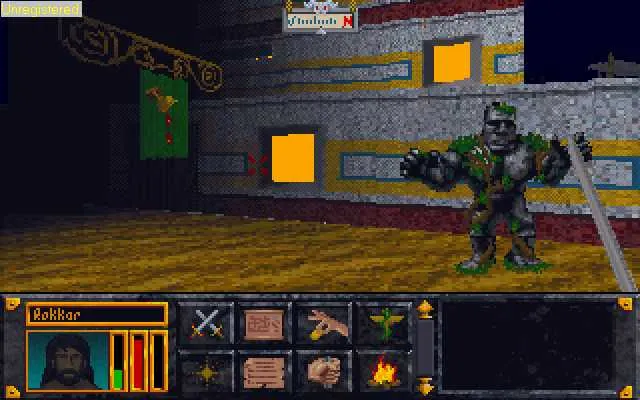
Arena
You could say that Arena is a combination of two games from the Ultima series: The Stygian Abyss and The Black Gate. It borrowed 3D, real-time and first-person view from the former, and the realistic game world from the latter. Players not only observed day and night transitions – sometimes it even rained or snowed depending on the season! It’s the nuances of the game world that make Arena such a remarkable title. The plot – find the eight pieces of the Staff of Chaos and use it to free the Emperor from his interdimensional prison – is hardly original. However, gamers were impressed by the incredible size of the world, open gameplay, and high replayability (with the start of each new game, plot-related items would appear in different locations – though this method of increasing replayability can hardly be called ideal).
Despite the fact that the game allowed gamers more freedom than most other games of its kind (especially regarding robbing merchants), players hoping to finish it still had to follow a fairly linear quest chain. Arena also had a decent combat system – the position of the cursor determined the type of attack the character would execute.
The game, however, is far from perfect. Yes, yes, once again, it’s all about the multitude of bugs. Also, battles were somewhat challenging for most gamers, and the harsh system requirements didn’t meet with warm reception among gamers with weaker machines. In any case, the game set a new standard for RPGs of this kind and clearly demonstrated that there was still much room for innovation. Bethesda was kind enough to make the game free, and it is now available for download on the company's website. It’s a pity that not all developers follow their example!
We are no longer forced to play the way some unknown uncle wants, we can ignore the princess's pleas, wander wherever we like, and get involved in stories whose outcomes depend on our actions!
Trent Ward, GameSpot, September 26, 1996.
Following the relatively successful Arena, Bethesda released Daggerfall in 1996 – a game that is still considered one of the largest CRPGs in the history of the genre. Players gained access to Tamriel, one of the largest game worlds ever created, as well as limitless gameplay possibilities. The leveling system became more dynamic: players increased their skills simply by practicing them, and the rigid class system was replaced with a more flexible guild system. Players could customize their characters according to their desires, following any creative impulses. There is even the option to create a character by answering a series of questions (just like in Ultima), in case someone does not want to mess with numbers. In fact, many players (if not most) soon forgot about the main story line and simply started exploring Tamriel and leveling up their characters.
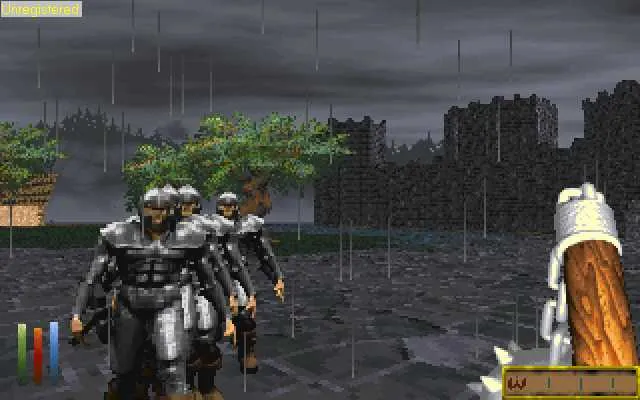
The [Elder Scrolls](/games?search=Elder Scrolls): Daggerfall
Unfortunately, the game again suffered from an incredible number of bugs, although by that time some gamers were already able to download patches from the internet. Another serious issue was the skewed balance. Experienced players could level up very quickly and then walk around the world, killing even the strongest enemies with one blow.
Before releasing the third numbered installment in the main series, Bethesda released two spin-offs: [Elder Scrolls Legend](/games?search=Elder Scrolls Legend): Battlespire (1997) and [The Elder Scrolls Adventures: Redguard](/games?search=The Elder Scrolls Adventures: Redguard) (1998). Battlespire is largely a simplified version of Daggerfall, resembling a shooter more than a CRPG.
Redguard deviated from the series' canons, switching from the first-person perspective to third-person view. If Battlespire leaned towards FPS, then Redguard is a traditional adventure game. To complete it, players not only had to chat with plenty of characters, but also run, jump, and swim a lot, just like in any [Tomb Raider](/games?search=Tomb Raider).
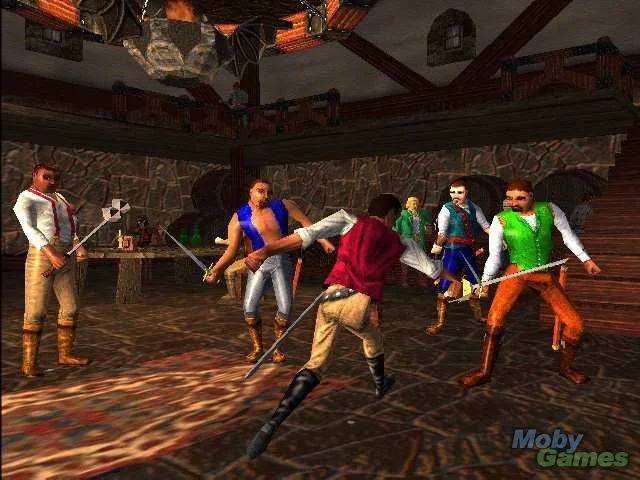
[The Elder Scrolls Adventures: Redguard](/games?search=The Elder Scrolls Adventures: Redguard)
Although both games were quite good, neither gained the acclaim that the main series enjoyed. However, the developers experimented with different types of gameplay and interfaces.
Perhaps the most famous game in the The [Elder Scrolls](/games?search=Elder Scrolls) series was released in 2002, and that game was [The Elder Scrolls III: Morrowind](/games?search=The Elder Scrolls III: Morrowind). Morrowind combined first-person view familiar from previous games with a third-person perspective, as seen in Redguard, and players could switch between them at any moment. It did not take long before they discovered that each mode had its advantages. For example, it was easier to evade long-range attacks in third-person view.
The role-playing system was also slightly reworked, with character attributes divided into two main categories: statistics (strength, speed, luck, etc.) and skills (combat, magic, etc.). Attributes could only be increased by leveling up, while skills were improved through usage. It may sound a bit complicated, but in reality, it was quite straightforward. Characters who run and jump a lot quickly level up athletics and acrobatics, characters who enjoy swinging axes will soon swing them more strongly and accurately, and so on. In addition to utilizing any skill for its improvement, characters could turn to instructors willing to pay to raise certain skills and look for scattered training books throughout the world.
It doesn't matter what you prefer to do – in Morrowind you cannot play incorrectly.
From the manual of [The Elder Scrolls III: Morrowind](/games?search=The Elder Scrolls III: Morrowind).
Indeed, there are not many CRPGs as flexible and complex as Morrowind. Even after finishing the main quest, I hardly explored more than 60% of its incredible world.
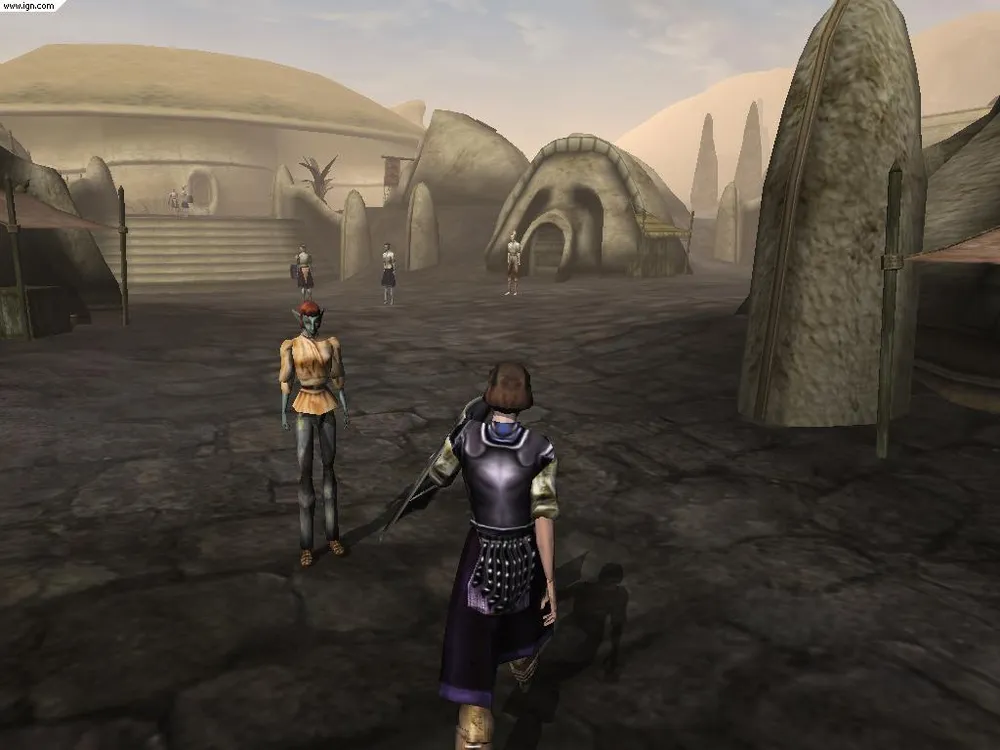
The Elder Scrolls III: Morrowind
Unfortunately, Morrowind also has its shortcomings. Like in Daggerfall, players could reach levels that even the strongest enemies became nothing more than insects in the path of a tank. Also, the game offered numerous ways to cheat the role-playing system – for instance, simply standing still and repeatedly casting a spell could enhance skills in this manner. Be that as it may, even today players actively and joyfully engage with Morrowind. For the third game, Bethesda released two expansions: Tribunal (2002) and Bloodmoon (2003). Both received decent ratings from the press, although the second one was arguably better.
While Bethesda may not have brought anything particularly new to the genre, they provided a decent alternative to the linear CRPGs that dominated the market at the time. Although their games also featured narrative and main quests, players were free to ignore them, and many did just that. More importantly, these games offered gamers room for creativity in character creation and development – another advantage. You play your character, rather than someone else's.