
கணினி ஆணைப்புக்கு உரிய விளையாட்டுகளின் கதை, பகுதி 8
\[post\]கணினி கதாப்பாத்திரங்களுக்கு இது ஒரு வரலாறு, பகுதி 1\[/post\]
[post]கணினி கதாப்பாத்திரಗಳಿಗೆ இது ஒரு வரலாறு, பகுதி 2[/post]
[post]கணினி கதாப்பாத்திரங்களுக்கு இது ஒரு வரலாறு, பகுதி 3[/post]
[post]கணினி கதாப்பாத்திரங்களுக்கு இது ஒரு வரலாறு, பகுதி 4[/post]
[post]கணினி கதாப்பாத்திரங்களுக்கு இது ஒரு வரலாறு, பகுதி 5[/post]
[post]கணினி கதாத்திரங்களுக்கு இது ஒரு வரலாறு, பகுதி 6[/post]
[post]கணினி கதாப்பாத்திரங்களுக்கு இது ஒரு வரலாறு, பகுதி 7[/post]
கருணைகளே இருளின் வாசல்கள்
Origin, Ultima Underworld ஐ அடிப்படையாகக் கொண்டு முக்கிய தொடரின் விளையாட்டுகளை உருவாக்குவதற்காக இயக்கத்தைப் பயன்படுத்தும் என்று எதிர்பார்க்கலாம், ஆனால் இப்படியாகவும் இல்லை. Ultima VII: The Black Gate மற்றும் The Stygian Abyss ஆகிய இரண்டும் ஒரே ஆண்டில் வெளியானது, இது முன்னாள் விளையாட்டுகளுக்கு முற்றிலும் மேலான காட்சி முறையை கொண்டு வந்தது, ஆனால் இது இன்னும் பழமையான மேலே பிங் காட்சிக்கு அசைந்தது. விளையாட்டில் மிகவும் மாறுபட்டது என்றால், இது நேர்மாறடியாகக் கொண்ட விளையாட்டுக்கான மாறுபாடு மற்றும் இதனால் யுத்தங்கள் முற்றிலும் மாறுபாடானதாக விளையாடப்பட்டது. மேலும், இது இரண்டு மூடிகளில் மாய்க்கப்பட்ட முதன்மை விளையாட்டாக இருந்தது - கையேட்டில் «லார்ட் பிரிட்டிஷ் விசேஷமாக மாய்க்கட்டான ஒரு மயிலைப் பயன்படுத்தி விளையாடுங்கள்» என்றதாகக் கூறப்பட்டுள்ளது. இன்று நாம் இதை குறிப்பிட்ட பரிணாமமாகக் கருதுகிறோம், ஆனால் அதற்குரிய பெரும்பாலான PC பயனர்கள் காட்டு முறைகளை முடியாது என்றும் நிச்சயமாகவே உவப்புகளாகக் கருதவில்லை.
Although Black Gate didn't take the leap into 3D, it is still considered the best game in the Ultima series, only comparable in popularity to Ultima III. The main strengths of the game included an engaging plot, well-written characters, and a meticulously crafted world. The level of interactivity in the game was simply incredible. How many other CRPGs do you know where players could milk cows and change babies' diapers just like that, simply because they could?
In general, The Black Gate delivered unforgettable experiences for those who spent 60 hours of their lives completing it (and it precisely took that long), and it seemingly will always have devoted fans. Unfortunately, the game is completely incompatible with modern Windows, but to everyone's delight, this problem is solvable – you can play Ultima VII using Exult – a program that enables you to run it on modern OSes.
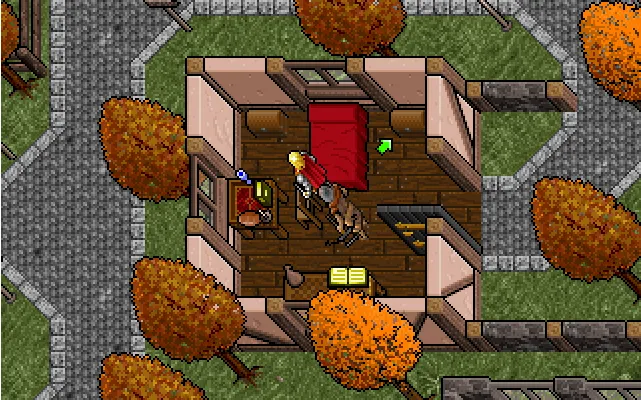
Ultima VII: The Black Gate
The plot of The Black Gate is quite complex compared to other games of that era, and like in other Ultima series games, it is full of references to religion and politics. At the beginning of the game, the Avatar meets the infamous Guardian and is subjected to his mockery, and then he is swept into Britannia, where roughly 200 years have passed since the players last visited. It is just in time and to the right place – to the site of a recently committed ritual murder. Subsequently, he learns about a cult called "The Brotherhood," which, some critics argue, is a reference to the Church of Scientology.
Perhaps even more than the plot, players loved the characters in the game, which were much better developed than in many other CRPGs. Instead of just standing still waiting to give the player a quest or directions, they walk around, engage in everyday activities, and even go to sleep at night. Dialogues with these characters also felt more convincing, and multiple topics of conversation were possible. The game was also praised for its open-ended gameplay. In The Black Gate, there are very few artificial constraints – a fact that could be both thrilling and intimidating for inexperienced players. It is relatively easy to find yourself wandering the world without the slightest clue of what to do next. Of course, a lack of exact instructions won't scare those who have been raised on Rogue and other sandbox games, but those who are used to "do X, then Y, then Z" in games can quickly lose their bearings.
Just to give you an idea of how captivating the world of Black Gate can be, I’ll cite an excerpt from Oleg Roschin’s detailed review on Mobygames. At one point, Roschin's party encounters a unicorn, which, as the legends say, only speaks to virgins. Roschin's Avatar, fortunately, happened to be a virgin, so they had an interesting dialogue. However, before the next visit to the unicorn, the Avatar slept with a prostitute in "The Pirate's Den," and it refused to speak with him. As usual, Garriott's message is easy to understand: yes, you can sin, but you will have to pay for it sooner or later. A little later, a similar level of interactivity would appear in Bethesda's [Elder Scrolls](/games?search=Elder Scrolls) series.
Origin released an expansion for the game that same year called The Forge of Virtue, and in 1993 Serpent Isle was released. Instead of calling it Ultima VIII, Garriott chose the title Ultima VII: Part Two. This unusual principle seems to have arisen from Garriott's belief that two numbered parts of Ultima should never have the same engine.
Serpent Isle, while sharing the engine with Black Gate, was much more linear and story-oriented than its predecessor – a fact that split critics' sympathies roughly evenly between these games. The story starts 18 months after the events of the first part, and throughout the story, the characters must undertake a journey to the Isle of Serpents in order to restore the balance disturbed by the Guardian. Apparently, due to pressure from Origin's new owner, Electronic Arts, the game was made very quickly, resulting in a lot of dead ends (those unfortunate enough to hit one of those had to restore their previous saves). The struggle between Origin and Electronic Arts subtly resembles an earlier conflict between Garriott and Sierra On-Line. That conflict also led to the creation of a not-so successful game in the series, Ultima II. In the same year, 1993, Origin released an expansion for the game called Silver Seed.

Ultima VII: Part Two - Serpent Isle
For a second, deviating from the main topic, let me say that in 1997, Ultima Collection was released for DOS and Windows – a compilation that included the first 9 games in the series (including a PC port of Akalabeth) and both expansions. Unfortunately, not all the games work well on Windows, but a bit of effort and software like DOSBox can make them work.
In 1994, Origin released Ultima VIII: Pagan, a rather questionable game that didn’t particularly please fans of the previous parts. Garriott returned to development once again and decided that players needed physical, not mental exercises. Thus, as with many console hits of that time, in Pagan, the Avatar can run, jump, and climb moving platforms. The battles descended (or ascended, depending on your perspective) into a series of quick mouse clicks, and speed, not strategic thinking, was now required to win them. As expected, some fans were disappointed with the game while others were thrilled by it, but everyone agreed that it didn't live up to Ultima standards. Many innovations that made The Black Gate successful, such as a realistic day and night cycle, were reduced to a minimum or completely ignored. As if that wasn’t enough for a public burning sentence for Pagan, the game had so many bugs that even the hardiest fans of the previous parts were bewildered. Once again, Garriott blamed everything on EA and the ridiculous amount of time allocated for the game’s production. But the worst was yet to come.
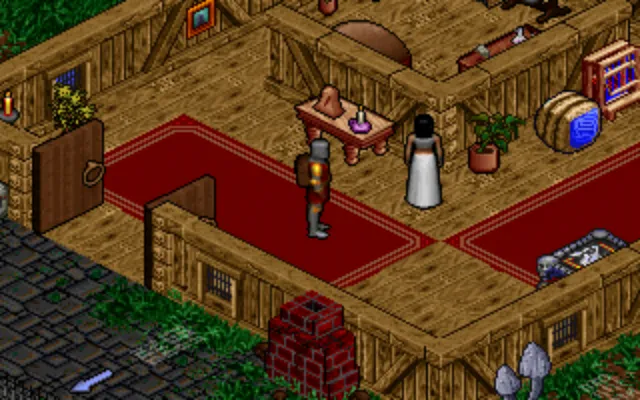
Ultima VIII: Pagan
The worst happened in 1999 when Ultima IX: Ascention was released, disappointing fans even more than Pagan. This time the problem was Garriott's policy promising everyone a game that would be closer to the classic titles in the Ultima series and even asking fans for advice. Fans suggested quite vigorously. Unfortunately, everything started to go wrong from the beginning, and during development at least four versions of the game code were written.
[Ultima Online](/games?search=Ultima Online) was also in production at the time, which undoubtedly added chaos to the development of Ascension. The final product ended up as a buggy action-oriented game even more so than Pagan, and the by then canonical isometric perspective was replaced with complete 3D in a third-person view.
Most critics ripped Ascension apart, but oddly enough, the game had its loyal fans too. There were plenty of opponents and defenders on both sides. One of the primary complaints – that the game is more of an action-adventure than a true CRPG – results from the limited role-playing system and linear narrative. Fans of The Black Gate were also outraged by the "mandating" of many plot events, such as a love story that, as some put it, the developers "shoved down fans' throats."
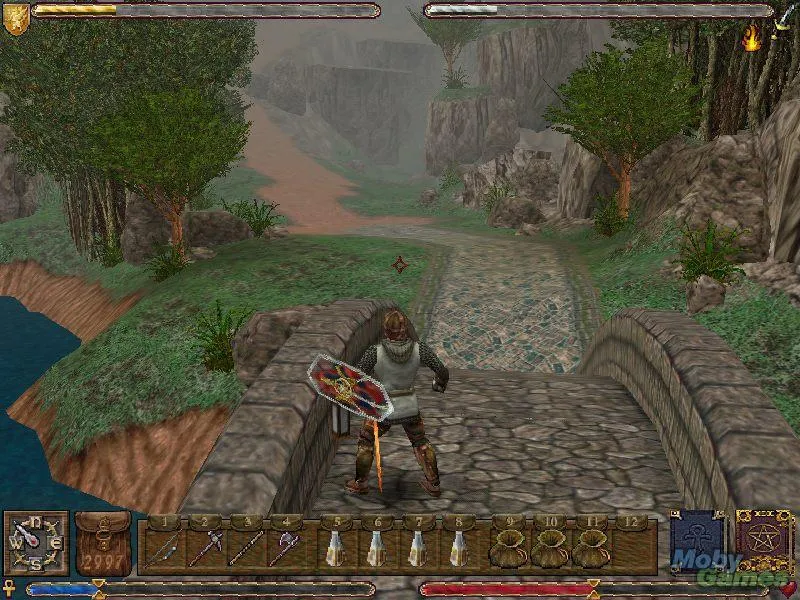
Ultima IX: Ascention
However, nobody complained about decent graphics, the return of the day and night cycle, and great music, as well as high interactivity. But the combination of lifeless voice acting, dull dialogues, and boring characters, of course, did not help the game win over fans of the previous installments, let alone other categories of players. Even a special edition under the title Dragon Edition, which contained a couple of knick-knacks – a nod to the older and more cherished games in the series – did not please the fans. I guess it goes without saying that Ascension was a very sad end to this great series. It’s like if Lucas had died right after the release of "Jedi Rocks: Special Edition".
The Gothic Series
Although Ascension was wholly disappointing, the Germans at Piranha Bytes managed to successfully follow it, further pushing the genre’s boundaries. The Gothic series began in November 2001, and the very first game introduced gamers to a fully three-dimensional world viewed from a third-person perspective with real-time gameplay. The gameplay was focused on solving puzzles using various objects and rather challenging arcade fights.
The game is best known for its dark, realistic world and open gameplay, reminiscent of The [Elder Scrolls](/games?search=Elder Scrolls) but emphasizing interaction with characters. Despite awkward controls and bugs, the game won the hearts of numerous dedicated fans. In 2003, Piranha Bytes released [Gothic II](/games?search=Gothic II), and in 2006 the third part saw the light. Both games differed from their predecessors through improved graphics and controls.
When the gaming landscape looks like a postcard picture, but the Hero's shield gets stuck in his shoulder bone, someone should seriously reconsider their quality control system.
Tim Takett in a review of [Gothic II](/games?search=Gothic II), December 18, 2006.
In some respects, these games are similar to the previously mentioned German series [Realms of Arkania](/games?search=Realms of Arkania). They have much to attract players, but for some reason they never received the recognition they deserve among gamers (not in Russia, Matt, not in Russia! – translator's note for goth-punchers). While one of these reasons certainly was intense competition, other explanations also abound for the middling scores of games in this series. For instance, in the second part, poor voice acting and English translation, and the third part was ruined by thousands of bugs.
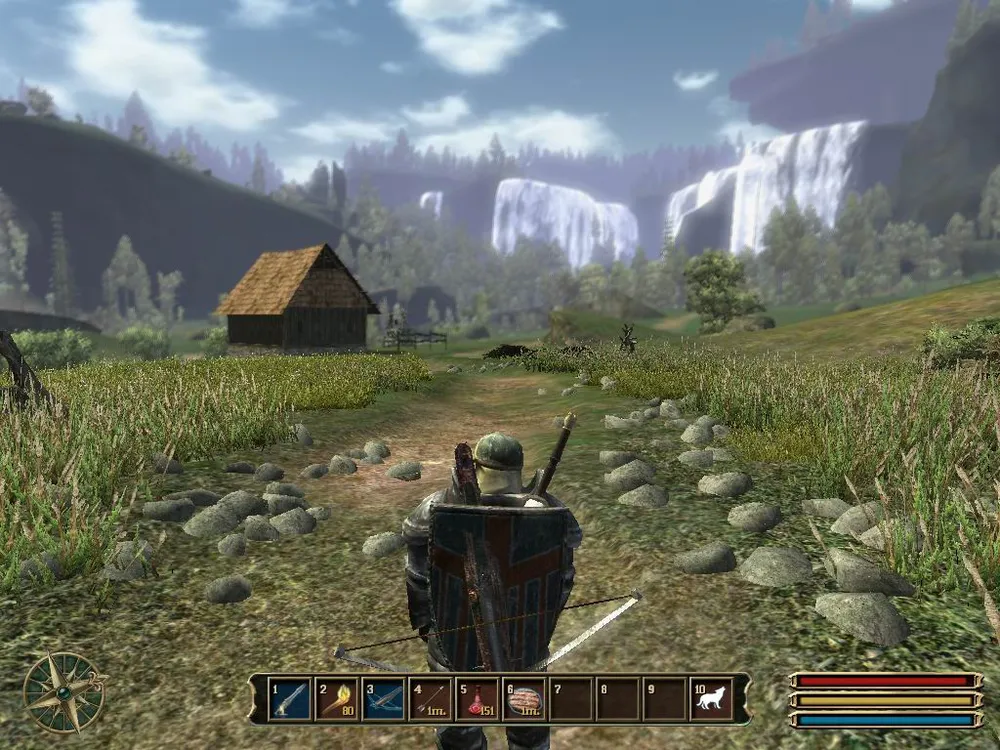
[Gothic 3](/games?search=Gothic 3)
Critics neither forgave the games for the awkward combat system, nor did they reach a consensus over their quality.
The Fall of SSI: Kingdoms Easily Forgotten.
If Ultima finally collapsed in 1999, SSI had been rolling downhill since 1993. While this developer and publisher proudly weathered the Golden Age with its licensed TSR games of the gold and black boxes, games in the spirit of [Spelljammer: Pirates of Realmspace](/games?search=Spelljammer: Pirates of Realmspace) caused fans to turn away from the company. Nevertheless, SSI struggled for a couple more years before they switched back to strategies before ultimately fading into oblivion.
After the peak of its box series, SSI developed and published additional games under TSR licenses, but none of them managed to replicate the success of its earlier titles. In 1993, the company released Dark Sun: Shattered Lands, a top-down CRPG based on the titular post-apocalyptic setting from TSR. Despite intuitive controls and an intriguing world, the game did not gain much attention from players due to mediocre graphics, choppy animations, and a slew of bugs.
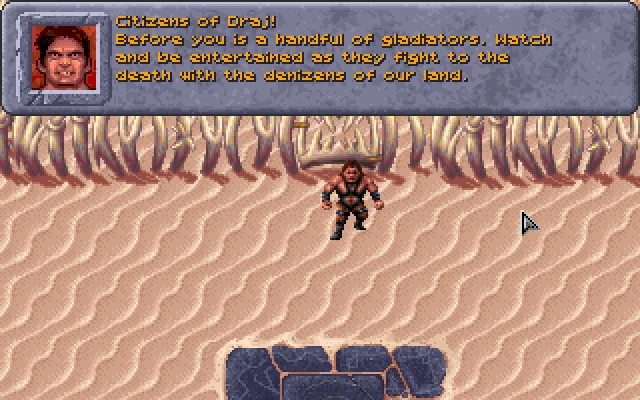
Dark Sun: Shattered Lands
Oddly enough, SSI even released a sequel to the game called Wake of the Ravager in 1994, but while the graphics improved, the bugs returned with a vengeance. One particularly nasty and noticeable bug was soon dubbed the Bug by players (yes, not too original). It made monsters suddenly stop attacking the character, turning the game from a tense adventure into a leisurely stroll. While such bugs can easily be fixed today with downloadable patches, in the early nineties, this practice, as you can imagine, was not widely spread. And if you were unfortunate enough to buy an early version of the game, you had to put up with the bugs.
SSI also released several games in the Ravenloft setting. The first of these, Ravenloft: Strahd's Possession, was developed by DreamForge and released in 1994. Like Ultima Underworld, Strahd's Possession was a three-dimensional game with a first-person perspective and real-time gameplay, although a turn-based mode was also available. The sequel titled Stone Prophet was released in 1995, its main innovations included improved graphics and new capabilities like levitation.
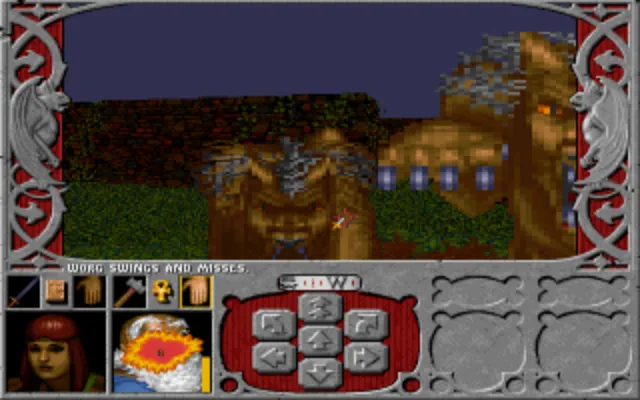
Ravenloft: Strahd's Possession
Both games exploited gothic themes and were released at the height of the popularity of various vampires, thanks to the release of Neil Jordan’s Interview with the Vampire in 1994. Why the games themselves did not achieve significant popularity is hard to say. Perhaps it has to do with critic reviews, which found nothing good in them – nor anything bad. In any case, they were certainly better than Iron & Blood: Warriors of Ravenloft from Take-Two Interactive, a rotten fighting game released in 1996 for DOS and PlayStation.
SSI's last game under the TSR license was the infamous (partially due to its hard-to-pronounce title) Menzoberranzan, released in 1994 for DOS. Another third-person and real-time game, Menzoberranzan had seemingly everything needed to become a hit. It even featured one of TSR's most famous characters, Drizzt Do'Urden, whose popularity was due to Robert Salvatore. Furthermore, the developers (Dreamforge) took all the criticism into account and significantly improved the game engine. However, gamers very quickly began to complain about the endless dull battles that spoiled the entire gaming pace. This was especially noticeable at the beginning of the game: to reach the point where something interesting began, players had to really work hard.
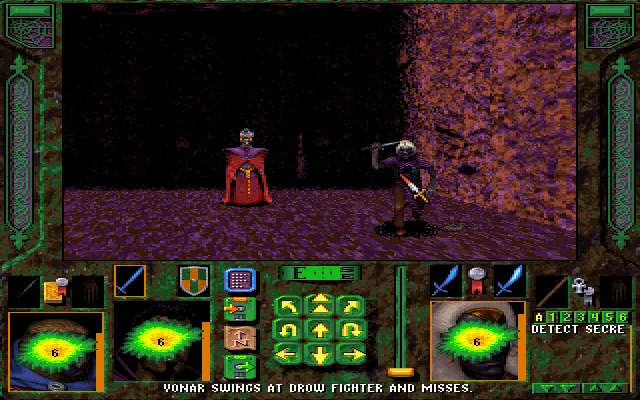
Menzoberranzan
Poor sales of these games and not-so-successful console games Slayer (1994) and Deathkeep (1995) undoubtedly became the last straw that broke the back of the agreement between TSR and SSI. TSR decided to never sell the exclusive license to anyone again and distributed production rights for their games to several companies, including Interplay, which, in conjunction with Black Isle, released BioWare's Baldur's Gate in 1998. I will discuss this series in one of the upcoming editions.
SSI also released several other CRPGs in that era, mainly developed by Event Horizon (later renamed Dreamforge). These include The Summoning (1992) and Veil of Darkness (1993), isometric games that were again rather indifferently received by critics and players. In 1994, SSI released Alien Logic, another isometric game developed by Cerdius Software and based on the tabletop Skyrealms of Jorune. Critics praised the game for its engaging gameplay and unique premise, but complained about the complicated installation process and convoluted interface, leading the game to ultimately fade into obscurity.
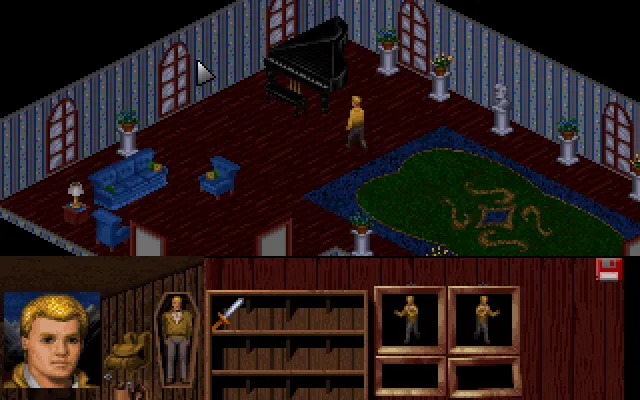
Veil of Darkness
In 1995, SSI developed World of Aden: Thunderscape and (together with Cyberlore) Entomorph: Plague of the Darkfall. Both games are set in a world reminiscent of Sierra's Arkanum: swords and magic coexist with steampunk. The first game takes place in first-person mode, but the second goes back to the good old isometric view. Unfortunately for SSI, these nicely made and quite engaging games did not receive due attention from genre fans then or now.
The story of SSI's gradual but steady decline can be told in a single phrase: death by mediocrity. The company simply could not create another masterpiece like Pool of Radiance or [Eye of the Beholder](/games?search=Eye of the Beholder). Games like Menzoberranzan and Shattered Lands just lacked the polish of its competitors, and even improvements in graphics and interface could not hide the old engine. And unskillful programming and testing turned out to be the final nails in the coffin of a once-great publisher.
AD&D: Dumber and Dumberer.
Although TSR was right in assuming SSI was no longer the best candidate to represent its interests in the CRPG market, with its next partners, they also did not succeed immediately. Many subsequent licensed games were action and strategy titles, but there were also a couple of CRPGs, such as [Birthright: The Gorgon's Alliance](/games?search=Birthright: The Gorgon's Alliance) (1996) from Sierra and Descent to Undermountain (1998) from Interplay.
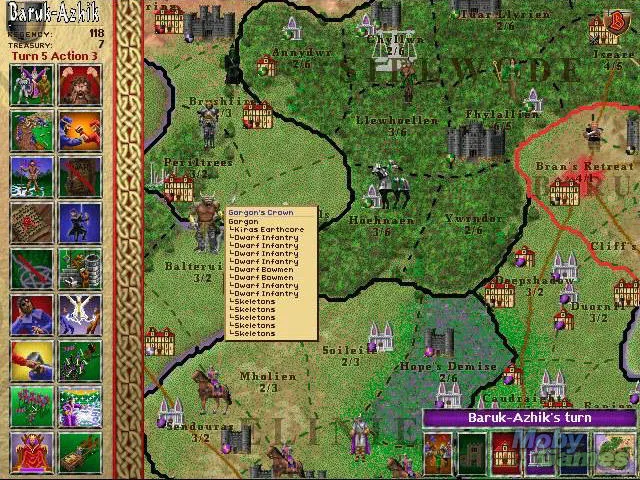
Birthright, developed by Synergistic Software, is a blend of strategy, adventure game, and CRPG. It is based on a successful TSR game, and one of its merits is an excellent plot revolving around an unknown evil called Gorgon, which kills kings and steals their divine blood to sustain its power. The game featured numerous political intrigues and multi-dimensional characters, and players could control not just a party of characters but an entire kingdom! Finally, it had the reputation of Sierra as the publisher of numerous hits, including the Quest for Glory series.
Unfortunately, [Birthright: The Gorgon's Alliance](/games?search=Birthright: The Gorgon's Alliance) failed for rather banal reasons. A promising game was riddled with so many bugs that even the most patient players couldn't forgive it, but an even bigger problem was that the game attempted to do everything but failed at anything.
[Birthright: The Gorgon's Alliance](/games?search=Birthright: The Gorgon's Alliance)
Birthright was neither a strategy, CRPG, nor an adventure – it struggled to please fans of all game types. But learning to play through this mishmash was tougher than scaling Everest – a fact that only deterred the most dedicated followers. The so-called “adventure mode” also turned out to be inappropriate, and the developers couldn't properly integrate it into the game. Although there are bright moments in the game, it deserves to be forgotten.
Interplay's Descent to Undermountain was even worse than Birthright. The game attempted to ride on the popularity of the Descent series by repurposing its shooter engine for CRPG needs. The plan seemed reasonable, but due to the ridiculous timeframe allotted for development, one of the worst CRPGs of all time was born.
The task of reworking an excellent FPS engine, developed by Parallax Software, into a CRPG proved far more serious than anticipated. Besides the numerous bugs, the game suffered from a general lack of polish. The levels were dreary and too uniform, and many players found their labyrinthine structure confusing. And the dull graphics and stupid AI ultimately led the game to its expected result – it quickly went to the garbage bin. TSR undoubtedly began to regret its falling out with SSI!

Descent to Undermountain
Fortunately, everything radically changed soon with the release of Baldur’s Gate, a game that finally made the audience pay attention to TSR-licensed games again. I will discuss Baldur’s Gate in one of the upcoming editions.
Dawn of the Platinum Age
Until now, the picture I’ve painted of the CRPG genre in the early nineties was rather bleak, but in reality, it wasn't all that bad. Perhaps the key problem for developers was bringing the genre up to speed with the times after the release of Doom and Myst. These games took the market by storm, and all publishers desperately wanted to release something similar to them.
By 1996, almost all serious PC gamers (and many not-so-serious ones) had upgraded their computers and installed the latest hardware – CD drives and expensive sound and graphics cards. Furthermore, what had previously been an off-putting mishmash of incompatible cards was turning into established industrial standards, and for those willing to utilize this advanced hardware to the fullest, great opportunities lay ahead. The publishers' creed was simple: either 3D, first-person view, and real-time gameplay, or shareware. Ultima Underworld from Origin ticked all the boxes, but was far ahead of its time. Consequently, the market was open for young and daring developers ready to put graphics and gameplay in the style of Doom on the CRPG track, and that's when Bethesda stepped onto the scene.
Bethesda and The [Elder Scrolls](/games?search=Elder Scrolls)
Bethesda entered the fray with a truly large club – their [Elder Scrolls](/games?search=Elder Scrolls) series is still going strong today. However, people who joined the party after the release of Oblivion might not know about the series' origins and the important role it played in the genre’s development.
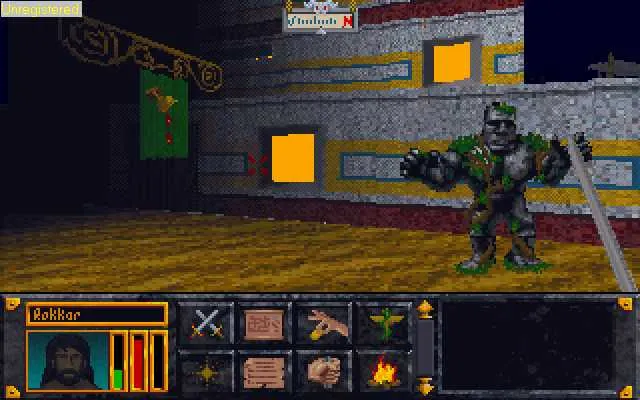
The first game in the TES series, Arena, was published by U.S. Gold on DOS in 1994. Like many of its sequels, Arena was a real-time game, with a first-person view in 3D. It also featured a giant world with about 400 cities, towns, and villages available for exploration – a true cornucopia of CRPG delight. Although today the game is not as well-known as Morrowind or Daggerfall, you won't have to look far to find TES fans who proclaim it as not only the best in the series but the best CRPG [insert desirable period]. I won't go as far in my praise, but I won't deny that it holds a worthy place among the venerable representatives of the genre.
Arena
You could say that Arena is a combination of two Ultima games: The Stygian Abyss and The Black Gate. It took 3D, real-time gameplay, and first-person view from the first one, and a realistic gaming world from the second one. Players could not only witness the passing of day and night – it even sometimes rained or snowed depending on the season! It's the subtleties of the game world that make Arena such a remarkable game. The story – finding eight pieces of the Staff of Chaos and using it to free the Emperor from an interdimensional prison – is hardly original. However, gamers were impressed by the game's immense world, open-ended gameplay, and high replayability (with each new game starting in different locations for story events – although this method of boosting replayability is difficult to call ideal).
While the game gave gamers more freedom than most other games of its kind (especially when it came to robbing merchants), players who hoped to complete it still had to follow a fairly linear quest chain. Arena also had a decent combat system – the cursor's position determined the type of attack the character would perform.
The game, nevertheless, is far from perfect. Yes-yes, it reels once again with a plethora of bugs. Plus, battles turned out to be somewhat challenging for most gamers, and its tough system requirements weren't warmly welcomed by gamers with weaker machines. In any case, the game set a new standard for RPGs of its kind and clearly demonstrated that there's still plenty of room for innovation. Bethesda was kind enough to release the game for free, and it’s now available for download on the company’s site. It's a pity that not all developers follow their lead!
We're no longer forced to play the way some unknown uncle wants us to, we can ignore the princess's pleas, roam wherever we want, and get involved in stories whose progression depends on our actions!
Trent Ward, GameSpot, September 26, 1996.
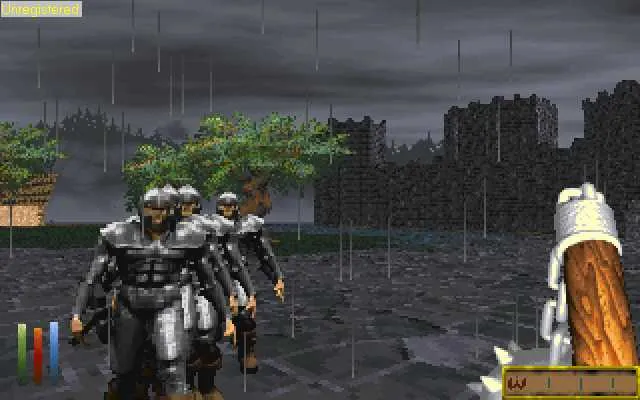
After the relatively successful Arena, Bethesda released Daggerfall in 1996 – a game that is still considered one of the largest CRPGs in the history of the genre. Players were given access to Tamriel, one of the largest game worlds ever, as well as limitless gameplay options. The leveling system became more dynamic: players increased their skills just by practicing them, and the rigid class system was replaced with a more flexible guild-based system. Players could customize characters to their liking, following any creative urges. There’s even an option to create a character by answering a series of questions (just like in Ultima), for those who don’t want to mess with numbers. In fact, many players (if not most) soon forgot about the main narrative line and began simply exploring Tamriel and leveling up their characters.
The [Elder Scrolls](/games?search=Elder Scrolls): Daggerfall
Unfortunately, the game was again plagued with an incredible number of bugs, although by that time some gamers could already download patches from the internet. Another significant issue became the skewed balance. Experienced players could level up too quickly and then walk around the world killing even the strongest enemies with one hit.
Before releasing the third main installment in the series, Bethesda published two spin-offs: [Elder Scrolls Legend](/games?search=Elder Scrolls Legend): Battlespire (1997) and [The Elder Scrolls Adventures: Redguard](/games?search=The Elder Scrolls Adventures: Redguard) (1998). Battlespire is largely a simplified version of Daggerfall and resembles a shooter more than a CRPG.
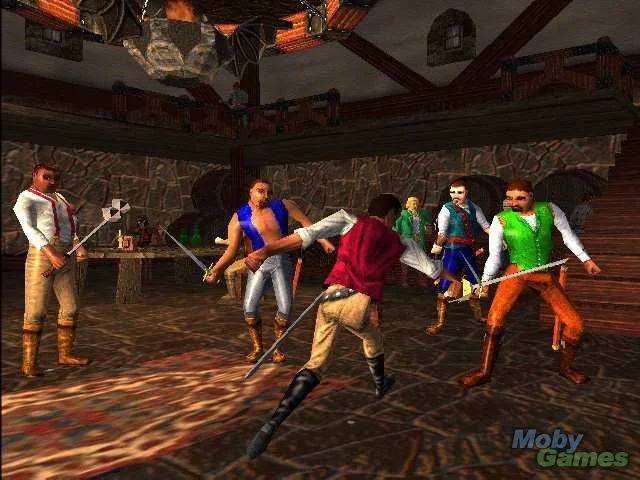
Redguard departs from the series canon, changing the familiar “first-person” perspective to a third-person view. While Battlespire leans towards FPS, Redguard is a traditional adventure game. To complete it, you have to chat with a bunch of characters and do plenty of running, jumping, and swimming, just like in some [Tomb Raider](/games?search=Tomb Raider).
[The Elder Scrolls Adventures: Redguard](/games?search=The Elder Scrolls Adventures: Redguard)
Although both games were quite decent, neither achieved the acclaim that the main series enjoyed. Instead, the developers experimented with different types of gameplay and interfaces.
Perhaps the most famous game in the The [Elder Scrolls](/games?search=Elder Scrolls) series was released in 2002, and that game was [The Elder Scrolls III: Morrowind](/games?search=Elder Scrolls III: Morrowind). Morrowind combined the first-person view familiar from previous games with the third-person perspective, as in Redguard, and players could switch between them at any moment. Soon they discovered that each mode had its advantages. For example, the third-person view made it easier to dodge distant attacks.
The role-playing system was also slightly redesigned, separating character traits into two larger groups: attributes (strength, speed, luck, etc.) and skills (combat, magic, etc.). Attributes could only be increased when leveling up, while skills were leveled up through use. It may sound complicated, but in reality, it was as simple as pie. Characters that run and jump a lot quickly level up athletics and acrobatics, characters that love to swing an axe will soon swing it stronger and more accurately, and so forth. Besides using a skill to level it up, characters could rely on instructors willing to raise certain skills for a fee, and also look for instructional books scattered throughout the world.
It doesn’t matter what you prefer to do – you can't play Morrowind incorrectly.
From the manual for [The Elder Scrolls III: Morrowind](/games?search=Elder Scrolls III: Morrowind).
Indeed, not many CRPGs can match the flexibility and complexity of Morrowind. Even after completing the main quest, I had barely explored 60% of its incredible world.
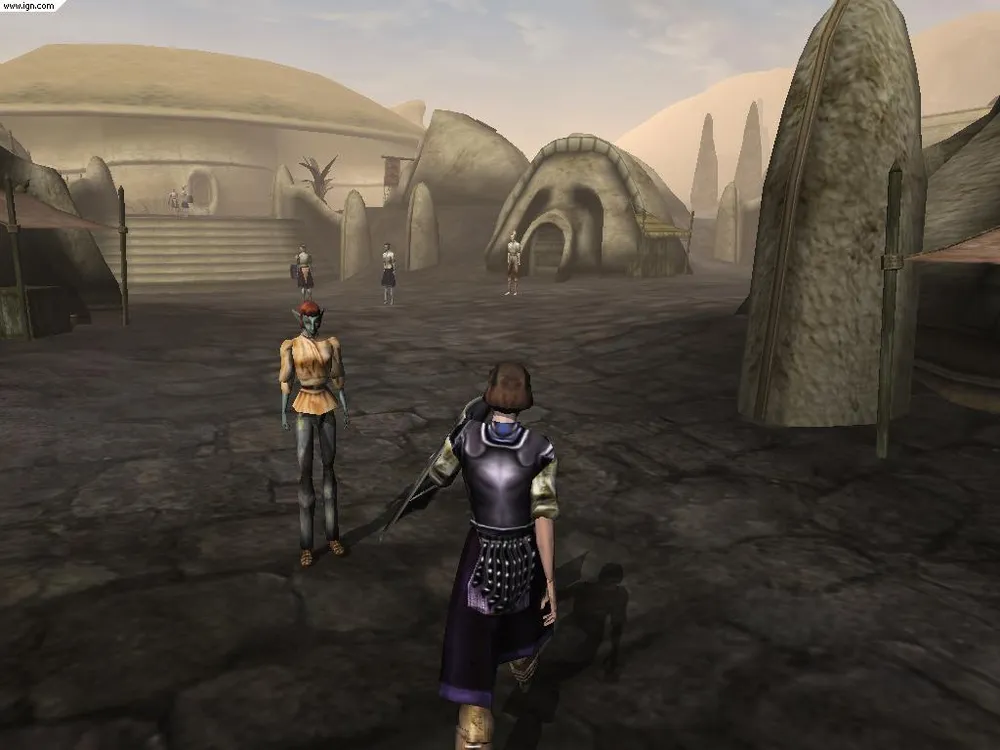
[The Elder Scrolls III: Morrowind](/games?search=Elder Scrolls III: Morrowind)
Unfortunately, Morrowind also has downsides. Like Daggerfall, players could level up so much that even the strongest enemies became mere insects in the path of a tank. Additionally, there are a plethora of ways to cheat the role-playing system – for example, by simply standing still and using a spell to level up that way. Nonetheless, even today, Morrowind is actively and enjoyably played. For the third game, Bethesda released two expansions: Tribunal (2002) and Bloodmoon (2003). Both received decent reviews in the press, although the latter was arguably better.
Maybe Bethesda didn’t offer anything particularly new to the genre, but they provided a good alternative to the linear CRPGs that dominated the market at the time. Although their games indeed had stories and main quests, players could effortlessly ignore them, and many did just that. More importantly, these games provided gamers the space to create and develop their characters – another of their advantages. You play your character, not someone else’s.
Some critics argued that such a degree of freedom places the game in the same league as the original tabletop D&D, where good dungeon masters encouraged creative ways to progress through an adventure. Why not let players bypass a monster, steal a guarded treasure, and sneak away? Why not allow them to swipe a good armor while the merchant's back is turned? Most games force you to do the "right" things, but [Elder Scrolls](/games?search=Elder Scrolls) allows you to decide for yourself.
Other Real-Time 3D CRPGs.
Naturally, other developers were not willing to give up their piece of the pie without a fight. Once Arena and Daggerfall demonstrated their technical and commercial potential, other companies jumped to the winning side.
Some of such games have already been mentioned – for example, Shadows Over Riva and the last two [Lands of Lore](/games?search=Lands of Lore). While Shadows Over Riva decided to play it safe: world exploration was carried out in a first-person perspective, while battles showcased ungainly isometry.
A more ambitious attempt by Westwood to penetrate the market was their Guardians of Destiny, the second game in the [Lands of Lore](/games?search=Lands of Lore) series. Released in 1997, the game attempted to ride on the popularity of live-action games (think [The 7th Guest](/games?search=The 7th Guest) or Gabriel Knight II) and was simply filled with such scenes. It also featured arcade elements, including timed tasks, a need for much running and jumping.

[Lands of Lore III](/games?search=Lands of Lore III)
The last game in the series, [Lands of Lore III](/games?search=Lands of Lore III), forsook live video in favor of motion capture and simple voice acting, but critics still considered it the weakest entry in the series. Players were not allowed to create their characters, and everyone complained about dull gameplay, uneven graphics, and the constant need to feed the character. Also, the game was riddled with bugs, which, of course, did not help its reputation.
Special thanks to Midest for the great offline editor.