The History of the Might and Magic Universe
What do we mean by the words "cult universe"? A large number of fans, well-developed mythology, many released games... All of this is true. However, none of these factors save, as it turns out, from oblivion. Where are now cult series like Ultima, Wizardry, Might and Magic? Although one could argue about Might and Magic. Ubisoft has taken the brand in and even seems to be developing it... But the brand and the universe are absolutely different things. However, my post today, in fact, is not about that. Today I will tell you about the Might and Magic universe - about its features, its games, its ups and downs, its bright and dark sides, about what it was and what it has turned into.
It all started in 1983. That year, Pink Floyd released The Final Cut, and Roger Waters decided to disband the band. However, this probably hardly interested a twenty-year-old boy named Jon Van Caneghem, who began developing [Might and Magic Book One: The Secret of the Inner Sanctum](/games?search=Might and Magic Book One: The Secret of the Inner Sanctum) on an Apple II computer in his small apartment in Hollywood. The game of his dreams was made almost single-handedly by Van Caneghem - he programmed, drew locations, and wrote the script, and during the development, he even founded the company New World Computing (which, surprise, consisted of him and his wife). And, in his own words, three years of game development gave him the most unforgettable creative experience of his life. In 1986, the game was finished, and Van Caneghem pondered how he would sell it. He decided (or was forced - history is silent on this) to sell the first Might and Magic straight from home and placed advertisements in two well-known computer gaming magazines of that time (CGW and A+). Customers called him personally to order the game. He was also contacted for technical support. No wonder that the popularity of the game almost drove Jon crazy in a literal sense...

We owe the emergence of our beloved universe to this man.
And what about the game? Well, it was a typical RPG of that time with a first-person view in the traditions of Wizardry and The Bard’s Tale - but instead of a series of confusing mazes and dungeons, players were offered an open world to explore, with forests, mountains, castles, and cities. Legendary characters such as Lord Kilburn and Crag Hack made their debut in the game, who would appear many more times in the series. The events of the first part took place in the world of Varn, and the plot revolved around a team of heroes opposing the villain Sheltum, who usurped power in the kingdom (under the guise of a benevolent ruler). Sheltum is a deranged intergalactic Guardian, destroying everything in his cosmic journey. If you think that the words "intergalactic" and "cosmic journey" don’t quite fit with a fantasy setting, then you are absolutely right - the old Might and Magic universe had quite a few sci-fi elements. The plots of the earlier parts revolved around the Ancients - an advanced race of precursors that built many artificial worlds interconnected by a complex network of galactic portals.
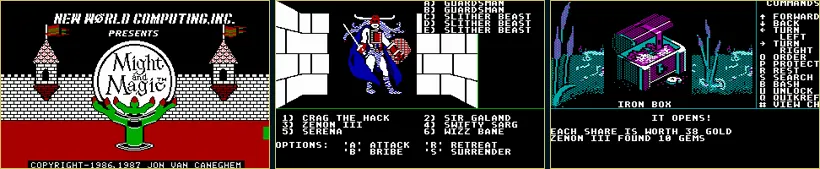
The first Might and Magic. Quite good for 1986.
In general, the game was well received, garnered many enthusiastic reviews, and New World Computing began development of a sequel. [Might and Magic II: Gates to Another World](/games?search=Might and Magic II: Gates to Another World) was released in 1988 and turned out to be a worthy sequel. The graphics improved, and the action moved to a new world - Cron, which players once again saved from the treacherous Sheltum. Some game features seem unusual even now: for example, characters aged as the game went on (and died upon reaching the age of 75), players could travel back in time, and the final dungeon was not a dungeon at all but a spaceship that needed to escape from the planet.
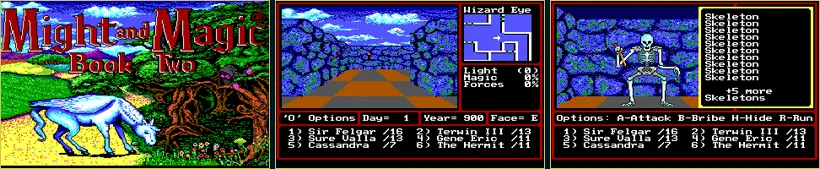
[Might and Magic II: Gates to Another World](/games?search=Might and Magic II: Gates to Another World).
It’s worth taking a small detour and talk about a game that, formally, seems unrelated to the M&M universe. In 1990, [King’s Bounty](/games?search=King’s Bounty) was released - a mixture of strategy and role-playing game, where the hero traveled on a global map, captured cities, gathered his own army for numerous battles, and sought treasures. As you can imagine, this game became the prototype for "Heroes".

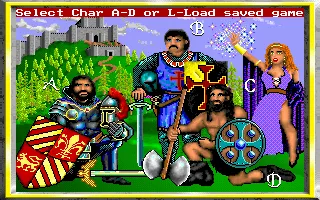
A year later, in 1991, the third installment of the main game from NWC - Might & Magic III – Isles of Terra was released. The game became a breakthrough for the series. Great graphics, an open new world to explore, accessibility for multiple players thanks to a new interface (the game was now fully controlled with a mouse), as well as tons of quests and monsters - Might & Magic III is considered a timeless classic.

Might an Magic III. Note the new interface.
The Might and Magic series brought many ideas to the genre that were revolutionary at the time, such as automatic maps and an item generator that used various prefixes and suffixes ("Mighty Sword of Burning" - how’s that?).
[Might and Magic IV: Clouds of Xeen](/games?search=Might and Magic IV: Clouds of Xeen) was released the following year, further consolidating the success of the third part while directly continuing its plot. Besides the usual graphics improvements, the game didn’t bring significant innovations - only there were more cutscenes.
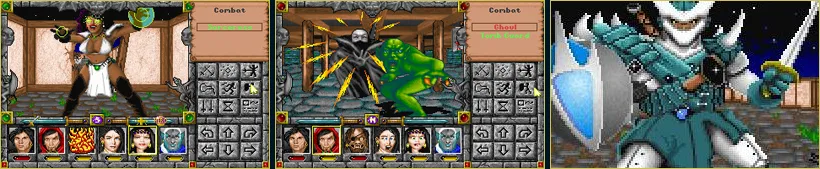
[Might and Magic IV](/games?search=Might and Magic IV). Boobs detected.
[Might and Magic V](/games?search=Might and Magic V): Darkside of The Moon Xeen was released in 1993. It was anticipated that players would use characters they had previously leveled up in the previous part, making it quite difficult for newcomers. But the main feature of the game was the ability to combine it with the fourth part if it was already installed on the player's computer. The result was a single game World of Xeen, combining all the content from previous parts and even a couple of additional quests. In 1994, World of Xeen was released on a separate disk.
Moreover, the fifth part of the series finally completed the story of the villain Sheltum that had begun in the first part - he was finally defeated by his old enemy Korak (with the help of the players, of course). In this part, the Necropolis and one of the most popular liches of all time - Sandro - made their first appearance.

Might and Magic V. In the far right screenshot - none other than Sheltum.
Upon completing Might and Magic V, Van Caneghem contemplated creating a spin-off of the main M&M series. Without overthinking, he took the basis from [King’s Bounty](/games?search=King’s Bounty), added beautiful graphics, moved the action into the Might and Magic universe, and voilà - a cult series that would captivate players worldwide for many years was ready. Released in 1995, Heroes of Might & Magic - A Strategic Quest brought heroes straight from various parts of its RPG predecessor and pitted them in battle for a new world - Enroth. Four lords were fighting for power over it, corresponding to four factions - Haven, Fortress, Wood, and Dungeon. Heroes traveled the global map, battles were turn-based... but you know all that well without me. It should be noted that Heroes of Might & Magic - A Strategic Quest became the first game of the universe for which composers Rob King and Paul Anthony Romero worked, who later wrote magnificent music for all other installments of the series (including the fifth and sixth).
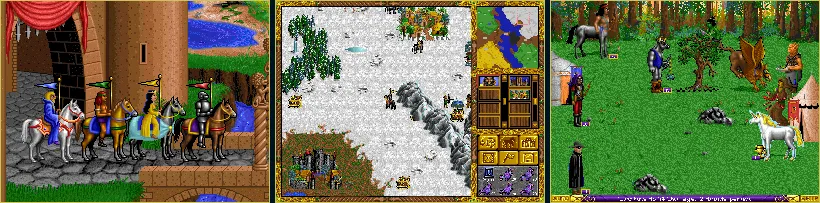
Heroes of Might & Magic - A Strategic Quest
Heroes of Might & Magic II – The Succession Wars was released the next year. The events unfolded 25 years after Lord Ironfist's victory in the first "Heroes". The game told the story of the struggle for the crown between his sons - the good Roland and, hmm, the not-so-good Archibald. Graphics improved, 2 new factions (wizards and necromancers) were added to the game, but otherwise, the gameplay remained unchanged.

Heroes of Might & Magic II. Note that the interface changes depending on whether we are playing as "good" or "evil".
The elements of science fiction that were present in the RPG series completely disappeared from its "heroic" spin-off. But they fully returned in [Might and Magic VI: The Mandate of Heaven](/games?search=Might and Magic VI: The Mandate of Heaven) - a new RPG in the famous series. Following Heroes of Might & Magic, the action moves to Enroth, which is under attack by Kreegan (externally - ordinary hell demons, but in actuality, the Kreegan once faced the Ancients and even fought with them successfully). The sixth part restructured the series: the entire world was now three-dimensional, the party was reduced to four characters, and the entire game took place in real time (although there was still the option to switch to the old turn-based mode). [Might and Magic VI](/games?search=Might and Magic VI) is considered by fans to be one of the best games in the series.
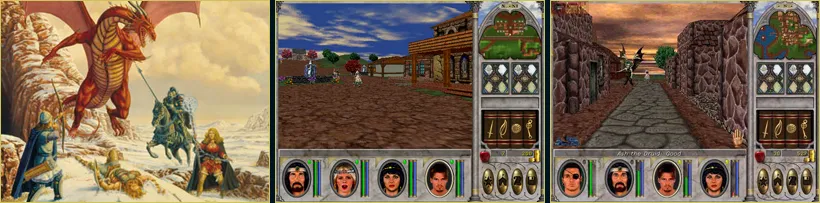
[Might and Magic VI: The Mandate of Heaven](/games?search=Might and Magic VI: The Mandate of Heaven). The art for the game cover (the image on the left) was painted by Larry Elmore.
1996, besides the release of the sixth part of M&M, was marked by another important event for the series - the sale of New World Computing to the publisher 3DO. As Van Caneghem says, several reasons prompted him to take this step, the main one being that he wanted to focus on creating games rather than on marketing, contracts with distributors, and other not-so-creative tasks. Well, and, besides, 3DO had money.
NWC made a three-year break only to shoot out two games. The first was [Might and Magic VII: For Blood and Honor](/games?search=Might and Magic VII: For Blood and Honor), which continued the storyline from the third part. The game became even more beautiful, the plot became nonlinear, and features from previous parts returned. The seventh game of the series was generally well-received but didn’t reach the success of its predecessors.
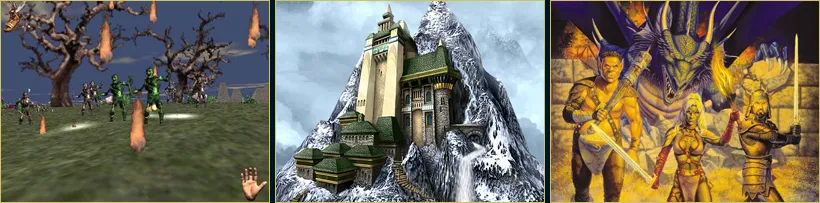
[Might and Magic VII: For Blood and Honor](/games?search=Might and Magic VII: For Blood and Honor).
However, another release that same year - Heroes of Might & Magic III – The Restoration of Erathia is considered the best game in the Heroes of Might & Magic series (as well as in the M&M universe, among turn-based strategies, or even in the world – it all depends on the fanaticism of each individual fan). The old factions were reworked and supplemented, with two new ones added - Fortress and Inferno (and later, in the expansion Armageddon’s Blade, also Conflux). There's not much more to say about the third "Heroes" - everyone already knows everything about them.
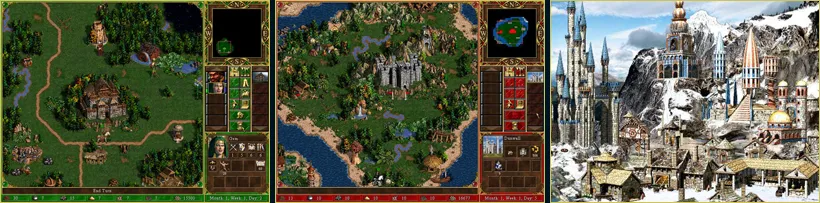
Heroes of Might & Magic III
[Crusaders of Might and Magic](/games?search=Crusaders of Might and Magic) appeared at the end of 1999. It was an action game in third-person view with RPG elements. The main character could slash everyone with a sword, throw fireballs and raid caravans. Nothing remarkable, but it was hard to call the game a complete failure.
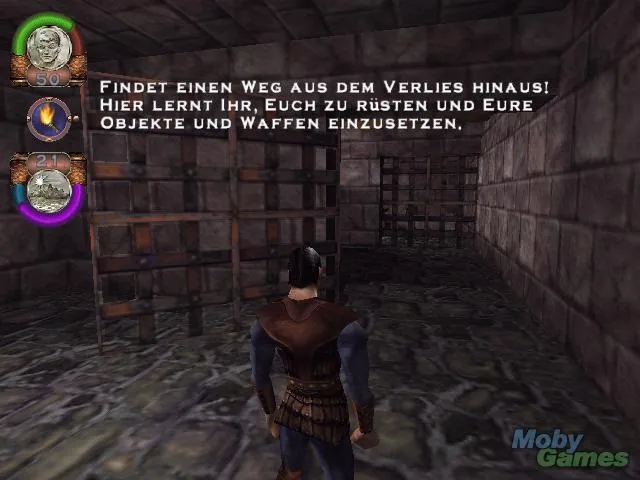
The very beginning of [Crusaders of Might and Magic](/games?search=Crusaders of Might and Magic). The main character escapes from prison.
The beginning of the third millennium was marked by 3DO with the release of [Might and Magic VIII: Day of the Destroyer](/games?search=Might and Magic VIII: Day of the Destroyer). The eighth part deviated from the series' canons, allowing players to start with just one hero, while the rest were hired into the party during the game. However, it allowed players to gather a party of vampires, trolls, minotaurs, and even (OMG!) dragons! This, however, did not save the game, which received not very high ratings and didn’t gain special recognition from fans of the previous installments. This was the beginning of the end.
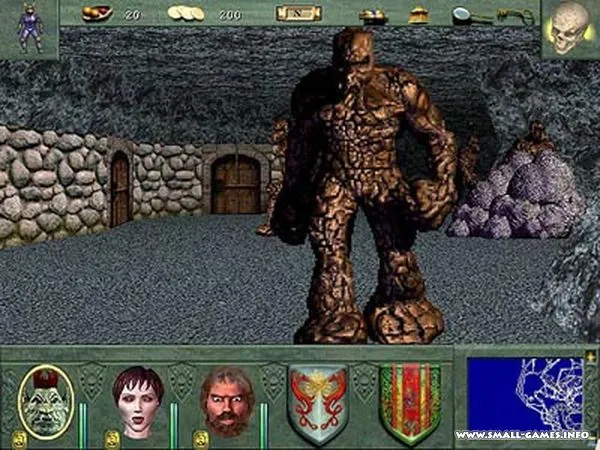
[Might and Magic VI](/games?search=Might and Magic VI)II.
Released in 2000, Heroes Chronicles were a kind of experiment aimed at attracting a new audience (casual, yeah) to the series and releasing games in an episodic format. Each of the “Chronicles” was released as a separate episode and contained a short campaign. The difficulty of these games was low, and a stripped-down version of the engine from the third part was used for development. Despite the initial lack of success of the idea, 3DO released as many as 8 episodes.

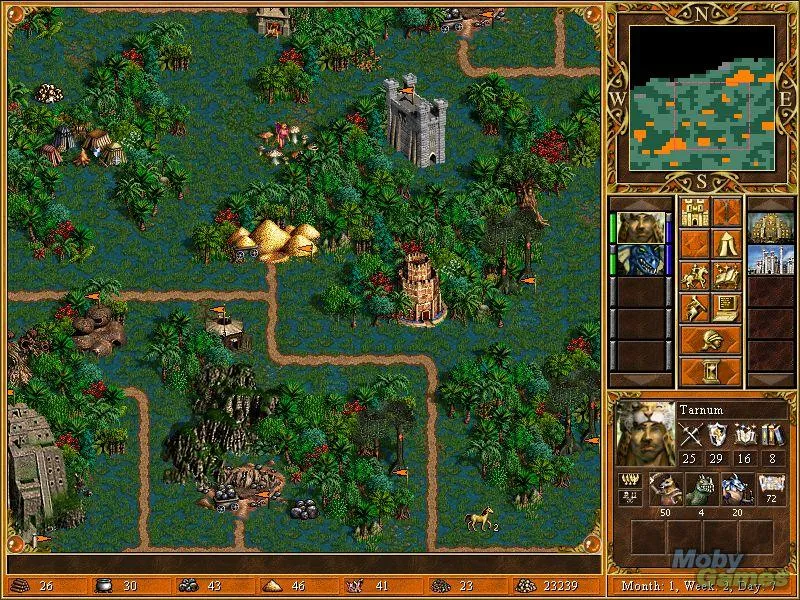
Screenshots of the main menu and global map of Heroes Chronicles. Find 10 differences from the third "Heroes".
In 2002, Might and Magic IX was released. In one interview, in response to the question, "What was your contribution to the development of Might and Magic IX?" Jon Van Caneghem answered: "Practically none. If I had had my way, this game would never have existed." In general, as you might imagine, the game turned out not to be very good. The graphics by that time were already outdated, the new world did not appeal to players, and a huge pile of bugs ultimately dealt the final blow to the last representative of the Might and Magic series. Rest in peace.

Might and Magic IX.
Things went a little better for the "Heroes". That same year, 2002, the fourth part of the series was released, in which Van Caneghem and the company decided to change everything again. The action was moved to a new world, Axeot (Enroth, the previous main location, was completely destroyed), the number of races was reduced to six, and heroes became full participants in battles... The fourth part was met with mixed reactions - ratings ranged from "masterpiece" to "total failure." Some consider it the best game in the series (though such fans are few), while others consider it heresy, in comparison to which the fifth part is perfection. In general, it’s better to form an opinion about it yourself.
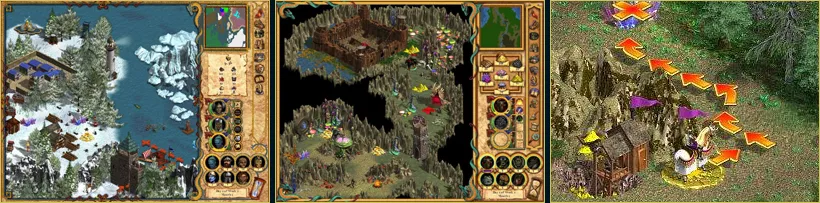
[Heroes of Might and Magic IV](/games?search=Heroes of Might and Magic IV).
Two expansions were released for the fourth part ("The Coming Storm" and "Winds of War" in the Russian translation). However, neither they, nor the original game, nor the failed M&M IX could save 3DO from bankruptcy. In May 2003, the company collapsed, all employees were laid off, and the intellectual property was sold off. The main brand of the company - Might and Magic - ended up in the hands of Ubisoft. The new owners, who acquired it for
In the hands of the French, the franchise lay idle for a couple of years, and in 2005, [Dark Messiah of Might and Magic](/games?search=Dark Messiah of Might and Magic) and [Heroes of Might and Magic V](/games?search=Heroes of Might and Magic V) were announced. Russian players felt particular pride for the second game, as it was developed at Nival Interactive. After its release... here, in general, the situation resembled the fourth part, as player opinions were again divided. Cartoonish graphics, unremarkable music, and an inappropriate 3D that many old-school players considered unwelcome - all these factors didn’t add to the game’s popularity. However, the decision to transfer gameplay from the third part proved to be a sure win. Overall, the game was well received, and the people at Nival even created two expansions: "Lord of the North" and "Masters of the Horde".
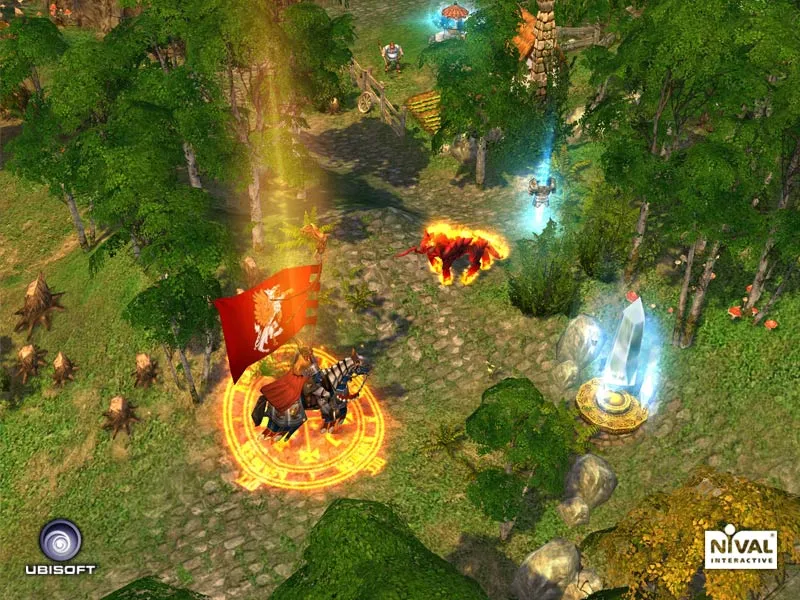
[Heroes of Might and Magic V](/games?search=Heroes of Might and Magic V).
[Dark Messiah of Might and Magic](/games?search=Dark Messiah of Might and Magic) also fared well. An adrenaline-fueled action game set in a fantasy setting, where enemies can be frozen and smashed with a sword or kicked onto spikes protruding from the walls - such a game could hardly fail.
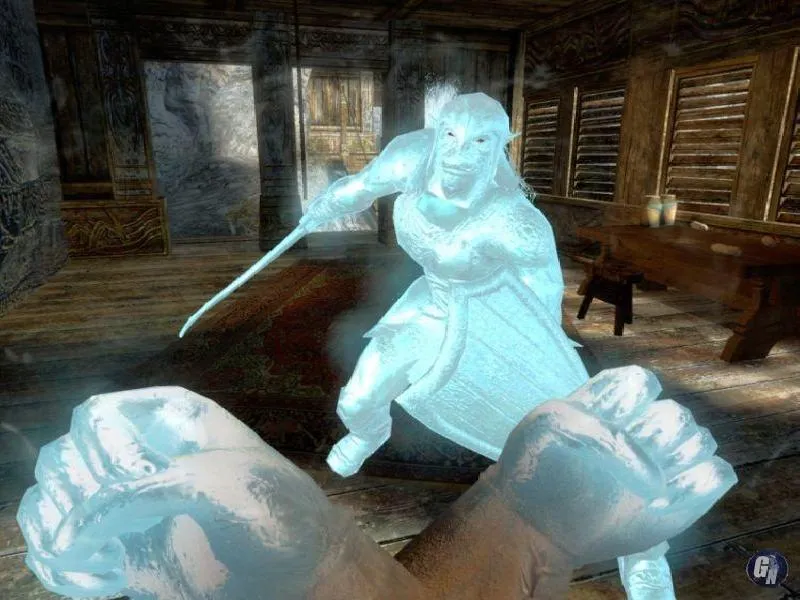
[Dark Messiah of Might and Magic](/games?search=Dark Messiah of Might and Magic).
And everything would be fine, but the games released by Ubisoft had absolutely no narrative connection to previous games in the series. Well, obviously, except for the name. No sci-fi, no Enroths, Axeots, Sheltums, or Hacks - the events of the game unfold in an ordinary fantasy world, of which there are millions. There’s a sense that Ubisoft only bought the gameplay mechanics at that time, while the rights to the setting went to someone else... However, the truth is that they decided to do for the series what is now referred to as the trendy term "rebranding." A restart, if you will. A reboot. Therefore, the M&M universe now essentially consists of two completely unrelated universes. So be it.
In 2007, the second expansion for the fifth heroes was released. That same year, Ubisoft announced Might and Magic: Heroes Kingdoms - a browser strategy in the Might and Magic universe. At this, all fans wept aloud and mourned the series from afar. Indeed, a browser strategy is not what they expected from their beloved universe. Decadent sentiments among fans of the series continued until August 2010, when Might & Magic Heroes VI was announced. The announcement brought comfort to some, but at least it became clear that the French were not intending to finally turn the beloved universe into a setting for monotonous browser games.

Might & Magic Heroes VI.
Such is the current situation. Might and Magic is developing more or less, and new games satisfy both old players and new audiences. Although they are by no means perfect, and the hope for the release of a new large-scale RPG is completely absent, let's admit - things could have been much worse.
Well, that's all for today. Here I certainly haven’t discussed all the games from the M&M universe. There are still ports to various consoles, console exclusives, canceled projects, fan mods... However, I hope that this post was to your liking.
*Images taken from the official series website, as well as randomly grabbed from the internet via a