
Lost Eidolons Overview
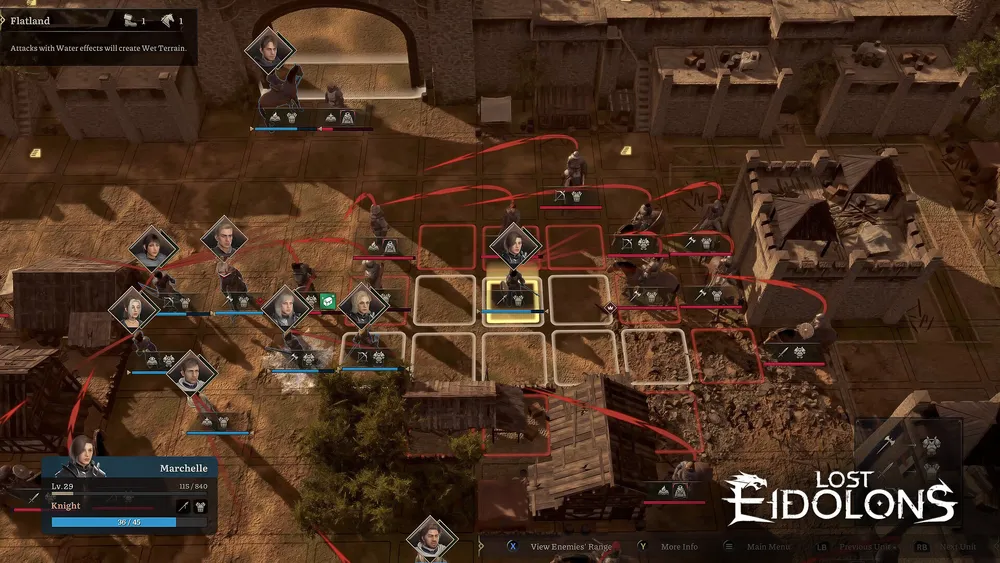
Lost Eidolons is a turn-based tactical RPG set in a late medieval fantasy world. The game was released two months ago and features Russian text localization.
Eidolons are forgotten ancient deities that play an important role in the story.
Plot.
It’s straightforward. In a certain kingdom, a usurper arises who subjugates all his neighbors and establishes an empire.

At first, everything was quite bearable, but suddenly he was prophesied to perish, and since then he has become obsessed with outsmarting fate and has resorted to terror.

No, that’s not the same prophecy :)
Our story begins in a distant village, where a client approaches the group of mercenaries led by the main character, Eden: a local lord has killed her husband, kidnapped her and her sister, and she managed to escape from the castle for a short time, asking them to free her sister. He, of course, agrees.
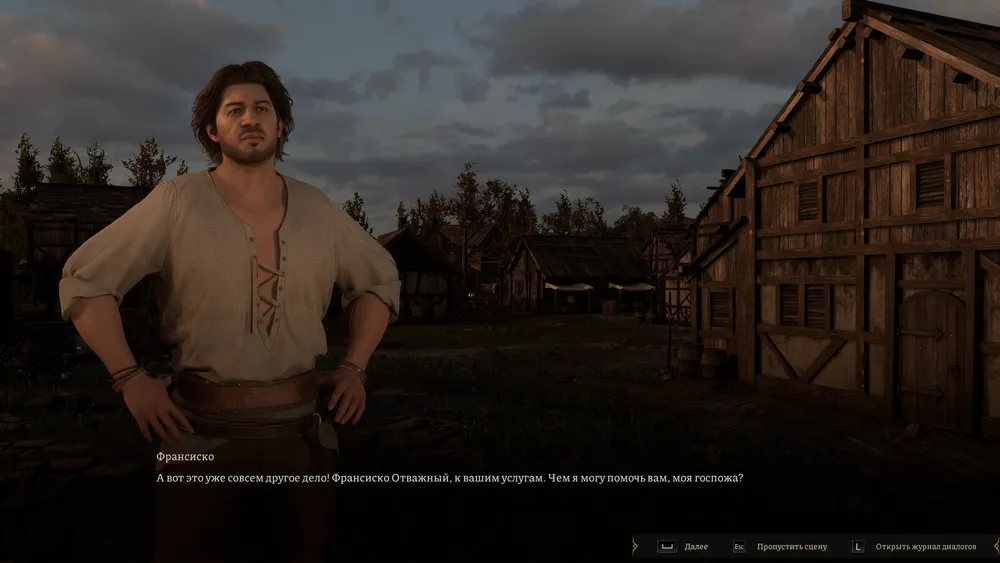
Subsequently, disobedience to the representatives of the authorities forces Eden and his friends to join the uprising against the empire.
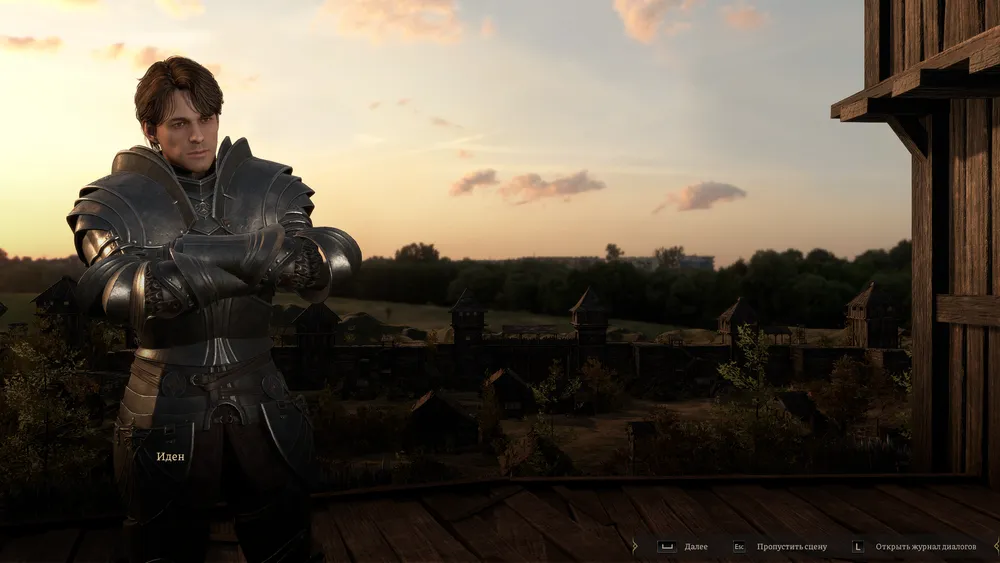
This is Eden
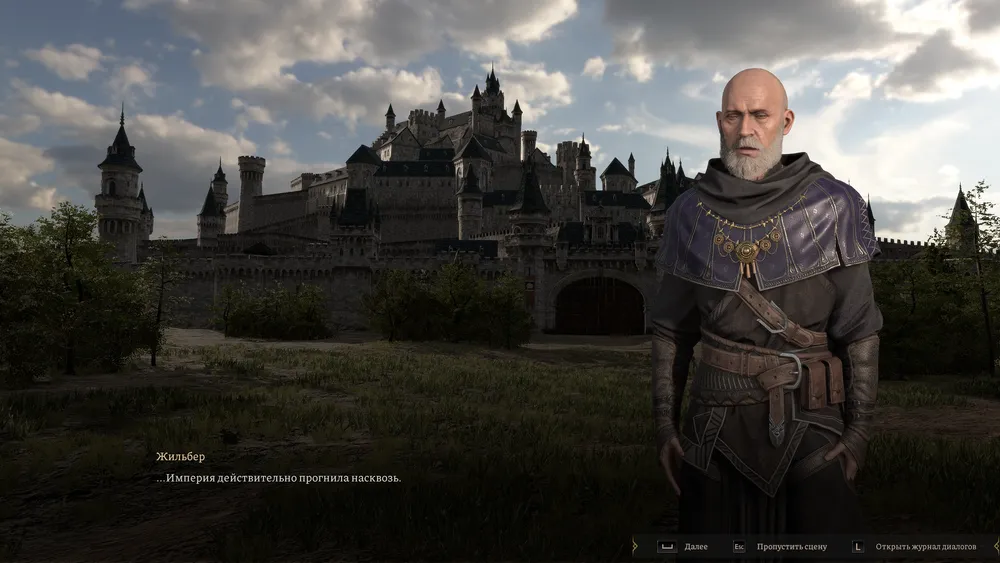
Captain Obvious ;)
Overall, the narrative is linear, but there are some minor branches that mainly affect the fate of allies. It’s also worth noting that about halfway through the campaign, a rather unexpected plot twist occurs in a place where you expect the story to reach its conclusion.
The anti-war agenda that permeates the plot is strikingly evident.

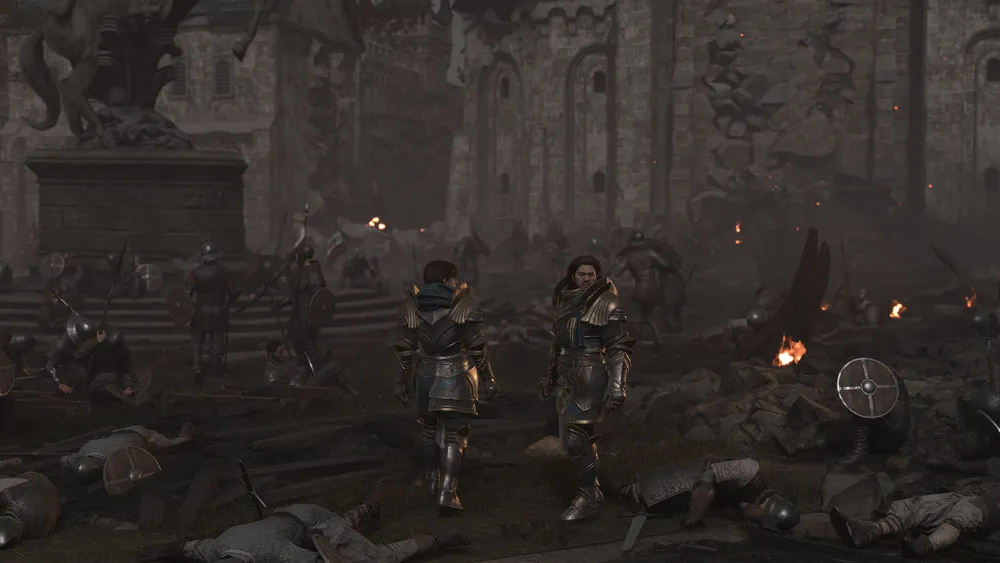
The horrors of war
Gameplay.
It is divided into two parts: the battles themselves and the resting periods in the camp between them. In the camp, players can interact with allies and complete side quests. The rewards for these include: reputation among local residents (and subsequently, levels of material gratitude for help), reputation among one or several allies, experience points, and unique items. Players can embark on side battles from the camp. Mostly, they are needed for experience, but sometimes completing them yields rewards.
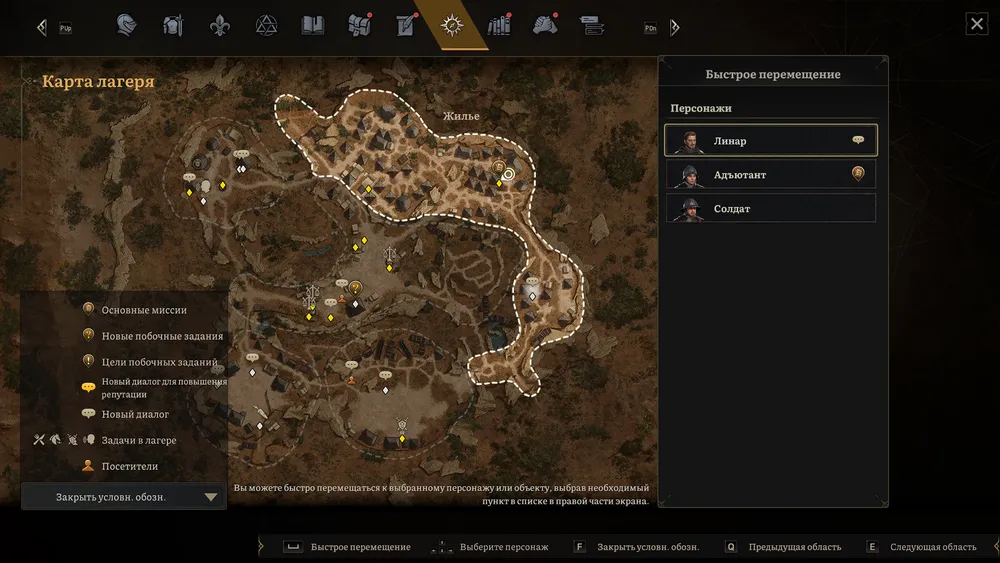
Camp
Nota Bene. Do not ignore conversations with allies. Even if they are not clearly marked as quest-related, a task may arise during or after the conversation.
In the camp, players can recruit new fighters into their party. Mercenaries often arrive; after major battles, outstanding soldiers from the defeated enemy show up. Some join for free. Generally, to hire others, players must reach a certain relationship level, which can easily be increased by giving gifts. The later a fighter is hired, the better trained and equipped they are. However, many leave after a couple of missions if not hired.
There are vendors in the market square offering potions, armor, weapons, gifts, and some quest items.
Over time, a training ground will appear where players can hone their combat skills through sparring with an ally.
Nota Bene. Sparring, in general, is such a useless and dull activity that I hardly used it. Two characters stand there and beat each other for half a minute - cutscene. Then, suddenly, at the last hit, the game may prompt you to press a combination or a few in a row to make a stylish finishing move and earn extra experience. It may prompt you, or it may not. Combinations are also not constant. Overall, the idea is interesting, but the implementation is quite unsuccessful.
Combat System.
The combat system does not offer any fundamental novelties. The only innovation is that each active participant in the battle can be assigned an adjutant who will provide a small bonus and level up themselves. This is why it is advisable to hire any available fighters.
Battles in the game are turn-based. Up to 10 characters can enter the battlefield. Among the opponents: humans and monsters (much less frequently). Initially, the entire squad consists of untrained commoners, and as the story progresses and experience grows, players can retrain them into other classes. Each class has its own starting requirements. Changing classes is free, without any restrictions. As class levels increase, combat skills unlock, starting with active skills, followed by passive skills. Only passive skills transition from class to class. The game features melee fighters, archers, and spellcasters (elementalists, warlocks, and priests).
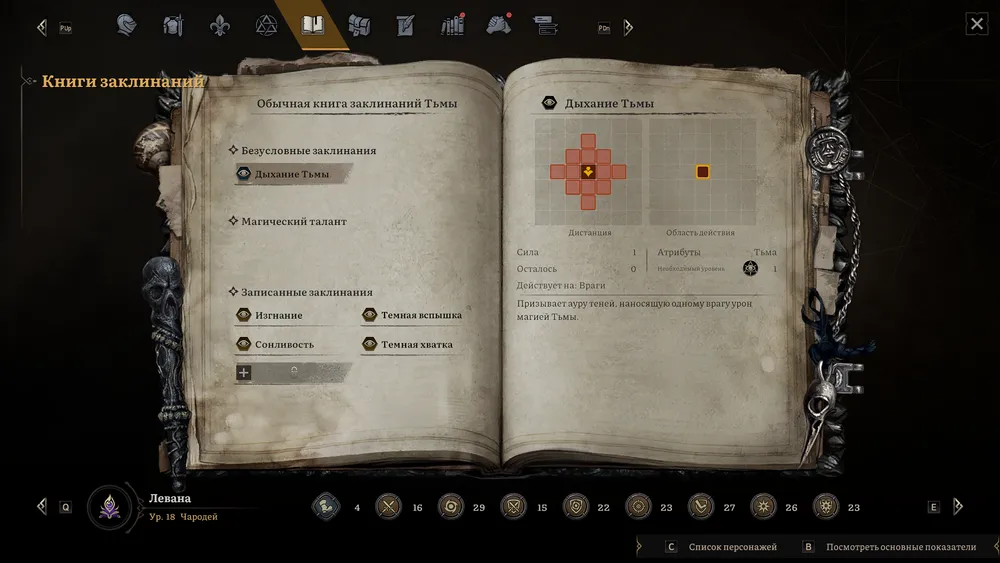
The number of spell applications or active skills is strictly limited. Fortunately, they restore themselves after battles.
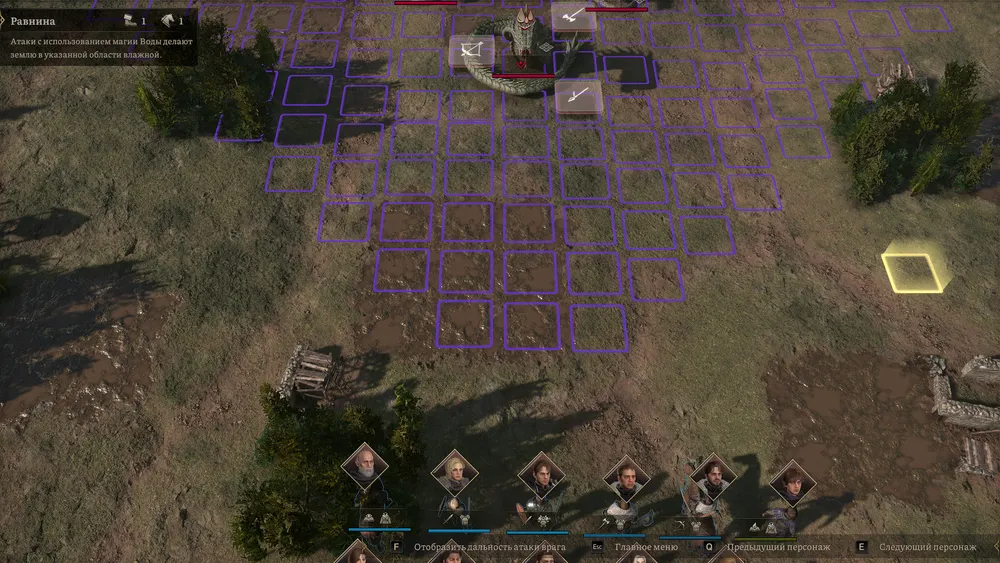
Nota Bene. Unfortunately, after expending all spells, casters become useless - there is no auto-attack for them. They can only counterattack. In a normal combat scenario (on normal difficulty), this isn't a problem at all, but in the final battle, it is quite unpleasant.
Interestingly, all melee fighters can use bows, and archers can use melee weapons. There are hybrid classes that use melee weapons, bows, and spell books.
Typically, each character has two active weapon sets, and players can switch between them at any moment.
The type of weapon and armor you use determines what levels up. Any fighter can be mounted on a horse. However, like in reality, horses are quite scarce (I encountered 3 or 4 horses among 20 fighters).
Nota Bene. Eden has an exclusive class - the suzerain, which requires level 3 in elemental magic to unlock. It cannot be acquired anywhere other than training with allies, and training is only possible with one character per chapter (each story battle is a chapter). Even earning level 1 takes 3-4 training sessions. Plan for this in advance. I did not calculate this well and perhaps, that’s why I can’t defeat the final boss at all.
A horse increases movement speed (the fields are large - there’s room to roam), reducing the chance to break a block and blocking an attack (block reduces damage from attacks). Only warlocks receive significant bonuses while mounted - they have a spell that greatly enhances its power when cast from a horse. Players can dismount and remount at any time.
Allies in adjacent squares provide and receive bonuses to attack and defense. Unfortunately, phasing movement in combat is not provided; however, if a player accidentally clicks on an empty square after approaching, the fighter simply returns to the starting position - the end of the turn always has meaning.
The game rewards players for completing levels quickly. The battle difficulty is not linear but rather resembles uneven slopes. Battles with monsters unfold differently than with humans; they are often more challenging and require fundamentally different tactics.
The game includes sieges and defenses of castles. They are quite primitive - you break down gates with a ram and burst inside. There are no special defensive structures, aside from ballistae.
I really liked the ability to cancel absolutely any move of any character. To prevent players from abusing this, a limit of 10 cancellations is implemented, which slightly increases as players progress through the story.
Conclusion.
Overall, this is an interesting representative of the turn-based tactics genre. A solid middle-weight. The plot does not provoke irritation and is slightly spiced up with RPG elements. The gameplay is familiar for genre enthusiasts. There are non-critical shortcomings and irritating elements, and there are rough edges in the Russian translation (generally related to the speaker’s gender - a common issue in many indies). Perhaps I would rate it higher than Arthur, but lower than Rome.
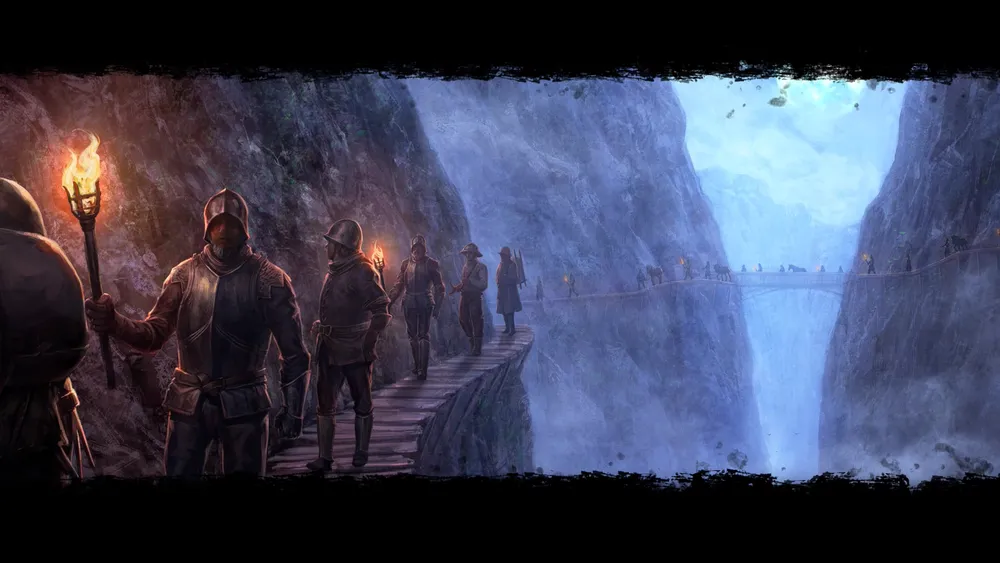
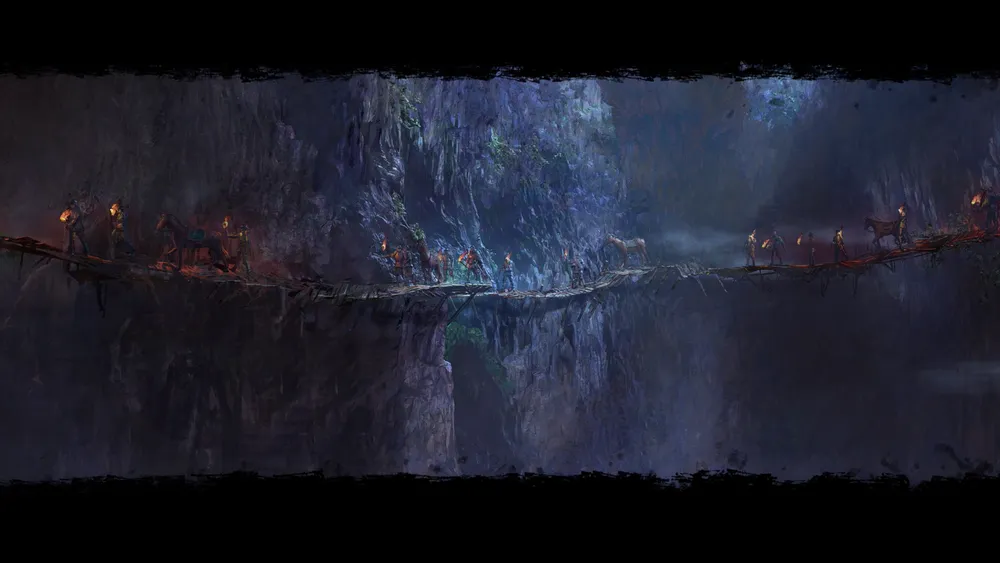
The arts between missions are beautiful...