
Pillars of Eternity II: Deadfire: reflections after the final credits.
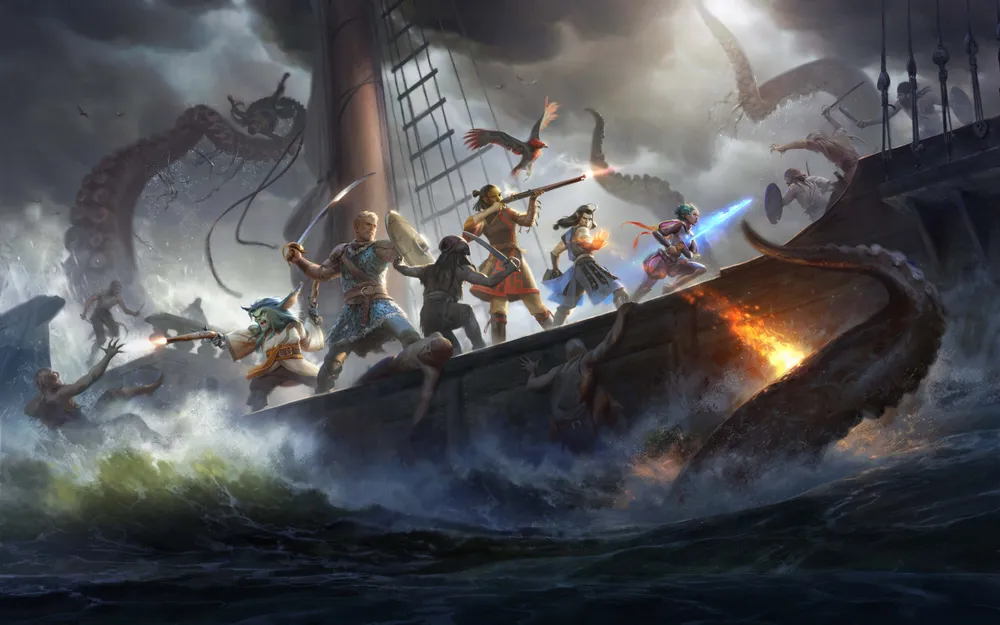
" - Nerf Maple, making her less powerful?...
- Players won't like it if we make her weaker!"*
**"I don't like pain, so I'm going to invest everything in defense"**
I warn you right away: I am from that group of gamers whose representatives are called: "Old."

But I am not the "Old" who is against everything new, but rather the one who is convinced that when creating "new," it is absolutely necessary to take everything good from the "old." The postulate of "not forgetting the good" is especially important for teams making sequels to existing games – just one loud title is not enough in such situations!
Were the creators of "[Pillars of Eternity](/games?search=Pillars of Eternity) II: Deadfire" able to surpass or at least repeat the success of "[Pillars of Eternity](/games?search=Pillars of Eternity)"? Did they manage to carry over all the "good" from the first part in addition to the changes made to the game? Opinions on this matter are divided... In turn, I will also try to answer these questions: by means of a comparative analysis of the two games. Let's start!
And I'll start with a quote that caught my attention from the review of "[Pillars of Eternity](/games?search=Pillars of Eternity) II: Deadfire" by "Igromania" from 2018:
"The continuation of the 'Pillars' became for the original what 'Shadows of Amn' once was for 'Baldur's Gate'.
What, I wonder, did the author mean? That the nonlinear 'Baldur's Gate' was reduced by eighty percent in 'Shadows of Amn'? Or that the excellent graphics of the first part became much worse in the second?
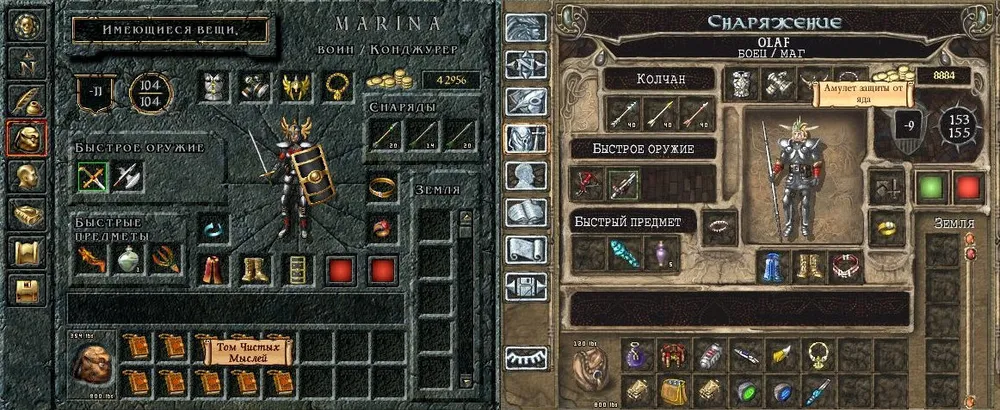
Perhaps he was upset by the absence of characteristic-increasing books in the second part? Not a very good or clear comparison...
Alright, let’s return to "[Pillars of Eternity](/games?search=Pillars of Eternity)"! In the first part, the party consisted of a hero and five companions; in the second, the commander was given only four companions. A strange decision that created many problems with skills. In the first part, there were only five; they were easily distributed among the party members. Now there are sixteen, and it often turns out that some skills are not sufficiently developed, which creates problems.

However, the terrible feature of dialogues and text parts of the walkthrough carried over from the first part: gamers are only informed of the necessary skill level if they successfully solve a problem.
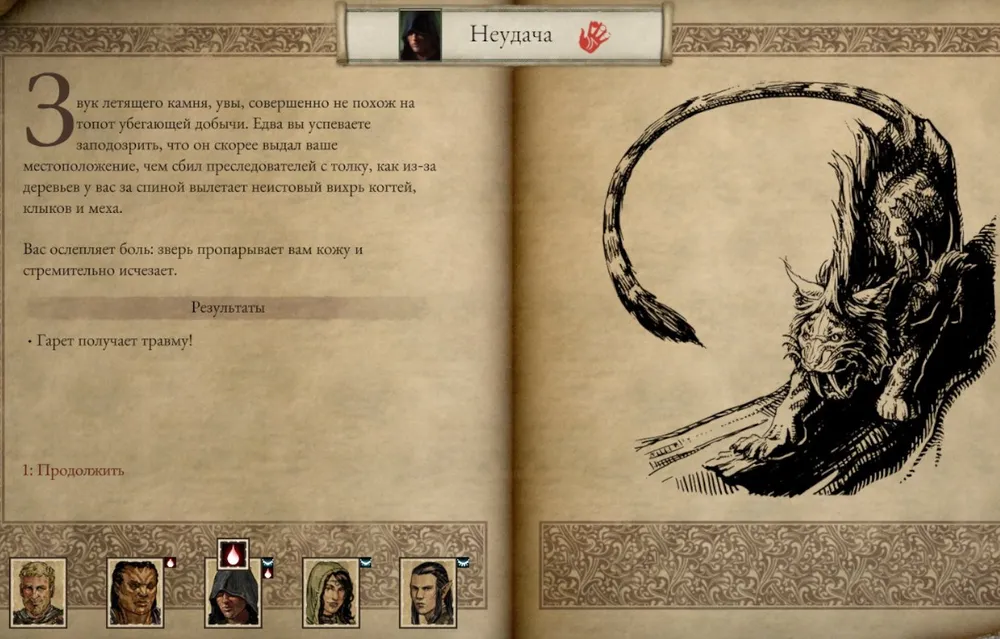
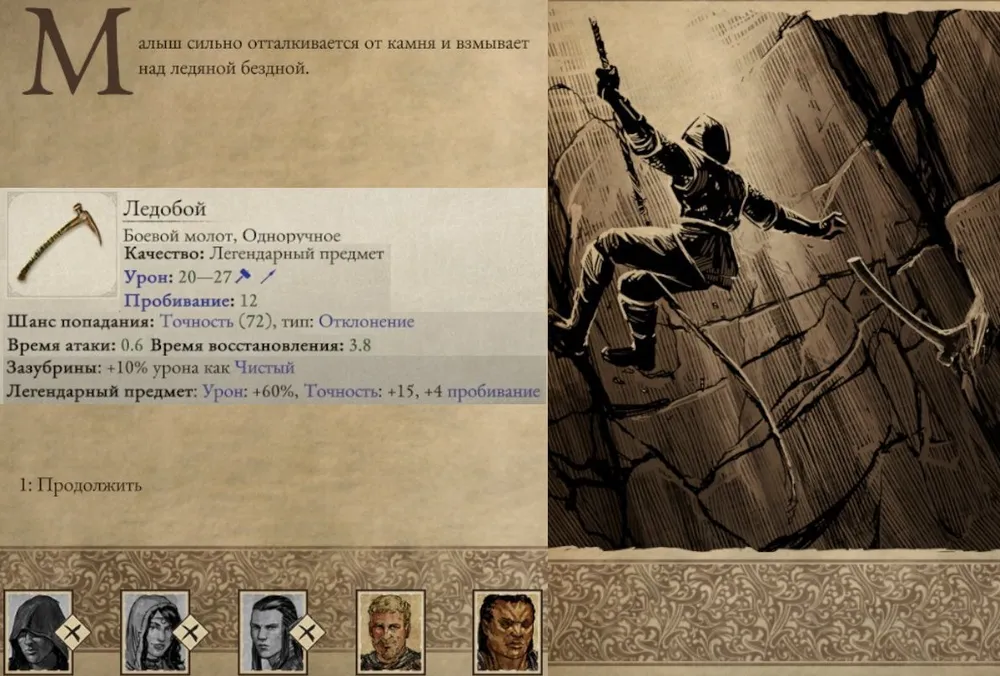
Can't climb the rock? Run back to the nearest merchant, pay them for the opportunity to change the hero's characteristics from the first level, then return and try to climb again: maybe you’ll succeed, and as a reward? – you’ll be shown the necessary skill level.
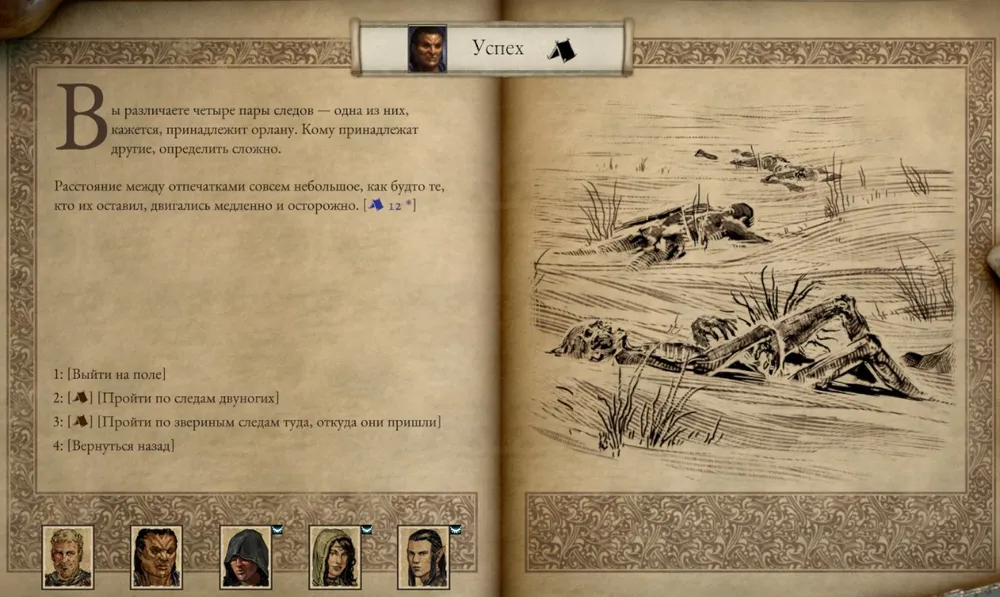
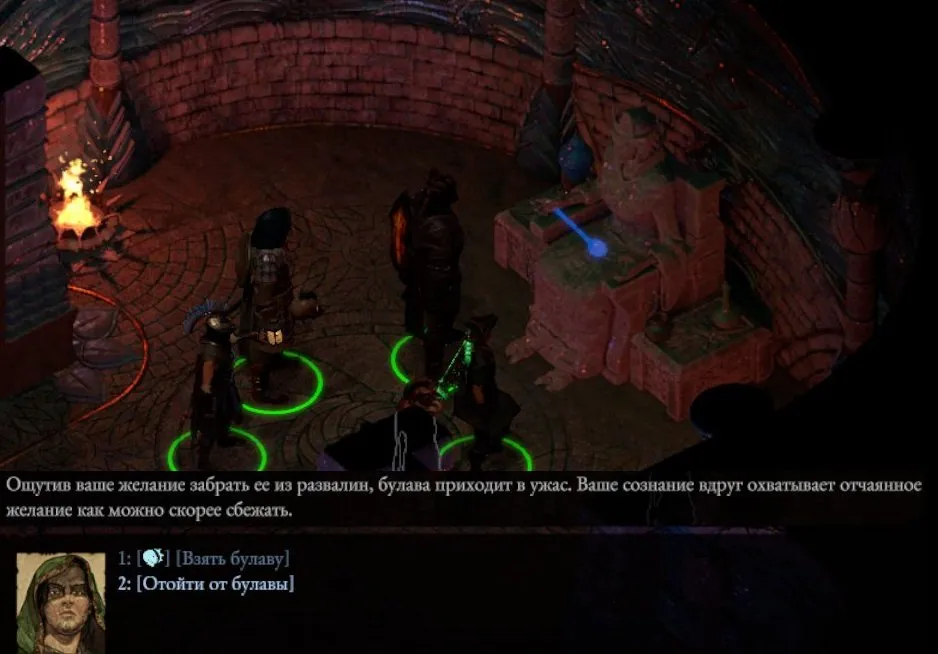
I couldn't take this mace; I lacked the level of some skill.
Moreover, in "[Pillars of Eternity](/games?search=Pillars of Eternity) II: Deadfire" the situations with skill level checks occur much more frequently, sometimes affecting the entire party: it's a cheery thing to reach the enemies while being wounded!
As if that weren't enough, the damage from several types of weapons in the second part directly depends on the level of a given skill. So whether you like it or not, you must raise it to the maximum!
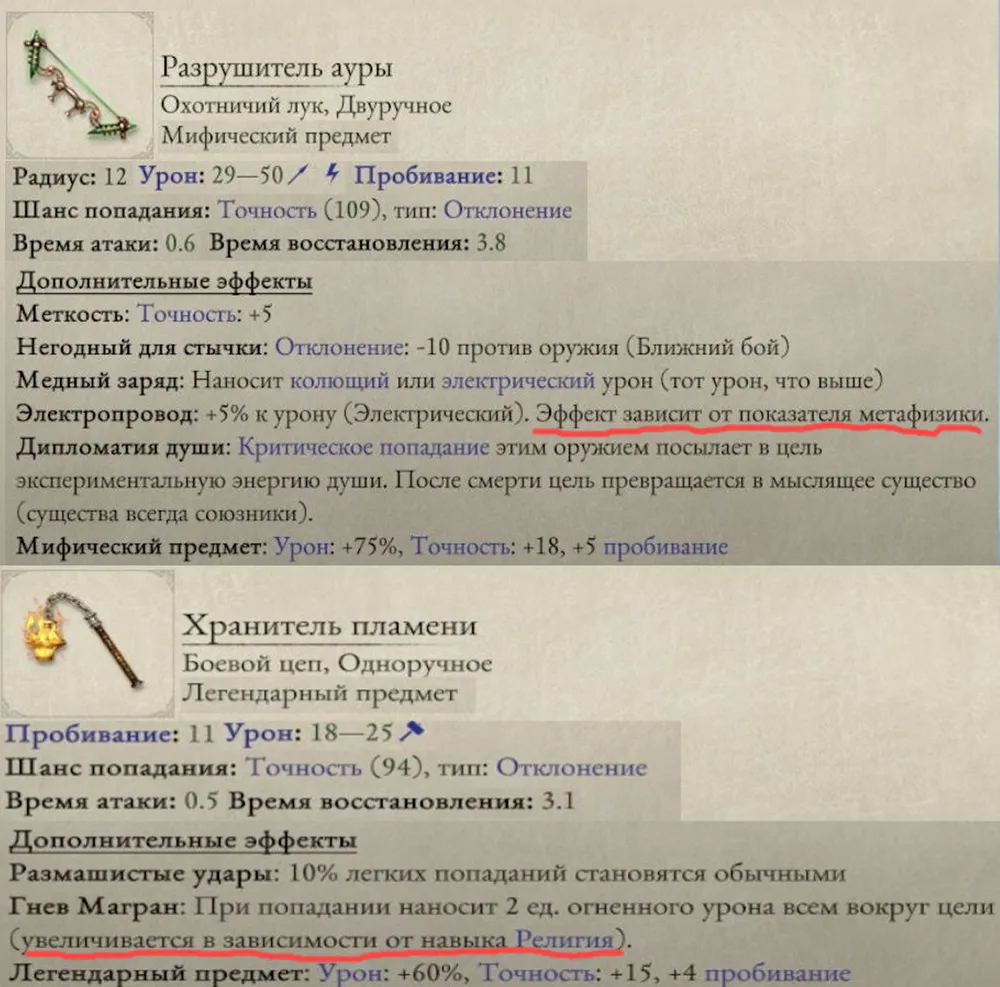
All the above-mentioned "features" of the new game are incredibly annoying...
But that's not all the "surprises" concerning the hero's companions! Look at the screenshot: a level sixteen paladin from the first part with a constitution of ten has two and a half times more health points than a level twenty paladin with a constitution of twenty!
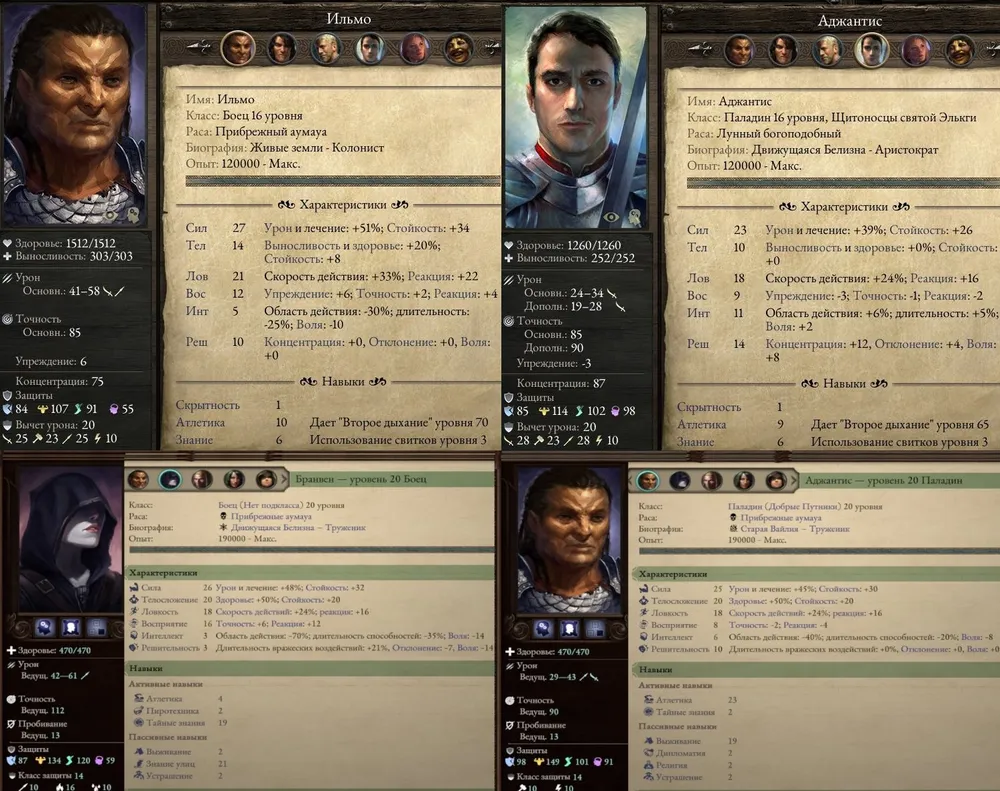
Is this an "improvement"?! It's a shame, no one to ask: "What the hell?!"
By the way, about the levels of the squads: the heroes of "[Pillars of Eternity](/games?search=Pillars of Eternity) II: Deadfire" reached the maximum level long before entering the expansions. Given that the expansions do not bring any outstanding equipment or at least a large number of consumable items – why go through them at all?

I couldn't complete Kazuvary, and I simply didn't see the point in Icewind.
This is interesting!
*How can one not remember the best RPG I know – "Baldur’s Gate"? The party finished the main campaign at level seven; as soon as the two expansions came out, the level rose to nine. At the same time, in Durgen’s Tower, one could find unique weapons and armor that didn’t occur in the main part of the game; and it was possible to get there with a fledgling party of heroes. Moreover, there is a new RPG called "Encased"; in it, there are absolutely no level restrictions for the hero! However, weapon skills do not increase, but the character's health does – and that’s something! The more there is, the easier it is to absorb damage, which gives the gamer a reason to thoroughly explore the entire map before moving into the finale. And, by the way, the creators of "Encased" weren’t afraid that a level hundred hero would disrupt the game's balance!*
Let's talk about equipment. In the first part of the game, any weapon could be upgraded – great! No magical blade? Let's enhance a simple one; it would help in battles.

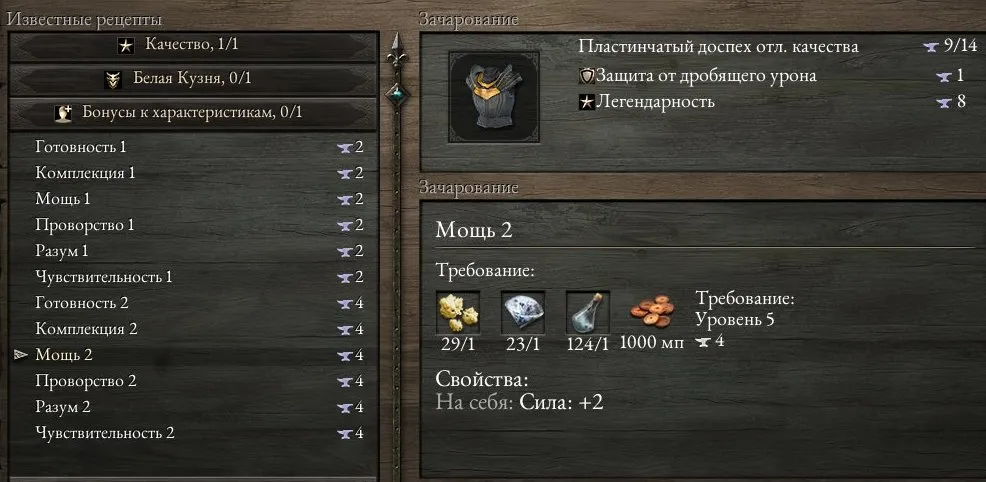
"[Pillars of Eternity](/games?search=Pillars of Eternity) II: Deadfire" only allows upgrading magical items; simple gear remains "junk for sale." In my opinion, this is a clear minus of the second part; especially since I would very much like to upgrade at least one spear to the maximum level.

By the way, magical weapons and armor in the second part are mostly upgraded through additional properties. Moreover, these properties evoke, to put it mildly, surprise or even nervous laughter. Let’s compare a dagger and an axe from different parts.
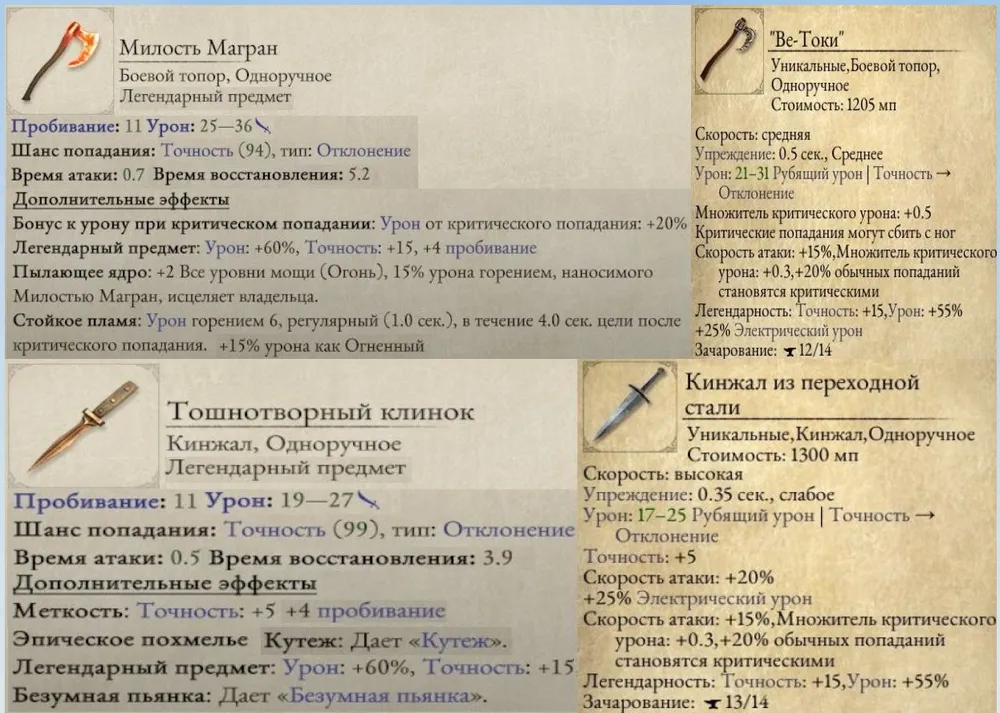
At first glance, the weapons of the second part have higher damage. But the additional properties of "Ve-Toki" are much stronger: both in terms of damage and the ability to knock enemies down; the same applies to the dagger made of transitional steel (by the way, it can be found in the first quarter of the game, without much trouble, unlike its "colleague" from the second part).
Perhaps two-handed swords in the second part are better? If looking at damage – yes.
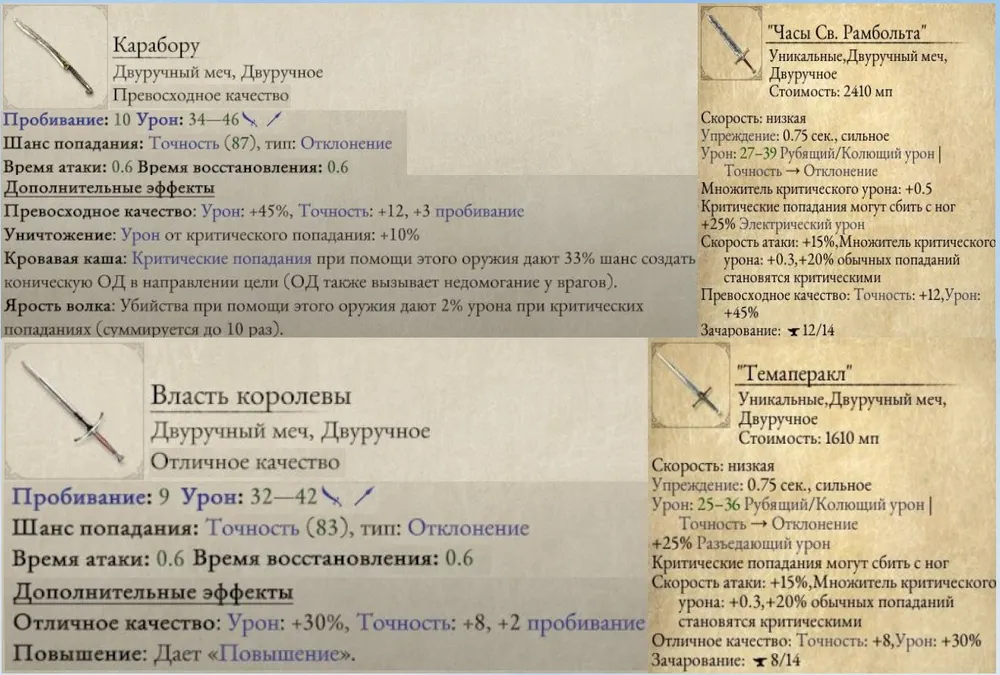
But the additional properties of two-handers from "[Pillars of Eternity](/games?search=Pillars of Eternity)" deserve all praise: due to increased attack speed and the ability to knock opponents down. Look at the weapons of my squad from the first part: they all had the property of knocking the opponent down on a critical hit.
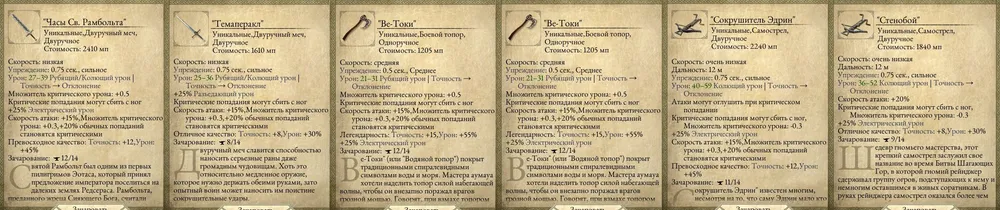
And what about "[Pillars of Eternity](/games?search=Pillars of Eternity) II: Deadfire"? Is there such a weapon?
There is. A total of two items: a battle chain and gloves.
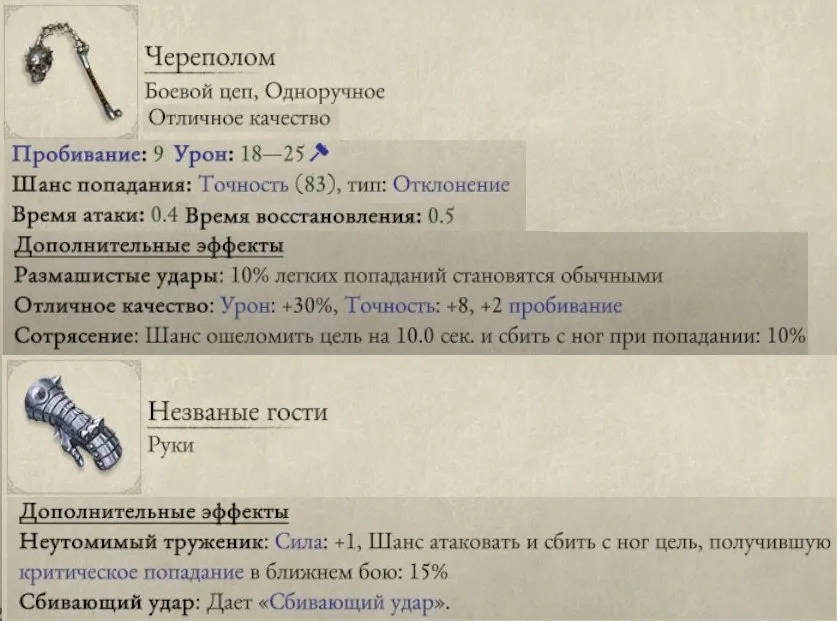
The first gives a ten percent chance of knocking down (not every tenth hit, but with every hit, there's a ten percent chance – ridiculously low!), the second – fifteen percent. A mockery and nothing more!
True, a spell "Knockdown Strike" is attached to the gloves... But a spell attached to an item doesn't improve but worsens its properties. First, its application in battle takes time. Secondly, there’s a significant chance that during its casting, the holder will get hit in the head with a sword or an arrow in the ribs, and the spell will "fail". Thirdly, the spell recovers AFTER REST (!). (Why am I shouting? You will understand soon!)
Here’s how the consumption of useful food and drinks looked in the first part: for two to five minutes, characteristics increase, then the effect disappears.

In the second part, the squad can eat a single dish, the effect of which lasts... Until the next rest! Of course, it's preferable to feed the heroes something better; especially if a series of battles is ahead. Win the first one using spells, and... sleep?
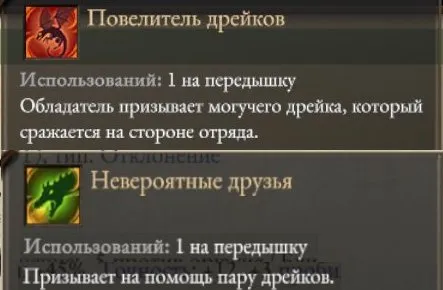
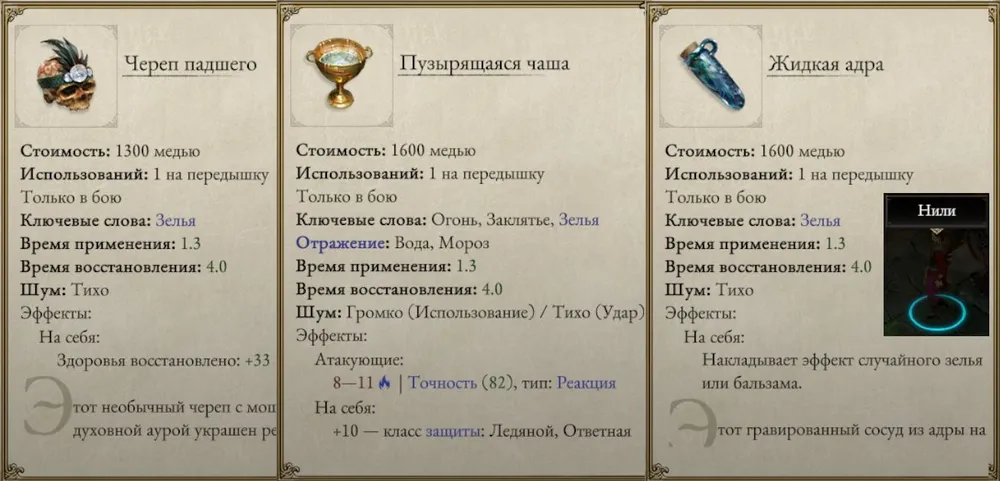
But the effect from the food consumed will disappear! And there are very few components for its preparation!
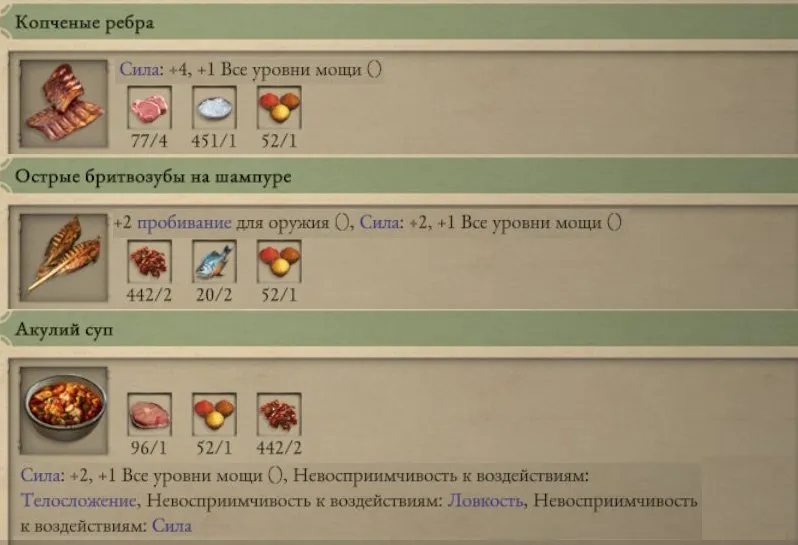
To get such a quantity of spices, I had to sleep near the merchant for a long time. And not every time when refreshing goods did he have spices...
Yes, but... How to restore the spells attached to items?! Did this inconsistency not catch the game designers of the second part’s attention? And where were the beta testers looking?
By the way, regarding components for making potions, scrolls, food, and upgrading equipment: nothing has changed from the first part; they are horrendously scarce. As if that wasn't enough, the same components can be needed to craft a scroll, a rare potion, a dish, or an item of equipment – choose what you need more!
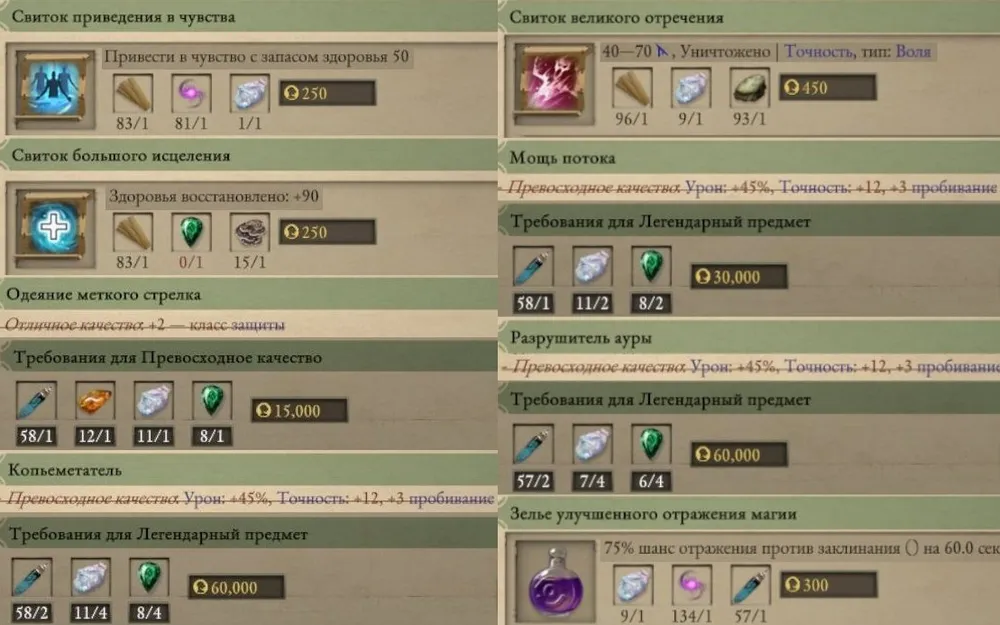
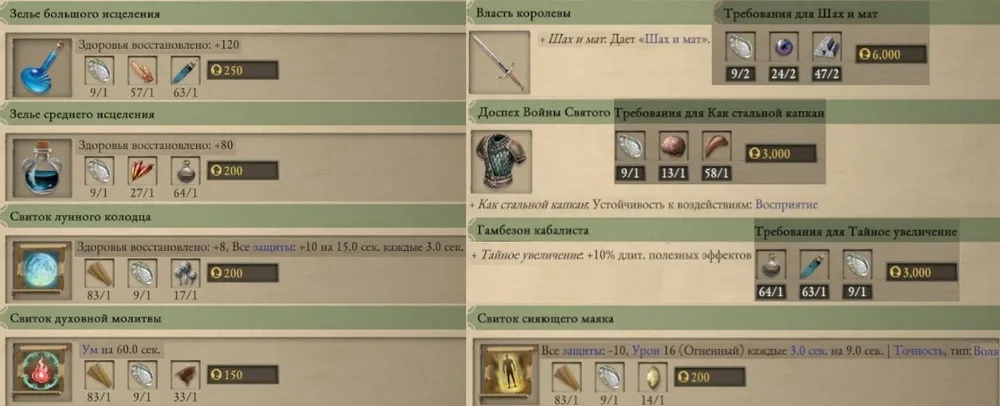
Pearl (like oysters) is simply the champion of inconsistency between availability and necessity.
In addition, the game designers "dragged" the absolutely dreadful requirement from the first part into the second, whereby to upgrade a bow, you need twice as many components as for upgrading a two-handed sword!
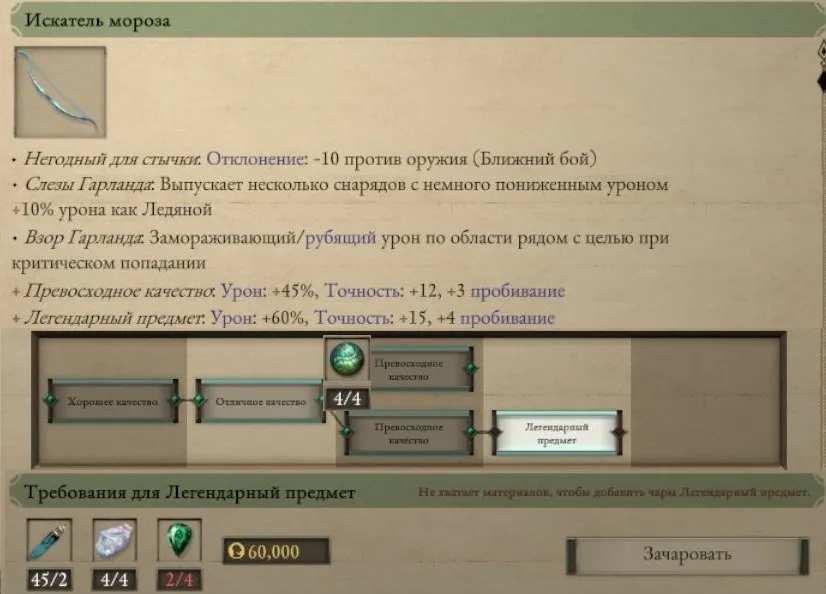
With equipment and weapons, it’s all utter nonsense: it’s impossible to find everything at once (especially for those playing through the game for the first time), just as it’s impossible to upgrade all items to find out which is the most effective for your squad? It would seem: gather the crew, repair the ship and sail wherever the soul wants, looking for equipment and weapon (you can dodge pirates). However, this is an illusory freedom...
Example: excellent weapons are in the "Outpost of Destiny" expansion, but you can only obtain them after defeating a dragon, which is possible for a party over level ten!
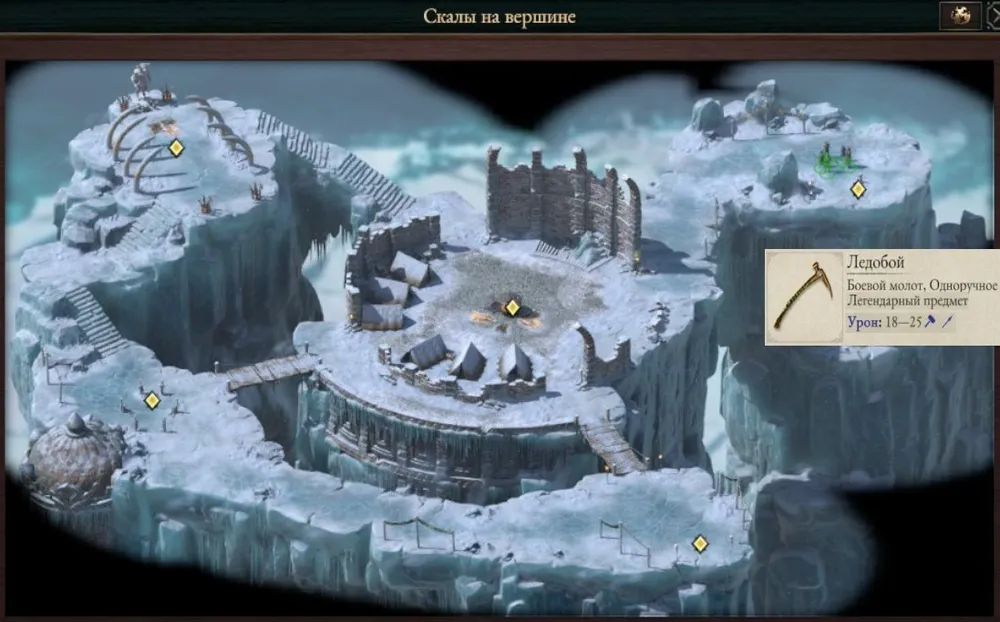
Another example - equipment in another expansion, "Hall of the Invisible" – but you can only access it after completing the quest "He Waits in the Fire" ("Teeth of Magran"); otherwise, the passage doesn’t open. The third example: a merchant in Crooksbore has chests with unique armor and a saber – but a novice thief cannot open them, and there’s not enough gold to buy items!
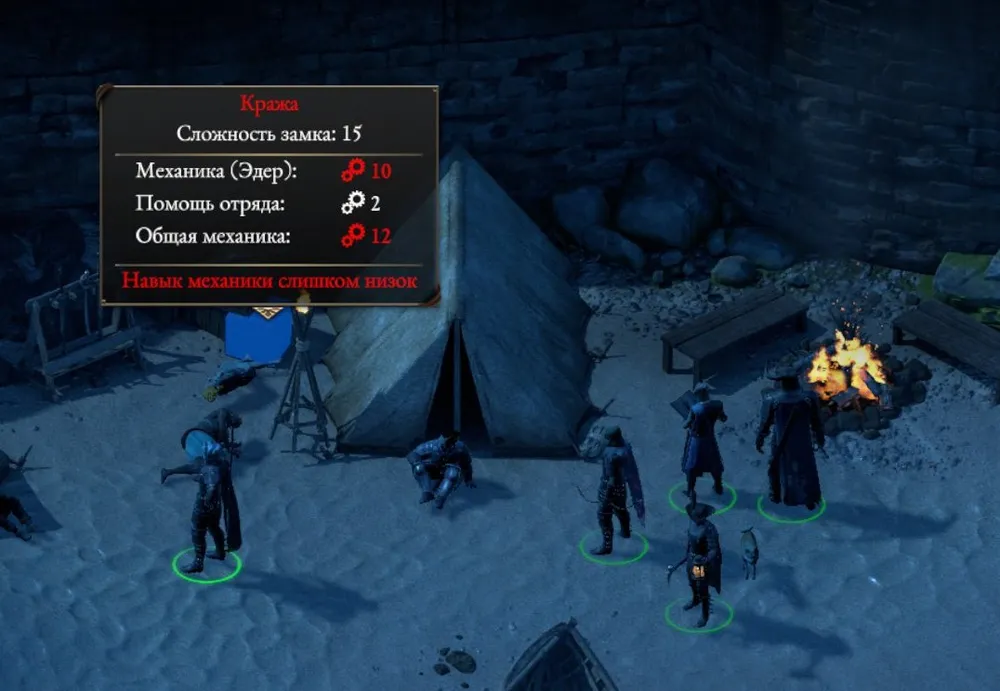
You can only freely gather water and collect fruits on the islands; decent equipment can only be obtained at high levels. Thus, upon closer examination, the second part is still thoroughly linear compared to the first! (How to equip the squad with the best weapons in "[Pillars of Eternity](/games?search=Pillars of Eternity)" - **see here.**)
Wait, wait: short on materials to upgrade the weapon? But there are soul-bound items, for which no components are needed for their upgrade, only meet the requirements! Such items exist, but the upgrade requirements in the second part cause surprise...
"[Pillars of Eternity](/games?search=Pillars of Eternity)": the bow and crossbow for upgrading require dealing damage, which is possessed by the upgrading weapon.
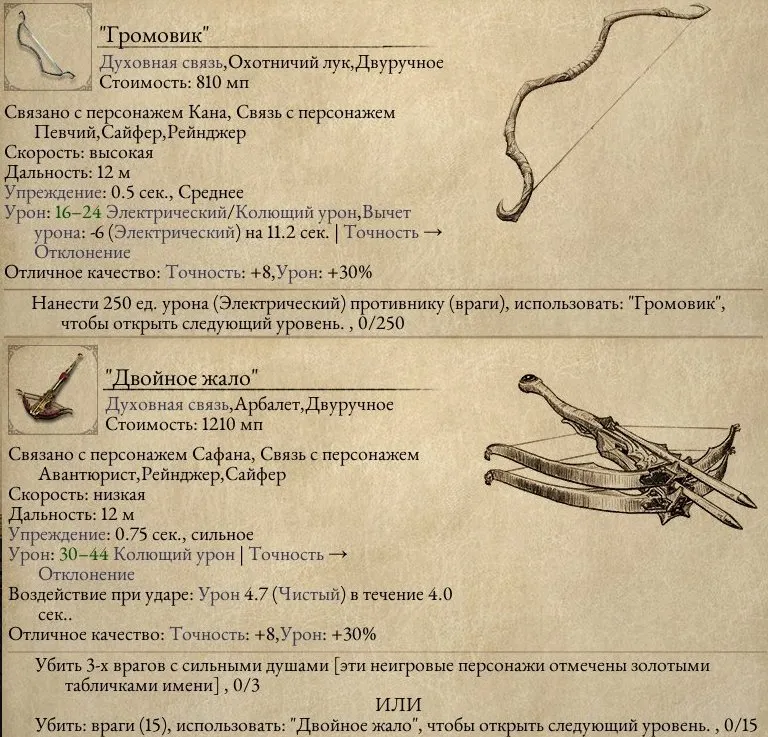
The belt – deal fire damage; and again, this is possible with it.

"Captain’s Company Hat" – apply the effect of "Disorientation"; this property is on the hat.
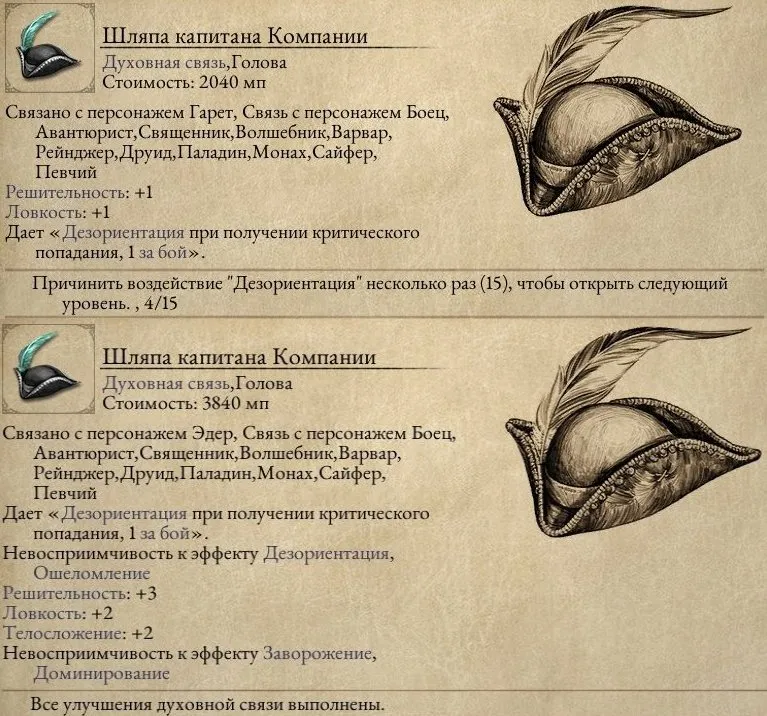
By the way, pay attention to the final characteristics of the hat and belt!
"[Pillars of Eternity](/games?search=Pillars of Eternity) II: Deadfire": the dagger "Maruks Amant" requires dealing fire damage, which it itself does not possess (the warrior had to switch to fire grenades).
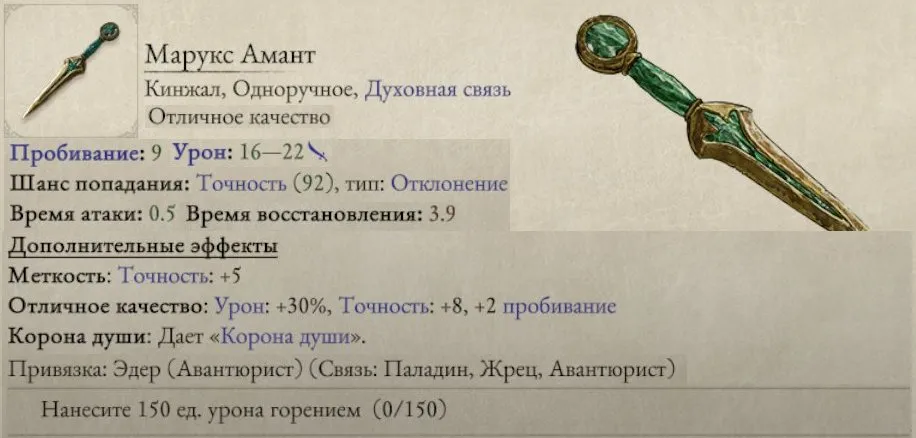
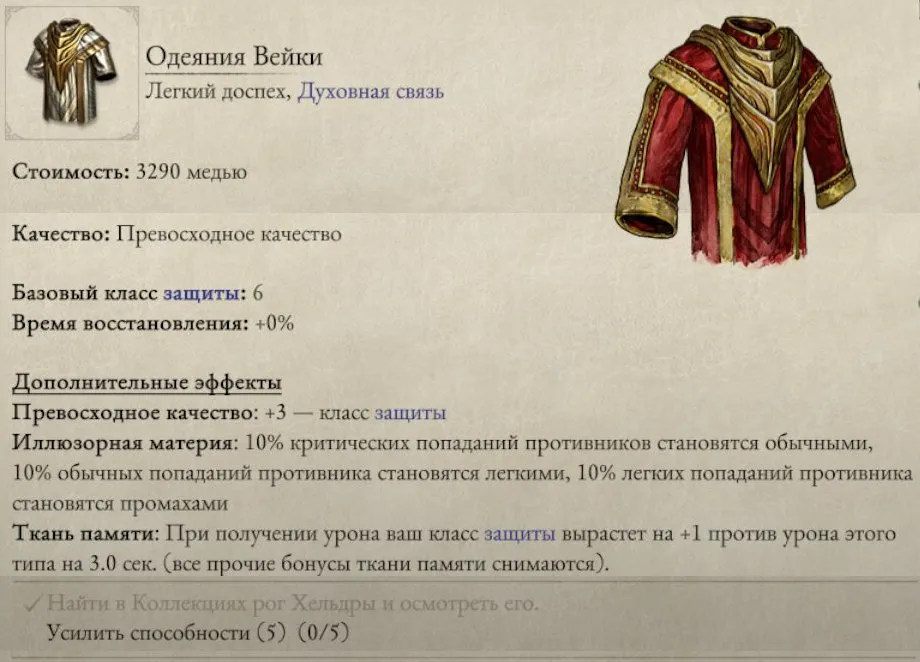
"Veika's Garment" – to enhance abilities (enhanced the owner's abilities, tried to enhance another – no effect, could not upgrade).
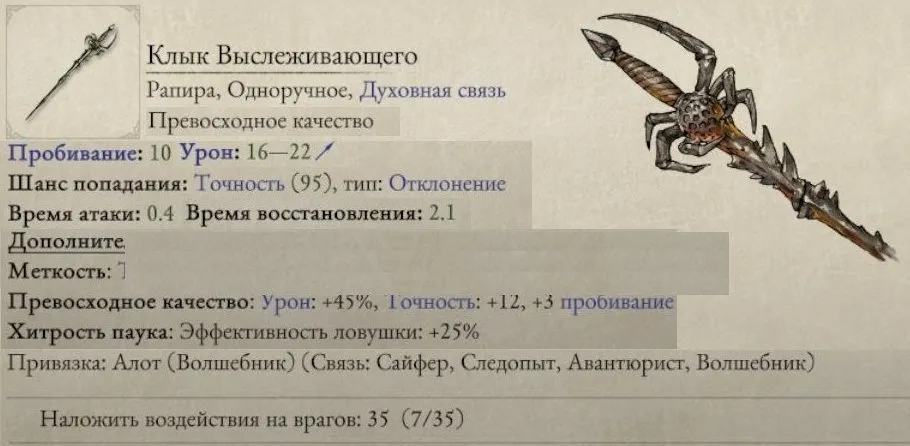
Rapier "Fang of the Tracker" – to inflict effects on enemies (guessed: in one hand the rapier, in the other – a magical stick; it worked).
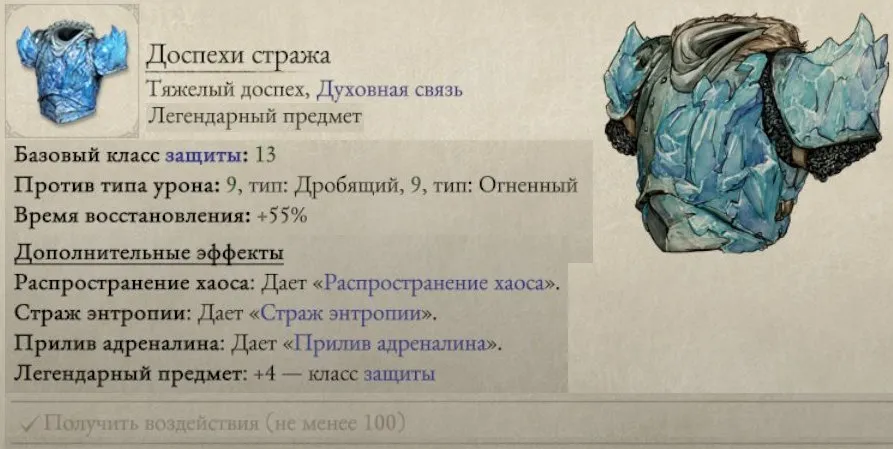
"Guard's Armor" – to gain effects (had to run to "The Maw" on Nekitaka, descend into "Ruins of the Old City" and wander through traps).
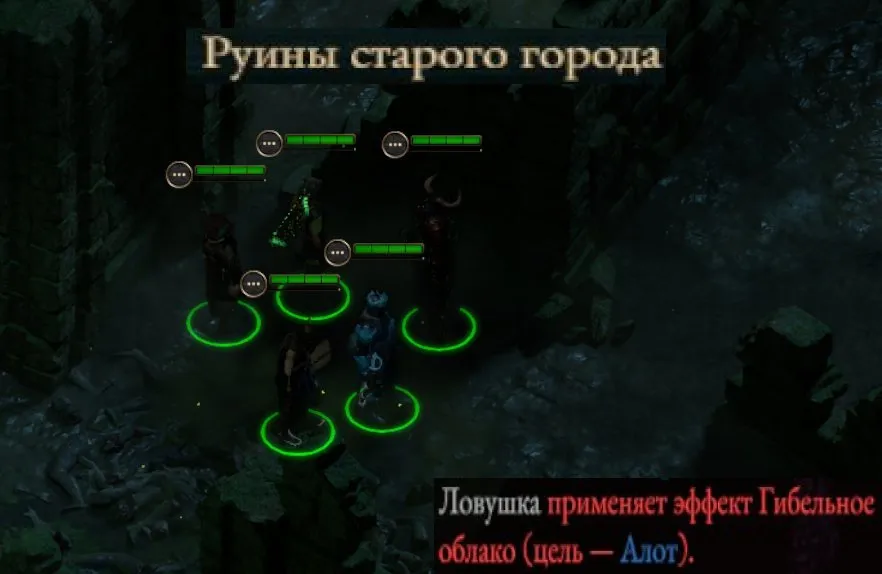
Some items require the owner to take a certain amount of damage! At the same time, any gamer is interested in their wards taking as little damage as possible!
Additionally, the properties of upgraded items surprise and disappoint.

Amazing! The property of the bow promises to distract almost killed enemies (instead of finishing them off with one shot), and the property of the chest piece - to heal four (!) health points over six seconds. Given that during those six seconds, one can easily "strip" the owner of a hundred health points! This is mockery!
This is interesting!
*And again "Baldur’s Gate". The first magical weapon (a dagger) the hero could obtain in Kendelkipe; in Beregost – steal from the forge a longsword at night; shortly thereafter, "swipe" the two best swords in the game from Drizzt; dig up full plate armor in the garden of Nashkel; sneaking invisibly into Durgen's Tower to grab another from a chest. Notably, the so-beloved by game designers "balance" did not suffer from this – games must be made skillfully!*
Now we come to the thief's skills – and not only. In the first part, the thief knew how to pick locks, disarm and set traps – and that was it; pickpocketing wasn’t available to him (?!). Hooray, the creators of "[Pillars of Eternity](/games?search=Pillars of Eternity) II: Deadfire" decided to allow thievery! They would have been better off not doing so than implementing it in such a way! Firstly, there are only three truly rich victims, and all of them live in expansions, you can’t just wander in there. Secondly, the success of the theft is determined not by a dice roll but by a skill development score. What does this mean?
Imoen ("Baldur’s Gate") with 15% pickpocketing (maximum - 115%) could steal a battle chain +1 (at the farm, just above "Friendly Hand"). Or with the same 15%, a large shield +1 (worth a thousand coins!) from the innkeeper of the same "Friendly Hand." Alright, maybe not on the first attempt, but she could do it!
The thief in "[Pillars of Eternity](/games?search=Pillars of Eternity) II: Deadfire" rummages in the merchant's pockets, finds a dagger and sees that he cannot steal it – the skill level is too low! Raising it higher and trying to steal later? An option, but by that time much more of those daggers can be obtained in battle; and the victims' pockets still yield one or two worthless items of negligible value. Given that three to four skills can be developed to an acceptable level, the question arises: is such thievery even needed? It creates the impression that the game designers introduced pickpocketing just for it to exist – and that’s all; no one thought about its usefulness.
In addition, pickpocketing or opening chests with the "thievery" label is only possible in a state of stealth. Let’s return to the review from "Igromania", another quote:
"Stealth plays out vividly and compellingly, such a system was greatly missed in the legendary 'Baldur’s Gate' and 'Icewind Dale.'
How can one compare the stealth system in "Baldur’s Gate" and "[Pillars of Eternity](/games?search=Pillars of Eternity)" – the first is exponentially more effective! The invisibility in "[Pillars of Eternity](/games?search=Pillars of Eternity)" very quickly "wears off" in the presence of outsiders. Moreover, increasing the stealth level does not reduce the vision field of victims, as gamers would hope, but slightly increases the time the thief stays in the shadows under others' gaze. Sometimes, the presence of many "spectators" makes theft altogether impossible; even a distracting "Firework" doesn’t help here!

This is interesting!
*In "Baldur’s Gate", the thief can easily slip into the shadows regardless of whether someone from the neutral party sees him or not (against enemies, only a potion, spell, or item can activate it). And to rob a victim, he doesn’t even need to be "invisible" – most likely, this is assumed when checking with virtual dice rolls: whether the theft was noticed by the victim or not. And indeed, real pickpockets are not invisible; they just show caution (now, I don’t like them!).*
And yes: a thief who is at maximum distance from an enemy in maximum stealth will become visible to everyone as soon as they release an arrow... Just like in both "[Pillars of Eternity](/games?search=Pillars of Eternity)"... (Admittedly, a "Baldur's custom" thief also becomes visible to everyone after an attack, but he doesn’t shoot from a bow; he deals fivefold damage from behind with a long sword, instantly killing the enemy.)
This is interesting!
*Once again about "Encased": an invisible sniper remains invisible after firing! Magnificent! What’s that? You say – "imbalanced"? First, max out the invisibility, find the longest-range rifle, maximize it; pick a good position that will allow retreat (sure, enemies rush to find the one who fired, even though he’s invisible); after that, you’ll be screaming – "imbalanced"! Is it hard to make such a game? Well, yes, it’s much easier to focus efforts on "improving" the mostly unnecessary graphics than to improve the game mechanics.*
By the way, regarding graphics. Once again, I will quote the review from "Igromania":
"Neat models, atmospheric decorations, a riot of colors and a consistent artistic style – everything works to immerse the player in the [magical world](/games?search=магический мир), and the attention to detail sometimes pricks the very heart: in the rays of sunlight, dust particles swirl in the room, the temple is illuminated by thousands of candles, and the tables in the tavern display the served dishes."
Look at how he described it! I only have one question: for what... uh... for what? Why do I need to see dust particles in the rays of light and a riot of colors?! I need a GAME, not a pretty picture! I played the first part on minimal settings not to overload my rather old laptop. I did the same with "[Pillars of Eternity](/games?search=Pillars of Eternity) II: Deadfire": even before starting the game, I set the graphics to minimal requirements.
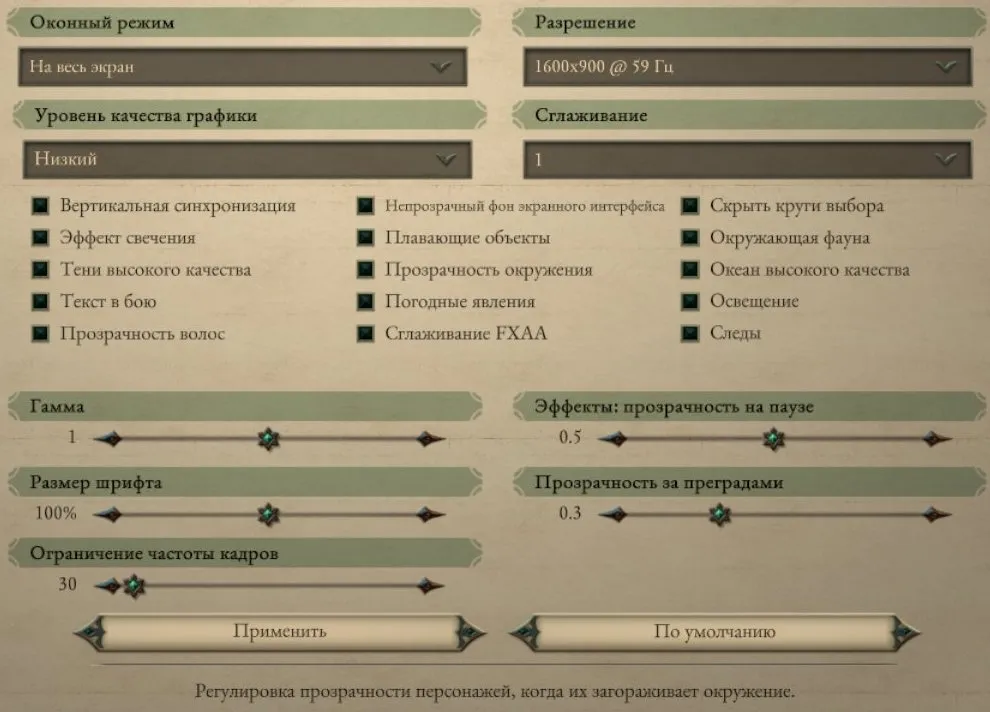
How surprised was I when I found that at minimal settings tree foliage sways in the wind, shadows from the torchlight run along the dungeon walls,
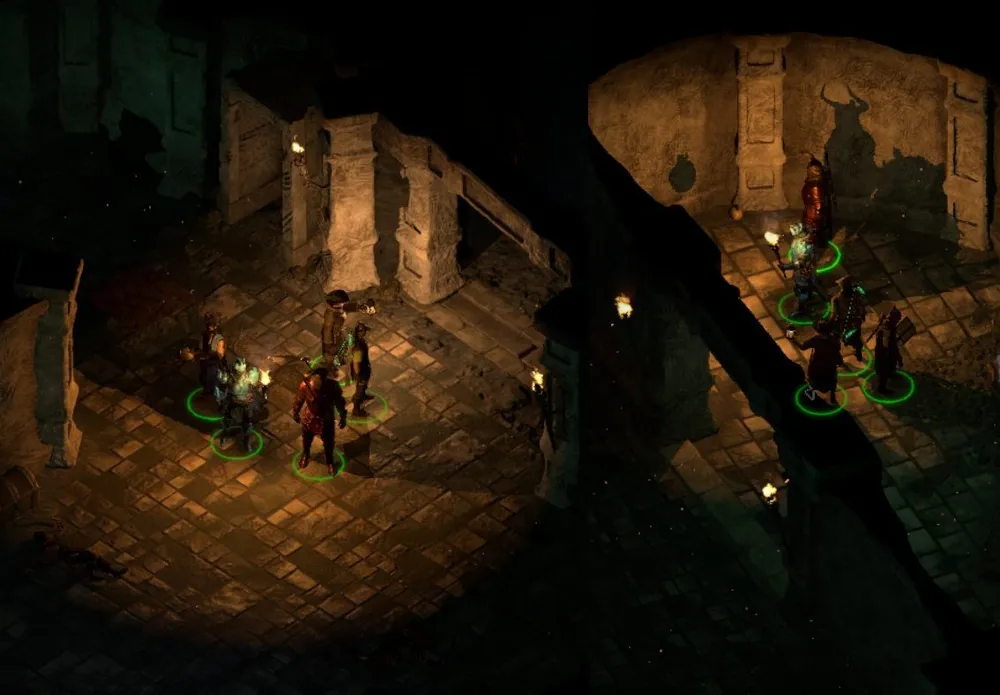
and on the surface, shadows run across the ground from clouds! Surely, the game lagged crazily due to these useless and unnecessary effects!

This moment drove me mad! A complicated battle, and not only is the screen filled with visual effects, but it also shakes thanks to the game creators' design! I expected "lagging" or "crashing" at any moment, due to which I would have to start the battle again.
This is interesting!
*The game "[Allods II: Ruler of Souls](/games?search=Аллоды II: Повелитель душ)":*
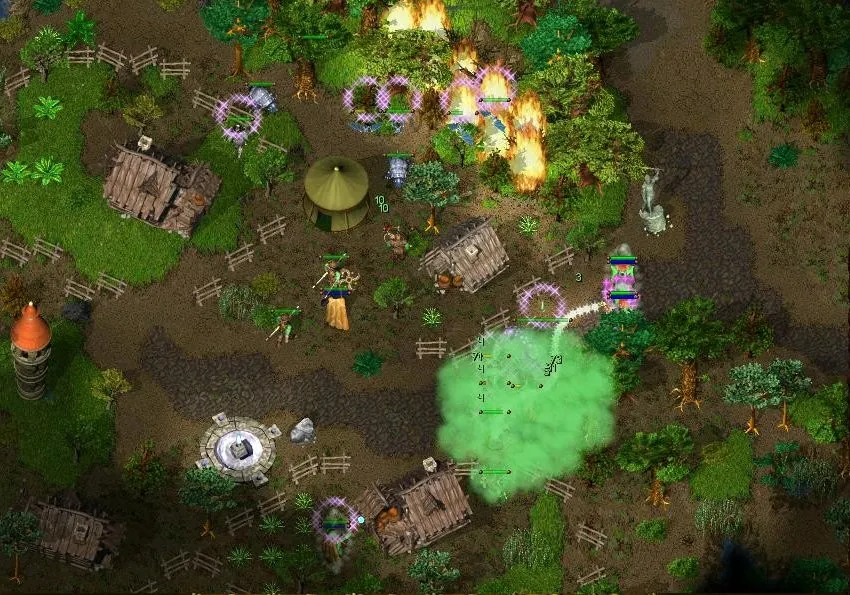
The picture is flat, system load is minimal; nevertheless, one can turn off the wind and the swaying of leaves on trees! "[Drakensang: The River of Time](/games?search=Drakensang: The River of Time)":
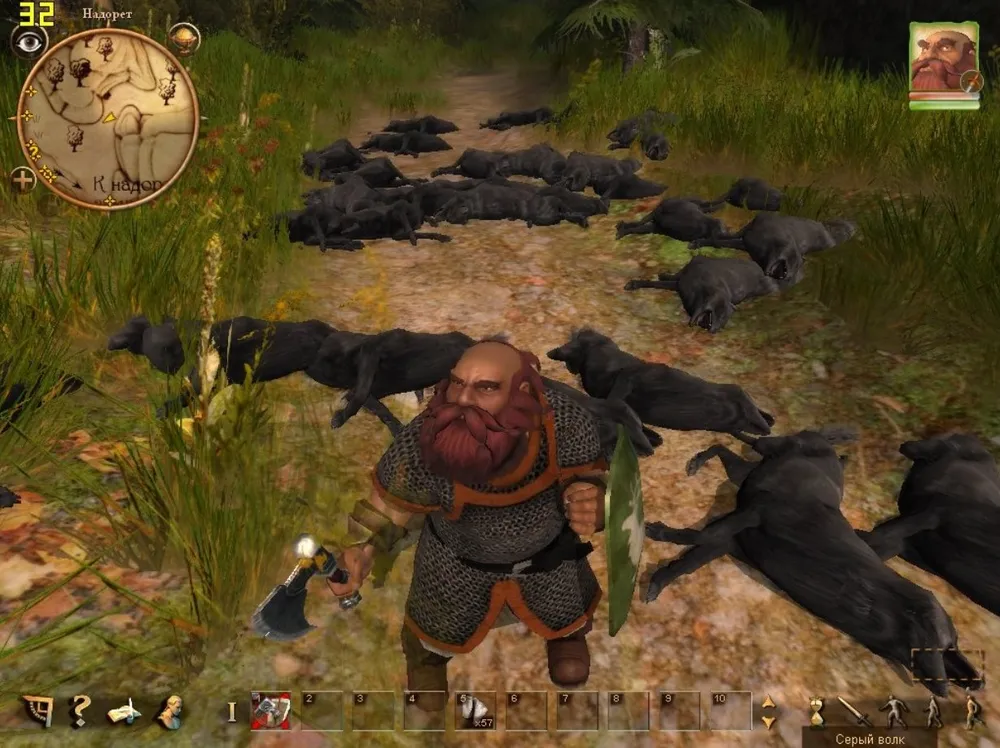
*is a three-dimensional and very beautiful game; lush grass sways in the wind; grass can be "turned off", removing it from the surface altogether. "Baldur’s Gate": in the mountains snow swirls, on the plains, a thunderstorm can occur with lightning and rain; all this can be turned off. What prevented the creators of "[Pillars of Eternity](/games?search=Pillars of Eternity) II: Deadfire" from removing all unnecessary effects? There is no answer...*
What other differences are there between the games? In "[Pillars of Eternity](/games?search=Pillars of Eternity)", my squad left no bosses alive on the cursed path and had no uncompleted quests. "[Pillars of Eternity](/games?search=Pillars of Eternity) II: Deadfire": the cursed squad couldn’t destroy any of the four megabosses (the slime, the iron giant, the spider queen, the mad sorceress);
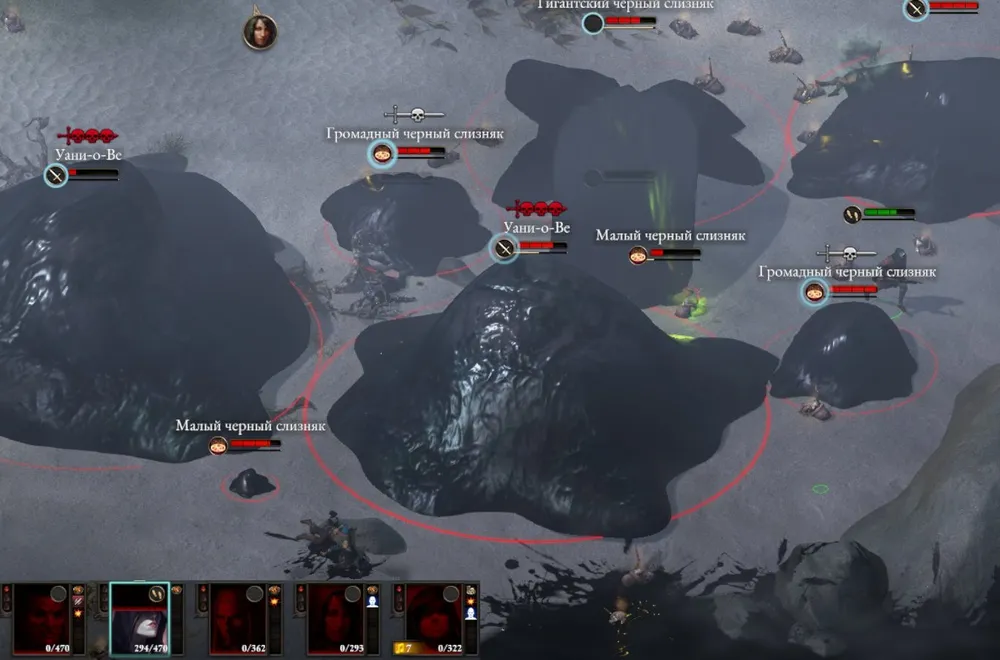
could not clear at least two microlocations (Sizak and Nemnok, Soul Devourer with their scrolls);

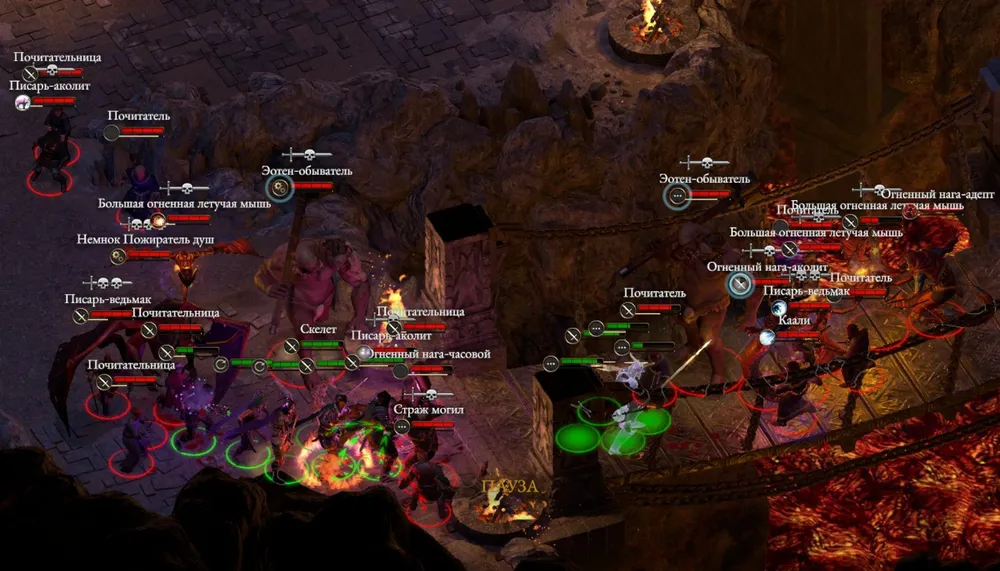
could not win all fights on the island arena of Kazuvary.
This is interesting!
*Maybe it was worth playing in turn-based mode? It would have been easier to manage complicated battles, but the game would have become infinitely long... How can one not recall another wonderful (in my humble opinion) game: "[Fallout Tactics: Brotherhood of Steel](/games?search=Fallout Tactics: Brotherhood of Steel)", which freely allowed switching to turn-based mode from real-time mode if necessary? Alas...*
To the grinding of teeth, the following feature of "[Pillars of Eternity](/games?search=Pillars of Eternity) II: Deadfire" infuriated: at night, a number of merchants and characters necessary for obtaining quests or resolving them disappeared into who knows where! I had to waste time waiting...
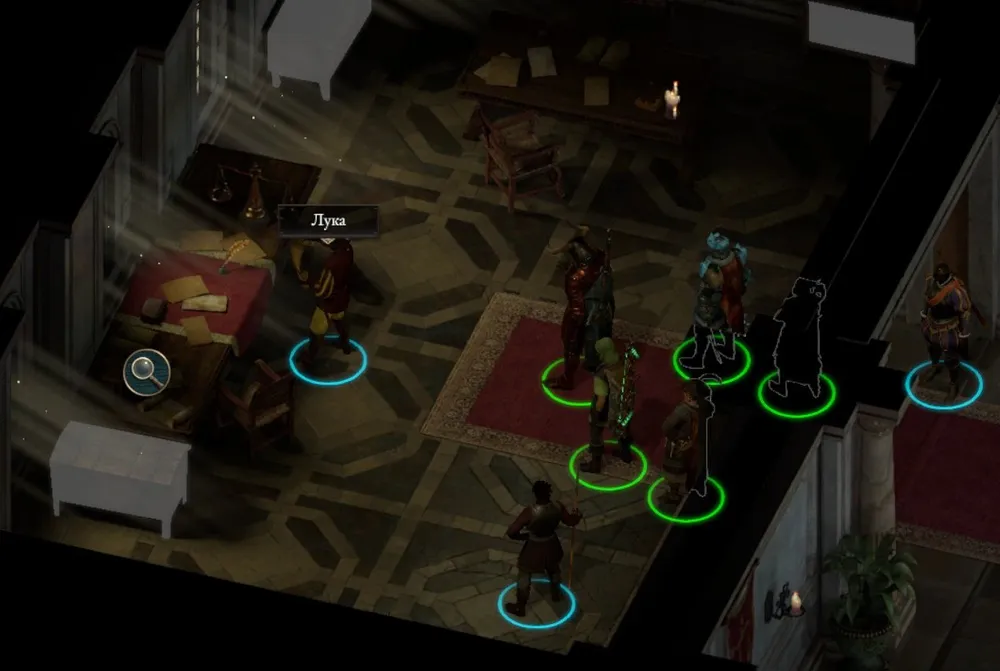
Couldn’t find him - turns out he went to sleep!

Morning came, and well-rested inhabitants appeared. Ugh!
This is interesting!
To be fair: in the forge of Beregost ("Baldur’s Gate") at night there was no one (Only in this forge! For the entire game!). This allowed for undisturbed lockpicking on chests and stealing their contents. (Attempting to pick any lock in broad daylight, in front of witnesses, invariably ended with the guards being called, battling, and a drop in reputation. However, one or two witnesses could easily be brought to an unconscious state with a punch – and then pick the lock without interference.)
On Suyuke, there are two merchants; one has unique food components in their assortment; the other has weapons. While the squad was busy exploring the underwater city of Sigat Mor, an attack from the Gnarled Marsh occurred from above (which at that point had already been cleared!); both merchants disappeared into who knows where – presumably, they were killed.
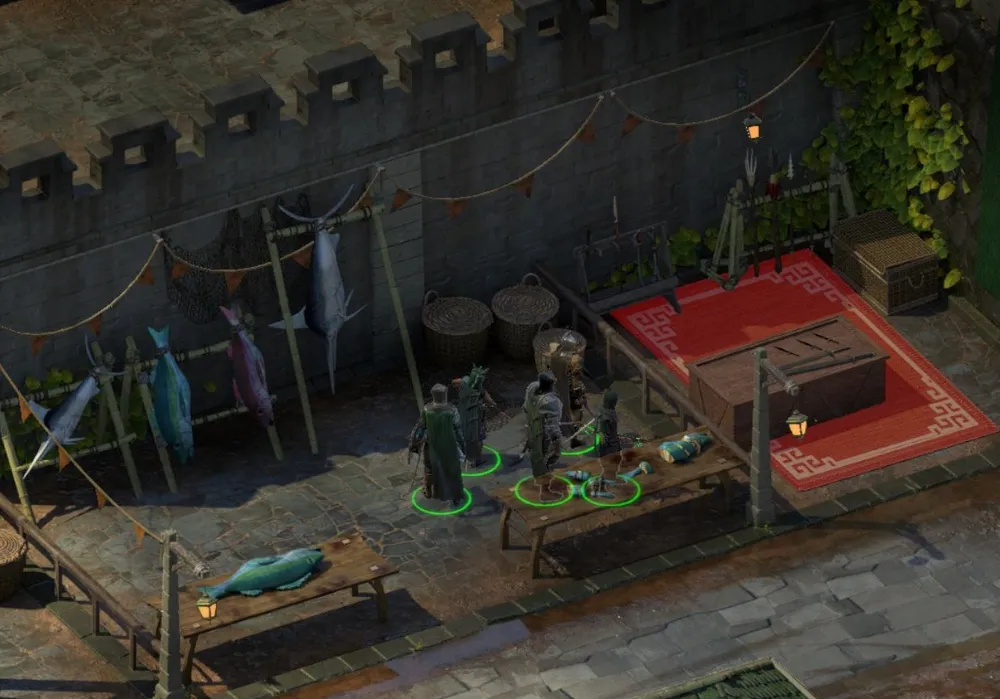
By the way, such things happen in the game constantly: for instance, if you dive straight into the "Engvitan Excavations" dungeon, avoiding a battle with the amphitheater’s guards, by the time you surface, they will have vanished.
A whole expansion called "The Ship of Curiosities" with several merchants – none of whom have anything to buy.
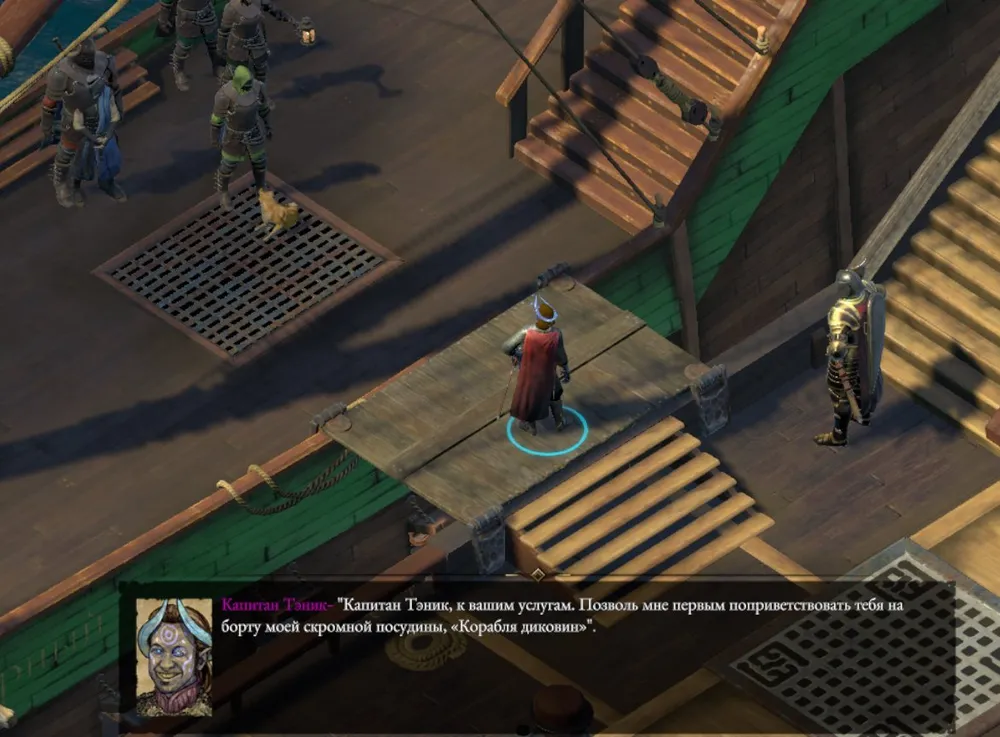
It would be a different story if they had an infinite supply of components needed for weapon and armor upgrades, even at exorbitant prices – wow! Immediately, interest in completing the entire game and finding all items with upgrades would rise! Alas...
Helmets, rings, belts, and other equipment in "[Pillars of Eternity](/games?search=Pillars of Eternity)" far exceed similar equipment from the second part in their properties.
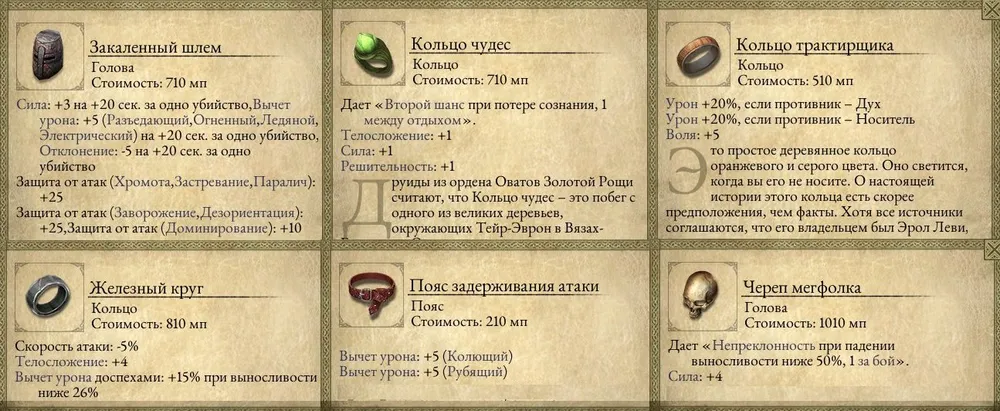
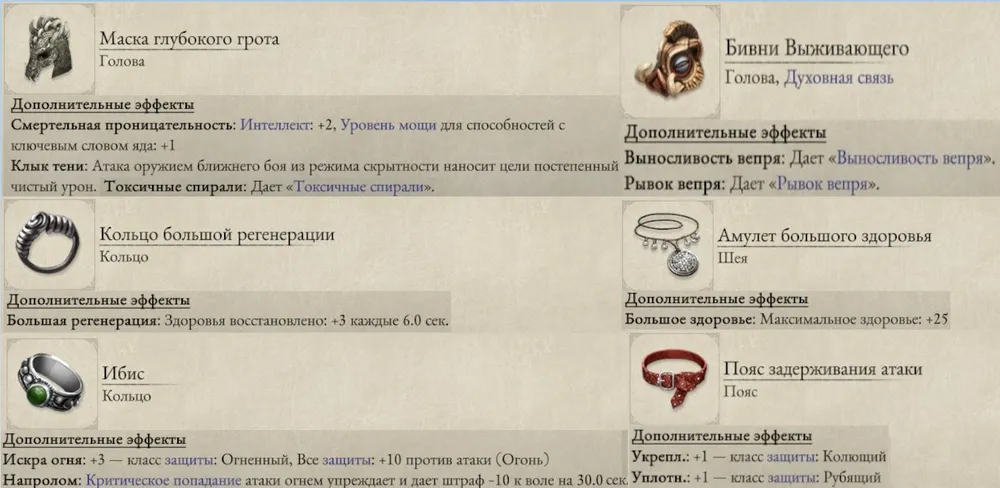
The items of the first part have better characteristics, and no spells in their properties!
Summoning figurines in "[Pillars of Eternity](/games?search=Pillars of Eternity)" could be used an infinite number of times (with breaks for sleep); figurines in the second part have a finite number of uses but also with breaks for sleep.

In "[Pillars of Eternity](/games?search=Pillars of Eternity)", there was a possibility to "set" enemies against each other. For example, in "Black Marsh", one could provoke trolls to attack the bandits' camp;
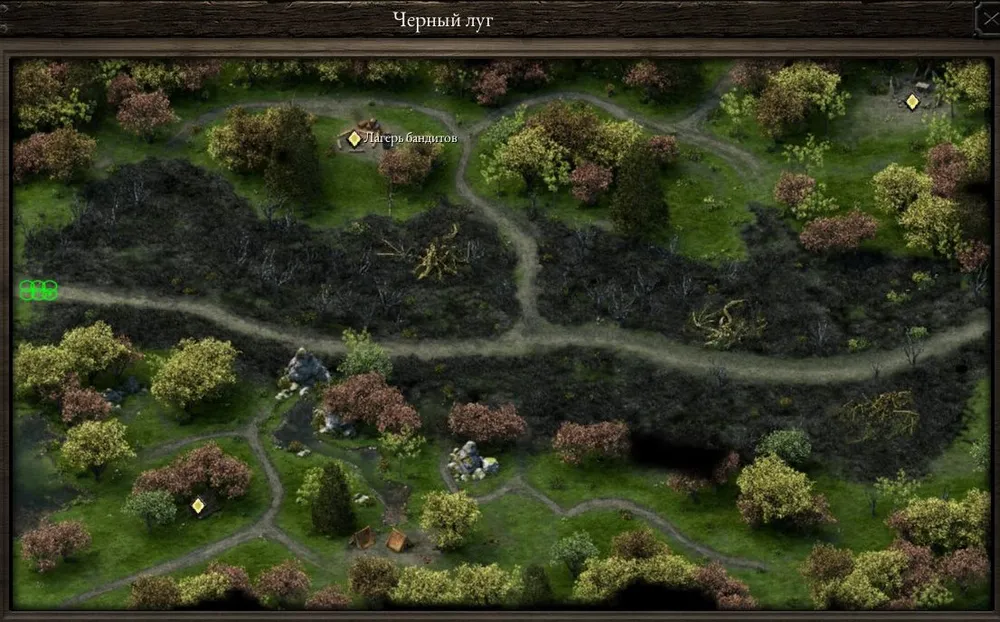
and at "Kreghold Cliffs," compel the besieging forces to fight against the undead at the entrance to the castle.
In "[Pillars of Eternity](/games?search=Pillars of Eternity) II: Deadfire", this opportunity has vanished...
The reader has the right to exclaim: "Is there anything in "[Pillars of Eternity](/games?search=Pillars of Eternity) II: Deadfire" that is better compared to the first part?" Yes. First, the pistol from two-handed weapons became one-handed. Second, an infinite amount of gold (thanks to boardings). Third, the appearance of items in a chest is no longer tied to the date of the month. Fourth, the desire to rest does not require firewood. Fifth, the new world itself.
On all other metrics, "[Pillars of Eternity](/games?search=Pillars of Eternity) II: Deadfire" significantly lags behind the first part; its creators managed to "nerf Maple," making the game much less appealing.
Thank you for your attention! Good luck to you all!
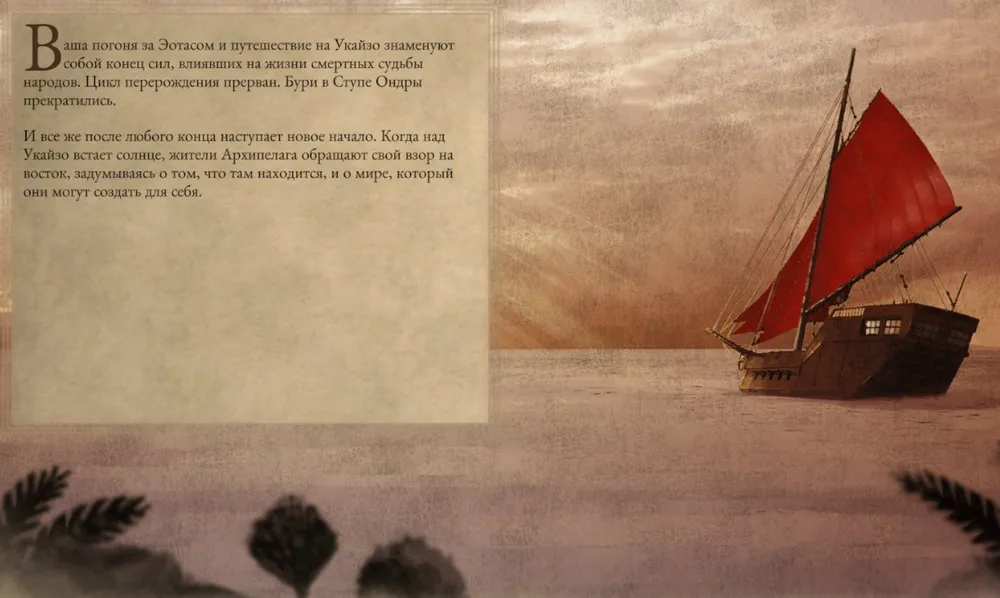
Judging by the text, the creators of the game left the door open for a third part. But I highly doubt it will come out.