Review of "Might and Magic: Heroes VI" - from beta to release
Not long ago, I had already written a review of the beta version of Heroes 6, but too many things were still unclear at that time. There were a lot of technical errors, some details simply hadn't been completed, Conflux wasn't working, and we weren't really allowed to try out the campaigns. To fix all of this, the developers at Black Hole Entertainment even postponed the game's release date. And now at last we have the chance to evaluate what they have ultimately produced.
Family Feuds
The game's plot, as has been known for a long time, revolves around the fate of the children of the suddenly deceased Duke Vyacheslav Gryphon (by the way, in the original, he was named Slava). The prolific duke has fathered five offspring, exactly the number of playable factions – three sons and two daughters. Each of them has their own problems – one has run away from a despised fiancé, another's path is paved with good intentions but leads straight to hell, and one in particular inadvertently served as the cause of their beloved father's death. Can anything be worse than a quarrel among relatives, when a brother turns against another brother and executes their sister? Might and Magic: Heroes 6 confidently answers us: yes! When this quarrel unfolds in an empire where angels flutter and croak… I mean prophesy the invasion of demons, the aristocracy thirsts for power, and the emperor, to be frank, does not shine with intelligence. Ancient monsters awaken, abominations rise, and in the raging fire that engulfs the state, the future is forged – a new country and a new dynasty of rulers. The Gryphon Dynasty.
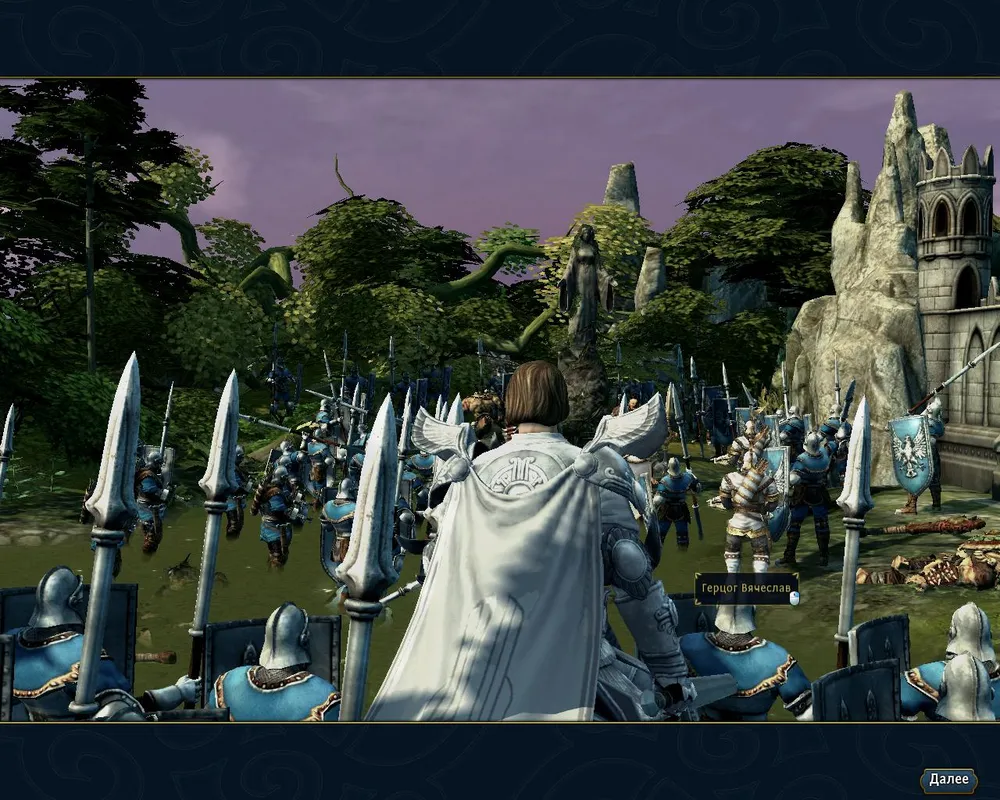
Duke Vyacheslav is still unaware that he is witnessing the beginning of the end of the empire.
Players are given a total of seven campaigns – an introductory one that explains the basics of management and how Duke Gryphon reached the life-and-death situation he finds himself in, five campaigns featuring his children who have joined different factions, and an epilogue that wraps up the story. Compared to previous installments, the missions in the campaigns have made a significant leap towards role-playing (I will mention this phrase more than once throughout the review) – we are given a huge number of tasks, most of which are not mandatory for completion, but in return, we receive a lot of interesting rewards, ranging from experience or resources to permanent upgrades of some characteristics of the main character, new troops in the army, or mighty artifacts. The maps of all missions are vast, but while completing them, there is no sense of linearity or drawn-out tediousness – there is so much to do, find, and explore that you won't have time to get bored.
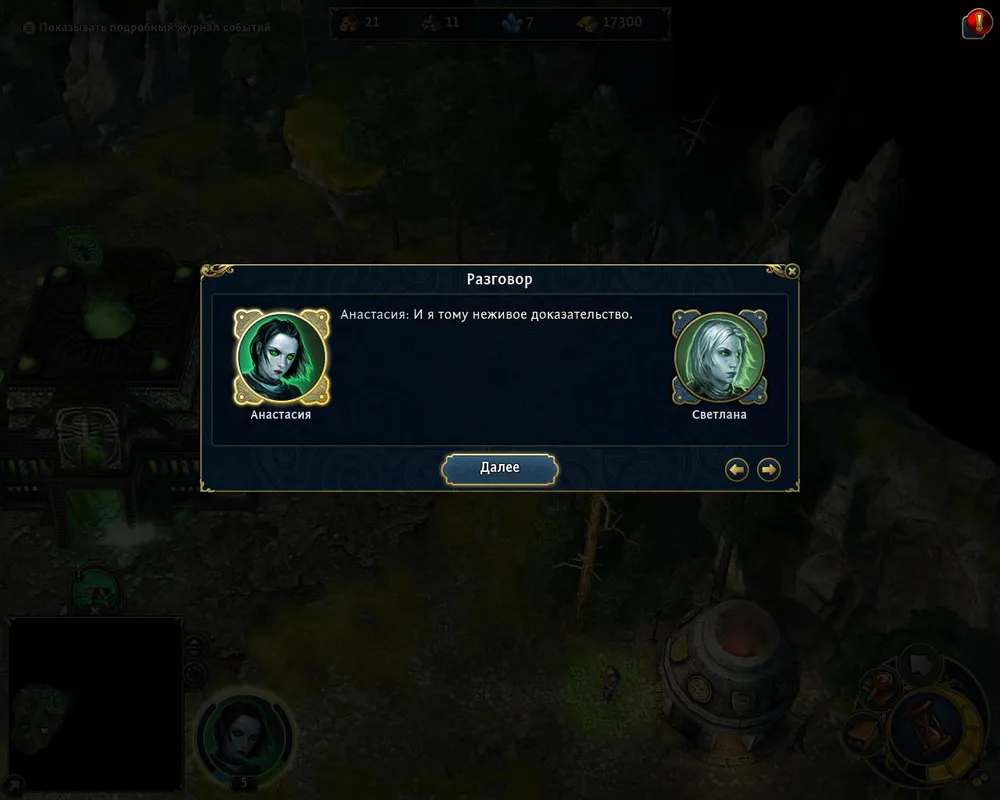
Nastya is a little dead girl, and her jokes are characteristic.
Heroes constantly engage in dialogues with NPC companions, and these dialogues are well-written and witty, providing a lot of interesting information about the world. Events are accompanied by videos using the game's engine – they look beautiful unless you scrutinize the characters' faces, which turned out a bit rough.
New Heroes of a New World
A significant role in completing the campaign and generally in gameplay is played by the number of Blood and Tears of the Dragon reputation points awarded to heroes for cruel and merciful actions, respectively. Many times we will be presented with a choice of how to act – and characters will react depending on their tendencies shaped by our actions. For example, in one of the missions of the tutorial campaign, we get the choice – to banish the traitor or execute her. Tears heroes choose banishment, while Blood heroes opt for execution. This typically doesn't have a major impact, but allows us to show how our influence shapes the hero's character and alters their personality. As reputation points accumulate, the character not only gains new abilities but even changes their appearance to better correspond with their altered worldview. For strategies, this is an unusual move, more characteristic of role-playing games.
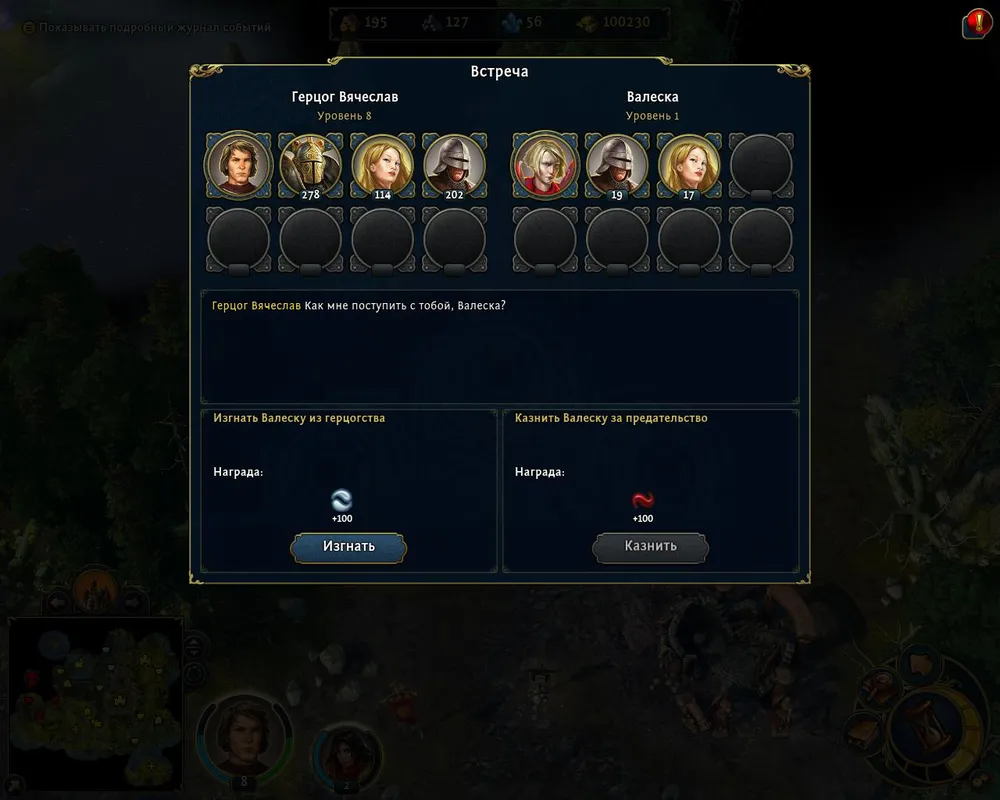
This is usually what a choice between cruelty and mercy looks like.
Speaking of heroes and the role-playing component, two important things must be mentioned: the development system and artifacts. In my opinion, the new system, which allows players to choose skills to improve upon leveling up, is much better than its predecessors based on randomness. Fewer unpredictable factors mean more opportunities for planning, and thus, more strategy. In one fell swoop, the developers killed two birds with one stone – their innovation perfectly aligns with both the strategic and role-playing aspects of the game. The righteous anger of players over weakened wizards turned out to be excessive upon closer inspection. Yes, it is now impossible to turn a hero-wizard into a super-powerful artillery unit that clears enemies from its path without the help of an army – used spells recharge over several turns and you can't learn many of them. However, many spells have interesting additional effects – for example, the ice arrow doesn't just hit the target, it also freezes them in place, allowing you to immobilize dangerous foes.
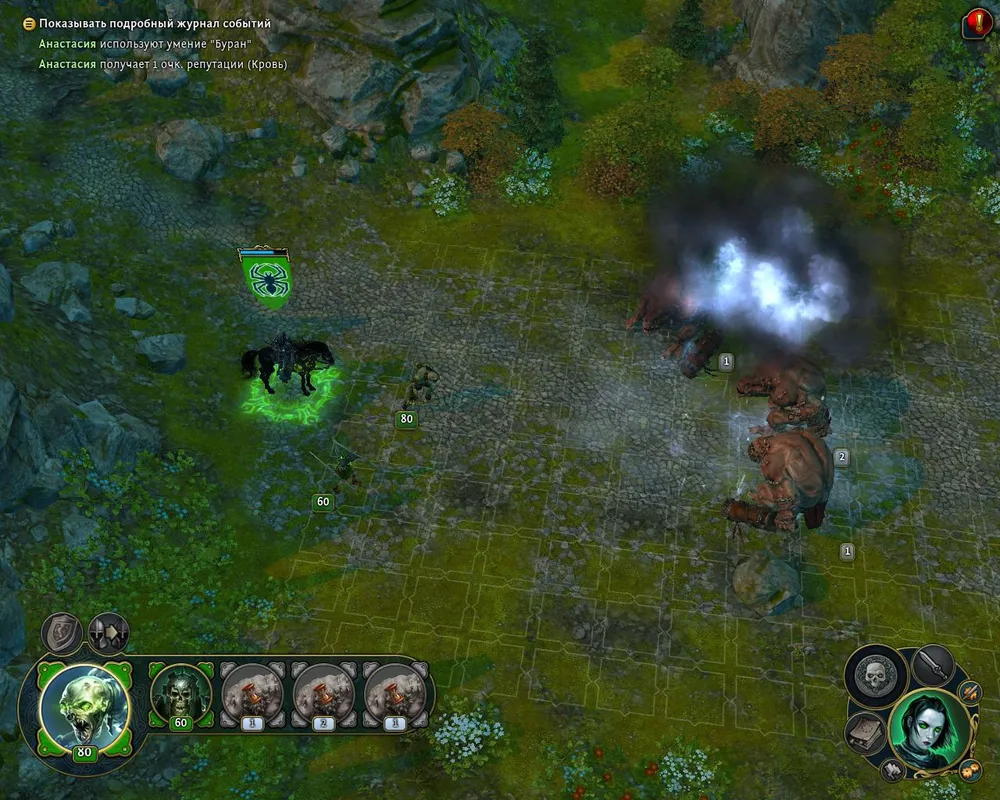
Under this rain, enemies get soaked to the bone, catch colds, and start moving more slowly.
Since the beta version, the developers have adjusted the balance, granting access to second-tier spells starting from the fifth level of the hero, not the tenth, which sharply increased the utility of wizards, since most of the combat magic is found at the second tier, as well as mass variants of various buffs and debuffs. In general, the role of the wizard hero in battle is now the same as that of the warrior hero – strengthening your army and weakening the enemy's; however, sorcerers have many more tricks and direct damage against enemies, so there are considerable tactical differences between the two character classes.
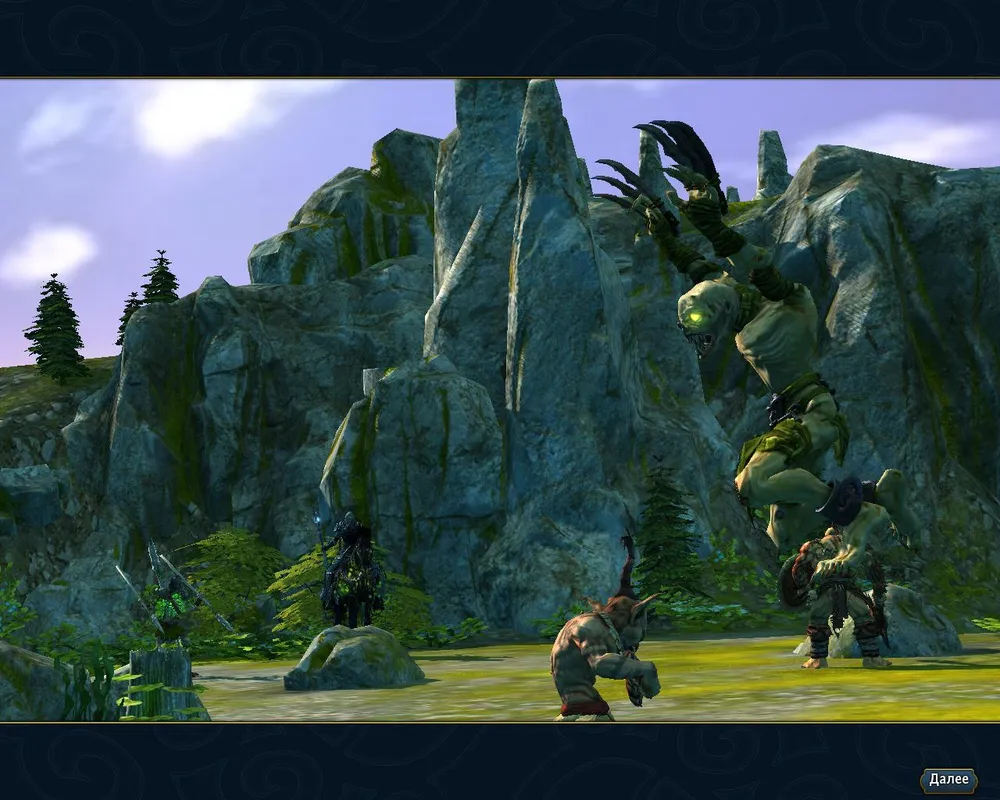
A new word in necromancy - flying ghouls.
Artifacts now have even greater importance than before – not only do set items carry over from mission to mission, but some particularly powerful magical weapons now level up just like heroes, gaining experience and unlocking significant new bonuses. Such weaponry is called dynastic. Single-use artifacts have also returned to the series – potions that restore mana and magical scrolls that allow you to cast a specific spell once.
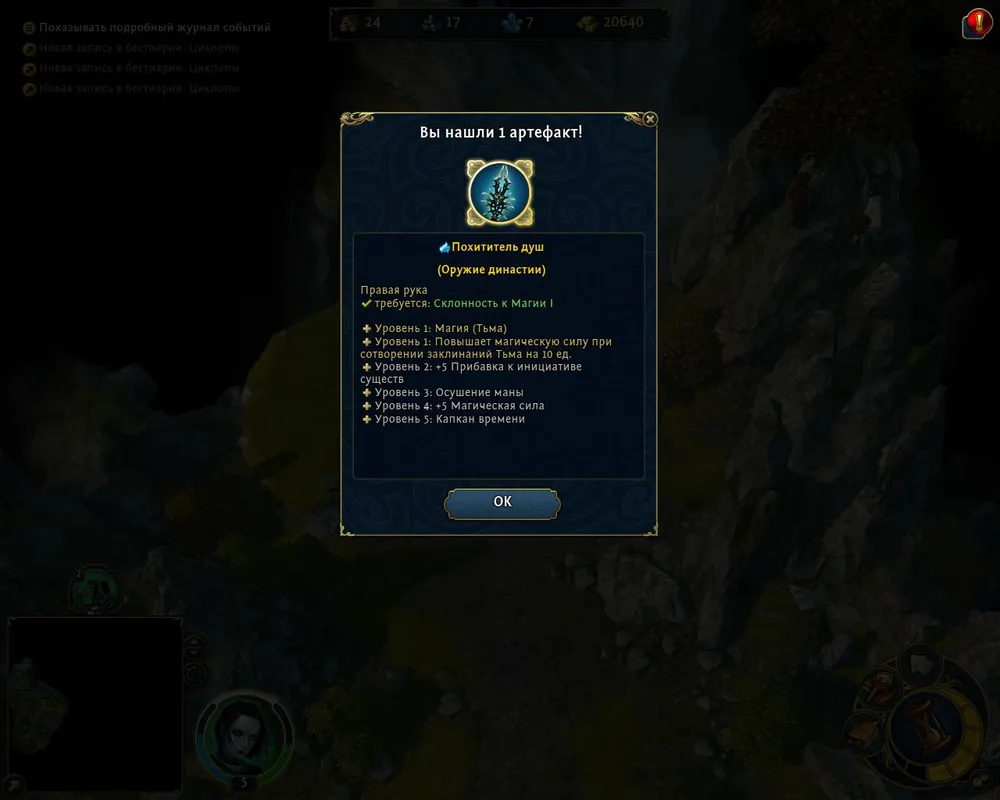
Heroes 6 has even made artifacts something... heroic.
The wave of role-playing permeated even the fighters of the heroes' armies. There simply isn't a resemblance among them – even the basic troops are radically different. For instance, between skeleton spearmen, goblins, and crossbowmen, the only similarity is that they shoot. But skeletons slow down the target and all enemies around it with their shots, goblins can set traps on the battlefield, and crossbowmen pierce enemy armor and can learn to hit everyone in the path of the arrow. Not to mention the basic melee fighters of the human empire, the guardians, who have distinguished themselves as well – the entire strategy of playing for this faction is built on their effective use, as these lovely guys absorb part of the damage inflicted on neighboring allies, and can learn to automatically attack those who deal that damage!
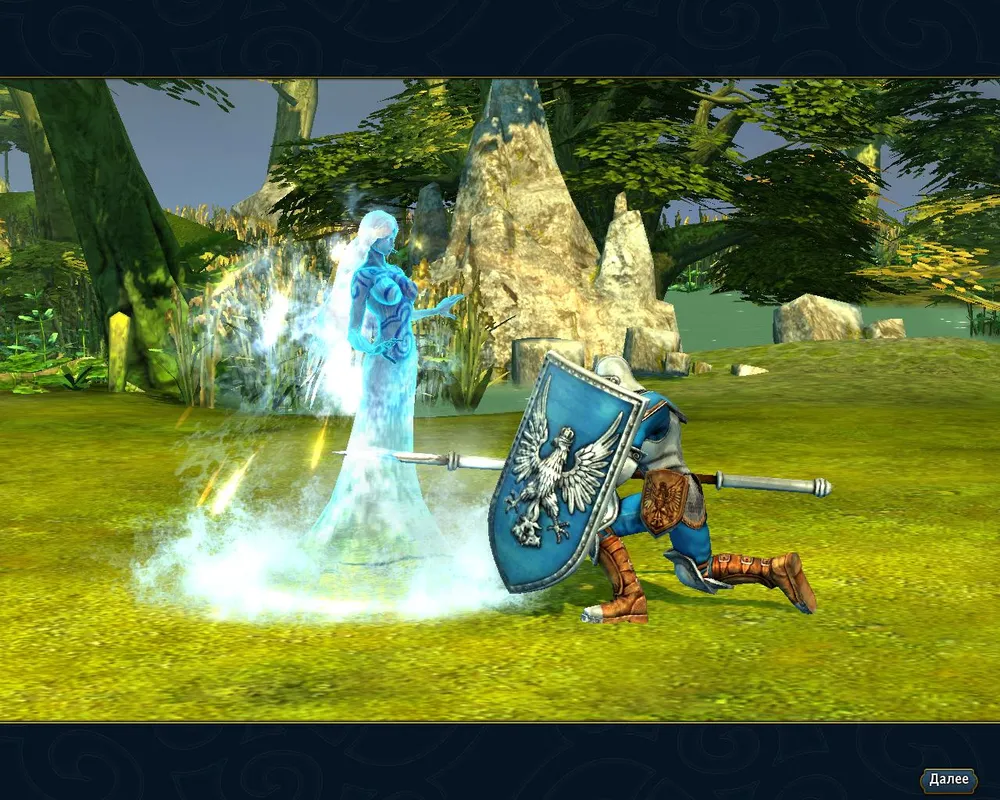
Artistic writing on water with forks... I mean, on a water elemental with a spear.
I won't even go into the creatures of the second and third ranks, which sometimes possess a set of seven to eight unique features. They too are quite heroic, just smaller. Thanks to this approach, the tactics of playing with different factions have almost nothing in common, and diversity is always great.
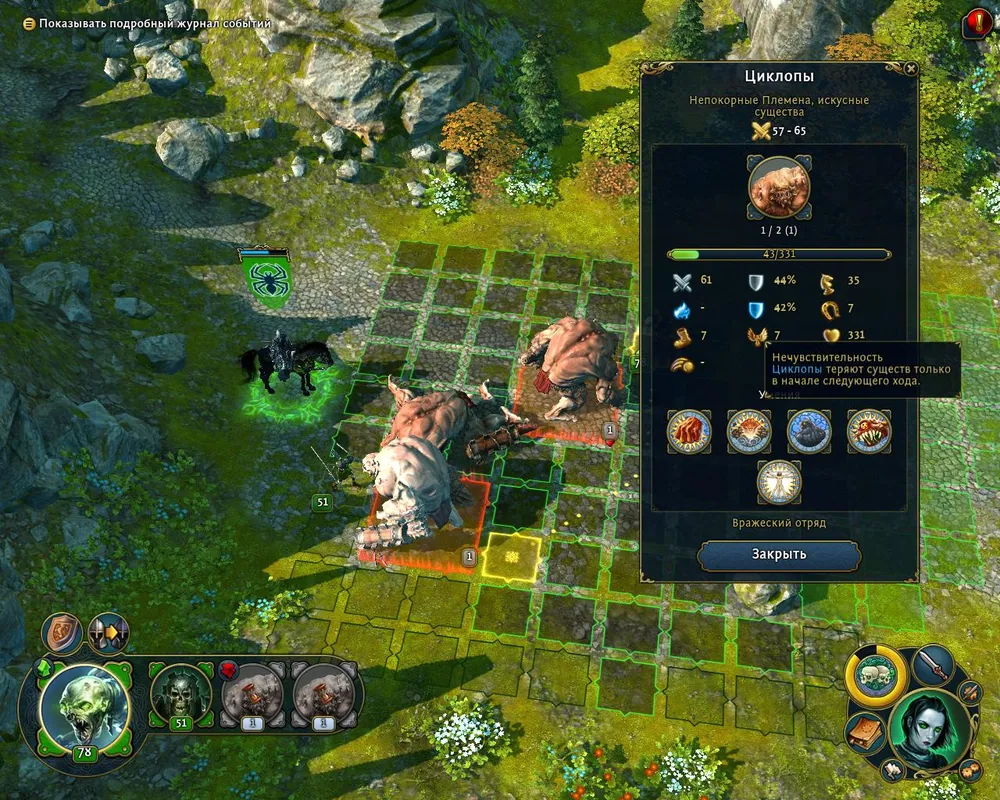
Not a bad set of parameters for just one of a hero's army fighters.
At the same time, a lot has been done to finally achieve balance in the game – in particular, a radical redesign of necromancy and vampirism. At first glance, the developers have managed to balance such dissimilar races, but this still needs to be tested in numerous battles.
The Other Side of Magic
There is little sense in dwelling on the graphics – since the beta version, it has hardly changed, only more animations have been added, making battles look even more beautiful. The grim style of the revamped Ashan blends seamlessly with the tragic story told in the campaign, though some design ideas can't be called entirely good. Yes, yes, I am again bringing up the sore subject – the appearance of the factions. But each individual must decide for themselves who they prefer – the bright saints from the human empire, the grim denizens of the necropolis (judging by the appearance of the ghouls and liches – fans of either BDSM or the musical style