
"Game of the Year, Soaring on the Wings of Night" — review from eurogamer.net [translation]
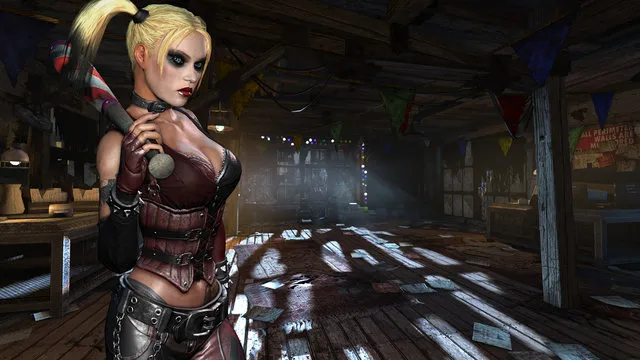
Review of “Batman: Arkham City”
Christian Donlan, 14.10.2011
If you break it down, the game is a role-playing game. Not because the player gains experience, levels up, and improves combat skills through upgrades, no. It’s a role-playing game in the literal sense, a game that allows the player to live in an imagined world of rooftop brawls and flights above them. The animation, movement mechanics, takedowns—all come together into a cohesive picture. In “Arkham City,” the player becomes Batman.
And becoming the Dark Knight is easy, partly because of the magnificent groundwork laid by “Arkham Asylum,” which defined not only the character’s strength but also his cunning and controlled rage, and partly because we all were Batman as kids.
Bedrooms and attics were our caves. We dreamed of dangling by the edge of a skyscraper those who rode their damn bicycles on the sidewalk. We swore to avenge the deaths of parents who were, in fact, very much alive and sitting in the next room, loudly discussing a broken “Morris Minor” since the morning.
“I must become a creature of the night!” Your words, Bruce. We were Batman for years without anyone noticing. “Arkham City” simply removed the awkwardness, becoming not only a game about Batman but a Batman simulator, a kind of fulfillment of secret wishes.
Basically, only games can fulfill wishes like this, creating yards, streets, and entire neighborhoods soaked in crime and gothic secrets. The setup is simple: a former warden of Arkham Asylum becomes the mayor of Gotham and turns the city slums into an asylum branch. Cutting them off from the city with watchtowers, searchlights, and barbed wire, the crazies were released from Bowery to Crime Alley, known for its shenanigans, and the old police precinct. Under the watchful eye of Dr. Hugo Strange, the inmates began to form gangs and divide their territories.
In this tangled web of strained relations and fragile alliances bursts Batman, and the player is treated to a rich comic narrative in the spirit of “Hush” or “The Long Halloween,” composed of short, sharp scenes, any twist of which can be forgiven if it leads to a new gadget or the appearance of a new supervillain.
“Rocksteady” isn’t shy about leveraging Batman’s not only excellent backstory but also his rogue gallery. “Arkham City” features an absurd number of characters, from the most dangerous stars of the main campaign to strange guests from side quests. And there’s nothing bad about that considering just who these characters are.
The best of them have been reimagined by “Rocksteady,” incorporating some changes into their canonical images. Just as in the first installment, where the Joker suddenly became the host of a deadly reality show, in the second, the Penguin became a shabby thug with the bottom of a beer bottle instead of a monocle, Mr. Freeze became mysterious and tragic in his refrigerator suit, and Hugo Strange became both threatening and vulnerable: a hypnotic voice combined with measured manners. Sometimes you even start to sympathize with him.
However, the main character of the game is the city itself. While “Arkham Asylum” focused intensely on Bruce Wayne’s psyche, the sequel brought Gotham’s past and predictions about its future to the forefront.
In essence, the entire plot is a retelling of “Chinatown” in a comic book style. It pulls the player underground, past abandoned stations and half-ruined buildings, and throws them into a strange mechanized fairy tale, reminiscent of the World Fair of the 19th century. Then the narrative soars upward again, flying past the whirling media helicopters and police dirigibles to a towering iron structure in Art Nouveau style, where mysterious forces clash in the battle for the soul of a decaying metropolis.

Externally, the city is just as you’ve always wanted to see Gotham: dirty snow and trash, rays of searchlights, and tilted Victorian-style buildings. It’s packed to the brim with prizes from the Riddler, the best of which now represent a clever puzzle with pressure plates, electric mazes, and the use of remote-controlled batarangs, as well as Easter eggs for the most observant fans. There stands the “Monarch” theater, right next to where Thomas and Martha Wayne were shot. And here you can see the edge of a poster from Harvey Dent’s election campaign. I believe in it.
In other words, if “Arkham Asylum” resembled “Metroid” with its enclosed spaces and complex mixture of gradual area unlocking and backtracking, then the sequel resembles “The Legend of Zelda”—a fast forward movement with moderately limited freedom, where the iconic buildings of Gotham serve as dungeons, and the streets replace Hyrule’s fields.
On the streets, there are random skirmishes, dozens of collectibles, and a nice selection of side quests, each utilizing a known name and interesting game mechanics. Whether you're soaring through the skies searching for the remains of the maniac’s victims or dashing from one phone booth to another, trying to track a coded call, there will always be something to distract your attention.
And it’s hard not to. For example, the question mark prizes that previously simply gave achievements and upgrades now unlock an entire mini-campaign. And it's not only the Riddler from the entire Arkham brotherhood who has grown in the player's eyes.
However, what truly amazes isn’t the assortment of characters but the navigation of the world. In “Arkham Asylum,” Batman was so seamlessly integrated into the game—invincible in combat, useless under fire, equally calm in planning battles and examining crime scenes—that it was easy to forget his other side. Now, though, “Rocksteady” has given players that side too, placing Batman where he belongs—in the night sky.
Sure, in the first installment you could glide and use a grapnel, but there were strict limitations. Gliding, for example, worked only as a mesmerizing jump off a cliff and then as a brief prelude to close contact between a heel and a face. Here, though, both elements have taken center stage. An acceleration via grapnel has been added, launching Batman straight into the sky, and there’s an open space where you can really glide on the cape. Suddenly, the game transformed into the fun of “Crackdown” and “Just Cause 2,” where the joy comes simply from moving through the world. It’s one of the coolest, rarely realized, and most important pleasures any game can deliver.
For even more convenience at larger scales, they attached a radar to the top of the screen and allowed players to place markers on the map, which, of course, appear as bat signals. Both disappear when switching to detective mode, which prevents players from once again skipping the artists' work on textures. Moving help will genuinely be needed.
Yes, “Arkham City” doesn’t have a huge open world, even when considering all the indoor spaces accessible in the main campaign, but the world is intricate and filled with mysteries. After four days of scouring the city, I still found something new, and the best moments in the game are often those where everything is calm, where Batman sneaks across rooftops, listening to the continuous chatter of criminals below. Sometimes it’s hard not to feel like the world’s greatest detective on duty, sifting through the noise for the clue that will prompt him to act.
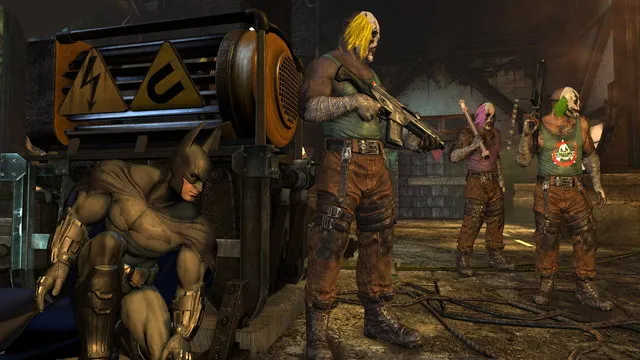
Batman can perform a bomb jump and slam down, reminiscent of the Mushroom Kingdom from “Mario,” suggesting that Alfred bought young Mr. Bruce a “SNES” in his time. Even disregarding this (as well as the grapnel, which is essentially a shooting hook from “Zelda,” and a bunch of other references to Link and Sam), playing “Arkham City” still leaves the feeling that this is what the Dark Knight could have been if created by “Nintendo” instead of “DC Comics.”
It’s not so much about specific moments, but the overall attitude. “Rocksteady” makes games much like “Nintendo”—the player will never be handed a contraption that’s only good for one thing, nor will they be confronted with a dreary, joyless goal, even if it’s just making it down the street. The main thing “Arkham City” shares with “Nintendo” games is that you can’t say what was created first—the game world, characters, or game mechanics—all harmoniously blend together.
If there’s anything lacking in the game, it’s novelty. “Arkham City” doesn’t have anything that could surpass the magnificent revelations and player interaction from the first installment (though there are things on the same level), and the main feeling that someone finally made a game about Batman that the license enriched rather than mutilated is hard to replicate. Instead of novelty, players receive improvements: bosses are better, the animation is improved, and the gameplay now requires more brainpower.
A worthy trade-off. The combat system, one of the best parts of the original, has been enriched with new solid animations, new enemy types, new takedown moves, and easy access to gadgets. Moreover, those gadgets have been reworked and improved. The grapple launcher now allows changing direction mid-flight, turning from a fun bridge substitute into a necessary tool for a good night in the Bowery, while newcomers include a remote electrical shocker and a freezing grenade, serving both as a means of incapacitating opponents and moving through certain areas. Alfred once says, “You’ll need a bigger belt.” If this keeps up, we’ll definitely need a bigger gamepad.
From time to time, Catwoman appears, both in the campaign and in her own side quests. To play as her, you need internet access, but she doesn’t differ that much from Batman. She fights a bit more elegantly, faster, and harder, moving with a whip, running across rooftops, and rhythmically pressing buttons while climbing buildings.
Challenges, to great joy, also remain in place, providing players with access to bone-crushing fights and stealthy hunts for criminals at all times. This time, the challenges are linked in chains like mini-campaigns, each having special modifiers. You can, for example, enable a time limit or take away all gadgets. Just an arcade paradise of leaderboard rankings.
A paradise amidst hell, heh heh. Prisons, killers, psychopaths… “Arkham City” consists of dark themes, but with each dive, it feels like an escape to another world where the player’s actions can save a life, and they themselves are resolute, aggressive, and don’t engage in conversations like “Okay, name the five best chocolates besides 'Mars'.”
Is the story ended? Hardly. “Rocksteady” certainly knows when to drop the curtain, but the game feels like a grim second act or the middle of a trilogy. If that’s the case, we can only eagerly speculate what twist the developer will pull next.
First, we were given the hero. Now—the perfect setting for him. And along the way, they’ve checked off one of the trickiest things on my future plans list, which was right between “Meet Ty Pennington” and “Finish that book by Robert Musil.”
“Become Batman.” Done.
Rating: 9/10.
“Batman: Arkham City” is released on 21.10.2011 for “PlayStation 3” and “Xbox 360” and in November for PC.
Translation by the author.
Thanks for the material — mchammer.
Thanks for proofreading — Soth.
Thanks for the support — Sinmara.